Artwork
Farfurie de formă tronconică, adâncită; pe margine este decorată cu motive geometrice: trei cercuri concentrice. În centru este pictată o cruce, încadrată de flori și frunze dispuse circular. Pe exteriorul vasului de la bază spre buză se disting trei profile circulare. Cromatică: fond alb; motive: roșu; verde.
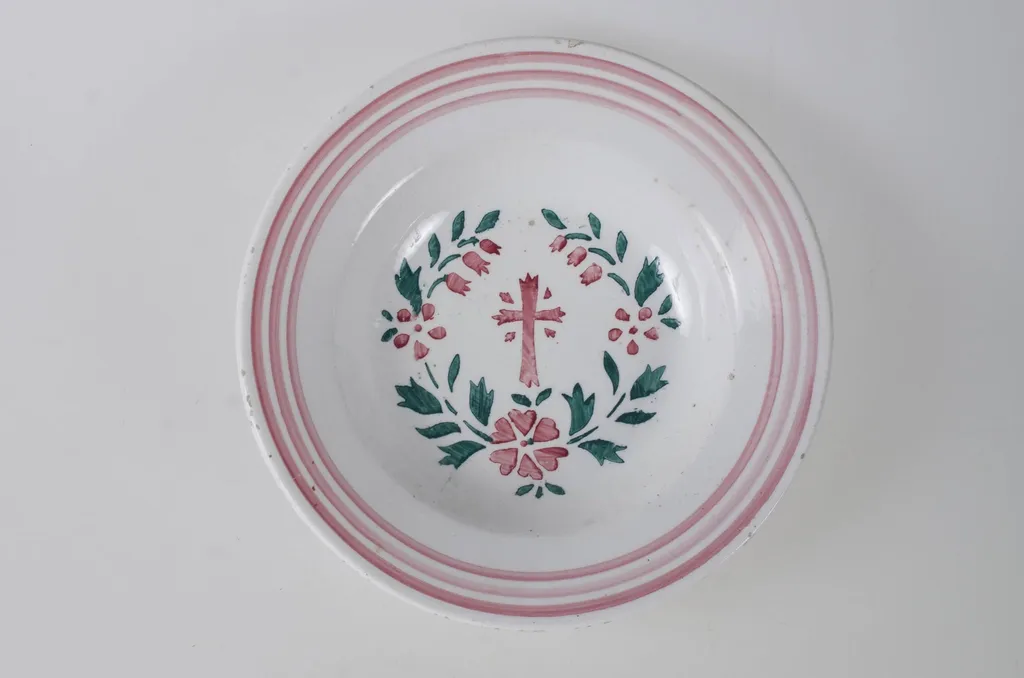
Farfurie de formă tronconică, adâncită; pe margine este decorată cu motive geometrice: trei cercuri concentrice. În centru este pictată o cruce, încadrată de flori și frunze dispuse circular. Pe exteriorul vasului de la bază spre buză se disting trei profile circulare. Cromatică: fond alb; motive: roșu; verde. is a photography by Unknown. It dates from 1850 and is held in the collection of the ASTRA National Museum Complex. This ceramic vessel is a conical bowl with a white slip surface, decorated using red and green pigments.
About this work
Overview
This ceramic vessel is a conical bowl with a white slip surface, decorated using red and green pigments. Its form suggests utilitarian use, likely for storage or ritual purposes. The decoration is confined to the rim and interior base, with geometric and botanical motifs arranged symmetrically. The design reflects a deliberate, non-figurative aesthetic common in regional folk traditions.
Subject & Meaning
At the center of the interior lies a red cross, encircled by stylized floral and foliate patterns. The concentric circles along the rim may symbolize continuity or cosmic order. While no textual evidence confirms religious intent, the cross and circular motifs suggest possible Christian or pre-Christian symbolic fusion, common in rural Eastern European material culture.
Technique & Style
The decoration was applied by hand using mineral-based pigments on a fired clay surface. The red outlines and fills are crisp, indicating use of a fine brush or stylus. Green accents are sparingly used, contrasting with the dominant red and white. The repetition of circular elements and radial symmetry reveals a standardized decorative vocabulary passed through generations.
History & Provenance
The object originates from a rural community in Eastern Europe, likely Romania or Moldova, where such vessels were produced for domestic or ceremonial use. It was collected in the late 19th or early 20th century and later entered the holdings of the Museum of Ethnography. No specific maker or date is recorded, but stylistic parallels place it within late 1800s folk pottery traditions.
Context
The persistence of circular and cross forms suggests enduring cultural symbols tied to seasonal cycles and spiritual beliefs.
This vessel belongs to a broader category of handcrafted ceramics produced in agrarian communities where decorative arts served both practical and symbolic roles. Similar motifs appear on textiles, woodcarvings, and Easter eggs, indicating shared visual languages across media. The persistence of circular and cross forms suggests enduring cultural symbols tied to seasonal cycles and spiritual beliefs.
Legacy
The object remains a representative example of regional folk pottery, preserved in ethnographic collections as evidence of pre-industrial craftsmanship. It contributes to scholarly understanding of how symbolic forms were adapted in everyday objects. While no direct lineage of production continues today, its design elements are occasionally referenced in contemporary craft revivals.
Artist & collection

 Domestic Scene
 Giacomo and Cardinal Marco, investing Andrea, Abbot of San Zeno, with his Benefice
 The Nymph of Fontainebleau
 Portrait of a Woman
 Madonna and Child with Saints in the Enclosed Garden
 Venus and Minerva
 Family Group of Four on Sofa
 Wall painting from Room H of the Villa of P. Fannius Synistor at Boscoreale
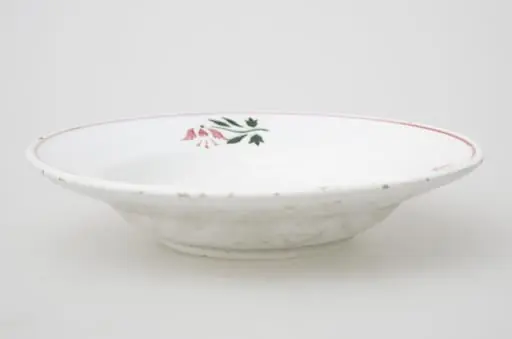 Farfurie din porțelan tronconică, de uz casnic, întrebuințată în gospodărie la decorarea pereților casei. Formă circulară, adâncită; În interioriul vasului se identifică un decor fitomorf; motive vegetale și florale și decor geometric. Decorul este dispus pe margine și în centru: are trei flori pe margine, ce sunt marginite de un cerc roșu; în centru este decorat cu trei flori. Pe fund prezintă găuri pentru agățare și o ștanță cu inscripția: HOLLOHAZA. Cromatică: fond alb; motive: verde, roșu.
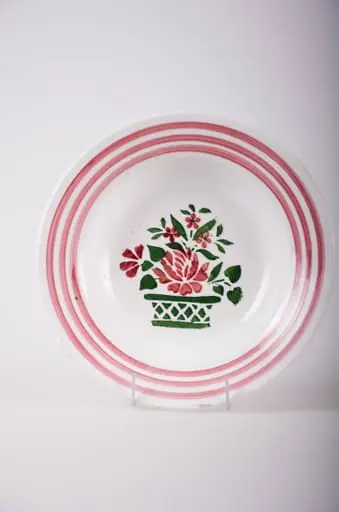 Vas de formă tronconică, adâncit; pe fund are găuri pentru agățare. În centru este decorată cu motive florale: vază cu flori; pe margine sunt trei cercuri concentrice; motive geometrice: linie, romb, triunghi. Pe fund are o marcă indescifrabilă. Cromatică: fond: alb; motive: vișiniu; verde.
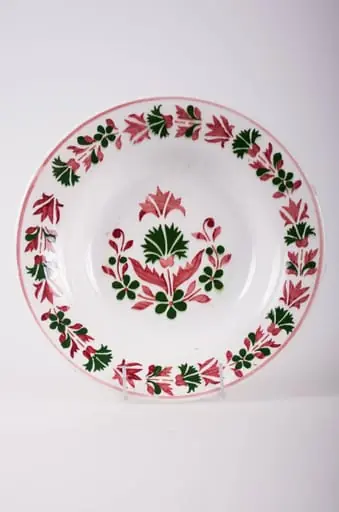 Farfurie de formă tronconică, adâncită; pe fund are găuri pentru agățare, Este decorată cu motive florale și geometrice; pe margine este decorat cu flori încadrate la exterior de o linie; în centru are mai multe flori. Pe fund are o marcă indescifrabilă. Cromatică: fond: alb; motive: vișiniu; verde.
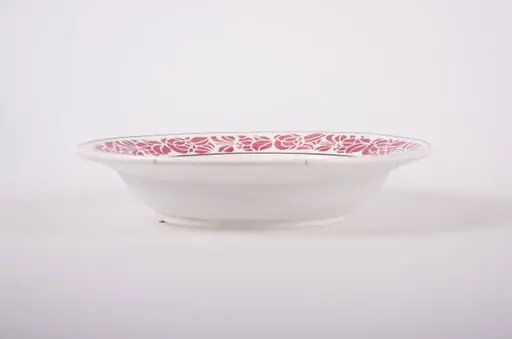 Blid de formă tronconică, adâncit; pe fund are găuri pentru agățare. Pe toată marginea este decorat cu motive florale încadrate de două cercuri concentrice; în centru este decorat cu flori. Pe fund are trei cercuri concentrice. Cromatică: fond: alb; motive: vișiniu: verde: negru.
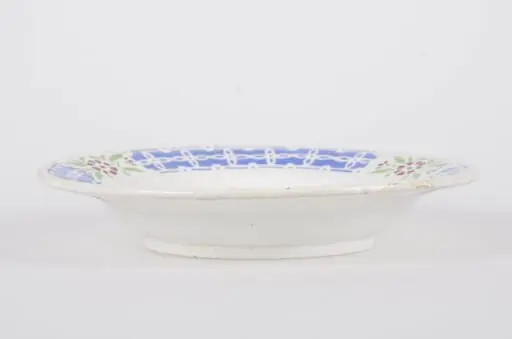 Formă circulară adâncită, decorată în centru cu motive fitomorfe și avimorfe (copaci, cocoș și trei păsărele), iar pe margine trei flori stilizate despărțite de registre cu flori stilizate albastre încadrate de două linii întrerupte cu puncte. Pe fund sunt prezente cercuri concentrice cu ștanță. Cromatică: fond alb; albastru; verde; galben; vișiniu; negru.
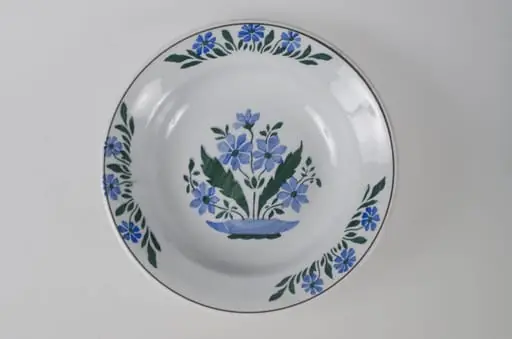 Vasul are formă tronconică, adâncită și este decorat cu motive florale dispuse în trei registre a câte trei flori pe margine, încadrate de o linie; în centru este decorat cu flori și frunze. Pe fund are trei cercuri concentrice care profilează trei registre. Vas evazat în partea superioară. Smălțuit interior-exterior. Cromatică: fond: alb; motive: verde; albastru; negru.
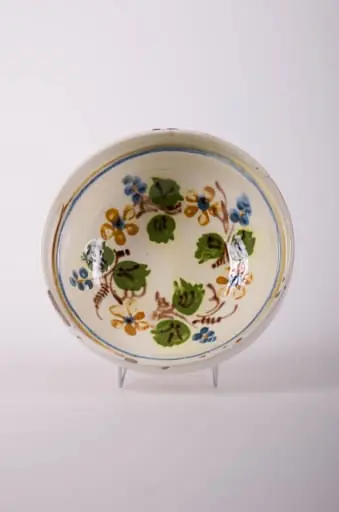 Farfurie de formă tronconică, adâncită, cu buza foarte înaltă; pe fund are găuri pentru agățare. Este smălțuit în interior și exterior (buza). Decorat cu motive geometrice: linie; motive fitomorfe; motive florale. Cromatică: fond: alb; motive: verde; maro; albastru.