Artwork
Formă circulară adâncită, decorată în centru cu motive fitomorfe și avimorfe (copaci, cocoș și trei păsărele), iar pe margine trei flori stilizate despărțite de registre cu flori stilizate albastre încadrate de două linii întrerupte cu puncte. Pe fund sunt prezente cercuri concentrice cu ștanță. Cromatică: fond alb; albastru; verde; galben; vișiniu; negru.
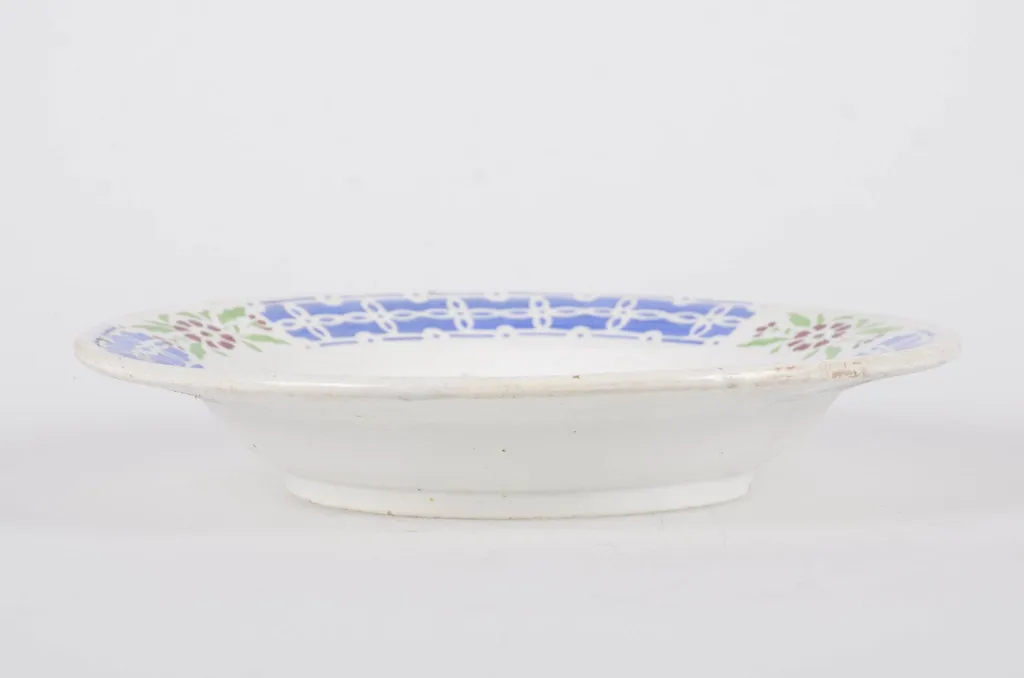
Formă circulară adâncită, decorată în centru cu motive fitomorfe și avimorfe (copaci, cocoș și trei păsărele), iar pe margine trei flori stilizate despărțite de registre cu flori stilizate albastre încadrate de două linii întrerupte cu puncte. Pe fund sunt prezente cercuri concentrice cu ștanță. Cromatică: fond alb; albastru; verde; galben; vișiniu; negru. is a photography by Unknown. It dates from 1850 and is held in the collection of the ASTRA National Museum Complex. This shallow white dish features a curved edge and vibrant, multicolored decoration.
About this work
Overview
This shallow white dish features a curved edge and vibrant, multicolored decoration. Its central design combines a tree, a rooster, and three smaller birds, surrounded by stylized floral motifs in blue, green, yellow, purple, and black on a predominantly white background.
Subject & Meaning
The dish's central imagery includes a tree, a rooster, and three birds, potentially carrying symbolic meanings beyond mere ornamentation. The specific significance of these elements is not explicitly stated but may relate to cultural or thematic contexts common in similar ethnographic pieces.
Technique & Style
The design is executed in a stylized manner with bold, bright colors (notably blue, green, yellow, purple, and black) against a white ground. The rim features blue stylized flowers separated by registers of blue flowers framed by dotted lines, while the base shows concentric circles created with a stamp.
History & Provenance
The dish exhibits signs of aging and edge wear, suggesting an appreciable age. However, specific details regarding its date, origin, or previous ownership are not provided.
Context
Similar pieces can be found at the Museum of Ethnography, implying the dish belongs to a broader category of ethnographic or folk-art ceramics characterized by vibrant, symbolic decorations.
Artist & collection

 Domestic Scene
 Giacomo and Cardinal Marco, investing Andrea, Abbot of San Zeno, with his Benefice
 The Nymph of Fontainebleau
 Portrait of a Woman
 Madonna and Child with Saints in the Enclosed Garden
 Venus and Minerva
 Family Group of Four on Sofa
 Wall painting from Room H of the Villa of P. Fannius Synistor at Boscoreale
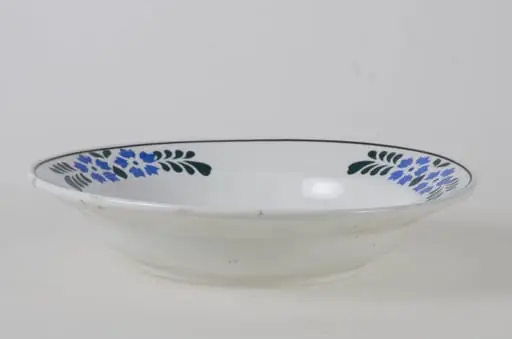 Vasul are formă tronconică smălțuit la interior și pe exterior (smalț de culoare albă). Prezintă motive decorative floral/vegetal și geometrice dispuse pe fundul vasului dar și într-un registru decorativ dispus pe buza vasului. De asemenea se identifică și motive decorative geometrice: pătratul, cercul, linia. Cromatică: fundal alb; verde; grena; albastru.
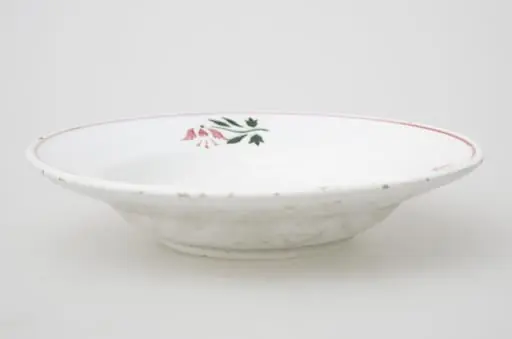 Farfurie din porțelan tronconică, de uz casnic, întrebuințată în gospodărie la decorarea pereților casei. Formă circulară, adâncită; În interioriul vasului se identifică un decor fitomorf; motive vegetale și florale și decor geometric. Decorul este dispus pe margine și în centru: are trei flori pe margine, ce sunt marginite de un cerc roșu; în centru este decorat cu trei flori. Pe fund prezintă găuri pentru agățare și o ștanță cu inscripția: HOLLOHAZA. Cromatică: fond alb; motive: verde, roșu.
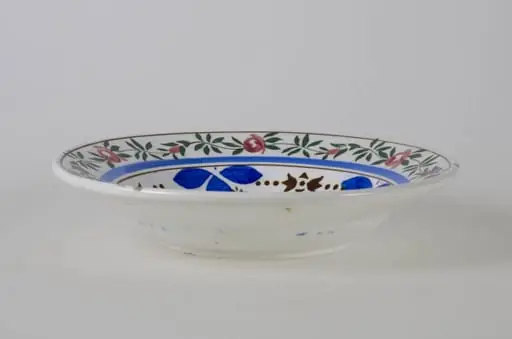 Farfurie de formă tronconică, adâncită; este decorată cu motive florale pe toată suprafața; florile de pe margine sunt încadrate de trei cercuri concentrice dintre care una spre exterior și două spre interior; cromatică: fond alb, motive: roșu; verde; albastru; maro; galben. Pe fund are o ștanță: trei cercuri concentrice. Tot pe fundul vasului sunt două incizii în care este introdus un șnur folosit la agățarea vasului pe perete.
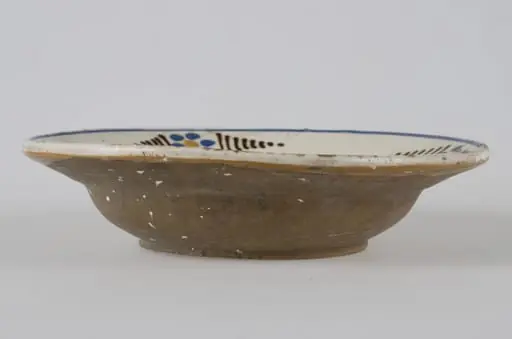 Vas adânc din lut, de formă tronconică, cu marginea evazată. Pe fundalul de culoare albă este decorat cu motive geometrice: linie circulară, linii curbe, puncte pe buza vasului; motive vegetale și florale, pe centrul vasului. Cromatică: fond: alb; motive: albastru; verde; maro; cărămiziu.
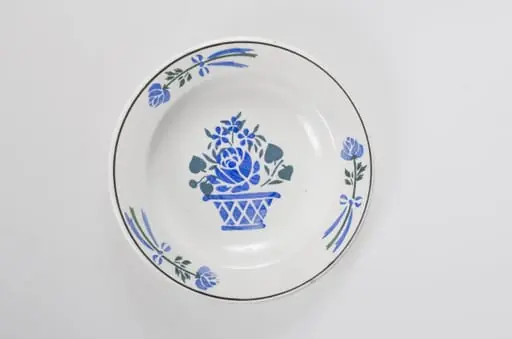 Vas tronconic și adânc realizat din porțelan. Pe fondul alb, central se află un coș albastru (realizat din motive geometrice: romuri și triunghiuri încadrate de două linii) cu un trandafir și trei floricele: pe marginimea farfuriei se observă trei secvențe cu trandafiri legate cu o fontiță. Marginea vasului este decorată cu un cerc. Cromatică: alb; motive: albastru; verde; negru.
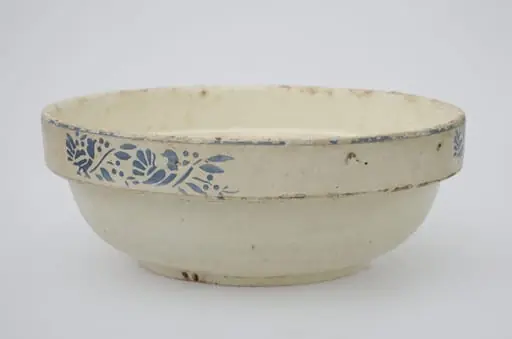 Strachină de lut de formă tronconică, cu buza ușor evazată, smălțuită în interior și la exterior. Decorată cu motive liniare, vegetale, florale și avimorfe (porumbel și porumbiță) motivele avimorfe se regăsesc pe exterior în trei registre, iar pe interior într-o casetă. Cromatică: fond: alb-bej: motive: albastru.
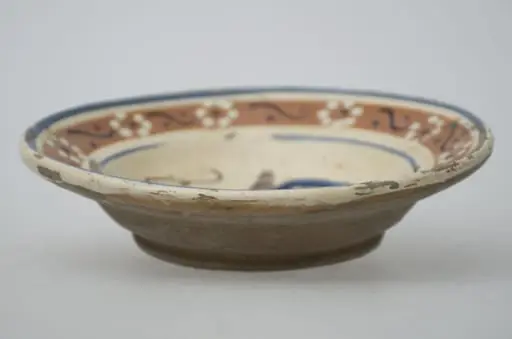 Farfurie de formă tronconică, de dimensiuni mai mici cu pereții ușor curbați și marginea evazată; Smălțuită în interior. Decorat cu motiv avimorf, central un cocoș, iar pe margine două cercuri încadrează un chenar floral. Cromatică: fond: alb; motive: verde; albastru; brun; negru.
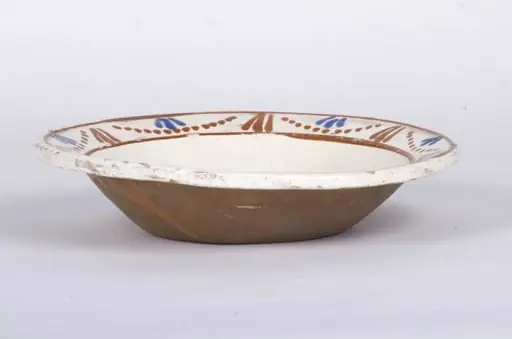 Vas de formă tronconică, adâncit, cu buza lată și evazată. Smălțuit în interior. Este decorat în centru cu motive florale: 8 lalele încercuiesc o floare dispusă central. Pe margini este decorată cu motive geometrice: șiruri arcuite de puncte și grupuri de câte trei linii încadrate de două cercuri concentrice. Cromatică: fond alb în interior; cărămiziu în exterior; motive: maro; albastru; verde.
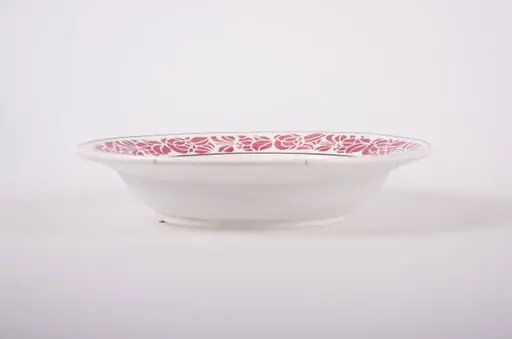 Blid de formă tronconică, adâncit; pe fund are găuri pentru agățare. Pe toată marginea este decorat cu motive florale încadrate de două cercuri concentrice; în centru este decorat cu flori. Pe fund are trei cercuri concentrice. Cromatică: fond: alb; motive: vișiniu: verde: negru.
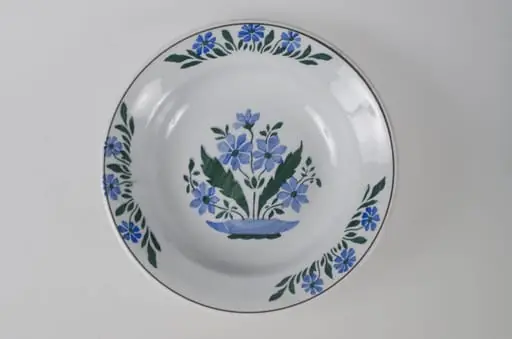 Vasul are formă tronconică, adâncită și este decorat cu motive florale dispuse în trei registre a câte trei flori pe margine, încadrate de o linie; în centru este decorat cu flori și frunze. Pe fund are trei cercuri concentrice care profilează trei registre. Vas evazat în partea superioară. Smălțuit interior-exterior. Cromatică: fond: alb; motive: verde; albastru; negru.
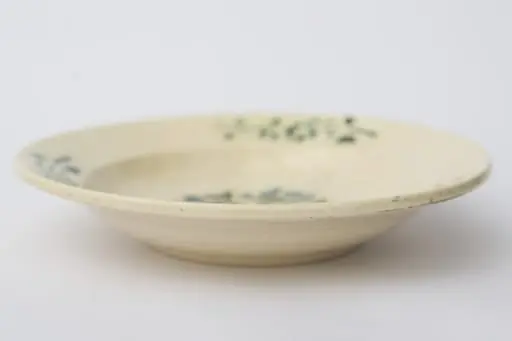 Farfurie de formă tronconică ce prezintă două registre ornamentale, unul plasat de jur împrejurul buzei cu motive florale. Al doilea registru plasat în centru cu motive deasemenea florale. La posterior, baza inelară perforată pentru atârnare. Cromatică: fond: crem; motive: verde; albastru.