Artwork
farfurie
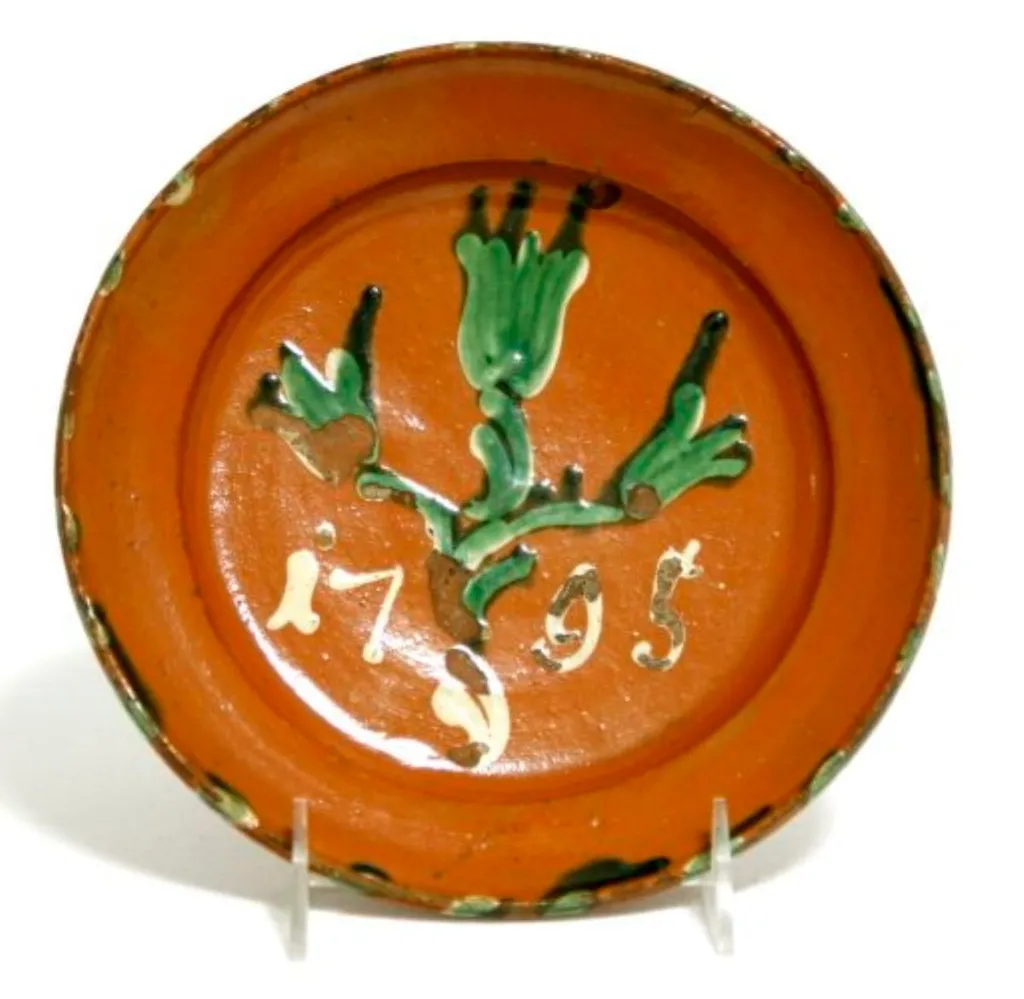
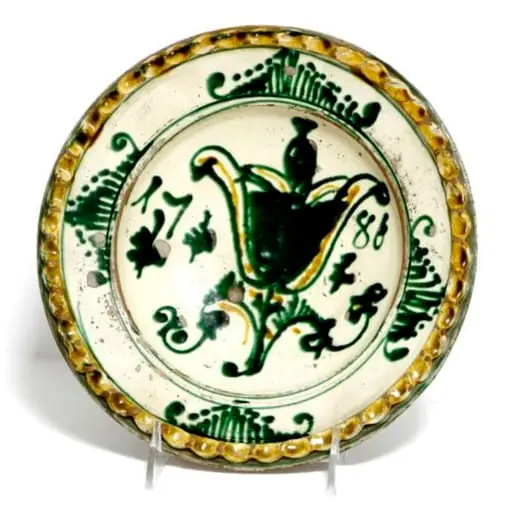
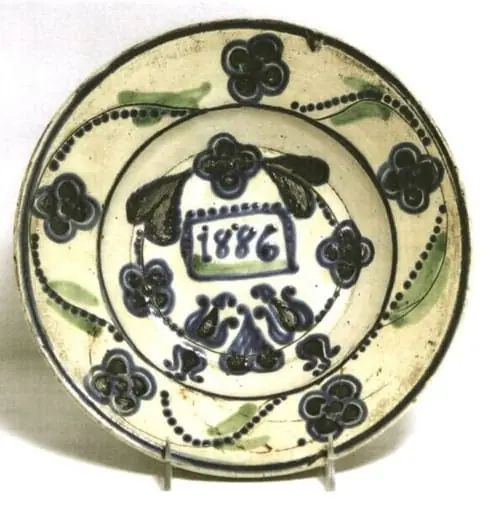
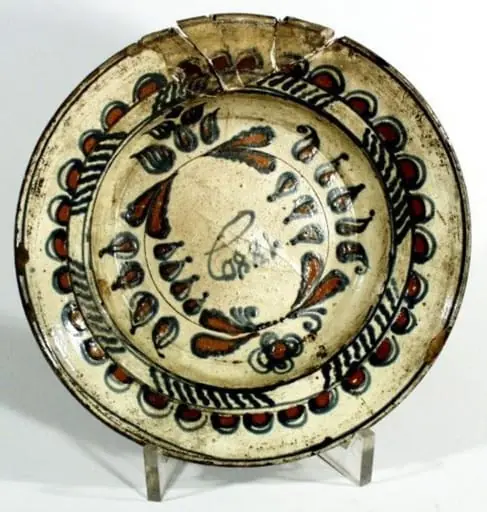
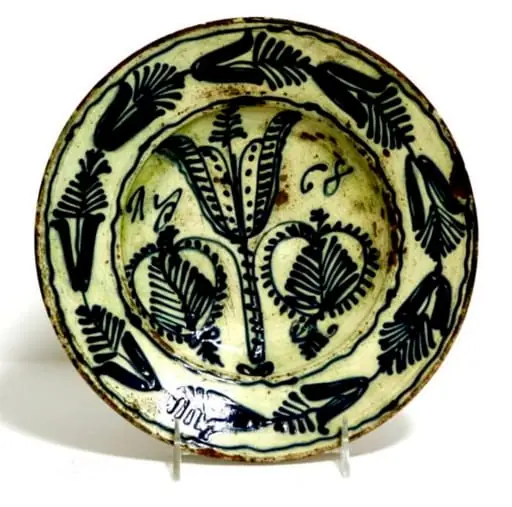
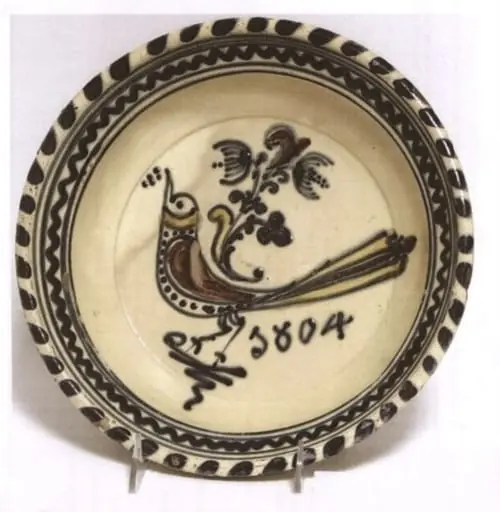
farfurie is a print by the Romanticist artist Unknown. It dates from 1795 and is held in the collection of the Romanian Peasant Museum. The object is a circular porcelain plate of an orange hue, featuring a wide peripheral rim.
About this work
The design features a green tulip with brown accents and the numbers "1795" written in white below it.
This image shows a round, orange plate with a floral design in the center. The design features a green tulip with brown accents and the numbers "1795" written in white below it. The plate has a wide rim and is displayed on a clear stand.
The plate's design is simple yet elegant, with the tulip being the main focus. The use of green and brown colors gives the plate a natural and earthy feel. The numbers "1795" add a touch of history and nostalgia to the design.
The plate is a beautiful example of floral art and would be a great addition to any collection. To learn more about this style of art, check out the Romanticism movement.
Overview
The object is a circular porcelain plate of an orange hue, featuring a wide peripheral rim. Centered on the surface is a stylized tulip rendered in green with brown detailing, accompanied by the inscription "1795" in white lettering beneath the flower. The plate is presented on a transparent support, allowing full view of its decorative surface.
Subject & Meaning
The central motif is a single tulip, a flower often associated with spring and renewal, rendered in a simplified natural palette. The inclusion of the date "1795" suggests a reference to the year of manufacture or a commemorative purpose, situating the piece within a historical context.
Technique & Style
The decoration employs painted enamel on a glazed ceramic body, typical of late eighteenth‑century European tableware. The color scheme—orange ground, green flower, brown accents, and white numerals—reflects a restrained yet decorative aesthetic, emphasizing clarity of form over elaborate ornamentation.
History & Provenance
The plate bears the year 1795, indicating its production at the close of the eighteenth century. While no maker's mark is noted, the style aligns with contemporary porcelain factories that supplied domestic and export markets during that period.
Context
Floral motifs were common in decorative arts of the era, resonating with the broader Romantic interest in nature. The tulip, in particular, enjoyed popularity in European decorative schemes, often symbolizing elegance and the burgeoning appreciation for botanical subjects.
Artist & collection

 Domestic Scene
 Giacomo and Cardinal Marco, investing Andrea, Abbot of San Zeno, with his Benefice
 The Nymph of Fontainebleau
 Portrait of a Woman
 Madonna and Child with Saints in the Enclosed Garden
 Venus and Minerva
 Family Group of Four on Sofa
 Wall painting from Room H of the Villa of P. Fannius Synistor at Boscoreale