Artwork
farfurie Iznik
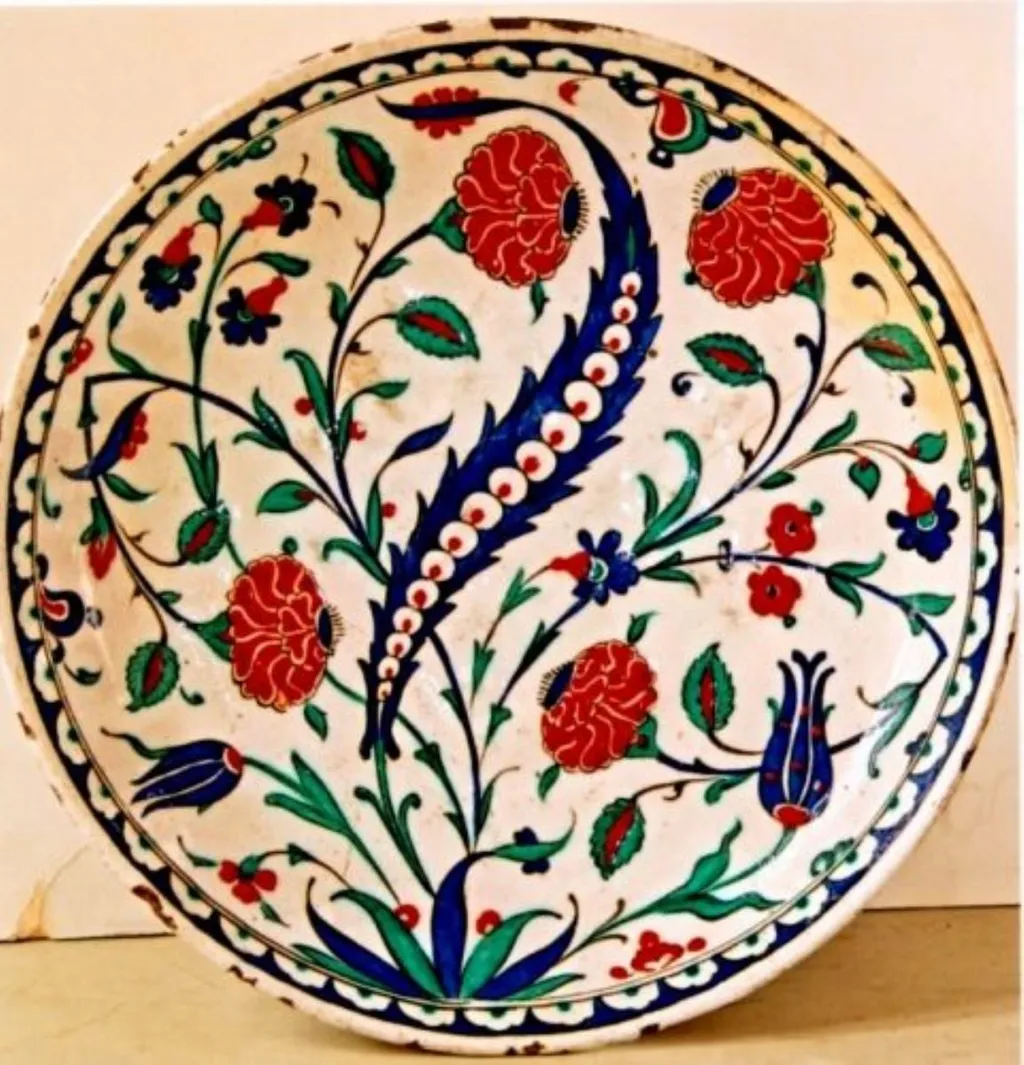
farfurie Iznik is a print by Unknown. It dates from 1750 and is held in the collection of the Romanian Academy in Bucharest. A circular ceramic plate, produced in Iznik, Turkey, features a refined floral motif rendered in underglaze pigments.
About this work
Overview
Central to the design are stylized red blossoms, their stems and leaves in green, accented with blue and white highlights.
A circular ceramic plate, produced in Iznik, Turkey, features a refined floral motif rendered in underglaze pigments. The surface is predominantly white, framed by a blue-edged border with scalloped white detailing. Central to the design are stylized red blossoms, their stems and leaves in green, accented with blue and white highlights. The composition balances symmetry and organic flow, typical of 16th-century Ottoman ceramic traditions.
Subject & Meaning
The floral pattern draws from Islamic artistic conventions that favor vegetal forms over figural representation. Red poppies and tulips, rendered with botanical precision, reflect both natural observation and symbolic associations with paradise and renewal. White dots along the stems may suggest dew or celestial light, reinforcing themes of purity and divine abundance common in Ottoman decorative arts.
Technique & Style
Crafted using the underglaze painting technique, the plate combines cobalt blue, copper green, and iron-red pigments on a tin-glazed white ground. The precision of line and controlled application of color reflect advanced kiln technology and skilled artisan training. The scalloped border and centralized motif follow established Iznik compositional templates, balancing repetition with subtle variation.
History & Provenance
This plate originates from the Iznik ceramic workshops active during the height of the Ottoman Empire, likely between 1550 and 1600. Such wares were produced for imperial courts and elite households, and later exported across Europe and the Middle East. Surviving examples are held in major collections, including the Museum of Ethnography, which preserves similar pieces from this period.
Context
Iznik pottery flourished under Ottoman patronage, particularly during the reign of Suleiman the Magnificent. The use of red pigment, introduced in the mid-16th century, marked a technical breakthrough, allowing richer floral designs. These plates were not merely utilitarian but served as status objects, displayed in palaces and mosques to demonstrate cultural refinement and imperial wealth.
Legacy
Iznik ceramics influenced ceramic production across the Islamic world and later European faience traditions. The color palette and floral vocabulary developed here became benchmarks for subsequent generations of potters. Though production declined after the 17th century, surviving pieces remain key references for understanding Ottoman aesthetics and the transmission of artistic techniques across cultures.
Artist & collection
 Domestic Scene
 Giacomo and Cardinal Marco, investing Andrea, Abbot of San Zeno, with his Benefice
 The Nymph of Fontainebleau
 Portrait of a Woman
 Madonna and Child with Saints in the Enclosed Garden
 Venus and Minerva
 Family Group of Four on Sofa
 Wall painting from Room H of the Villa of P. Fannius Synistor at Boscoreale
 Farfurioară kuty
 Farfurie cu portretul lui Harutiun Bezciyan (Bezdjian)
 farfurie mică
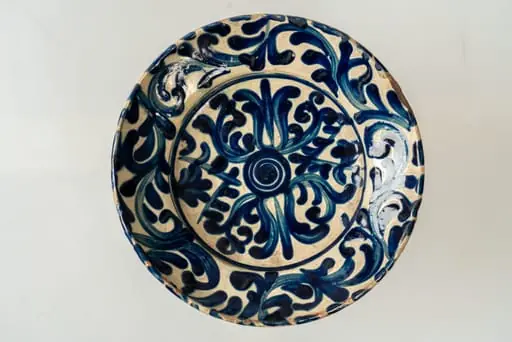 Farfurie semi-adâncă, cu corp scund și buză lată, răsfrântă. Piesa este modelată la roata olarului, angobată cu humă albă pe fața interioară a acesteia. Decorul este unul bogat, realizat prin pictare cu pensula, cu linii groase, și constă în motive decorative florale și vegetale stilizate (flori și frunze), dispuse pe toată suprafața farfuriei. Cromatica decorului: alb, albastru. Farfuria este smălțuită pe interior, cu smalț transparent.
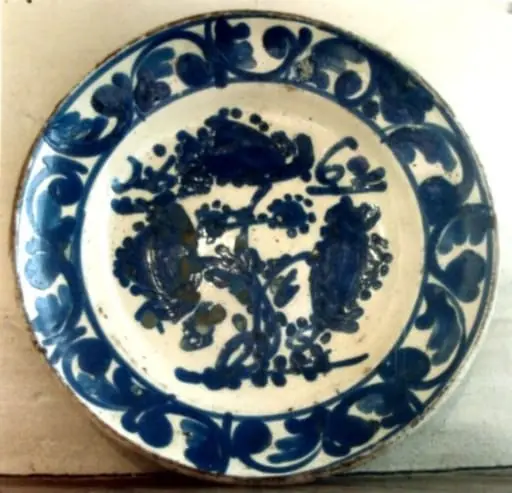 farfurie
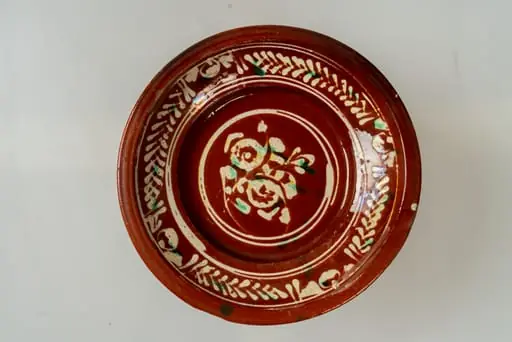 Farfurie adâncă, modelată la roata olarului, cu suprafața interioară neangobată. Decorul este pictat cu cornul și cu pensula și constă în motive decorative florale (un buchet de flori central) și vegetale stilizate, pe buza farfuriei. Pe fața interioară a farfuriei este aplicat un strat de smalț transparent. Cromatica decorului: alb, pe fondul roșu al lutului ars.
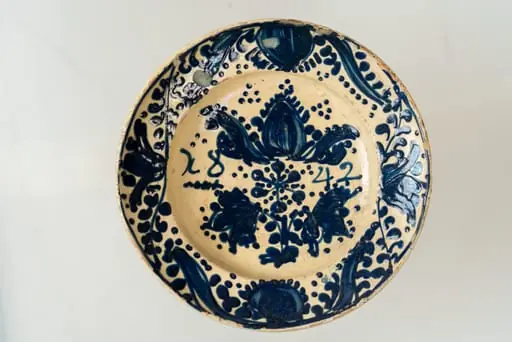 Farfurie adâncă, cu corp scund și buză lată, răsfrântă. Piesa este modelată la roata olarului, angobată cu humă albă pe fața interioară a acesteia. Decorul este realizat prin pictare cu cornul și cu pensula și constă în motive decorative vegetale stilizate (flori și frunze) și geometrice (puncte), dispuse pe întreaga suprafață a farfuriei. Central, pe fundul farfuriei, este înscris anul fabricației "1842", deoparte și de alta a registrului decorativ central. Cromatica decorului: alb, albastru. Farfuria este smălțuită pe interior, cu smalț transparent.