Artwork
Farfurie mare adâncă, cu corp tronconic, buză lată evazată și muchia buzei profilată; este acoperită pe suprafața interioară cu un strat de angobă albă, peste care este pictat cu cornul și cu pensula decorul format din motive vegetale, dispuse astfel: centrul farfuriei conține un motiv stelar pictat cu contur verde, decorat în interior cu romburi verzi și cu puncte mici maro și care are în colțuri grupuri de frunze duble de formă ovală, unele umplute cu culoare verde, altele cu puncte mici maro. Buza farfuriei este decorată cu o ghirlandă continuă formată prin repetarea aceluiaș motiv vegetal (grupuri de frunze duble) regăsit pe centrul farfuriei. Farfuria este acoperită pe suprafața ornamentată cu un strat de smalț transparent. Cromatica: alb, verde, maro.
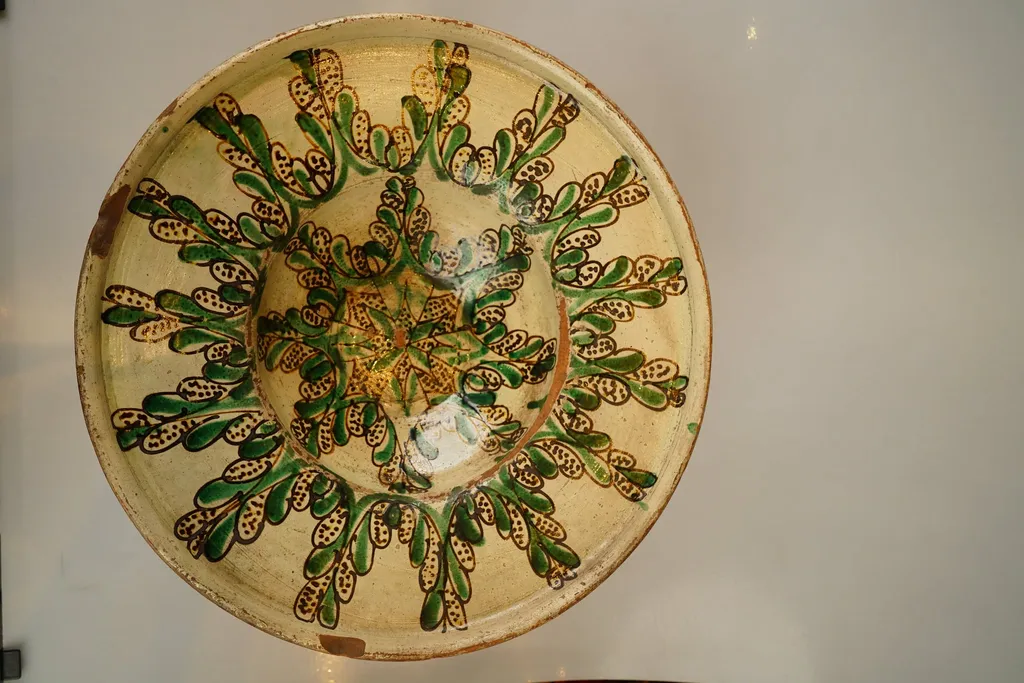
Farfurie mare adâncă, cu corp tronconic, buză lată evazată și muchia buzei profilată; este acoperită pe suprafața interioară cu un strat de angobă albă, peste care este pictat cu cornul și cu pensula decorul format din motive vegetale, dispuse astfel: centrul farfuriei conține un motiv stelar pictat cu contur verde, decorat în interior cu romburi verzi și cu puncte mici maro și care are în colțuri grupuri de frunze duble de formă ovală, unele umplute cu culoare verde, altele cu puncte mici maro. Buza farfuriei este decorată cu o ghirlandă continuă formată prin repetarea aceluiaș motiv vegetal (grupuri de frunze duble) regăsit pe centrul farfuriei. Farfuria este acoperită pe suprafața ornamentată cu un strat de smalț transparent. Cromatica: alb, verde, maro. is a photography by Unknown. It dates from 1850 and is held in the collection of the Ethnographical Museum of Transylvania. This shallow ceramic dish features a conical body with a broad, flared rim and a profiled edge.
About this work
Overview
The palette is restrained—white, green, and brown—emphasizing naturalistic patterns rather than ornamental complexity.
This shallow ceramic dish features a conical body with a broad, flared rim and a profiled edge. Its interior is coated with a white engobe, over which vegetal motifs are painted in green and brown tones. A transparent glaze covers the entire surface, preserving the hand-applied decoration. The palette is restrained—white, green, and brown—emphasizing naturalistic patterns rather than ornamental complexity.
Subject & Meaning
The decoration centers on stylized double leaves arranged in a radial star pattern at the dish’s core, echoed continuously along the rim. Each leaf is outlined in green, filled either with solid color or small brown dots, suggesting botanical abundance. The repetition of the motif implies a symbolic connection to growth and continuity, common in folk ceramic traditions where nature serves as both ornament and metaphor.
Technique & Style
The design was executed with a brush and a horn tool, leaving visible brushstrokes beneath the clear glaze. The patterns are hand-drawn, not stamped, resulting in subtle irregularities that attest to artisanal production. The use of engobe as a ground layer and the precise alignment of leaf clusters indicate a developed local tradition, balancing symmetry with organic variation in execution.
History & Provenance
This piece belongs to a regional ceramic tradition from Eastern Europe, likely produced in the 18th or 19th century. Similar vessels have been documented in rural households and ethnographic collections, particularly in present-day Romania. Its preservation suggests it was used in domestic settings rather than ceremonial contexts, reflecting everyday aesthetic values of the time.
Context
Produced in a pre-industrial setting, such ceramics were made by local potters using earthenware clay and natural pigments. The absence of figural imagery and the focus on vegetal forms align with broader folk traditions that avoided religious or human motifs. The dish’s functional form and durable glaze indicate practical use in food service, while its decoration expressed cultural affinity with the natural world.
Legacy
This vessel exemplifies a regional ceramic style preserved in ethnographic archives, notably in the Museum of Ethnography. Its design elements—repeating leaf motifs, earth-tone palette, and hand-painted execution—continue to inform contemporary interpretations of traditional pottery. Though no longer in widespread production, its aesthetic remains a reference point for studies of rural craft and material culture.
Artist & collection
Museum
Ethnographical Museum of Transylvania
Continue through works from the same source collection.
 Domestic Scene
 Giacomo and Cardinal Marco, investing Andrea, Abbot of San Zeno, with his Benefice
 The Nymph of Fontainebleau
 Portrait of a Woman
 Madonna and Child with Saints in the Enclosed Garden
 Venus and Minerva
 Family Group of Four on Sofa
 Wall painting from Room H of the Villa of P. Fannius Synistor at Boscoreale
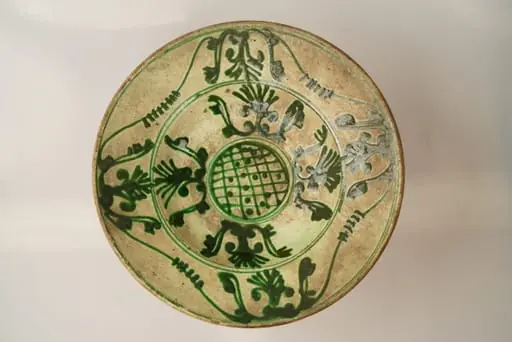 Farfurie mare, adâncă, cu buză lată dreaptă, evazată; suprafața interioară a piesei este acoperită cu un strat de angobă albă peste care este pictat cu cornul decorul monocromatic format din motive vegetale stilizate și geometrice, dispuse astfel: centrul farfuriei este decorat cu un cerc cu linii hașurate intersectat, de culoare verde, cu puncte verzi în interior; pe exteriorul acestui cerc, pe peretele farfuriei, sunt pictate patru motive vegetale aproximativ identice, formate din două frunze ce conțin în interior câte o floare formată din linii în formă de V (acest motiv poate fi interpretat și ca o floare de crin cu petalele deschise). Același motiv vegetal de pe peretele farfuriei se repetă de patru ori și pe buza acesteia, legătura între motive făcându-se cu o linie în formă de S ce are, perpendiculare pe mijloc, mici linii drepte verzi. Suprafața ornamentată a farfuriei este acoperită cu un strat de smalț transparent. Cromatica: alb, verde.
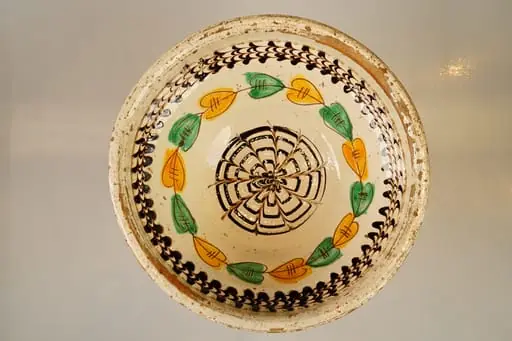 Farfurie adâncă, de tip castron, cu corp tronconic și buza dreaptă, cu muchia buzei răsfrântă spre exterior. Piesa este acoperită pe suprafața interioară cu un strat de angobă albă, peste care este realizat, prin sgrafitare în pasta de angobă și prin pictare cu cornul și cu pensula, decorul format din motive vegetale și geometrice, dispuse astfel: fundul farfuriei este decorat cu cercuri concentrice de culoare maro, pictate cu cornul și trase cu găițoiul, iar peretele farfuriei cu un șir continuu de frunze duble de culoare verde și galben, realizate cu contur sgrafitat și înșiruite de-a lungul unei linii circulare sgrafitate. La baza buzei se găsește o bandă decorativă circulară, formată din linii de culoare maro-închis, trase cu găițoiul. Suprafața ornamentată a farfuriei este acoperită cu un strat de smalț transparent. Cromatica: alb, verde, maro-închis, galben.
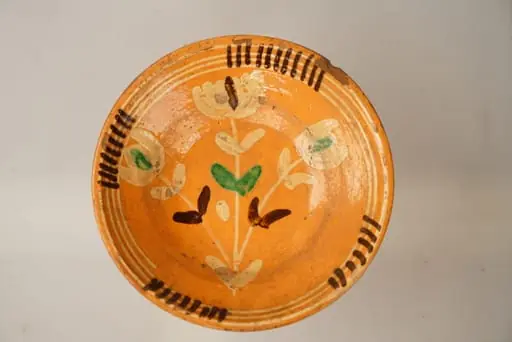 Farfurie adâncă, acoperită pe suprafața interioară cu un strat de angobă de culoare galben-ocru, peste care este pictat cu cornul și cu pensula decorul format din motive florale stilizate și geometrice: centrul farfuriei conține trei tulpini înalte cu flori de lalea de culoare albă, cu mijlocul verde și maro și frunze de culoare maro, alb și verde. Buza farfuriei este decorată cu o linie circulară spiralată de culoare albă, perpendicular pe care sunt pictate patru grupuri de linii drepte de culoare maro, așezate diametral opus în formă de cruce. Suprafața ornamentată a farfuriei este acoperită cu un strat de smalț transparent. Cromatica: alb, galben ocru, maro, verde.
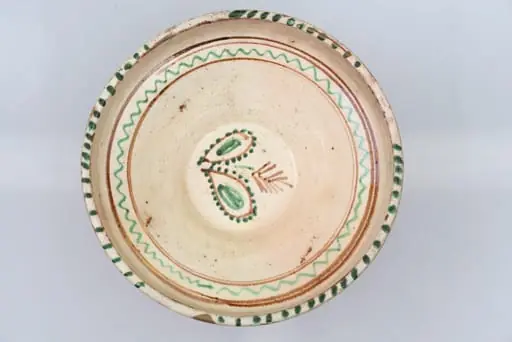 Farfurie adâncă de tip castron, cu baza îngustă, corp tronconic și buza dreaptă, verticală. Suprafața interioară a farfuriei este acoperită cu un strat de angobă albă, peste care s-a pictat cu cornul decorul format din motive decorative geometrice și un motiv vegetal stilizat: central pe fundul farfuriei se regăsesște un motiv vegetal format din două frunze cu contur dintr-o linie maro și puncte verzi având în centru o floare cu petale formate din linii simple maro. Bordura interioară a farfuriei este decorată cu două linii circulare maro între care se găsește o linie circulară ondulată, de culoare verde. Muchia buzei este decorată cu trei grupuri de linii mici drepte, de culoare verde. Suprafața exterioară a buzei este decorată cu două linii circulare simple realizate prin incizare. Suprafața ornamentată a farfuriei este acoperită cu un strat de smalț transparent. Cromatica: alb, verde, maro.
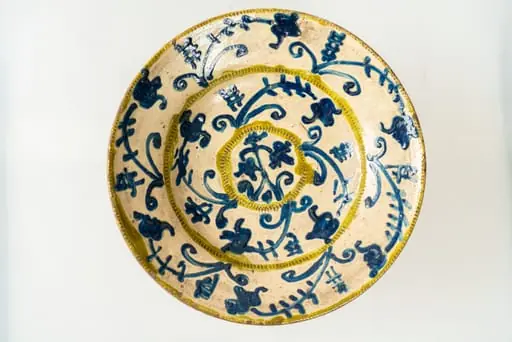 Farfurie mare, semi-adâncă, cu corp scund și buză lată, răsfrântă. Piesa este modelată la roata olarului, angobată cu humă albă pe fața interioară a acesteia. Decorul este realizat prin pictare cu pensula și cu cornul și constă în motive decorative florale și vegetale stilizate (flori și frunze), dispuse pe toată suprafața farfuriei, încadrate în trei registre separate de cercuri concentrice formate dintr-o linie verde și un șir continu de linii mici, paralele, incizate (cercuri localizate: central - pe fundul farfuriei; pe bordura interioară a buzei și pe muchia acesteia). Cromatica decorului: alb, albastru, verde. Farfuria este smălțuită pe interior, cu smalț transparent.
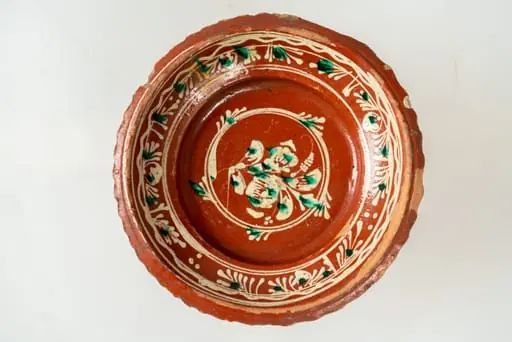 Farfurie adâncă, cu buza răsfrântă și muchie ondulată. Piesa este modelată la roata olarului, cu suprafața interioară acoperită cu un strat de angobă maro. Decorul este pictat cu cornul și cu pensula, cu humă albă, și constă în motive decorative florale și vegetale stilizate, amplasate pe fundul farfuriei (un buchet de flori cu frunze, încadrat într-un cerc format din două linii paralele și decorat pe exterior cu patru grupuri de linii sugerând frunze) și pe buza farfuriei, într-un registru decorativ continuu, completat cu motive decorative geometrice (linii paralele sub formă de cerc, linie vălurită, puncte). Peste acest decor sunt aplicate câteva pete de smalț verde. Pe fața interioară a farfuriei este aplicat un strat de smalț transparent. Cromatica decorului: alb, maro, verde.