Artwork
Farfurie pentru desert din porțelan, pictată manual, decorată cu motive tradiționale rusești. Pe verso logo-ul Fabricii de Porțelan Lomonosov. Farfuria face parte dintr-un serviciu de ceai pentru 10 persoane. Serviciu de ceai oferit lui Nicolae Ceaușescu de Leonid Brejnev cu ocazia întâlnirii de la Ialta, august 1978.
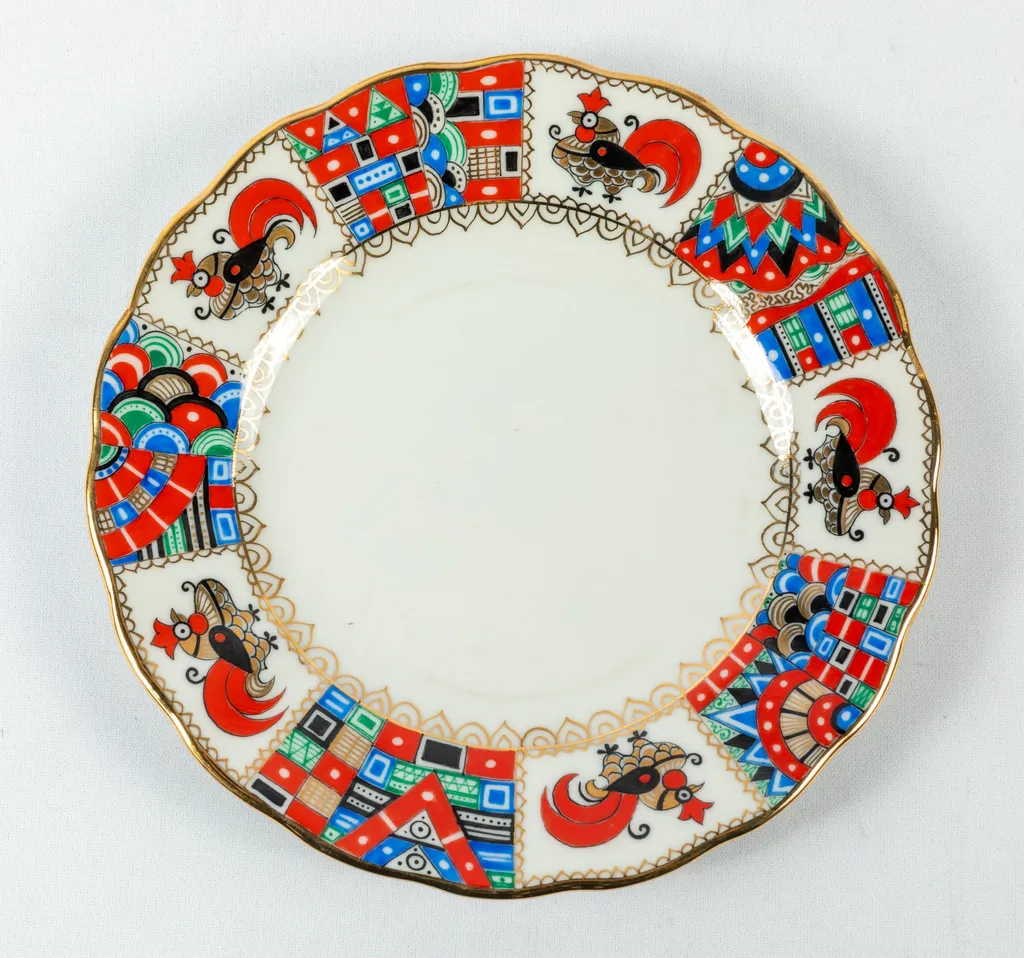
Farfurie pentru desert din porțelan, pictată manual, decorată cu motive tradiționale rusești. Pe verso logo-ul Fabricii de Porțelan Lomonosov. Farfuria face parte dintr-un serviciu de ceai pentru 10 persoane. Serviciu de ceai oferit lui Nicolae Ceaușescu de Leonid Brejnev cu ocazia întâlnirii de la Ialta, august 1978. is a print by Unknown. It dates from 1850 and is held in the collection of the National Museum of Romanian History. A hand‑painted porcelain dessert plate, part of a ten‑person tea service, displays a white field edged in gold.
About this work
The plate has a white background and a gold rim, and it features various shapes and patterns in red, blue, green, and black.
This image shows a plate with a colorful, intricate design. The plate has a white background and a gold rim, and it features various shapes and patterns in red, blue, green, and black.
The design includes several roosters and geometric shapes, and it appears to be a traditional Russian motif. The plate is part of a tea set, which was a gift to Nicolae Ceaușescu from Leonid Brezhnev in 1978.
The plate is held at the Museum of Ethnography.
Overview
A hand‑painted porcelain dessert plate, part of a ten‑person tea service, displays a white field edged in gold. The surface is enlivened by a dense arrangement of red, blue, green and black motifs, including stylized roosters and geometric patterns that reference traditional Russian decorative art.
Subject & Meaning
The decorative scheme draws on folk motifs common in Russian ceramics, where animal figures such as roosters symbolize vitality and the geometric interlaces convey harmony. The composition serves both aesthetic and ceremonial functions, enhancing the ritual of tea drinking with culturally resonant imagery.
Technique & Style
Crafted at the Lomonosov Porcelain Factory, the plate was hand‑painted using mineral pigments applied to glazed porcelain before a high‑temperature firing. The gold rim was added by applying a gold overglaze, a technique that yields a durable, lustrous edge while preserving the vivid painted designs.
History & Provenance
The tea service, including this plate, was presented by Soviet leader Leonid Brezhnev to Romanian President Nicolae Ceaușescu during the Ialta summit in August 1978. The reverse side bears the Lomonosov factory logo, confirming its origin in the Soviet porcelain tradition.
Context
The gift reflects diplomatic customs of the Cold War era, where elaborate tableware symbolized mutual respect and cultural exchange between allied states. Today the plate is conserved in the Museum of Ethnography, illustrating the intersection of political history and decorative arts.
Artist & collection

 Domestic Scene
 Giacomo and Cardinal Marco, investing Andrea, Abbot of San Zeno, with his Benefice
 The Nymph of Fontainebleau
 Portrait of a Woman
 Madonna and Child with Saints in the Enclosed Garden
 Venus and Minerva
 Family Group of Four on Sofa
 Wall painting from Room H of the Villa of P. Fannius Synistor at Boscoreale
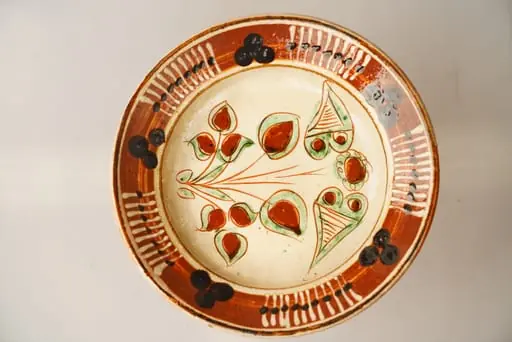 Farfurie adâncă, acoperită pe suprafața interioară cu un strat de angobă albă peste care este pictat cu pensula și cu cornul decorul format din motive vegetale stilizate și geometrice, dispuse astfel: centrul farfuriei este decorat cu o tulpină cu o floare mică centrală, opt boboci (doi dintre ei mai mari și câte trei mai mici, grupați împreună) și două frunze în formă de inimă (decorate cu câte două puncte mari și linii subțiri paralele dispuse în formă de triunghi), desenate cu contur fin roșu și umplute cu culorile roșu și verde. Registrul decorativ marginal de pe buza farfuriei se compune din motive geometrice (cinci grupuri de linii albe drepte, paralele, cu un șir de puncte maro în zona mediană, între care sunt intercalate grupuri de câte trei puncte mari, maro), pictate peste o dungă lată, de culoare roșu-cărămiziu, ce acoperă aproape întreaga suprafață a buzei. Suprafața ornamentată a farfuriei este acoperită cu un strat de smalț transparent. Cromatica: alb, verde, roșu-cărămiziu, maro.
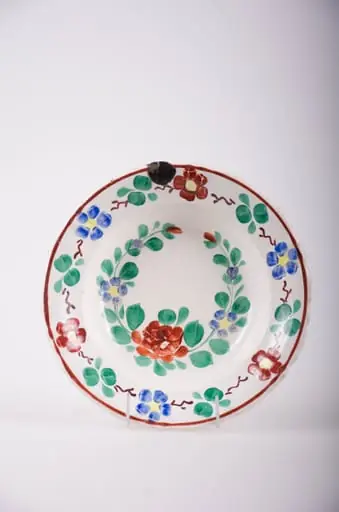 Farfurie de porțelan smălțuită pe fond alb. Decorată cu flori și frunze dispuse sub formă de ghirlande atât în centrul vasului cât și pe buza acestuia. De asemenea sunt prezente și motive geometrice: linia și linii întrerupte. Comatică: fond: alb; motive: verde; albastru; galben; roșu.
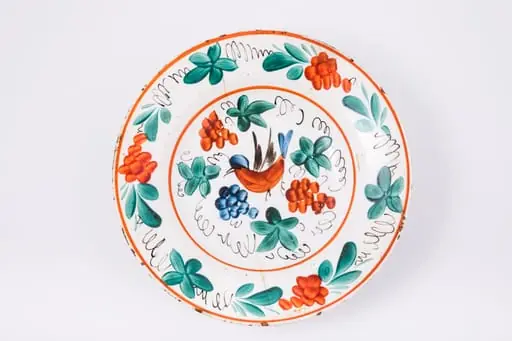 Farfurie adâncă, cu marginea lată și evazată, ușor îndoită spre interior. Marginea este decorată cu trei grupuri de buchete alcătuite dintr-o floare roșie și frunze, intercalate de trei motive fitomorfe și ramuri stilizate. Decorul central reprezintă o pasăre în cromatică roșu și albastru, cu aripi maro, înconjurată de trei buchete, două compuse din flori roșii și unul din flori albastre, intercalate de patru frunze și ramuri stilizate. Piesa prezintă pe spate o ștampilă, indescifrabilă. Cromatică: alb, roșu, verde, albastru, maro.
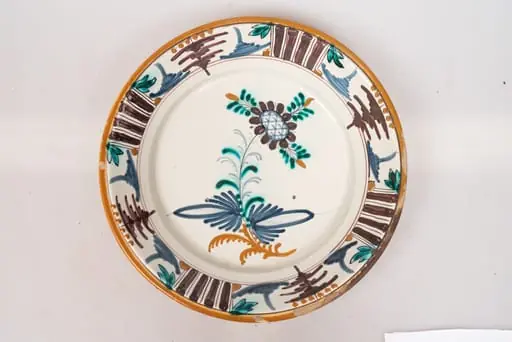 Farfurie de formă aplatizată, cu buza răsfrântă. Decorul, dispus pe un fond alb lăptos, prin pictare, este format dintr-un motiv floral stilizat, dispus central, pe fundul farfuriei, și motive geometrice (puncte galbene, grupuri de dungi paralele de culoare maro-brun, linii subțiri, paralele, linii sub formă de cerc, motivul bradului), dispuse într-un registru continuu pe buza farfuriei. Muchia buzei este marcată cu o dungă de culoare galbenă. Cromatica: alb, verde, brun, albastru, galben-ocru.
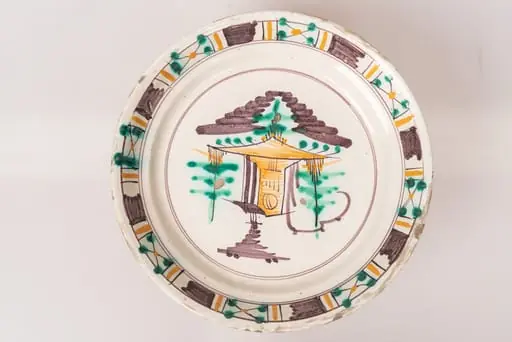 Farfurie semi-adâncă, cu buza răsfrântă. Decorul, dispus prin pictare pe un fond alb lăptos, este format dintr-un motiv arhitectural și motive vegetale stilizate, dispuse central, pe fundul farfuriei, și motive geometrice (linii galbene și dungi maro paralele, grupuri de linii intersectate sub formă de X, decorate cu puncte verzi și galbene), dispuse pe buza farfuriei, într-un registru continuu. Cele două registre ornamentale, cel central de pe fundul farfuriei și cel marginal, de pe buza acesteia, sunt încadrate în cercuri formate din linii fine de culoare maro-brun. Cromatica: alb, verde, maro-brun, galben ocru.
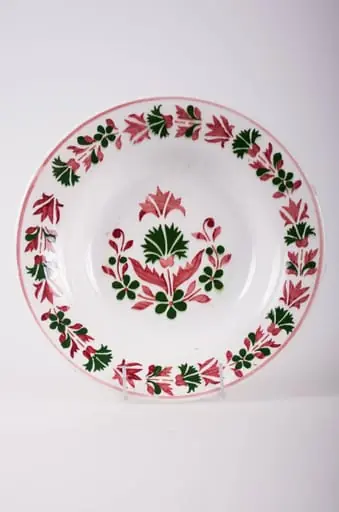 Farfurie de formă tronconică, adâncită; pe fund are găuri pentru agățare, Este decorată cu motive florale și geometrice; pe margine este decorat cu flori încadrate la exterior de o linie; în centru are mai multe flori. Pe fund are o marcă indescifrabilă. Cromatică: fond: alb; motive: vișiniu; verde.
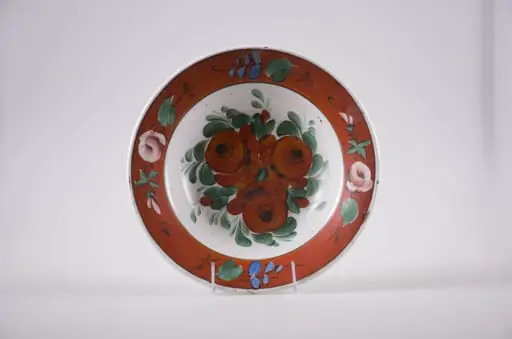 Farfurie de formă tronconică din faianță, cu buza dreaptă, ornamentată prin pictare. Fundul este alb și are pictate trei flori roșii înconjurate de frunze mărunte, este delimitat de buza farfuriei cu o linie subțire, neagră. Buza vasului este roșie, decorată cu flori roz și frunzulițe discrete. În partea posterioară prezintă o gaură prin care se trece ața ce servește la agățarea farfuriei. Cromatică: fond: alb, roșu; motive: verde; roz; albastru; roșu; negru.
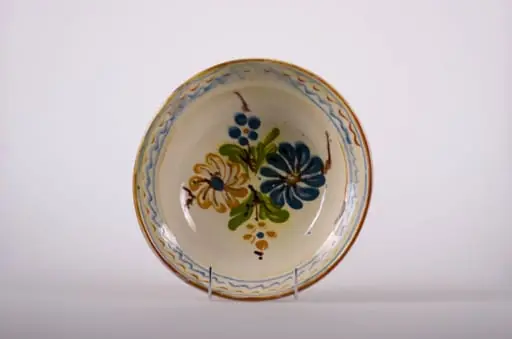 Blid de formă tronconică, adâncit; pe fund are găuri pentru agățare. Este smălțuit în interior și exterior (buza); este decorat cu motive geometrice: linie, linie ondulată; motive fitomorfe: frunze; motive florale. Cromatică: fond: alb; motive: albastru; maro; verde.