Artwork
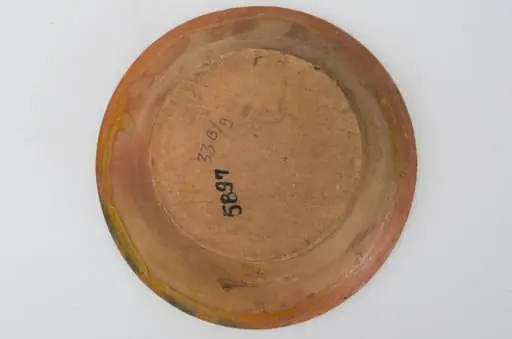
Farfurie plată, cu marginea îngustă și evazată spre interior. Pe marginea farfuriei sunt redate trei buchete de trandafiri roșii cu boboci și frunze. Grupurile florale sunt intercalate de trei boboci de trandafir. Decorul central reprezintă un buchet alcătuit dintr-un trandafir mare, înflorit și două fire de boboci de trandafiri. Cromatică: alb, roșu, verde.
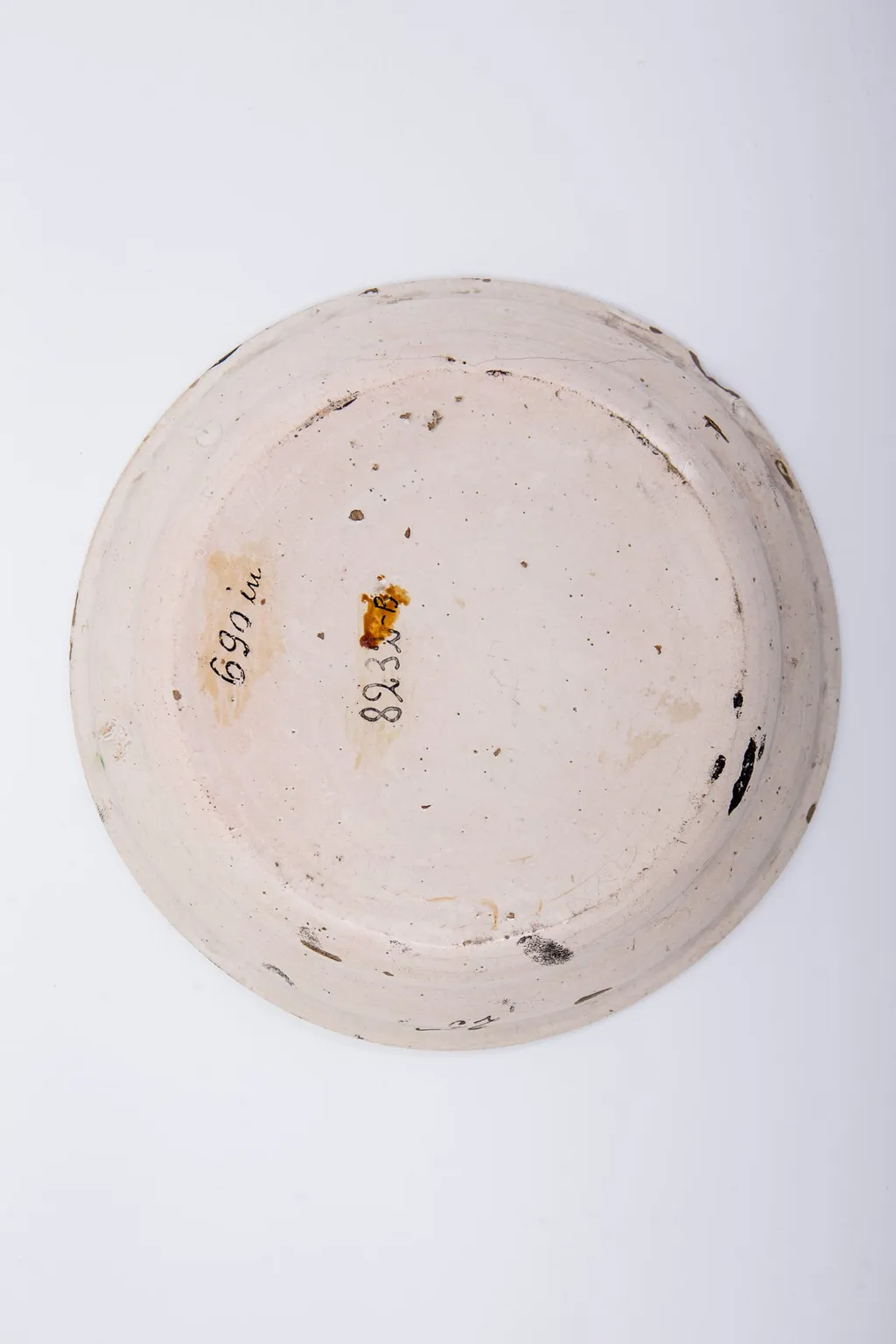
Farfurie plată, cu marginea îngustă și evazată spre interior. Pe marginea farfuriei sunt redate trei buchete de trandafiri roșii cu boboci și frunze. Grupurile florale sunt intercalate de trei boboci de trandafir. Decorul central reprezintă un buchet alcătuit dintr-un trandafir mare, înflorit și două fire de boboci de trandafiri. Cromatică: alb, roșu, verde. is a print by Unknown. It dates from 1850 and is held in the collection of the ASTRA National Museum Complex. The object is a circular ceramic plate with a narrow, inward‑curving rim.
About this work
Overview
The object is a circular ceramic plate with a narrow, inward‑curving rim. Its decorative surface features a floral motif dominated by red roses, buds and foliage, arranged in three peripheral bouquets separated by solitary buds and a central cluster composed of a large open rose flanked by two buds. The palette is limited to white background, red blossoms and green leaves.
Subject & Meaning
The composition celebrates the rose, a traditional symbol of love and beauty, presented in a symmetrical arrangement that balances three outer groups with a central focal point. The inclusion of buds alongside full flowers suggests a narrative of growth and renewal, while the stylized leaves provide a natural framing element.
Technique & Style
Executed in porcelain with a glossy glaze, the design is rendered in painted enamel, allowing the vivid reds and greens to stand out against the white ground. The narrow rim and evanescent inner edge create a subtle depth, characteristic of decorative tableware produced for domestic use in the 19th‑century European tradition.
History & Provenance
The plate bears faint alphanumeric markings on its reverse side, likely factory stamps or inventory numbers, though they are illegible. No artist’s signature is present, and the piece is attributed to an unknown maker. Its provenance is limited to museum acquisition records, with no documented ownership prior to that.
Context
Floral ornamentation was a common decorative theme for functional ceramics, especially in the domestic markets of Central and Eastern Europe, where porcelain factories produced richly painted table settings for middle‑class households. The use of roses aligns with contemporary tastes for naturalistic yet stylized motifs.
Legacy
While the plate’s creator remains unidentified, its preservation illustrates the durability of glazed porcelain and the enduring appeal of floral decoration in everyday objects. The piece contributes to the broader understanding of mass‑produced decorative ceramics and their role in 19th‑century household aesthetics.
Artist & collection

 Domestic Scene
 Giacomo and Cardinal Marco, investing Andrea, Abbot of San Zeno, with his Benefice
 The Nymph of Fontainebleau
 Portrait of a Woman
 Madonna and Child with Saints in the Enclosed Garden
 Venus and Minerva
 Family Group of Four on Sofa
 Wall painting from Room H of the Villa of P. Fannius Synistor at Boscoreale
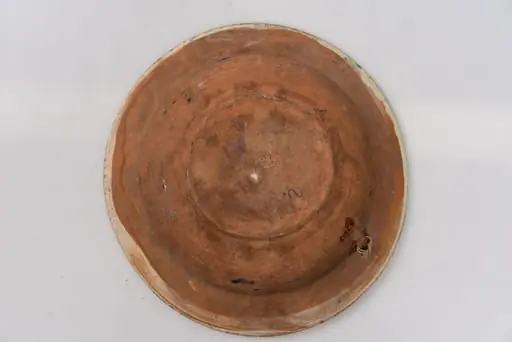 Farfurie adâncă, cu buza dreaptă, evazată; este angobată pe suprafața interioară cu un strat de humă albă, peste care este pictat cu pensula decorul monocromatic format din motive vegetale și florale stilizate: registrul decorativ central de pe fundul farfuriei conține o tulpină cu cinci flori de lalea, o floare centrală cu patru petale rotunde și frunze. Registrul decorativ marginal de pe buza farfuriei, încadrat între două linii circulare ondulate ușor, este format dintr-un șir continuu de motive formate dintr-o linie spiralată de formă ovală. Suprafața ornamentată a farfuriei este acoperită cu un strat de smalț transparent. Cromatica: alb, albastru.
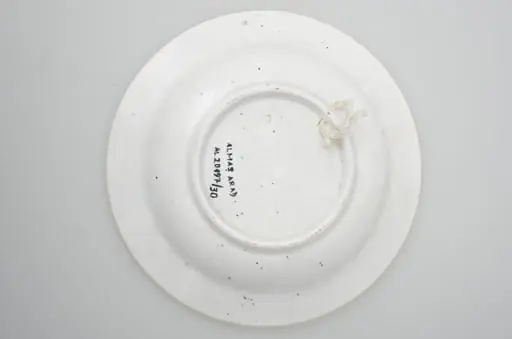 Farfurie din porțelan, de formă tronconică, întrebuințată în gospodărie la decorarea pereților casei. În interior se identifică un decor fitomorf, motive florale și vegetale, precum și un decor geometric. Motive florare sunt dispuse în trei registre pe margine, încadrate de un cerc negru; în centru este decorat cu trei flori albastre cu frunze verzi. Cromatică: fond: alb; motive: albastru, negru, verde.
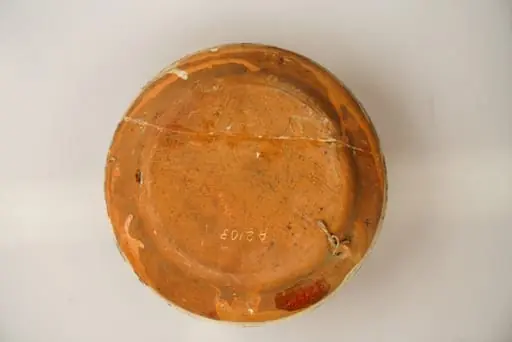 Farfurie de formă aplatizată, cu buza evazată și ușor concavă spre interior; este angobată pe suprafața interioară cu un strat de humă albă peste care este pictat cu pensula și cu cornul decorul format din motive geometrice, dispuse pe întreaga suprafață a piesei: linii groase verzi sub formă de semicerc, cu contur maro; grupuri de linii paralele crescătoare și descrescătoare dispuse pe buză sub formă de triunghi cu vârful orientat spre interior; linii circulare simple și ondulate; linii drepte groase de culoare verde cu contur maro; elemente vegetale geometrizate (frunze?) verzi sau cu linii mici maro în interior; motive sugerând mici flori cu petale rotunde. Suprafața ornamentată a farfuriei este acoperită cu un strat de smalț transparent. Cromatica: alb, albastru.
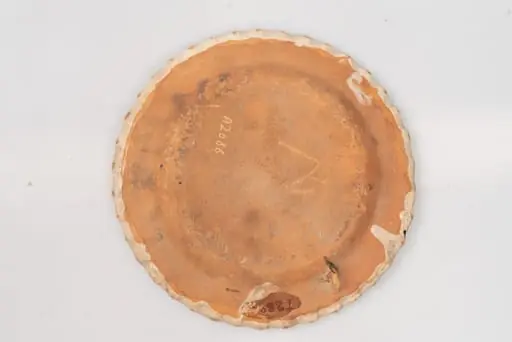 Farfurie de formă aplatizată, cu muchia buzei ușor ondulată; este angobată pe suprafața interioară cu un strat de humă albă peste care este pictat cu cornul și cu pensula decorul monocromatic format din motive florale stilizate și geometrice: pe fundul farfuriei este pictată o tulpină cu frunze și trei flori de crin, ce au centrul format din linii hașurate intersectat. Buza farfuriei este decorată cu un șir continuu de frunze duble. Bordura interioară a farfuriei este marcată cu o linie circulară ușor ondulată iar muchia buzei cu o dungă albastră. Suprafața ornamentată a farfuriei este acoperită cu un strat de smalț transparent. Cromatica: alb, albastru.
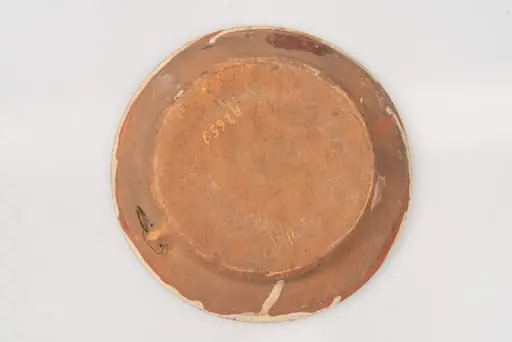 Farfurie de formă aplatizată, angobată cu humă albă pe suprafața interioară și decorată prin pictare cu cornul, cu motive geometrice și vegetale geometrizate, ce acoperă întreaga suprafață a piesei: registrul central de pe fundul farfuriei este decorat cu motivul brăduțului, flori de crin geometrizate și elemente vegetale (vrejuri), iar buza farfuriei cu două linii circulare în formă de zig-zag, intersectate, completate cu puncte albastre mari. Bordura interioară a farfuriei și muchia buzei sunt decorate cu linii circulare simple și linii circulare ondulate. Cromatica: alb, albastru. Suprafața ornamentată a farfuriei este acoperită cu un strat de smalț transparent.
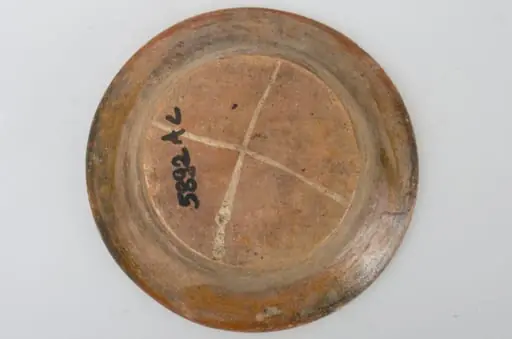 Farfurie de formă tronconică, adâncită, cu buza evazată. Este smălțuită în interior și la exterior (buza). Pe fund are o marcă în formă de ”X” de culoare albă. Pe alocuri smalțul este sărit. Cromatică: cărămiziu, verzui, alb.
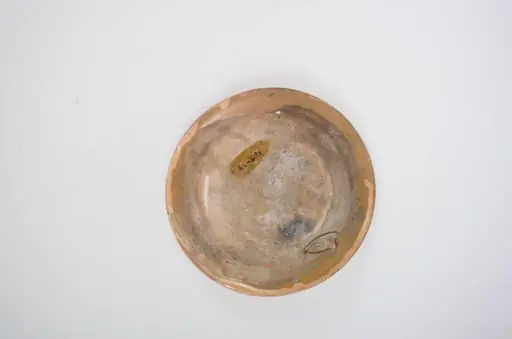 Blid de formă tronconică cu buza îngustă, smălțuit, cu decor floral stilizat amplasat pe fund și motive geometrice formate din două cercuri poziționate la baza buzei și perimetral, la partea interioară a fundului. Cromatică: fond: cărămiziu; decor: alb; verde; maro deschis.
 Formă tronconică, adâncită, cu buza evazată; este smălțuit în interior și exterior (buza); este decorat pe margine cu motive geometrice dispuse în 4 registre a câte 3 linii albe; cromatică: cărămiziu, verzui, alb.