Artwork
Farfurie semi-adâncă, cu fund larg, buză evazată și muchia buzei ondulată. Piesa este angobată pe suprafața interioară cu un strat de humă albă peste care este pictat cu pensula și cu cornul decorul monocromatic format din motive vegetale stilizate și geometrice: registrul central de pe fundul farfuriei conține un cerc umplut cu linii hașurate intersectat, linii în fomă de V, decorate pe exterior cu mici linii paralele, și cinci motive formate din linii hașurate intersectat. Buza farfuriei este decorată cu un șir continuu de frunze duble cu motive punctate între ele (linii). Muchia buzei este marcată cu o dungă albastră. Suprafața ornamentată a farfuriei este acoperită cu un strat de smalț transparent. Cromatica: alb, albastru.
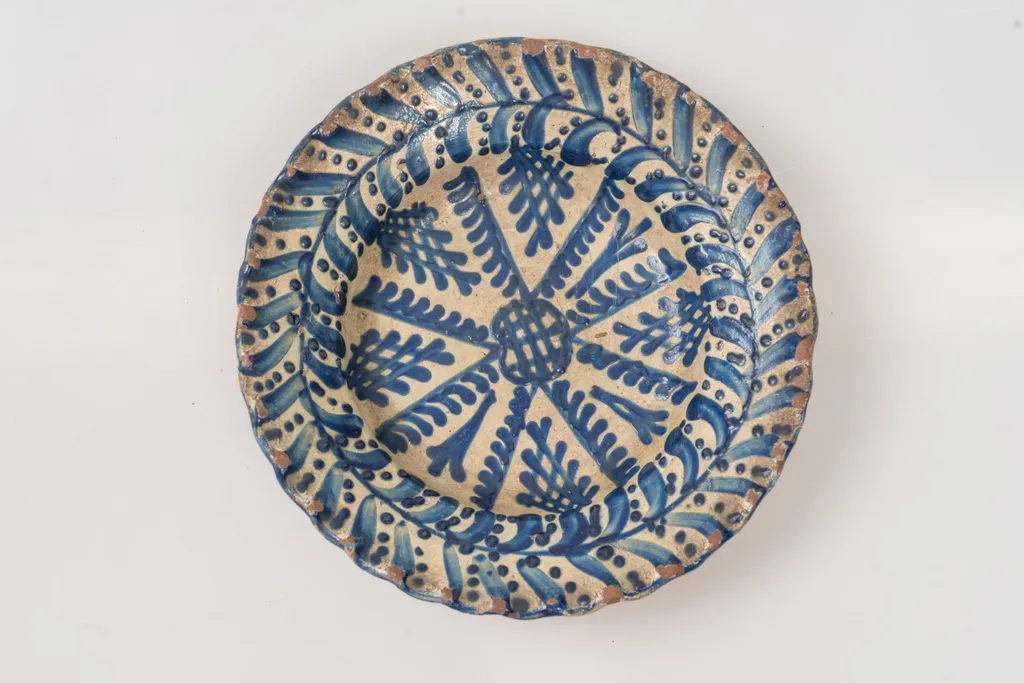
Farfurie semi-adâncă, cu fund larg, buză evazată și muchia buzei ondulată. Piesa este angobată pe suprafața interioară cu un strat de humă albă peste care este pictat cu pensula și cu cornul decorul monocromatic format din motive vegetale stilizate și geometrice: registrul central de pe fundul farfuriei conține un cerc umplut cu linii hașurate intersectat, linii în fomă de V, decorate pe exterior cu mici linii paralele, și cinci motive formate din linii hașurate intersectat. Buza farfuriei este decorată cu un șir continuu de frunze duble cu motive punctate între ele (linii). Muchia buzei este marcată cu o dungă albastră. Suprafața ornamentată a farfuriei este acoperită cu un strat de smalț transparent. Cromatica: alb, albastru. is a photography by Unknown. It dates from 1850 and is held in the collection of the Ethnographical Museum of Transylvania. This shallow ceramic plate features a broad, flared rim and a wide, gently curved interior.
About this work
Overview
The design is executed in monochrome blue, using a brush and a hollow reed tool known as a *cornu*, producing sharp, flat lines and precise geometric forms.
This shallow ceramic plate features a broad, flared rim and a wide, gently curved interior. Its surface is coated with a white slip and finished with a transparent glaze, enhancing the clarity of the painted decoration. The design is executed in monochrome blue, using a brush and a hollow reed tool known as a *cornu*, producing sharp, flat lines and precise geometric forms. The overall form and decoration reflect a tradition of handcrafted pottery with emphasis on rhythmic, repetitive motifs.
Subject & Meaning
The decoration centers on stylized vegetal and geometric patterns, including intersecting hatched lines, V-shaped motifs, and five distinct hatched forms arranged around a central circle. Along the rim, paired leaf shapes alternate with dotted lines, suggesting a connection to natural forms without direct representation. These patterns likely carried symbolic or cultural significance, possibly tied to fertility, protection, or seasonal cycles, though their exact meaning remains interpretive within the broader context of regional ceramic traditions.
Technique & Style
The plate was painted using a brush and a *cornu*, a hollow reed tool that enabled fine, consistent lines. The blue pigment was applied over a white slip, creating high contrast and clarity. Dots and parallel lines were added to define texture and rhythm, while the flared rim’s edge was accented with a thin blue band. The flat, unmodulated color and precise repetition indicate a methodical, skilled hand, prioritizing pattern over naturalism and emphasizing harmony through repetition.
History & Provenance
This piece belongs to a group of ceramics produced in the Carpathian region, likely during the late medieval or early modern period. Similar vessels have been recovered from archaeological contexts in Romania and neighboring areas, often associated with domestic or ritual use. The consistent use of white slip and blue decoration links it to broader regional traditions, though the exact workshop or community of origin remains unidentified.
Context
The plate’s design aligns with a wider corpus of folk ceramics from Eastern Europe, where geometric and vegetal motifs were commonly used to decorate utilitarian ware. The monochrome palette and hand-painted execution reflect a local aesthetic that valued clarity and rhythm over elaborate polychromy. Such objects were likely made for everyday use, yet their ornamentation suggests care and cultural investment in domestic material culture.
Legacy
This ceramic plate exemplifies a regional craft tradition that persisted for centuries, influencing later folk pottery in the Carpathians. Its preservation in museum collections underscores its value as a record of pre-industrial craftsmanship. Contemporary artisans and researchers continue to study its techniques and motifs, recognizing its role in sustaining visual continuity within rural ceramic practices.
Artist & collection
Museum
Ethnographical Museum of Transylvania
Continue through works from the same source collection.
 Domestic Scene
 Giacomo and Cardinal Marco, investing Andrea, Abbot of San Zeno, with his Benefice
 The Nymph of Fontainebleau
 Portrait of a Woman
 Madonna and Child with Saints in the Enclosed Garden
 Venus and Minerva
 Family Group of Four on Sofa
 Wall painting from Room H of the Villa of P. Fannius Synistor at Boscoreale
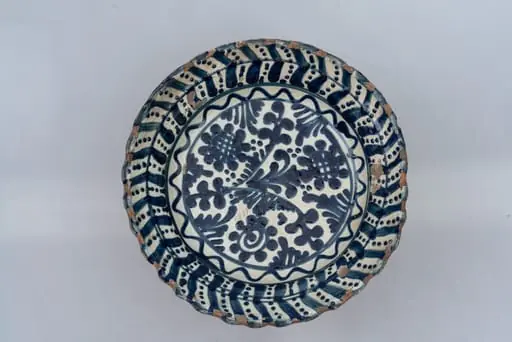 Farfurie semi-adâncă, cu fund larg, buză evazată și muchia buzei ondulată. Este acoperită pe suprafața interioară cu un strat de angobă albă peste care este pictat cu pensula și cu cornul decorul monocromatic format din motive geometrice și florale stilizate: registrul central de pe fundul farfuriei conține un buchet format din trei flori cu petale rotunde și mijlocul umplut cu linii hașurate intersectat, una dintre flori având mijlocul dintr-o linie spiralată, și din frunze; acest registru este încadrat între două linii circulare simple și o linie circulară ondulată și este completat cu șase motive formate din grupuri de linii crescătoare și descrescătoare, dispuse sub formă de triunghi și cu puncte. Registrul decorativ marginal de pe buza farfuriei este decorat cu un șir continuu de frunze duble între care se găsesc motive punctate (linii). Muchia buzei este marcată cu o dungă albastră. Suprafața ornamentată a farfuriei este acoperită cu un strat de smalț transparent. Cromatica: alb, albastru.
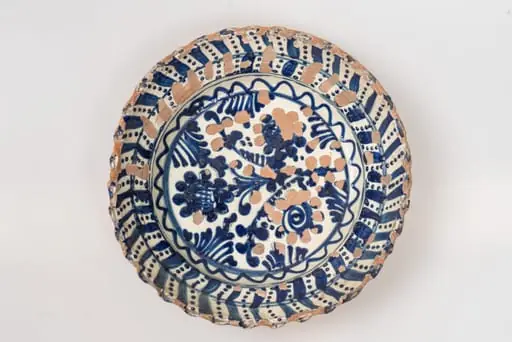 Farfurie de formă semi-adâncă, cu buză lată, evazată și muchia buzei ondulată. Farfuria este angobată pe fața interioară cu un strat de humă albă, peste care este pictat cu cornul și cu pensula decorul monocromatic, format din motive florale și fitomorfe stilizate (tulpină cu trei flori și frunze, reprezentate pe centrul farfuriei și un șir continuu de frunze duble între linii punctate, pe buza farfuriei) și geometrice (linii simple circulare, linie ondulată dispusă sub formă de cerc, puncte, grupuri de linii paralele, crescătoare și descrescătoare ca mărime, linii spiralate, linii hașurate). Buza farfuriei este marcată cu o dungă de culoare albastră. Cromatica: alb, albastru. Farfuria este acoperită pe fața decorată cu un strat de smalț transparent.
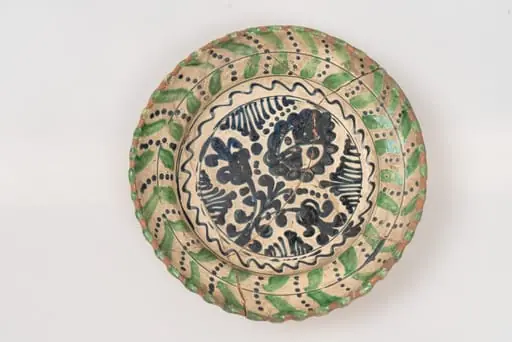 Farfurie de formă semi-adâncă, cu buză evazată și muchia buzei ondulată. Farfuria este angobată pe fața interioară cu un strat de humă albă, peste care este pictat cu cornul și cu pensula decorul format din motive florale și fitomorfe stilizate și din motive geometrice: în registrul central de pe fundul farfuriei este pictată o tulpină cu trei flori și frunze mici de culoare albastră, înscrisă într-un cerc dublu ce are la mijloc o linie ondulată circulară, de culoare albastră. Acest registru este completat cu motive formate din linii albastre crescătoare și descrescătoare dispuse în formă de triunghi. Buza farfuriei este decorată cu un șir continuu de frunze duble verzi între linii punctate de culoare albastră. Buza farfuriei este marcată cu o dungă de culoare verde. Cromatica: alb, albastru, verde. Farfuria este acoperită pe fața decorată cu un strat de smalț transparent.
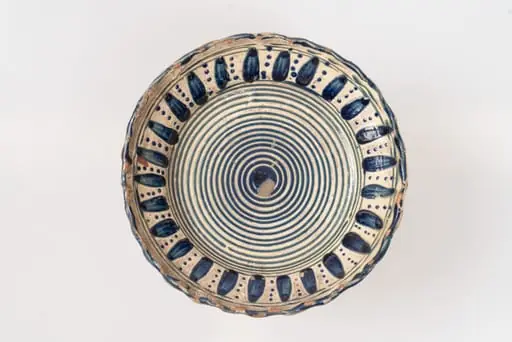 Farfurie de formă semi-adâncă, cu buză lată, evazată și muchia buzei ușor ondulată. Farfuria este angobată pe fața interioară cu un strat de humă albă, peste care este pictat cu cornul și cu pensula decorul monocromatic, format din motive fitomorfe stilizate (un șir de frunze simple, separate de câte o linie punctată - pe buza farfuriei) și geometrice (o linie spiralată amplă, ce pornește din centrul farfuriei și acoperă întreaga suprafață centrală a acesteia; linii simple circulare, puncte - pe buza farfuriei). Muchia buzei este marcată cu o dungă de culoare albastră. Cromatica: alb, albastru. Farfuria este acoperită pe fața decorată cu un strat de smalț transparent.
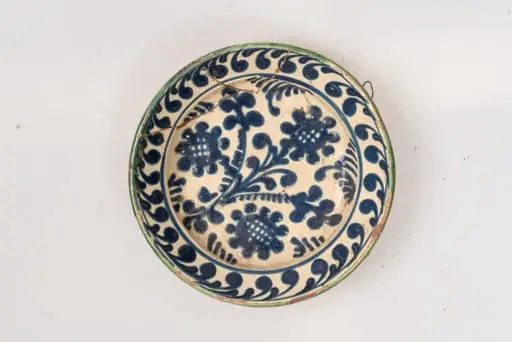 Farfurie de formă semi-adâncă, cu fund larg și buză evazată. Farfuria este angobată pe fața interioară cu un strat de humă albă, peste care este pictat cu cornul și cu pensula decorul format din motive florale și fitomorfe stilizate: o tulpină cu trei flori rotunde, cu mijlocul umplut cu linii hașurate intersectat, și frunze, reprezentate central pe fundul farfuriei. Buza farfuriei este decorată cu un șir continuu format din două tipuri de linii sub formă de virgulă. Bordura interioară a farfuriei este marcată cu o dungă de culoare albastră iar muchia buzei cu o dungă verde. Cromatica: alb, albastru, verde. Farfuria este acoperită pe fața ornamentată cu un strat de smalț transparent.
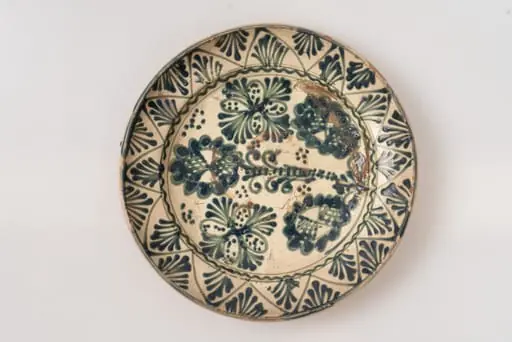 Farfurie de formă semi-adâncă, cu buză lată, răsfrântă; este angobată pe fața interioară cu un strat de humă albă, peste care este pictat cu cornul decorul monocromatic, format din motive florale și fitomorfe foarte stilizate (tulpină cu cinci flori și frunze, reprezentate pe centrul farfuriei) și geometrice (o linie în formă de zig-zag, pe toată lungimea buzei, completată cu motive formate din linii verticale, dispuse în formă de triunghi; linii circulare simple și linie circulară ondulată ce marchează bordura interioară a farfuriei; puncte, linii hașurate). Buza farfuriei este marcată cu o dungă de culoare albastră. Cromatica: alb, albastru. Farfuria este acoperită pe fața decorată cu un strat de smalț transparent.
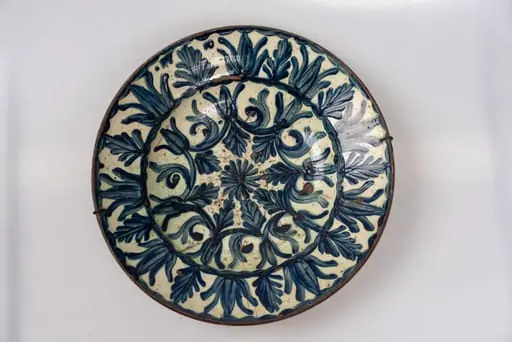 Farfurie semi-adâncă, cu fund îngust și buza lată, evazată. Piesa este acoperită pe suprafața interioară cu un strat de angobă albă peste care este pictat cu pensula decorul monocromatic, format din motive florale și vegetale stilizate ce acoperă întreaga suprafață a piesei: opt lalele împreună cu vrejuri și frunze așezate în formă de stea, acoperă zona centrală a farfuriei, iar buza acesteia conține un șir continuu format din flori de lalea intercalate cu frunze. Bordura interioară a farfuriei și muchia buzei sunt marcate de câte o linie albastră ușor ondulată. Cromatica: alb, albastru. Suprafața ornamentată a farfuriei este acoperită cu un strat de smalț transparent.
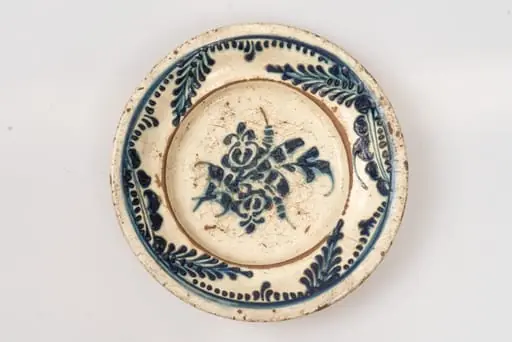 Farfurie semi-adâncă, cu fund larg și buză evazată; este acoperită pe fața interioară cu un strat de angobă albă, peste care este pictat cu cornul decorul monocromatic format din motive vegetale și florale stilizate: un buchet cu două flori și frunze, ce formează registrul decorativ central, de pe fundul farfuriei, iar buza acesteia este decorată cu patru motive vegetale (frunze) formate din linii în formă de brăduț, completate cu motive formate din puncte și șiruri de linii mici, sub formă de virgulă. Marginea buzei este marcată de o linie albastră. Cromatica: alb, albastru. Fața ornamentată a farfuriei este acoperită cu un strat de smalț transparent.
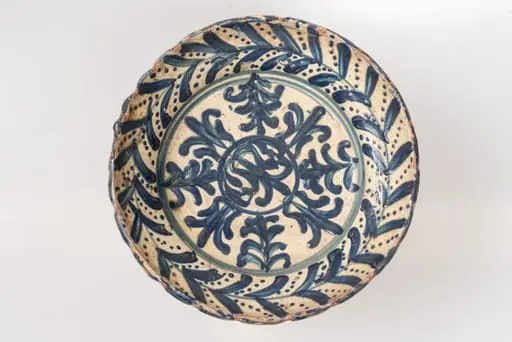 Farfurie de formă semi-adâncă, cu buză lată, evazată și muchia buzei ușor ondulată (mici alveole). Farfuria este angobată pe fața interioară cu un strat de humă albă, peste care este pictat cu cornul și cu pensula decorul monocromatic, format din motive florale și vegetale stilizate (o floare de lalea, înscrisă într-un cerc, pe exteriorul căruia se desfășoară un decor format din patru flori de lalea alternând cu patru brăduți - motive reprezentate central, pe fundul farfuriei, și un șir continuu de frunze duble între linii punctate - pe buza farfuriei). Bordura interioară a farfuriei este marcată de două linii circulare albastre iar buza farfuriei de o dungă, de asemena de culoare albastră. Cromatica: alb, albastru. Farfuria este acoperită pe fața ornamentată cu un strat de smalț transparent.
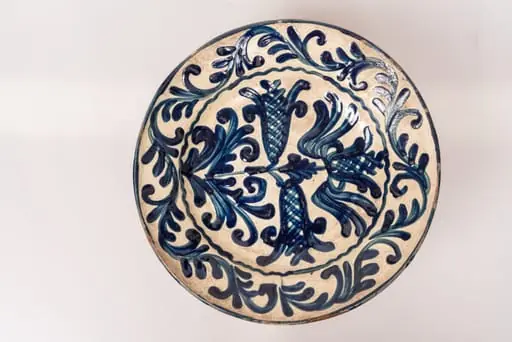 Farfurie semi-adâncă, cu buză răsfrântă; piesa este modelată la roata olarului și este angobată pe fața interioară cu humă albă. Decorul monocromatic este pictat cu pensula și se compune din motive decorative florale și vegetale stilizate (o floare de crin cu doi boboci și cu frunze, plasate central pe fundul farfuriei; buza farfuriei este acoperită cu un șir continuu de motive vegetale). Muchia buzei este marcată de o linie albastră iar bordura interioară a farfuriei de o linie vălurită. Cromatica: alb, albastru. Fața ornamentată a farfuriei este acoperită cu un strat de smalț transparent.
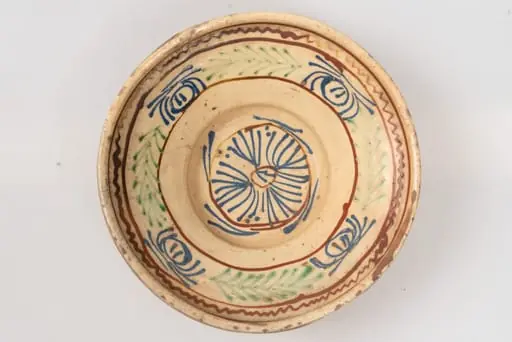 Farfurie adâncă, de tip castron, cu fund îngust, corp tronconic și buză dreaptă, verticală; este angobată pe fața interioară și pe suprafața exterioară a buzei cu un strat de humă albă. Este decorată prin pictare cu cornul cu motive florale și fitomorfe geometrizate: pe fundul farfuriei este pictată o floare cu petalele din linii subțiri albastre și centrul marcat cu un cerc mic maro, încadrată într-un cerc de asemenea de culoare maro. Peretele farfuriei este decorat cu patru grupuri de motive formate din linii verzi, sugerând o ramură cu frunze, intercalate de patru flori geometrizate, realizate din linii albastre. Decorul este completat cu trei linii circulare simple și o linie circulară ondulată. Suprafața ornamentată a farfuriei este acoperită cu un strat de smalț transparent. Cromatica: alb, verde, albastru, maro.