Artwork
Figura centrală a icoanei este Iisus stând în fața mormântului sărmanului Lazăr, pe care îl învie, ridicând semnificativ , dreapta cu degetele strânse. La picioarele lui Iisus, Lazăr stă întins în mormânt cu corpul acoperit de fașele obișnuite pentru stilul de înmormântare, capul ridicat trezindu-se, mâna stângă adusă spre bărbie. În stânga lui Iisus, se remarcă o figură bărbătească luând în brațe un copil, reprezentat din spate, simbolizând probabil, intrarea în sânul lui Avram al sărmanului Lazăr, semn al intrării în rândul drepților (sufletul fiind reprezentat sub formă de copil). În dreapta lui Iisus un apostol. Cromatica: bleu, roșu, galben, verde. În partea superioară e scris „Învierea lui Lazăr”. Pe spate, icoana este întărită cu o placă din lemn de esență moale.
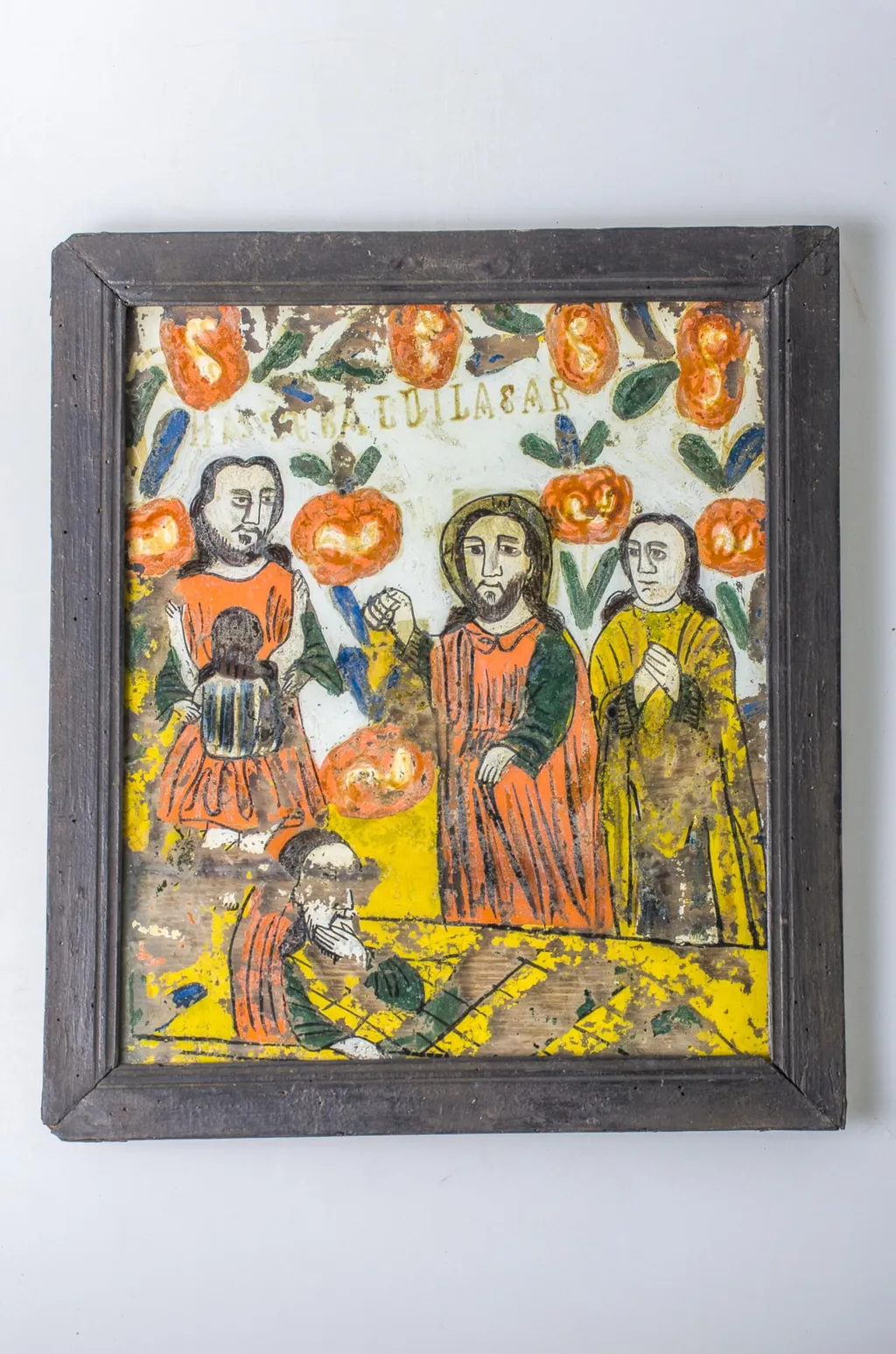
Figura centrală a icoanei este Iisus stând în fața mormântului sărmanului Lazăr, pe care îl învie, ridicând semnificativ , dreapta cu degetele strânse. La picioarele lui Iisus, Lazăr stă întins în mormânt cu corpul acoperit de fașele obișnuite pentru stilul de înmormântare, capul ridicat trezindu-se, mâna stângă adusă spre bărbie. În stânga lui Iisus, se remarcă o figură bărbătească luând în brațe un copil, reprezentat din spate, simbolizând probabil, intrarea în sânul lui Avram al sărmanului Lazăr, semn al intrării în rândul drepților (sufletul fiind reprezentat sub formă de copil). În dreapta lui Iisus un apostol. Cromatica: bleu, roșu, galben, verde. În partea superioară e scris „Învierea lui Lazăr”. Pe spate, icoana este întărită cu o placă din lemn de esență moale. is a drawing by Unknown. It dates from 1850 and is held in the collection of the ASTRA National Museum Complex. This icon depicts the biblical resurrection of Lazarus, a moment from the Gospel of John in which Christ restores life to a deceased man.
About this work
Overview
This icon depicts the biblical resurrection of Lazarus, a moment from the Gospel of John in which Christ restores life to a deceased man.
This icon depicts the biblical resurrection of Lazarus, a moment from the Gospel of John in which Christ restores life to a deceased man. The central figures are Jesus and Lazarus, positioned before a tomb, with Jesus raising his right hand in an act of divine command. The scene is framed by inscriptions and flanked by two additional figures, one holding a child and another likely an apostle, reinforcing the theological weight of the event.
Subject & Meaning
The resurrection of Lazarus symbolizes Christ’s power over death and prefigures his own resurrection. The child held by the figure to Jesus’ left is interpreted as Lazarus’s soul, depicted in infant form to signify entry into the bosom of Abraham—a traditional representation of the righteous dead. Lazarus, still wrapped in burial cloths, turns toward life, his posture indicating awakening under divine will.
Technique & Style
Rendered in tempera or similar medium on wood, the icon employs flat, symbolic forms typical of Eastern Orthodox tradition. Colors—blue, red, yellow, and green—are used expressively rather than naturallyistically, with gold lettering above emphasizing the sacred text. The figures are arranged hierarchically, with Christ as the largest and most central, his gesture commanding attention without dramatic motion.
History & Provenance
The icon’s wooden backing, made of soft timber, suggests it was crafted for devotional use, likely in a domestic or small ecclesiastical setting. Its construction reflects regional practices in Eastern Europe, where icons were often reinforced for durability. The presence of the Romanian inscription 'Învierea lui Lazăr' points to a Moldavian or Wallachian origin, possibly from the 18th or early 19th century.
Context
This icon belongs to a tradition of religious imagery that served both liturgical and educational purposes in Orthodox communities. Scenes of Christ’s miracles were commonly displayed to reinforce faith in divine intervention. The inclusion of symbolic elements—such as the child representing the soul—aligns with theological interpretations common in Byzantine and post-Byzantine iconography across the Balkans.
Legacy
Icons like this one preserve a visual language rooted in medieval theology and regional craftsmanship. Though not attributed to a known artist, they remain vital to the spiritual and cultural heritage of Eastern European Christianity. Their continued preservation in museums and private collections underscores their role as objects of both devotion and historical continuity.
Artist & collection

 Domestic Scene
 Giacomo and Cardinal Marco, investing Andrea, Abbot of San Zeno, with his Benefice
 The Nymph of Fontainebleau
 Portrait of a Woman
 Madonna and Child with Saints in the Enclosed Garden
 Venus and Minerva
 Family Group of Four on Sofa
 Wall painting from Room H of the Villa of P. Fannius Synistor at Boscoreale
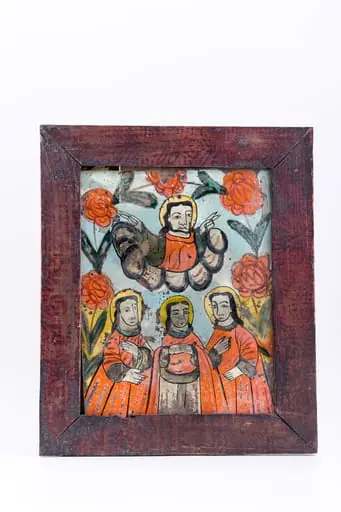 Icoana reprezintă unul dintre praznicele împărătești foarte importante, Înălțarea Domnului Iisus Hristos, care are loc la 40 de zile după Învierea Domnului Iisus Hristos. Icoana este împărțită în două registre, printr-o mandorlă de nouri rotunzi albi-gri. În registrul superior, deasupra mandorlei, este Mântuitorul Iisus Hristos Înălțat la Ceruri și Binecuvântând, spunând: Eu sunt cu voi și nimeni împotriva voastră! În registrul inferior, pe pământ este Maica Domnului, cu doi dintre cei 12 ucenici, prezenți la Înălțare. Întreaga compoziție este încadrată de un chenar decorativ fitomorf, format dintr-o ghirlandă de ruje - 5 trandafiri roșii, cu frunze verzi. Numărul de 5 poate fi interpretat pe de o parte, cele 5 răni ale Mântuitorului Iisus Hristos, și pe de altă parte, cele 50 de zile până la Praznicul Pogorârii Duhului Sfânt - Rusaliile, Cincizecimea. Icoana este de Nicula. Cromatica este luminoasă și armonioasă: roșu vermillon, galben chihlimbar, albastru bleu-ciel, verde brad, gri, alb, negru.
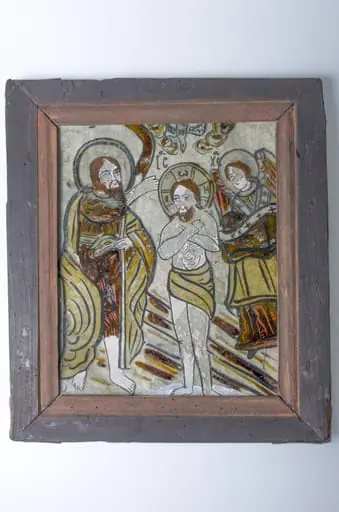 Icoana este pictată pe sticlă, având tema Botezului. Iisus se află în apa Iordanului fiind încadrat în stânga de Sfântul Ioan Botezatorul iar în dreapta de un înger cu năframa în mâini. Deasupra lui Hristos, în nori, este redat Sfântul Duh în chip de porumbel, iar dedesubt sunt înscrise în grafie chirilică prescurtarea numelui lui Iisus: „ICXC”. Pe verso-ul ramei sunt prinse scânduri subțiri din lemn pentru protecția icoanei. Cromatică: fond: gri; roșu; alb; negru; culoarea lemnului grunduit.
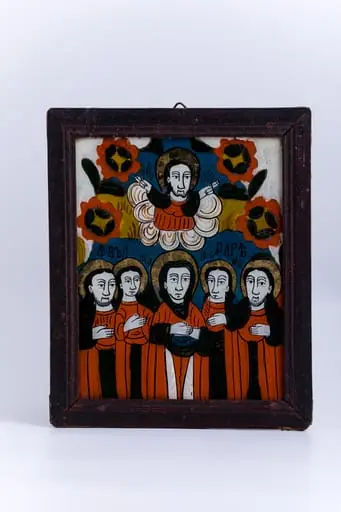 Icoana reprezintă Înălțarea Domnului Iisus Hristos, în a 40-a zi după Învierea Sa. Înălțarea are loc într-o zi de joi, asemenea ca și Cina cea de Taină, Cina Euharistiei. În registrul superior, este Mântuitorul Iisus Hristos cu mâinile ridicate în Binecuvântare și Ocrotire, fiind ridicat și Înălțat pe o mandorlă de nouri albi-gri-crem. În registrul inferior, este Maica Domnului dimpreună cu patru din cei 12 ucenici și apostoli ai Mântuitorului Iisus Hristos. Veșmintele sunt într-o combinație de roșu vermillon, gri, negru antracit. Fondul icoanei este cerul albastru cobalt-ceruleum, în registrul superior, iar în registrul mediu-lateral și inferior este un câmp luminos galben-chihlimbar. Întreaga compoziție iconografică este încadrată de un chenar decorativ fitomorf, format dintr-o ghirlandă de bujori-trandafiri - 4 ruje roșii mari. Cromatica este armonioasă și luminoasă: roșu vermillon, albastru cobalt și ceruleum, galben chihlimbar, crem-bej, gri, negru antracit, alb. Icoana este rară, datorită tematicii iconografice abordate și are o compoziție simetrică, echilibrată și armonioasă. Icoana este din Nicula.
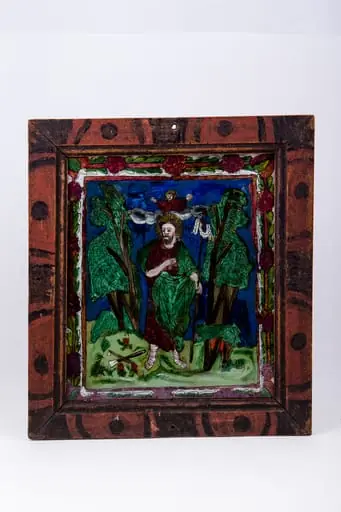 Icoana îi reprezintă împreună pe Sfântul Ioan Botezătorul și Înaintemergătorul Mântuitorului Iisus Hristos și pe Dumnezeu Tatăl. Sfântul Ioan Botezătorul este îmbrăcat într-un himation sau o sarică de păr de cămilă, încins la brâu și cu o mantie de culoare verde, și aripi albastre turcoaz-smarald de înger. Fondul este albastru cu o pădure de copaci verzi, în pustietate. Desenul este foarte sigur și detaliile realizate minuțios, trăsăturile chipurilor fiind foarte expresive și pictate cu măiestrie. Deasupra Sfântului Ioan Botezătorul este Dumnezeu-Tatăl, din deschiderea Cerurilor, cu mâinile ridicate, ocrotind, acoperind și binecuvântând. Cromatica este armonioasă, dar mai rece, și întunecată, specifică picturii Mărginimii Sibiului: verde mușchi de pădure, albastru ceruleum, acajou, brun, stacojiu, alb, negru. Inscipția din româno-chirilică se traduce Sf Ioan IC XC Iisus Hristos.
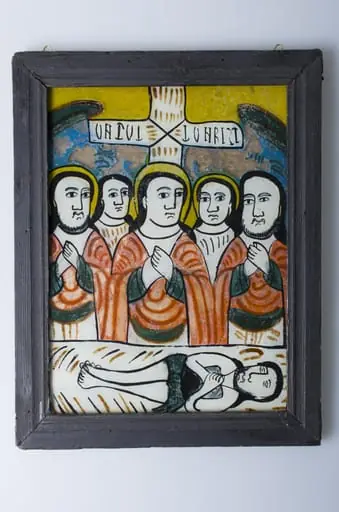 Icoana este pictată pe sticlă, având tema "Plângerea lui Iisus"; în registrul secund este ilustrat Iisus întins pe lințoliu, în jurul lui aflându-se un grup de cinci persoane, în mijlocul lor fiind reprezentată Sfânta Fecioară. Pe verso, de rama din lemn, pentru a proteja icoana, sunt prinse câteva scânduri. Rama este realizată din lemn de brad cu elemente profilate pe latura interioară, grunduită. Cromatica: alb; negru; roșu; galben; albastru; culoarea patinată a lemnului (rama).
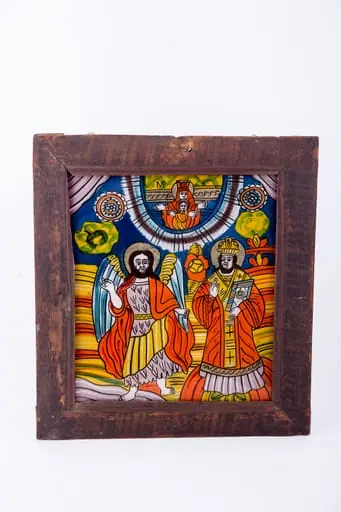 Icoana îi reprezintă pe Sfântul Ioan Botezătorul și Înaintemergătorul Mântuitorului Iisus Hristos și pe Sfântul Mare Ierarh Vasile cel Mare. Cel dintâi este simbolul pocăinței și cel de-al doilea este asprimea dezlegărilor. Sfântul Ioan Botezătorul este îmbrăcat cu o mantie roșie vermillon și ocru și un himation gri-brun sau o haină din păr de cămilă. Este desculț și are aripi de înger. Sfântul Mare Ierarh Vasile cel Mare este îmbrăcat în veșminte liturgice de arhiereu, cu mantie roșie vermillon, sacos alb-gri, epitrahil-patrafir galben, mithră mitopolitană și ține în mâna stânga Sfânta Evanghelie închisă și cu mâna dreaptă binecuvintează. În registrul superior, într-un semicerc de raze, asemenea unei mandorle de nouri, ca într-o deschidere de Ceruri, este Maica Domnului cu Pruncul Iisus Hristos în brațe, amândoi arătând Calea, ocrotind, păzind și binecuvântând. Maica Domnului este Orantă, adică rugătoare. Fondul icoanei este albastru ceruleum, pe care sunt câteva flori mari galben-verzi și doi aștri decorativi. Soarele, luna, stelele și florile adeseori se suprapun simbolic și semantic în icoanele din Țara Oltului. Cromatica este armonioasă, luminoasă și vie: roșu vermillon, galben, ocru, verde, albastru ceruleuum, alb, negru.
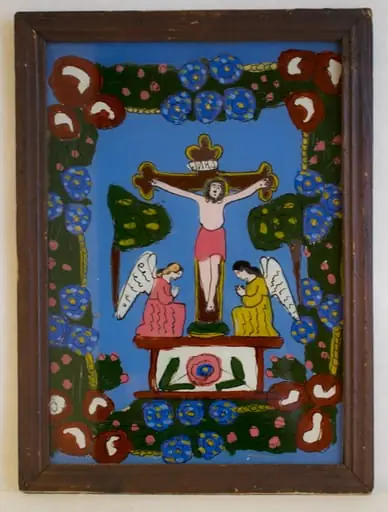 Icoana redă tema Răstignirii combinată cu Plângerea de influență apuseană, catolică. Desenul este executat probabil fără tipar, cu un instrument de scris cu cerneala sau tuș. Isus răstignit pe cruce plasată deasupra pietrei mormântului, plâns de doi îngeri cu profiluri diforme, este încadat de un chenar greoi compus din ramuri groase și elemente florale divers colorate(roz, roșu, albastru, galben). De o parte și de alta a lui Isus doi copaci cu coroane globulare, diforme..Desenul este foarte naiv. Isus are ochii deschiși, părul este bogat, mânile și picioarele diforme.Aureola se "scurge" pe lângă capul lui Isus. În jurul mijlocului veșmânt roz. Crucea treflată, pictată cu brun, chenar ocru galben și inscripția INRI pe fond alb. Îngerii au părul ondulat,(unul blond, unul brunet) sunt înveșmântați în roz și galben, veșminte de inspirație catolică.. Mormântul decorat cu o floare roz. Câmul icoanei bleu închis. Pe spate a avut lipită o hârtie mai groasă care servea drept dos. Rama este profilată, lăcuită, de culoare cafeniu închis.