Artwork
Icoana este pictată pe sticlă, având tema "Plângerea lui Iisus"; în registrul secund este ilustrat Iisus întins pe lințoliu, în jurul lui aflându-se un grup de cinci persoane, în mijlocul lor fiind reprezentată Sfânta Fecioară. Pe verso, de rama din lemn, pentru a proteja icoana, sunt prinse câteva scânduri. Rama este realizată din lemn de brad cu elemente profilate pe latura interioară, grunduită. Cromatica: alb; negru; roșu; galben; albastru; culoarea patinată a lemnului (rama).
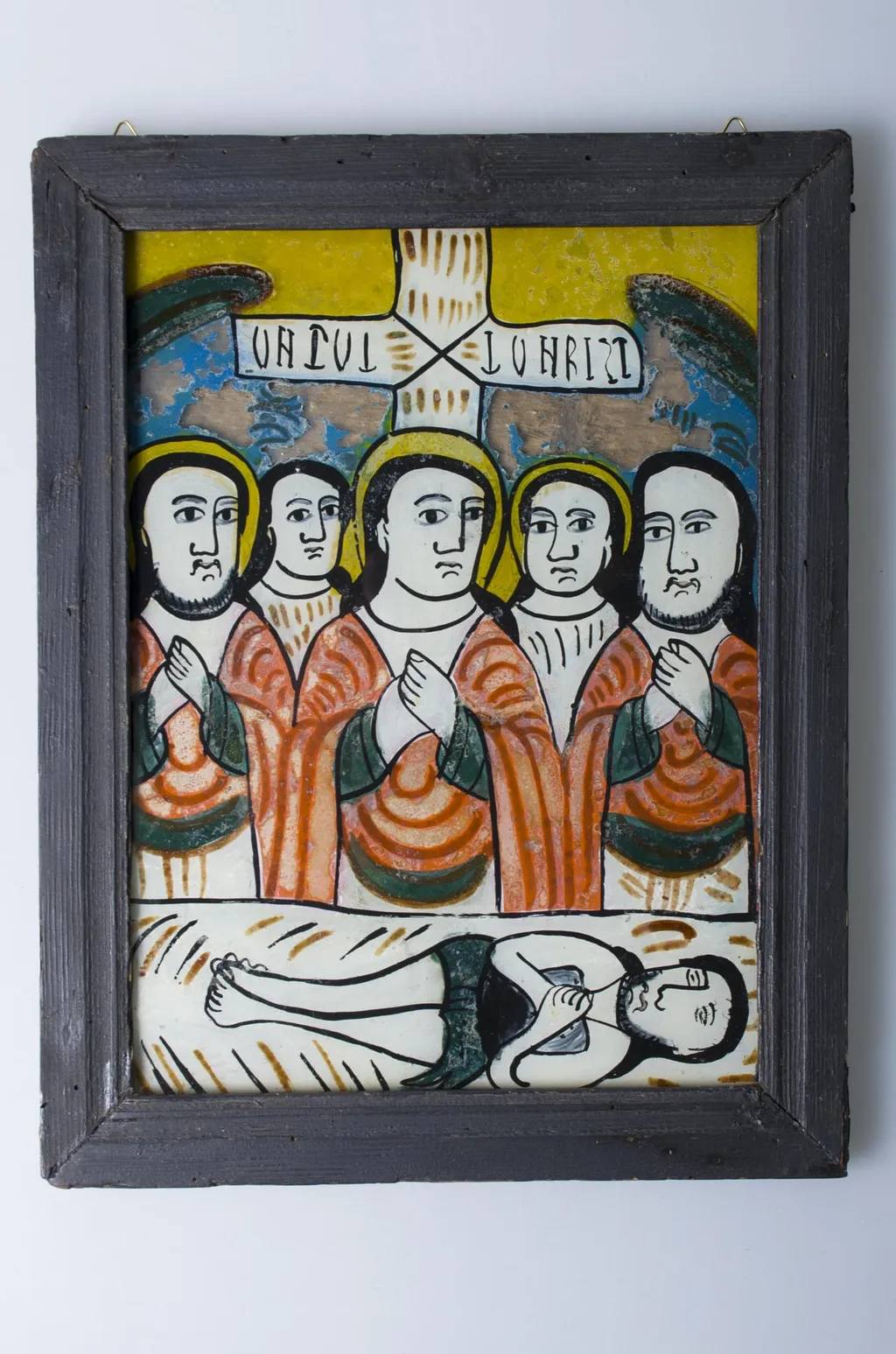
Icoana este pictată pe sticlă, având tema "Plângerea lui Iisus"; în registrul secund este ilustrat Iisus întins pe lințoliu, în jurul lui aflându-se un grup de cinci persoane, în mijlocul lor fiind reprezentată Sfânta Fecioară. Pe verso, de rama din lemn, pentru a proteja icoana, sunt prinse câteva scânduri. Rama este realizată din lemn de brad cu elemente profilate pe latura interioară, grunduită. Cromatica: alb; negru; roșu; galben; albastru; culoarea patinată a lemnului (rama). is a drawing by Unknown. It dates from 1850 and is held in the collection of the ASTRA National Museum Complex. This religious image is painted on glass, depicting the Lamentation of Christ.
About this work
Overview
The composition centers on Christ’s body laid upon a shroud, surrounded by five mourners, with the Virgin Mary positioned centrally among them.
This religious image is painted on glass, depicting the Lamentation of Christ. The composition centers on Christ’s body laid upon a shroud, surrounded by five mourners, with the Virgin Mary positioned centrally among them. The scene is framed in weathered pine wood, reinforced from behind with wooden planks for protection. The use of glass as a support is characteristic of certain Eastern European devotional traditions.
Subject & Meaning
The image illustrates Christ’s body after the Crucifixion, surrounded by mourners in a moment of quiet grief. The Virgin Mary, placed at the heart of the group, embodies sorrow and maternal devotion. The figures, with clasped hands and solemn expressions, convey reverence and mourning. The yellow background, marked by a cross and Latin inscriptions, reinforces the sacred context, linking the scene to liturgical tradition.
Technique & Style
Painted in opaque pigments on glass, the image employs a limited palette: white, black, red, yellow, blue, and the natural tone of aged wood. Figures are rendered with simplified forms and flat planes, typical of folk iconography. The lack of perspective and stylized drapery emphasize spiritual rather than naturalistic representation. The glass surface enhances luminosity, allowing light to interact with the pigments in a way unique to this medium.
History & Provenance
The work originates from a region where glass icon painting was practiced for devotional use, likely in the 18th or 19th century. The wooden frame, made of spruce and internally profiled, suggests local craftsmanship. Reinforcing planks on the reverse indicate practical care to preserve the fragile glass support. Its survival implies continuous veneration, possibly within a household or small chapel setting.
Context
Painting on glass was a regional alternative to wood panel icons, particularly in areas where materials or resources were limited. This practice persisted in rural Orthodox communities, blending Byzantine iconographic conventions with local aesthetics. The inclusion of Latin text alongside Orthodox imagery hints at cultural intersections in border regions, where religious traditions overlapped.
Legacy
This object exemplifies a modest but enduring tradition of glass iconography in Eastern Europe. Though less documented than panel paintings, such works reflect the adaptability of religious art in everyday contexts. Its preservation offers insight into how devotional practices were sustained through accessible materials, preserving spiritual expression beyond urban centers and major workshops.
Artist & collection

 Domestic Scene
 Giacomo and Cardinal Marco, investing Andrea, Abbot of San Zeno, with his Benefice
 The Nymph of Fontainebleau
 Portrait of a Woman
 Madonna and Child with Saints in the Enclosed Garden
 Venus and Minerva
 Family Group of Four on Sofa
 Wall painting from Room H of the Villa of P. Fannius Synistor at Boscoreale
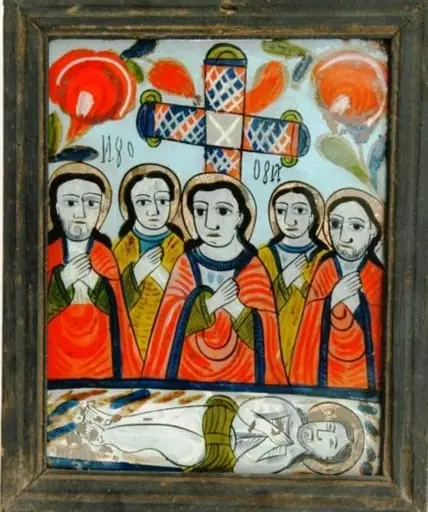 Plângerea lui Iisus Hristos (Prohodul)
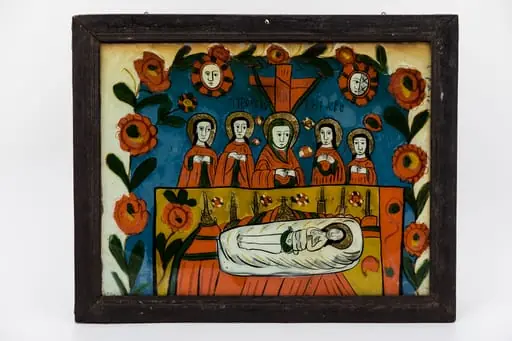 Icoana reprezintă Punerea în mormânt a Mântuitorului Iisus Hristos. Prohodul Domnului. Trupul Mântuitorului Iisus Hristos, fiind coborât de pe cruce, este învelit în țesătura giulgiului alb-gri, cu fire diafane galbene de lumină, amintind de Lumina Învierii. Maica Domnului împreună cu Sfinții Iosif din Arimateea, Nicodim și două femei mironosițe aducătoare de mir țin în brațe trupul Mântuitorului. Compozițional se creează astfel o imagine concentrică de corabie, cu Crucea Răstignirii ca și catarg, corabia prefigurând Biserica. Giulgiul și îmbrățișarea celor apropiați, uniți întru dragoste și suferință, reprezintă axa orizontală perpendiculară pe Cruce. Compoziția este echilibrată, simetrică și circulară. Maica Domnului este îmbrăcată în veșmânt cu maforiom roșu vermillon, cu sacos roșu vermillon și interiorul căptușit cu verde văratic. Fondul icoanei este cerul albastru ceruleum-cobalt, în registrul superior și de mijloc și un spațiu de galben-chihlmbar, în registrul inferior, în jurul mormântului Mântuitorului Iisus Hristos. Întreaga compoziție iconografică este încadrată de un chenar decorativ geometrizant alb, dublat de un chenar fitomorf, format dintr-o ghirlandă de 10-12 ruje roșii vermillon, cu interiorul galben-verde. În ghirlanda de ruje, sunt intercalate cele două elemente astrale martore: Soarele și Luna. Simetric și armonios, sunt 6 sfeșnice cu lumânări arzânde, lângă Trupul Mântuitorului Iisus Hristos, învăluit în giulgiu. Cromatica este armonioasă și luminos-pastelată: roșu vermillon, albastru cobalt, ceruleum, verde văratic-forest, galben chihlimbar, alb și negru. Inscripția din româno-chirilică se traduce Îngroparea Lui IC XC Iisus Hristos. Icoana este din Țara Oltului, Șcheii Brașovului.
 Icoaorat
 Icoaun o
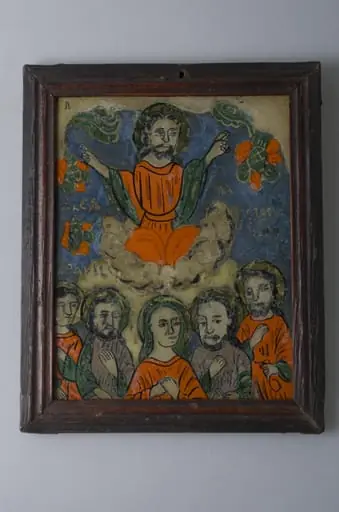 În registrul superior central, este reprezentat Iisus cu brațele larg deschise și binecuvântând, plutind pe norii slavei. În registrul inferior este redată central Fecioara Maria încadrată de grupul apostolilor, în dreapta ei Sfântul Petru cu cheia în mână, alături de un alt sfânt apostol, în stânga ei sfinții Pavel și Ioan. În registrul superior, de o parte și de cealaltă a lui Iisus este redat pe fundalul albastru elemente florale. Icoana are o ramă din lemn de brad cu elemente profilate pe latura interioară, grunduită. Cromatică: albastru; roșu pal; verde; oliv; negru și foiță de aur.
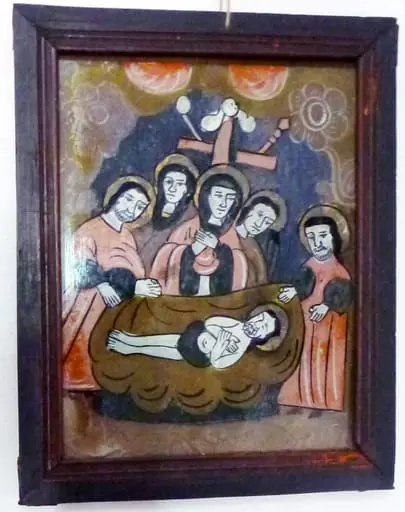 Prohodul Domnului
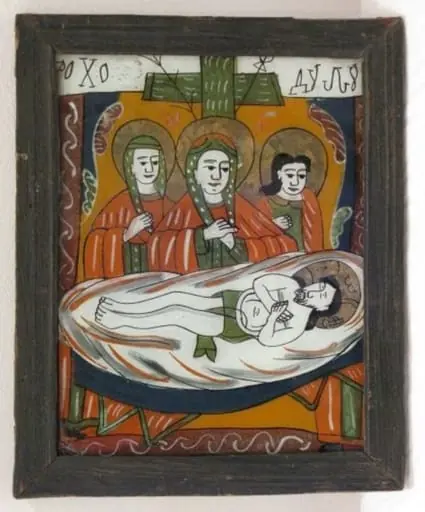 Plângerea lui Iisus