Artwork
Fish woman
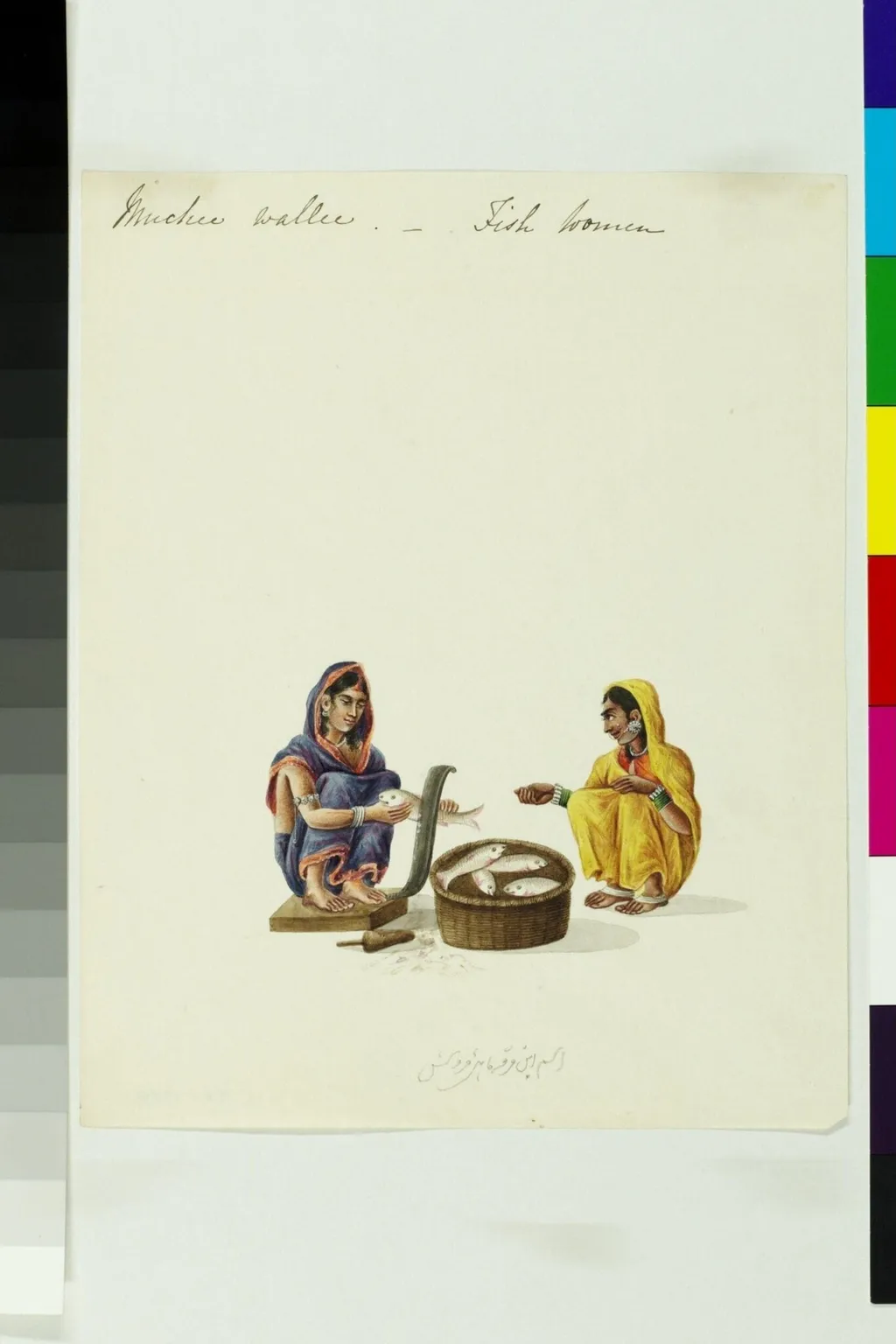
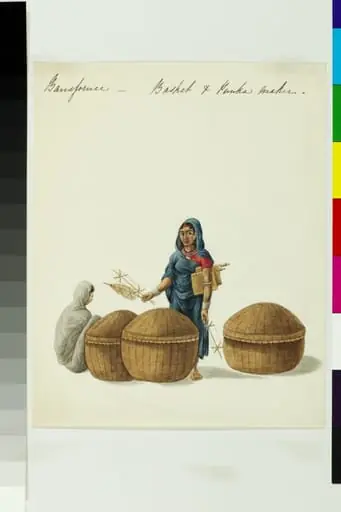
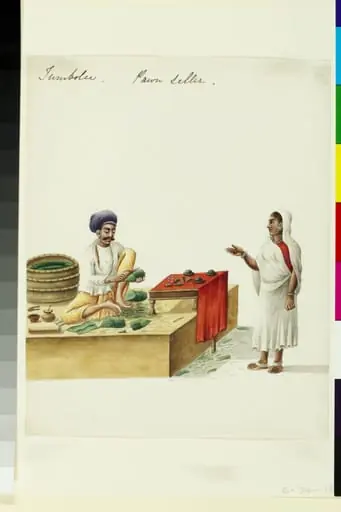
Fish woman is a paint painting by the Romanticist artist Unknown. It dates from 1826 and is held in the collection of the Victoria and Albert Museum. This painting is one of thirty-five works from a series produced in 1826, each portraying a distinct trade or occupation in daily life.
About this work
Overview
This painting is one of thirty-five works from a series produced in 1826, each portraying a distinct trade or occupation in daily life. It depicts two women engaged in the routine task of cleaning fish, rendered without theatricality or idealization. The composition emphasizes labor over narrative, capturing a moment of quiet industry rather than a ceremonial or dramatic event.
Subject & Meaning
One handles a fish with a knife, while the other holds a smaller one, her gaze directed toward a basket brimming with catch and scattered scales.
The scene centers on two women working side by side, their focus entirely on the task at hand. One handles a fish with a knife, while the other holds a smaller one, her gaze directed toward a basket brimming with catch and scattered scales. The title, 'Fish women,' underscores the ordinary nature of their labor, framing their work as a quiet testament to the economic roles of women in their community.
Technique & Style
The artist employs flat, unmodulated colors and avoids shading or perspective to create a direct, unembellished image. Bright hues—blue, red, and yellow—define the figures’ clothing, while the absence of background detail isolates the figures and their activity. The lack of atmospheric depth reinforces the emphasis on the physicality of labor, not its setting.
History & Provenance
The painting originates from a documented series of thirty-five occupational studies made in 1826, likely commissioned or compiled to record the diversity of labor in the region. While the artist’s identity remains unconfirmed, the series was preserved and later entered institutional collections, where it continues to serve as a record of 19th-century working life.
Context
In early 19th-century South Asia, such depictions of laborers were uncommon in formal art traditions, which typically favored religious or royal subjects. This series represents a shift toward documenting everyday existence, possibly influenced by colonial interest in ethnographic detail or local artistic responses to changing social observation.
Legacy
The series has endured as a rare visual archive of pre-industrial labor, particularly the roles of women in informal economies. Its straightforward style and focus on mundane activity have made it a reference point for scholars studying vernacular art and the representation of work in non-Western contexts.
Artist & collection

 Domestic Scene
 Giacomo and Cardinal Marco, investing Andrea, Abbot of San Zeno, with his Benefice
 The Nymph of Fontainebleau
 Portrait of a Woman
 Madonna and Child with Saints in the Enclosed Garden
 Venus and Minerva
 Family Group of Four on Sofa
 Wall painting from Room H of the Villa of P. Fannius Synistor at Boscoreale