Artwork
Basket and <i>punka</i> maker
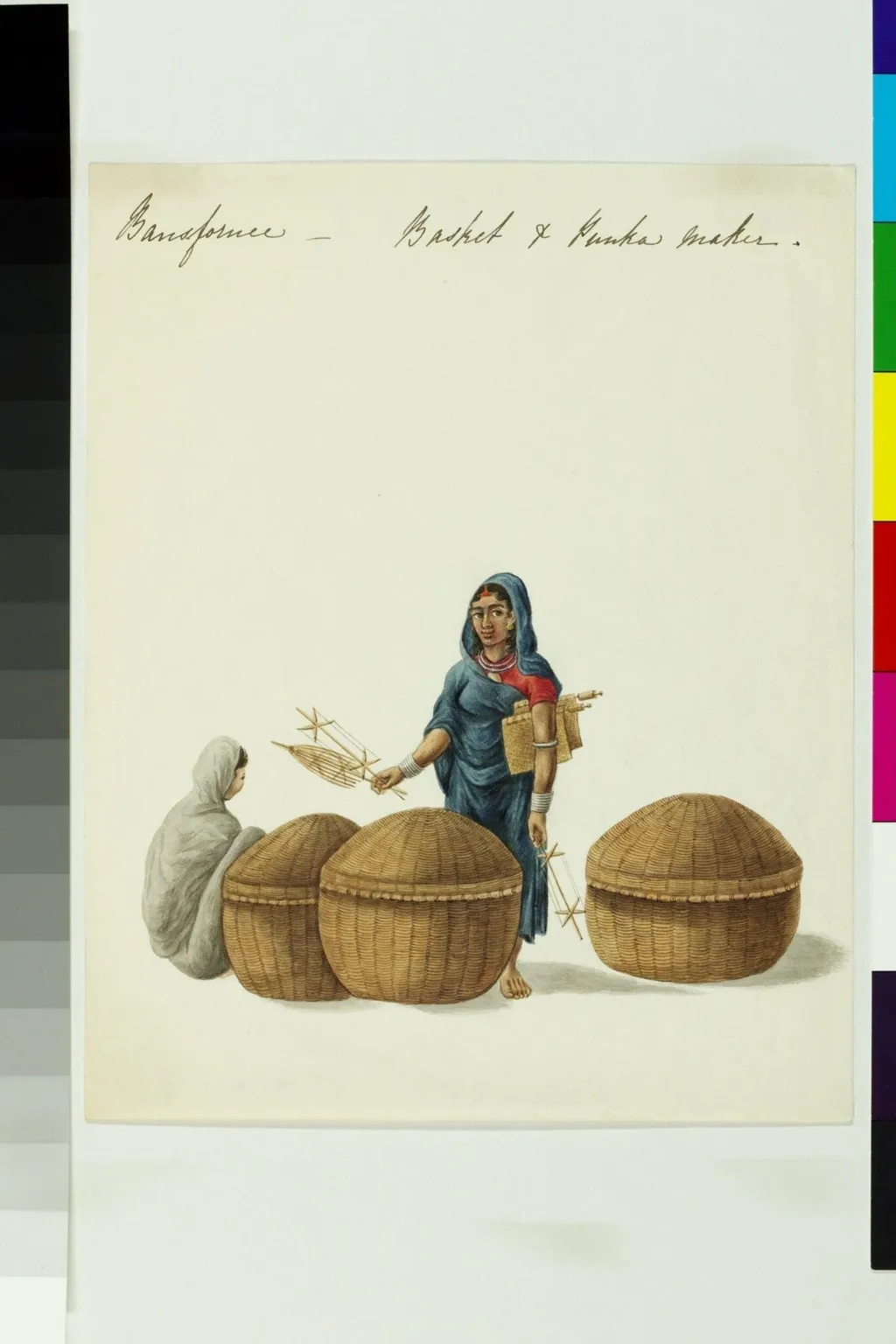
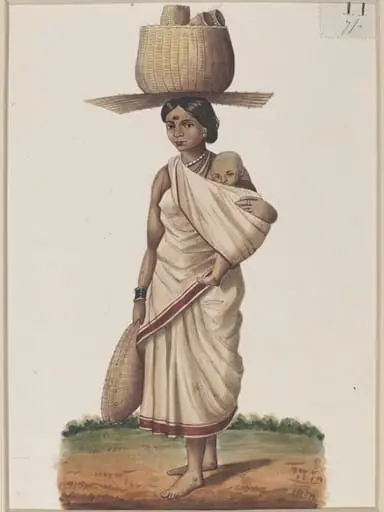
Basket and <i>punka</i> maker is a paint painting by the Romanticist artist Unknown. It dates from 1826 and is held in the collection of the Victoria and Albert Museum. This painting is one of thirty-five works documenting traditional Indian labor, created in the early 19th century.
About this work
Overview
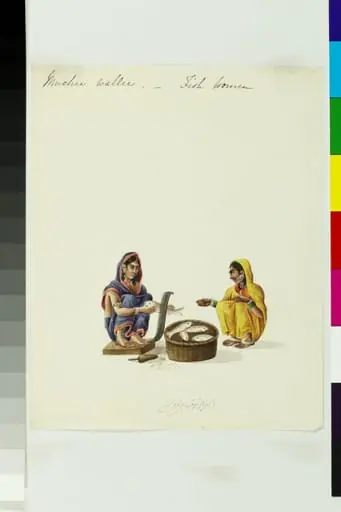
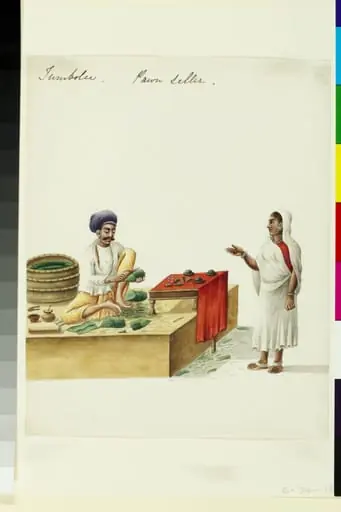
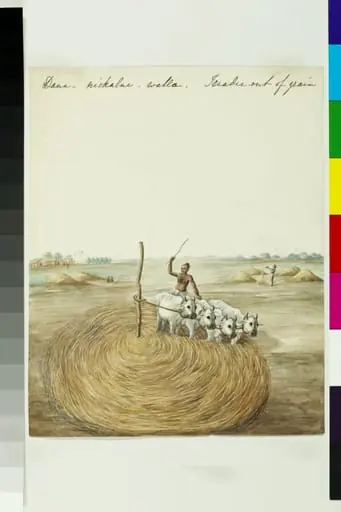
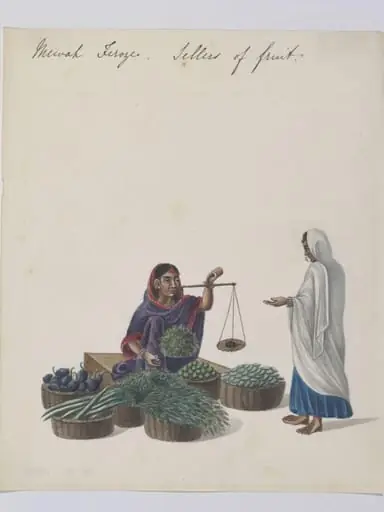
The composition is minimal, with no decorative elements beyond the figures and their tools, emphasizing the dignity of everyday work.
This painting is one of thirty-five works documenting traditional Indian labor, created in the early 19th century. It portrays a woman engaged in the craft of basket and punka production, capturing a moment of quiet labor. The composition is minimal, with no decorative elements beyond the figures and their tools, emphasizing the dignity of everyday work. The plain white background isolates the subject, drawing focus to her actions and attire.
Subject & Meaning
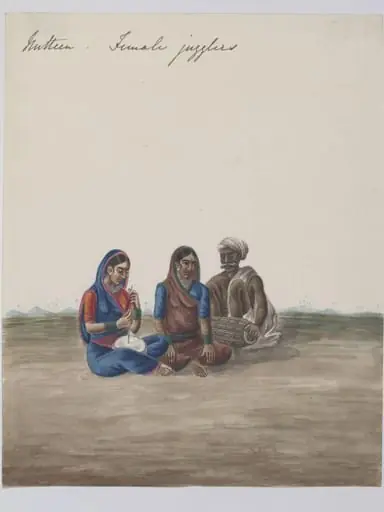
The scene depicts a woman weaving baskets and a punka, a hand-pulled ceiling fan used for cooling. Her tools and materials reflect regional craftsmanship, while the presence of a second woman in the background suggests collaborative labor. The work does not idealize or dramatize; instead, it records a common domestic trade, offering insight into the division of labor and material culture in rural or artisanal Indian communities of the period.
Technique & Style
Rendered in watercolor or tempera, the painting employs muted earth tones and precise line work to convey texture and form. The folds of the blue sari and red shawl are suggested with subtle shading, while the woven baskets are rendered with careful attention to interlaced fibers. The figures are depicted with restrained realism, avoiding theatricality. The style aligns with colonial-era Indian documentation, prioritizing clarity over emotional expression.
History & Provenance
The painting originated as part of a commissioned series, likely produced under British colonial administration in India during the 1820s–1840s. Such works were often created by Indian artists for European patrons interested in ethnographic records. The series was intended as a visual catalog of indigenous trades, preserving knowledge of crafts that were rapidly changing due to industrialization and shifting economic structures.
Context
These images emerged during a period when British officials sought to systematize knowledge of Indian society. Artistic documentation of labor was part of broader administrative efforts, blending observation with classification. While framed as neutral records, such works also reflected colonial interests in controlling and categorizing local economies. The absence of landscape or architectural context underscores the focus on the human hand and its tools.
Legacy
The series remains a valuable resource for understanding pre-industrial Indian craftsmanship, offering visual evidence of techniques now rare or lost. Though created within a colonial framework, the works preserve the agency and skill of unnamed artisans. Today, they are studied not as art in the Western canon, but as historical documents that reveal the rhythms of daily labor and the material life of 19th-century India.
Artist & collection

 Domestic Scene
 Giacomo and Cardinal Marco, investing Andrea, Abbot of San Zeno, with his Benefice
 The Nymph of Fontainebleau
 Portrait of a Woman
 Madonna and Child with Saints in the Enclosed Garden
 Venus and Minerva
 Family Group of Four on Sofa
 Wall painting from Room H of the Villa of P. Fannius Synistor at Boscoreale