Artwork
Vishnu as Parasurama avatar
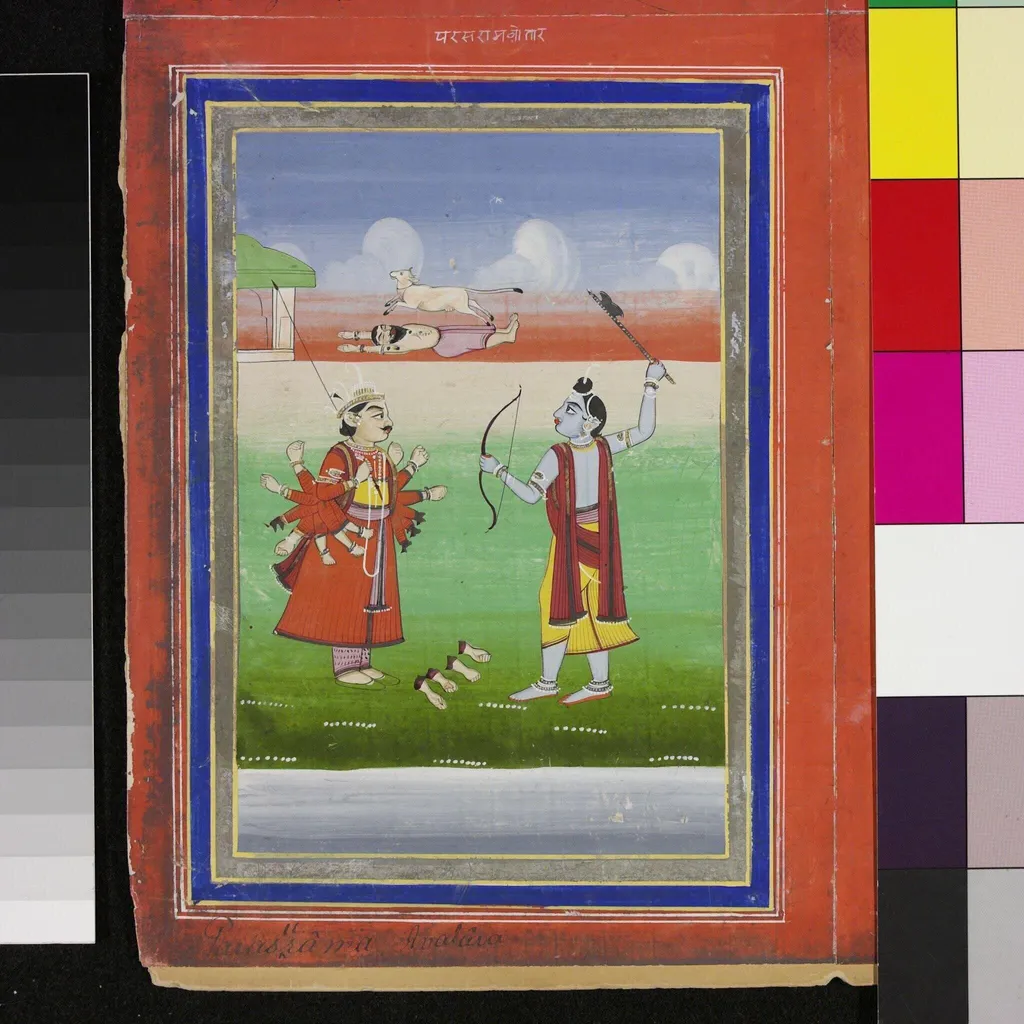
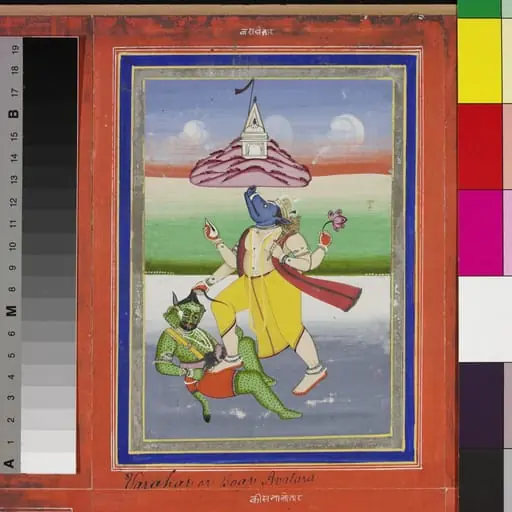
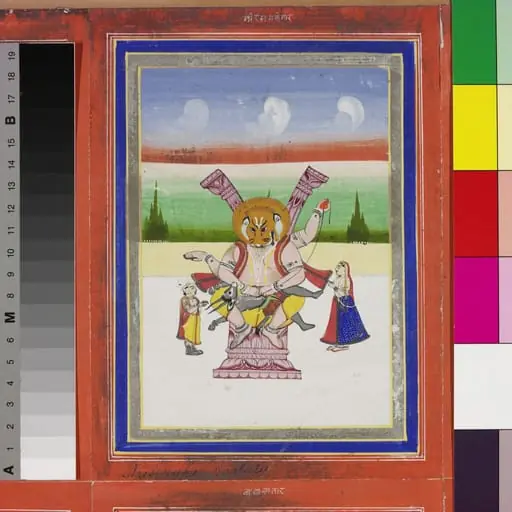
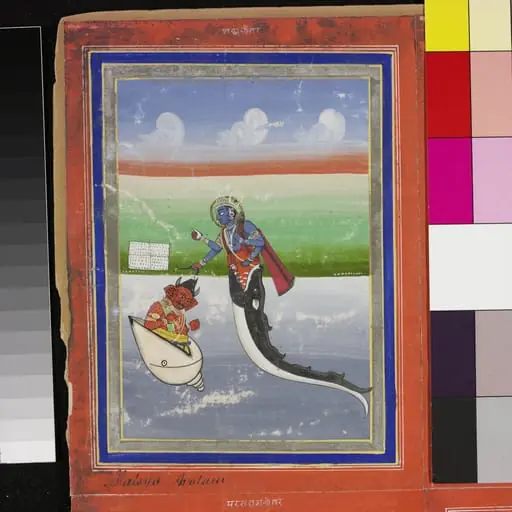
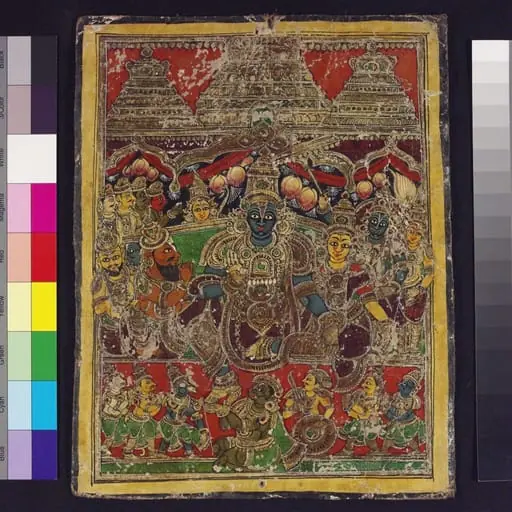
Vishnu as Parasurama avatar is a paint painting by Unknown. It dates from 1850 and is held in the collection of the Victoria and Albert Museum. This opaque watercolour on paper portrays Vishnu’s sixth avatar, Parasurama, in a moment of divine retribution.
About this work
Overview
The work originates from a North Indian tradition of miniature painting and is part of the Victoria and Albert Museum’s collection.
This opaque watercolour on paper portrays Vishnu’s sixth avatar, Parasurama, in a moment of divine retribution. Executed in vivid pigments, the scene captures the confrontation between the avenging warrior and King Kartavirya, set against a naturalistic landscape with a blue sky and scattered clouds. The work originates from a North Indian tradition of miniature painting and is part of the Victoria and Albert Museum’s collection.
Subject & Meaning
The painting illustrates the myth in which Parasurama avenges his father Jamadagni’s murder by King Kartavirya, who had stolen the divine cow Kamadhenu. Parasurama, armed with his axe, confronts the king, whose arms have been severed, leaving eight intact. Above, Kamadhenu hovers near Jamadagni’s lifeless form, symbolizing the sacred loss that triggered the cycle of vengeance and cosmic balance.
Technique & Style
The artist employs fine brushwork and layered opaque watercolours to define figures and landscape with clarity. Rich reds, deep blues, and earthy greens create contrast and spatial depth, while the flat, decorative background contrasts with the three-dimensional rendering of the central figures. Details such as fabric folds and facial expressions are rendered with precision, typical of regional Pahari or Rajasthani miniature traditions.
History & Provenance
The painting likely dates to the late 18th or early 19th century, produced in a courtly atelier in North India. It entered the Victoria and Albert Museum’s collection through colonial-era acquisitions, possibly as part of a larger series of Hindu mythological scenes gathered by British officials or collectors. Its preservation reflects early institutional interest in Indian visual culture.
Context
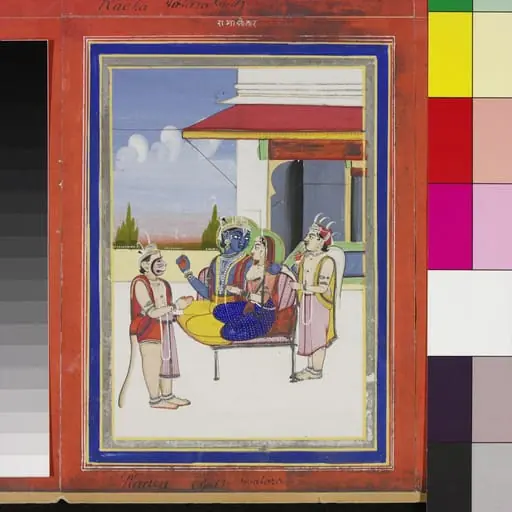
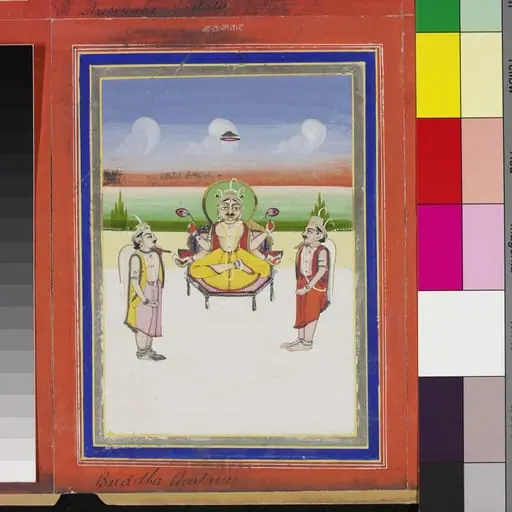
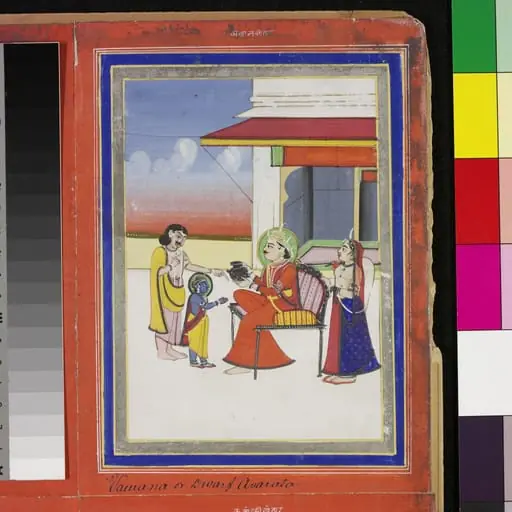
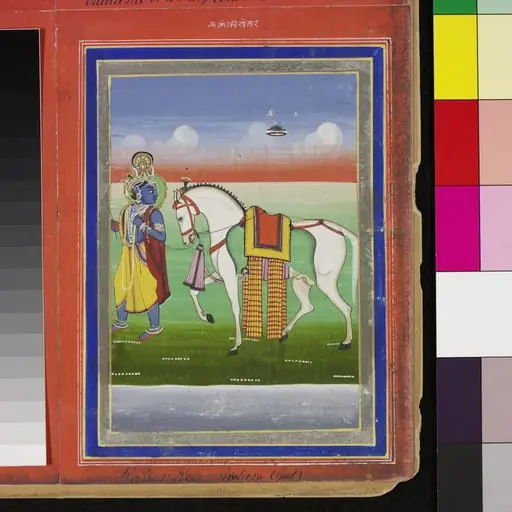
This image belongs to a broader tradition of devotional painting that visualized episodes from the Puranas, particularly those involving Vishnu’s avatars. Such works were commissioned by royal patrons for private devotion or courtly display. The emphasis on narrative clarity and symbolic elements—like the cow and severed limbs—served both religious instruction and aesthetic pleasure within Hindu artistic conventions.
Legacy
The painting contributes to the documented continuity of Hindu iconographic storytelling in miniature form. Its survival and display in a major Western museum highlight the cross-cultural transmission of Indian art. While not widely reproduced, it remains a reference for scholars studying the visual representation of divine justice and the evolution of regional painting styles in early modern India.
Artist & collection

 Domestic Scene
 Giacomo and Cardinal Marco, investing Andrea, Abbot of San Zeno, with his Benefice
 The Nymph of Fontainebleau
 Portrait of a Woman
 Madonna and Child with Saints in the Enclosed Garden
 Venus and Minerva
 Family Group of Four on Sofa
 Wall painting from Room H of the Villa of P. Fannius Synistor at Boscoreale