Artwork
Formă circulară; fond alb; decorul realizat prin zgrafitare; pe una din fețe este amplasat un vrej cu boboci de culoare galbenă, hașurați și flori cu petale galbene care încadrază o floare cu o corolă maro deschis și petale galbene și maro; întreaga compoziție se aseamănă cu o cunună. Fața cealaltă este decorată cu o floare stilizată care urmărește conturul obiectului cu petale verzi și galbene; pe muchie sînt dispuse forme circulare de culoare galbenă hașurată și două tortițe pentru fixarea curelei.
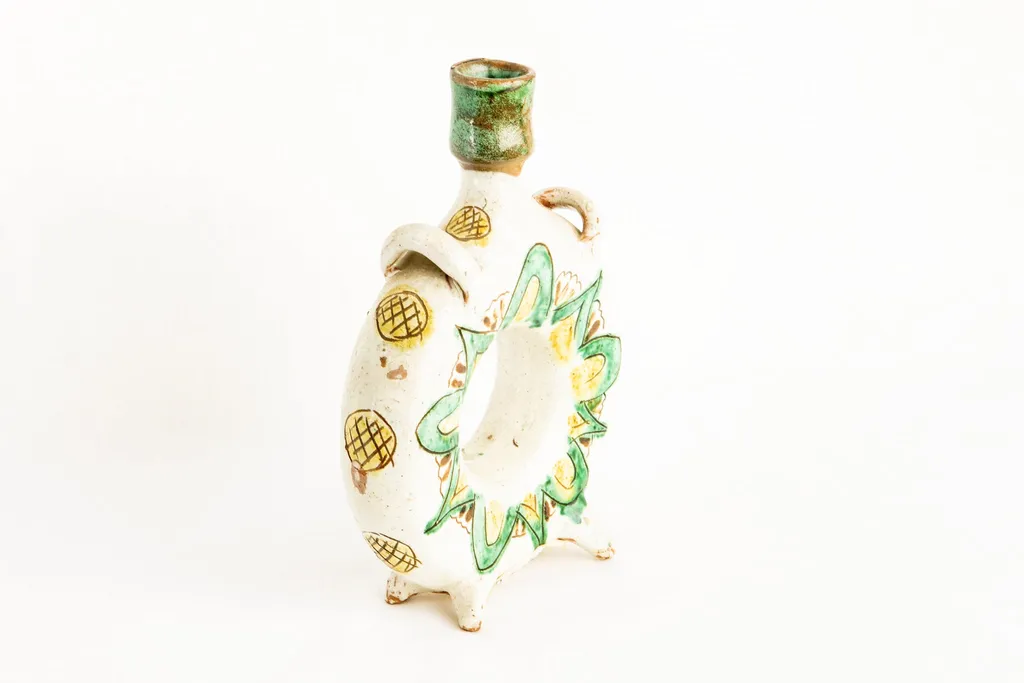
Formă circulară; fond alb; decorul realizat prin zgrafitare; pe una din fețe este amplasat un vrej cu boboci de culoare galbenă, hașurați și flori cu petale galbene care încadrază o floare cu o corolă maro deschis și petale galbene și maro; întreaga compoziție se aseamănă cu o cunună. Fața cealaltă este decorată cu o floare stilizată care urmărește conturul obiectului cu petale verzi și galbene; pe muchie sînt dispuse forme circulare de culoare galbenă hașurată și două tortițe pentru fixarea curelei. is a photography by Unknown. It dates from 1850 and is held in the collection of the Romanian Peasant Museum. The object is a white ceramic vessel whose profile resembles a circular band or crown.
About this work
Overview
The object is a white ceramic vessel whose profile resembles a circular band or crown. Its rim is adorned with small, hatched yellow circles and two looped fittings intended for a strap. One side displays a central yellow flower surrounded by smaller yellow buds and a brown‑toned corolla, while the opposite side features a stylized green‑and‑yellow foliage motif that follows the vessel’s outline.
Subject & Meaning
The decorative program centers on floral motifs: a prominent yellow blossom with a light brown corolla, encircled by additional yellow buds, and a complementary green‑yellow leaf pattern. In folk traditions such floral arrangements often symbolize fertility, celebration, or matrimonial rites, suggesting the piece may have been created for a ceremonial context such as a wedding or communal festivity.
Technique & Style
The overall design combines stylized natural forms with abstract circular accents, reflecting a synthesis of ornamental folk aesthetics and functional pottery.
The vase is executed in white slip‑covered ceramic, with surface decoration applied by incised scratching (zgrafitare). The floral and geometric elements are rendered through fine hatchwork, creating tonal variation within the yellow pigments. The overall design combines stylized natural forms with abstract circular accents, reflecting a synthesis of ornamental folk aesthetics and functional pottery.
Context
Such ring‑shaped vessels are typical of regional folk pottery, where the circular silhouette evokes crowns or wreaths used in ritual settings. The inclusion of strap loops indicates the piece may have been suspended or carried during processions. The dual‑sided decoration allows the vase to be displayed from any angle, a practical consideration in communal gatherings.
Artist & collection

 Domestic Scene
 Giacomo and Cardinal Marco, investing Andrea, Abbot of San Zeno, with his Benefice
 The Nymph of Fontainebleau
 Portrait of a Woman
 Madonna and Child with Saints in the Enclosed Garden
 Venus and Minerva
 Family Group of Four on Sofa
 Wall painting from Room H of the Villa of P. Fannius Synistor at Boscoreale
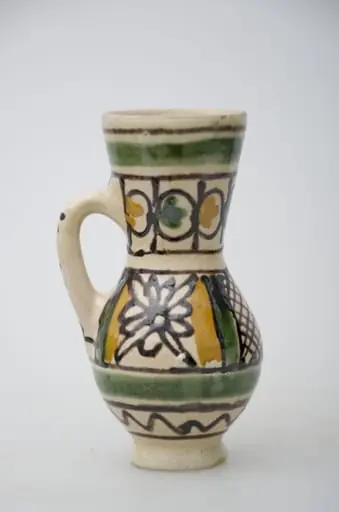 Vas ceramic de formă bitronconică, smălțuit de mici dimensiuni, cu baza plată și bombat în zona „pântecelui”. Prezintă o toartă ce pornește din zona gâtului redus ca dimensiuni și se termină în zona diametrul maxim al vasului. Decorul vasului este compus din două registre picturale. În primul registru, mărginit de două linii drepte subțiri, de culaore maro închis, au fost pictate două flori conturate cu negru și încadrate de câte două linii groase de culoare verde și galben. Cel de-al doilea registru este compus din boboci de culoare verde și galben, fiind dispuși concentric pe gâtul vasului. Ambele registre picturale sunt încadrate între două linii groase circulare, verzi. Pe toartă a fost redactat textul: „KORUND”. Prezintă uzură funcțională. Cromatică: fond: alb; motive: galben, verde, maro închis.
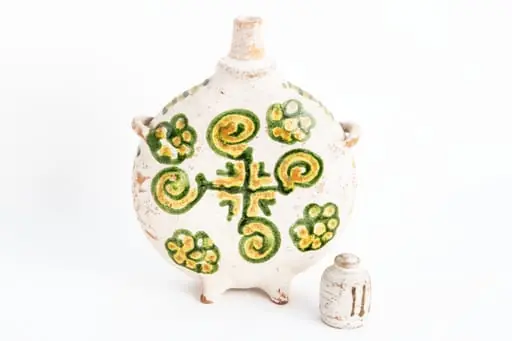 Ploscă de dimensiuni mici prevăzută cu capac. Fond alb. Decorul este similar pe ambele fețe ale obiectului; o cruce de culoare verde dispusă central; între brațele crucii sînt amplasate unghiuri duble colorate în galben respectiv, verde. Crucea este încadrată de patru spirale colorate în galben și verde și patru flori stilizate realizate cu aceleași culori. Muchia ploștii este decorată cu linii orizontale de culoare galbenă și verde, în alternanță cromatică.
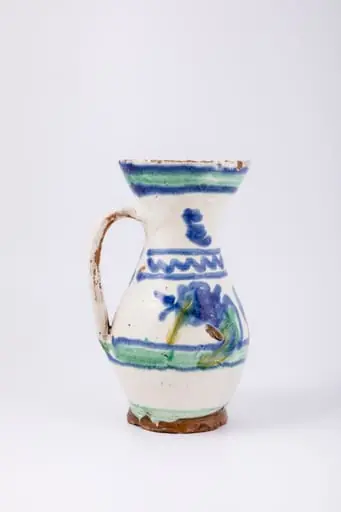 Cănceu piriform prevăzut cu o toartă, gât alungit și puternic evazat, toarta dispusă de la gât la diametrul maxim al piesei. Partea superioară și inferioară este decorată cu câte o bandă lată verde, mărginită de linii subțiri albastre. Decorul central este dispus în trei registre. Primul registru așezat pe gâtul vasului, redă un motiv fitomorf stilizat. Al doilea registru prezintă o bandă circulară realizată dintr-o linie vălurită, mărginită de două linii subțiri. Diametrul maxim al piesei este decorat cu un motiv floral, realizat din două rodii stilizate, în cromatică galben, verde și albastru.
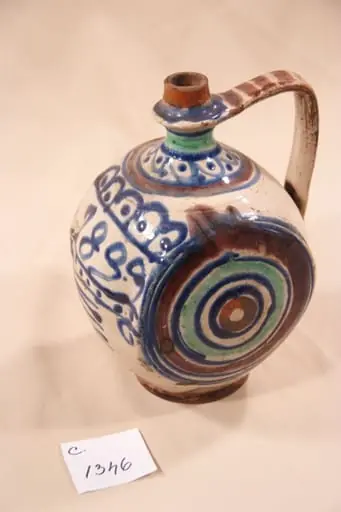 ulcior
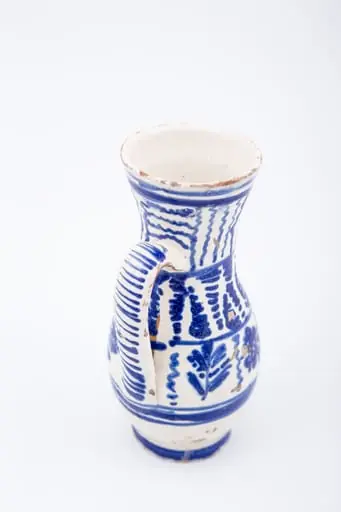 Cănceu piriform prevăzut cu o toartă, gât alungit și ușor evazat, toarta dispusă de la gât la diametrul maxim al vasului. Suprafața vasului este împărțită în 3 registre verticale, separate prin linii subțiri. Primul registru prezintă linii vălurite dispuse vertical, al doilea registru conuri dispuse piramidal cu vârful alternând în sus și jos, iar al treilea registru redă motive florale și fitomorfe stilizate.Suprafața decorativă este încadrată în partea superioară și inferioară de o bandă lată albastră mărginită de linii subțiri, albastre. Cromatică: alb; albastru.
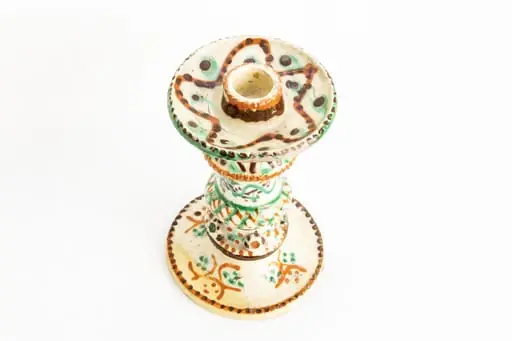 Obiectul reprezintă un sfeșnic de mici dimensiuni. Smălțuit și colorat cu angobă albă și decorat prin pictare cu cornul cu semicercuri verzi, maron și galbene, dispuse circular pe trunchiul obiectului, în registe succesive. Baza pentru suportul lumînării decorată cu o stea cu cinci raze.
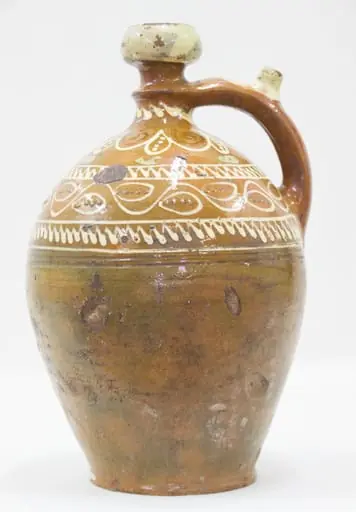 Ulcior de formă bitronconică cu gura îngustă și rotundă, cu o toartă și un orificiu pentru scurgerea lichidului, smălțuit și decorat pe jumătatea superioară cu motive vegetale (ghirlande) și geometrice (spirale; patru cercuri concentrice cu o linie șerpuită între ele).Cromatică: maro (fond), decor - galben, bej, alb, verde. Jumătatea inferioară a obiectului este nesmălțuită.
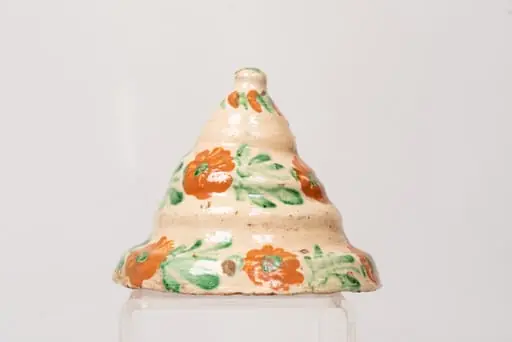 Vază: corp sferic, bază joasă, tronconică, cu talpă lată, gât rotund înalt, cu buză evazată și ușor ondulată. Piesa este prevăzută cu două torți laterale (rotunde) pornind de la buză până la mijlocul burții vasului, capătul superior fiind modelat sub formă de volută orientată spre interior iar capătul inferior sub formă de volută orientată spre exterior. Piesa este acoperită pe fața exterioară cu un strat de humă albă peste care este pictat cu pensula decorul format din motive vegetale: patru flori maro cu frunze verzi dispuse pe burta vasului și două flori cu frunze pe gât, și motive geometrice: linii mici paralele de culoare maro și verde dispuse pe torți și pe talpă. Suportul/elementul decorativ are formă conică, cu suprafața profilată (ondulată); fața exterioară este angobată cu humă albă și decorată prin pictare cu pensula cu motive vegetale și florale stilizate: două rânduri paralele orizontale de flori maro cu frunze verzi și motive geometrice (mici linii paralele maro și verzi pe capătul ascuțit al piesei suport. Cromatica: alb, verde, maro. Ambele piese sunt acoperite pe fețele ornamentate cu un strat de smalț transparent.
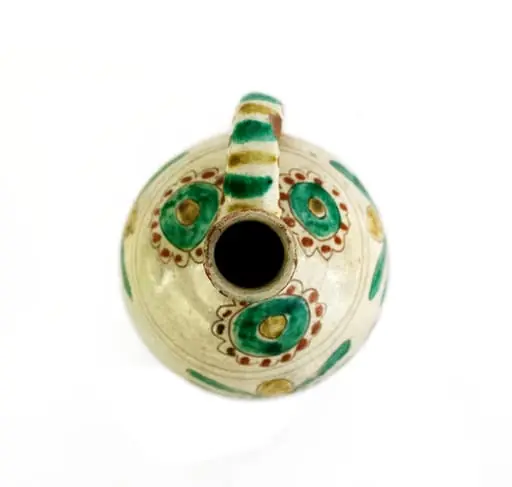 Ulcior de formă cilindrică, bombat la mijloc, lucrat în manieră Kuty, modelat la roată; prezintă o toartă pentru prindere și gât îngust; decor naturalist amplasat pe toată suprafața și organizat în două registre despărțite de linii drepte: la bază un registru cu motive fitomorfe despărțite de semicercuri; registrul superior prezintă motive astrale: soare realizate cu crecuri, linii vălurite și puncte de culoare; pe toartă prezintă puncte și linii colorate; cromatică: fond alb dat de angobă, decor cu cărămiziu, verde, galben.
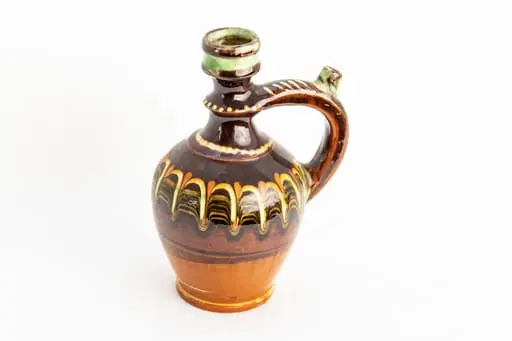 Ulcior prevăzut cu toartă cu țîtă, baza nesmălțuită; fond maro închis. Decorul amplasat în partea mediană, pe pîntec este realizat prin jirăvire, reprezintă semicercuri dispuse circular colorate în galben și cărămiziu. La baza gîtului este amplasat cu cerc de culoare albă. Toarta prinsă de pîntec și jumătatea gîtului este decorată cu linii oblice, paralele, de culoare albă; țîta vasului vopsită în verde.