Artwork
Ulcior prevăzut cu toartă cu țîtă, baza nesmălțuită; fond maro închis. Decorul amplasat în partea mediană, pe pîntec este realizat prin jirăvire, reprezintă semicercuri dispuse circular colorate în galben și cărămiziu. La baza gîtului este amplasat cu cerc de culoare albă. Toarta prinsă de pîntec și jumătatea gîtului este decorată cu linii oblice, paralele, de culoare albă; țîta vasului vopsită în verde.
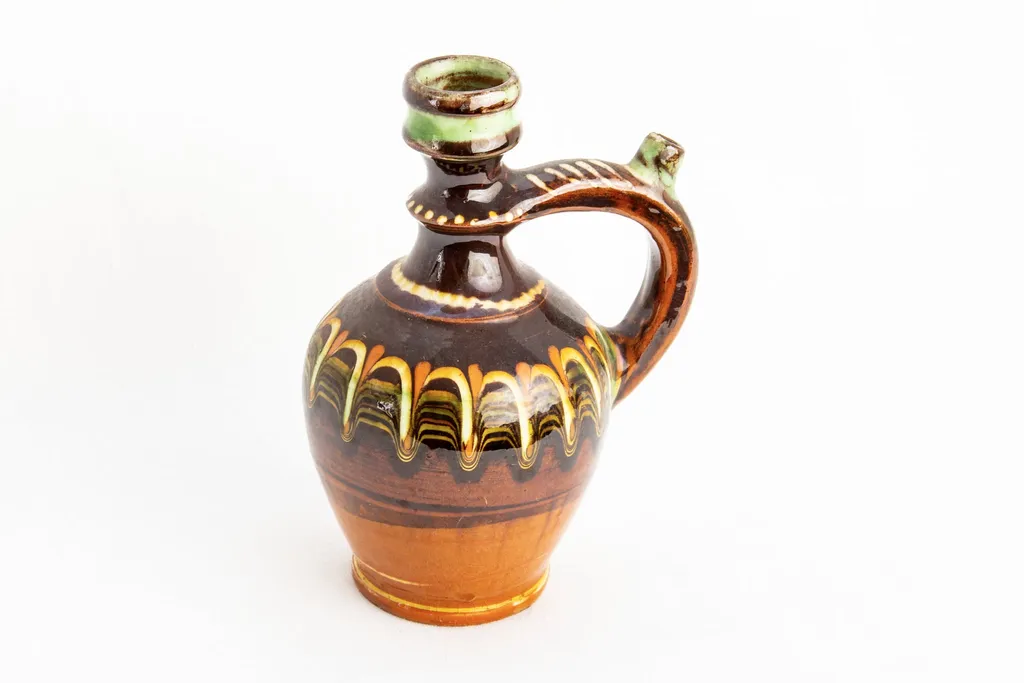
Ulcior prevăzut cu toartă cu țîtă, baza nesmălțuită; fond maro închis. Decorul amplasat în partea mediană, pe pîntec este realizat prin jirăvire, reprezintă semicercuri dispuse circular colorate în galben și cărămiziu. La baza gîtului este amplasat cu cerc de culoare albă. Toarta prinsă de pîntec și jumătatea gîtului este decorată cu linii oblice, paralele, de culoare albă; țîta vasului vopsită în verde. is a photography by Unknown. It dates from 1850 and is held in the collection of the Romanian Peasant Museum. A ceramic vessel with a handle and spout, featuring an unglazed base and a dark brown body.
About this work
Overview
A ceramic vessel with a handle and spout, featuring an unglazed base and a dark brown body. Its surface is adorned with geometric patterns applied through incising, emphasizing simplicity and handcrafted precision. The design centers on circular semicircles in yellow and brick-red, arranged around the belly, with a white band encircling the neck.
Subject & Meaning
The vessel’s decoration consists of repetitive, abstract motifs—concentric semicircles and parallel oblique lines—suggesting symbolic or ritual significance rather than representational intent. The use of limited colors and structured repetition may reflect cultural conventions tied to function, identity, or cosmology, common in early ceramic traditions.
Technique & Style
Decorative elements were created by incising lines into the clay surface before firing, a method requiring controlled handwork. White pigment outlines the neck and base, while yellow and red fill the semicircular motifs. The unglazed base and green-spout contrast with the matte body, indicating deliberate material choices and a focus on tactile texture over surface gloss.
History & Provenance
Though exact origin is unconfirmed, the vessel’s form and decoration align with Neolithic or early Bronze Age pottery from Southeastern Europe or the Balkans. Similar artifacts have been found in settlements along the Danube, where incised geometric patterns were standard in domestic or ceremonial wares during the 5th to 3rd millennia BCE.
Context
This vessel belongs to a broader tradition of prehistoric ceramics where decoration served both aesthetic and cultural functions. Its lack of glaze and reliance on incised patterns distinguish it from later, more refined wares, placing it within early communal pottery practices where utility and symbolic expression were closely linked.
Legacy
The vessel exemplifies early human engagement with form and pattern, demonstrating how functional objects carried cultural meaning through minimal visual language. Its preservation allows modern study of prehistoric craftsmanship, offering insight into the visual systems of societies that left no written records.
Artist & collection

 Domestic Scene
 Giacomo and Cardinal Marco, investing Andrea, Abbot of San Zeno, with his Benefice
 The Nymph of Fontainebleau
 Portrait of a Woman
 Madonna and Child with Saints in the Enclosed Garden
 Venus and Minerva
 Family Group of Four on Sofa
 Wall painting from Room H of the Villa of P. Fannius Synistor at Boscoreale
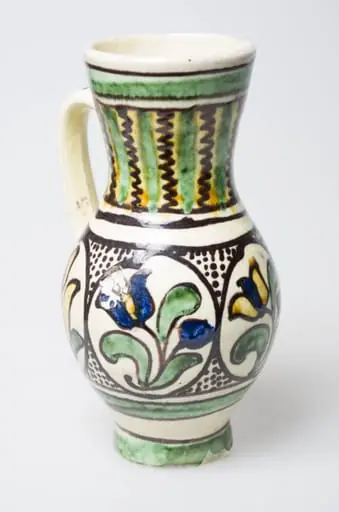 Recipient ceramic de formă ovoidală, smălțuit, cu gâtul lung, fund inelar și buza dreaptă. Prevăzut cu o toartă arcuită, care pleacă din mijlocul gâtului spre partea inferioară a vasului. Intens stilizat cu motive florale, vegetale și geometrice, pictate cu pensula, în două registre diferite. În primul registru, situat în zona gâtului, sunt pictate dungi late și linii meandrice dispuse pe verticală, alternativ. Aproape de gura vasului, sunt prezente dungi late și linii circulare. În al doilea registru întâlnim patru flori încadrate în cercuri și între acestea, puncte mici, umplând astfel cu decorații toată zona bombată a recipientului. Registrele sunt delimitate între ele de trei linii circulare. În partea inferioară, întâlnim ca și la gură, o dungă lată încadrată de două linii circulare. Prezent motiv geometric pe toartă sub formă de linie vălurită. Cromatică: fundal: alb; motive: galben; albastru; verde; maro închis.
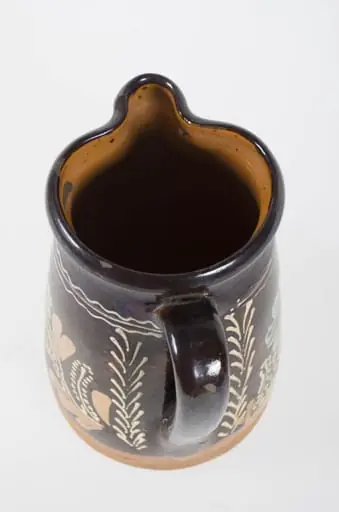 Vas de formă tronconică cu buza evazată și prevăzută cu cioc. Prezintă o toartă care pleacă de sub gât și se unește la partea inferioară. Vasul este smălțuită în interior și exterior (mai puțin ultimii 2 cm). Este decorat cu motive geometrice: două linii în val care încadrează o linie dreaptă dispuse pe corpul vasului la nivelul de la care pleacă toarta. Corpul vasului este decorat cu motive florale și vegetale: două flori care încadrează un pom al vieții stilizat. Toarta este mărginită de o parte și de alta de câte o crenguță de brad verticale. Cromatică: fond maro; motive: verde; alb; maro; crem.
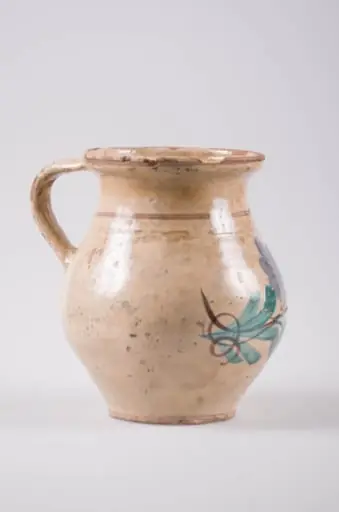 Oală de formă bitronconică de culoare bej. Decorul este reprezentat de motive florale: floarea este încadrată de linii albe realizate cu degetul; motive vegetale, motive geometrice: în partea superioară decorație circulară, linii. Prezintă toartă curbată. Smălțuită. Cromatică: fond: bej; motive: verde; albastru; maroniu.
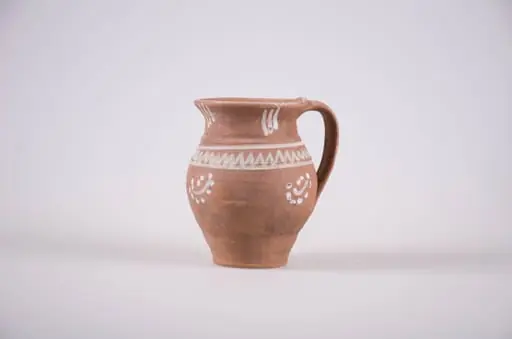 Recipient bitronconic cu gura largă. Prezintă toartă laterală care pleacă din buză până la diametrul maxim al vasului. Decor geometrizant pe partea superioară a vasului și pe toartă; linii paralele, cercuri, linie ondulată, puncte. Cromatică: fond: cărămiziu; motive trasate cu angobă albă. Vasul este nesmălțuit.
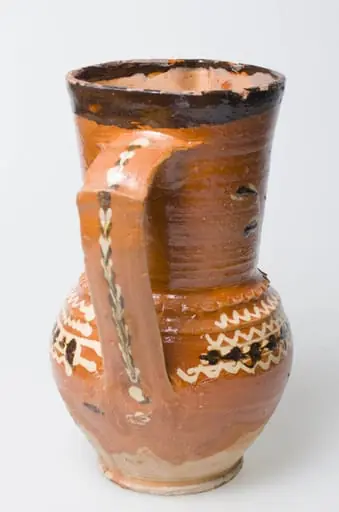 Vasul este confecționat din lut, având forma bitronconică, cu gura largă. Acesta este prevăzut cu o toartă pentru prindere fixată, în partea superioară de margine, iar în partea inferioară de zona bombată a vasului. Obiectul este decorat cu linii vălurite și motive florale. Cromatică: fond: maro; decor: alb; negru.
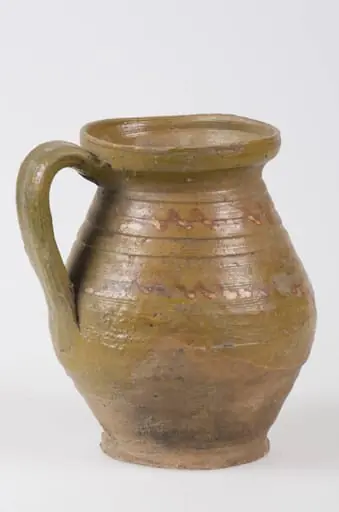 Vas bitronconic cu gât scurt și foarte profilat, cu gura înaltă și dreaptă. Prezintă o toartă care pleacă de sub buză și se unește cu corpul sub zona diametrului maxim. Este smălțuit în interior și la exterior (parțial nesmălțuit în partea de jos). În partea superioară prezintă un decor geometric realizat din cinci linii incizate și două linii în val pictate. Toarta este decorată cu puncte. Cromatică: fond: cărămiziu și pe alocuri verziu; motive: alb; maroniu. Prezintă uzură funcțională.
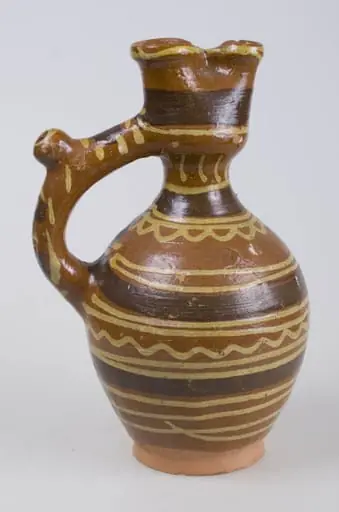 Recipientul este confecționat din lut, cu pântecul extins în zona mediană, cu gât îngust și gură bilobată. Acesta prezintă ciur la gură și în interior piatră sunătoare. Obiectul este prevăzut cu o toartă tubulară cu țâță pentru scurgerea lichidului, lipită de gât și de mijlocul diametrului maxim al corpului. Ulciorul este smălțuit până aproape de fundul vasului. Decorul este format din motive geometrice, pictate cu cornul, pe toată suprafața corpului, inclusiv pe mâner: linii circulare, linii vălurite, linii oblice dispuse vertical, semicercuri pe umeri. Cromatică: fond: cărămiziu; decor: galben; maro închis.
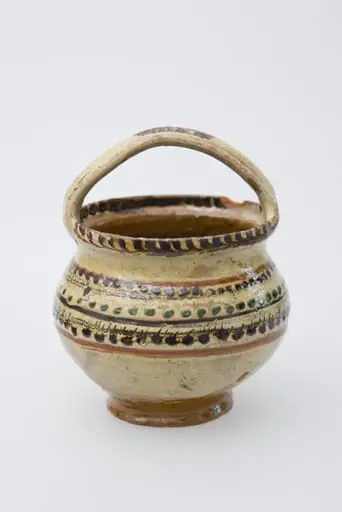 Vas ceramic de mici dimensiuni, pe bază inelară, pântecos, cu fundul și gura late. Deasupra gurii vasului a fost pusă o toartă de prindere. Buza vasului a fost pictată printr-un brâu de crenguțe. Pe pântecul vasului brâuri de puncte și două benzi subțiri jirăvite. Smălțuit în interior și exterior. Cromatică: fond: crem; motive: verde; maro; bej.
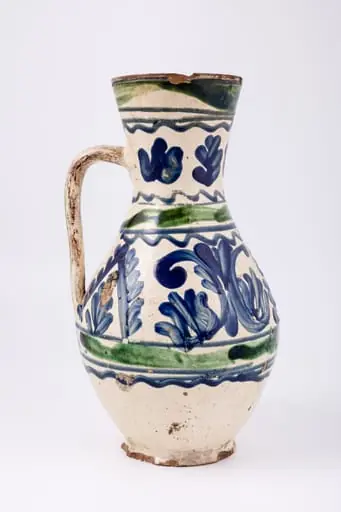 Cănceu piriform prevăzut cu o toartă, gât scurt și ușor evazat, corpul pântecos, toarta de la gât la diametrul maxim al vasului. Decorul este împărțit în două registre verticale separate printr-o bandă lată verde, mărginită de linii subțiri vălurite. Registrul superior este decorat cu motive florale și fitomorfe, câte o lalea înflorită intercalată de brăduți stilizați. Registrul inferior este decorat cu motive florale reprezentând stilizări ale pomului vieții alcătuit din lalele și triunghiuri decorate cu motivul bradului stilizat.
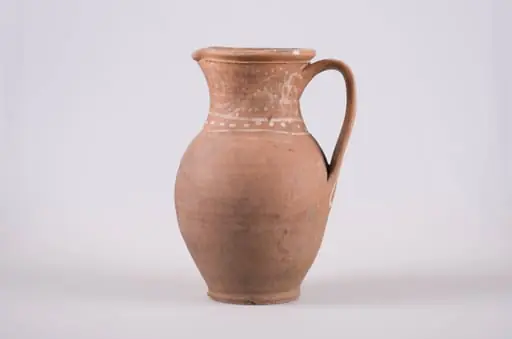 Recipient sferoidal cu gura largă și cioc. Prezintă toartă laterală. Decorul este floral și geometric pe toată suprafața gâtului format din linii, puncte, spirale. Decorat și pe toartă cu o linie de jur împrejur, iar pe buza vasului format din puncte. Cromatică: fond: cărămiziu; motive: alb.