Artwork
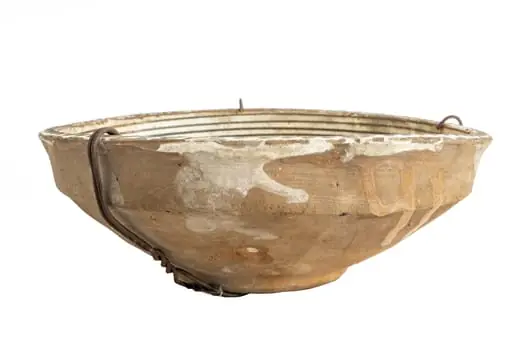
Formă tronconică; fond alb; culori: verde, maro; în centrul farfuriei este amplasată o spirală de culoare maro înscrisă într-un cerc de culoare verde cu culoare intinsă, scursă. Pe perete sînt amplasate semicercuri de culoare verde, cu contur dublu orientate către centrul farfuriei. Sub buză sînt amplasate două cercuri de culoare maro; buza decorată cu un zig -zag de culoare similară. Culorile sînt scurse.
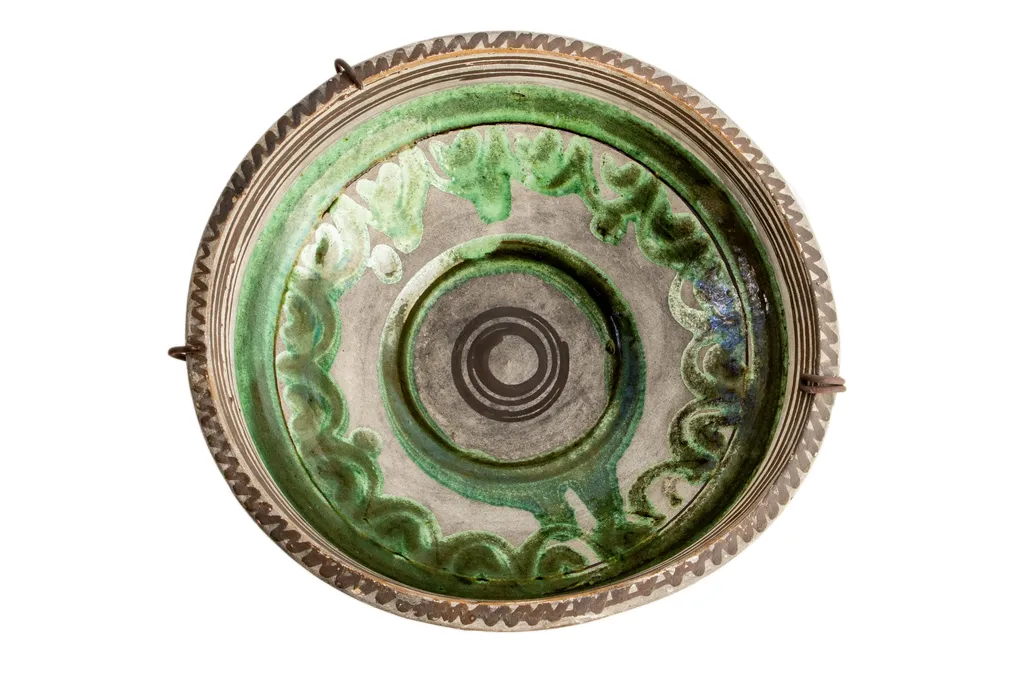
Formă tronconică; fond alb; culori: verde, maro; în centrul farfuriei este amplasată o spirală de culoare maro înscrisă într-un cerc de culoare verde cu culoare intinsă, scursă. Pe perete sînt amplasate semicercuri de culoare verde, cu contur dublu orientate către centrul farfuriei. Sub buză sînt amplasate două cercuri de culoare maro; buza decorată cu un zig -zag de culoare similară. Culorile sînt scurse. is a print by Unknown. It dates from 1850 and is held in the collection of the Romanian Peasant Museum. The object is a circular plate featuring a muted palette of green and brown.
About this work
Overview
The object is a circular plate featuring a muted palette of green and brown. Central to the design is a brown spiral enclosed within a broad, faded green circle. Encircling the middle are green semicircular motifs that point inward, while the rim is accented with a brown zig‑zag band and two small brown circles beneath it.
Subject & Meaning
The composition emphasizes concentric movement, with the central spiral suggesting a focal point of energy or growth. The surrounding semicircles and rim decorations create a sense of radiating motion, directing the viewer’s eye toward the plate’s core.
Technique & Style
The decorative elements appear applied with a fluid, runny medium that has softened over time, giving the colors a washed‑out quality. The pattern relies on simple geometric shapes—circles, arcs, and spirals—arranged in a balanced, symmetrical layout typical of traditional folk ceramics.
History & Provenance
The plate is catalogued as an image rather than a physical object, indicating it is documented primarily through photographic record. Its style and faded pigments suggest an origin in an earlier historical period, though specific dating or cultural attribution is not provided.
Context
Similar designs are found in the collections of the Museum of Ethnography, where rounded vessels often serve both functional and decorative roles within domestic or ceremonial settings.
Artist & collection

 Domestic Scene
 Giacomo and Cardinal Marco, investing Andrea, Abbot of San Zeno, with his Benefice
 The Nymph of Fontainebleau
 Portrait of a Woman
 Madonna and Child with Saints in the Enclosed Garden
 Venus and Minerva
 Family Group of Four on Sofa
 Wall painting from Room H of the Villa of P. Fannius Synistor at Boscoreale
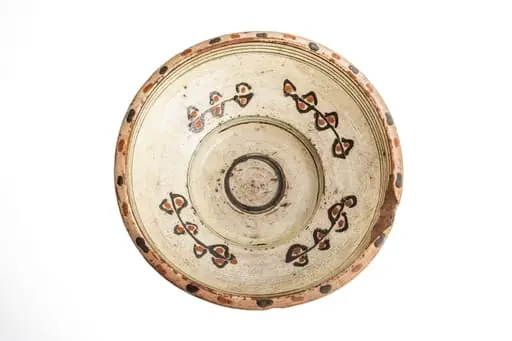 Formă tronconică; fond alb fildeșiu; în centrul farfuriei în partea centrală este amplasat un cerc de culoare brună; pe peretele vasului sînt dispuse patru vrejuri de culoare brună cu frunze portocalii; sub buză sînt amplasate cercuri concentrice de culoare brună; buza decorată cu pete de culoare brun și cărămiziu alternînd cromatic.
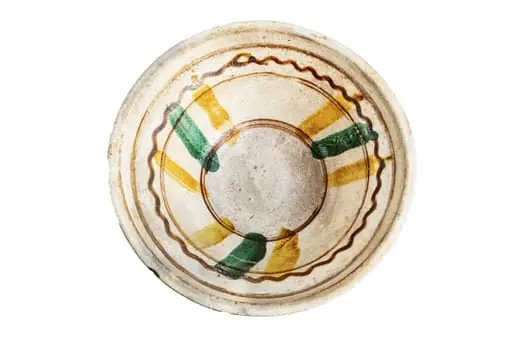 Formă tronconică; fond alb. În partea centrală este amplasat un cerc de culoare maro. Pe peretele vasului sînt amplasate trei grupuri decorative formate din trei linii: două de culoare galbenă și una verde, dispuse oblic, trasate cu pensula. În planul următor este amplasat un val circular și un cerc, ambele de culoare maro. Folosită la decorarea interiorului țărănesc în așa numita - cameră bună.
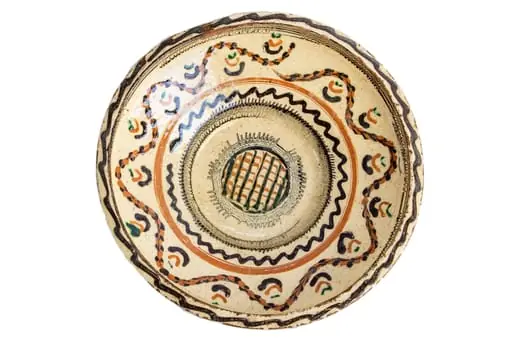 Formă tronconică; fond alb fildeșiu; pe fundul vasului este amplasat un cerc cu contur brun cu suprafața acoperită cu o rețea de romburi de culoare portocalie. Compoziția este încadrată de un val circular de culoare brun închis și un cerc de culoare portocalie. Pe umărul vasului este amplasat un vrej circular portocaliu cu mici accente de culoare brun închis; semicercuri grupate cîte trei colorate: brun, portocaliu și verde care sugerează frunzele vrejului. Buza decorată cu un val de culoare brună.
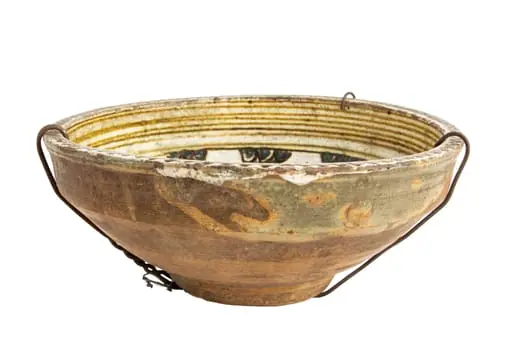 Formă tronconică; fond alb. Decorul, pictat pe fond alb și amplasat în centrul farfuriei, este reprezentat de o spirală dispusă central, de culoare maro încadrată de un soare stilizat cu șase raze. Pe peretele vasului este amplasat un soare de culoare albă cu nouă raze. Între razele soarelui sînt amplasate triunghiuri de culoare maro închis formate din alăturarea unor semicercuri. Sub buza vasului sînt amplasate mai multe cercuri concentrice de culoare maro. Buza farfuriei este decorată cu un val de culoare maro Folosită la decorarea interiorului țărănesc în așa numita - cameră bună.
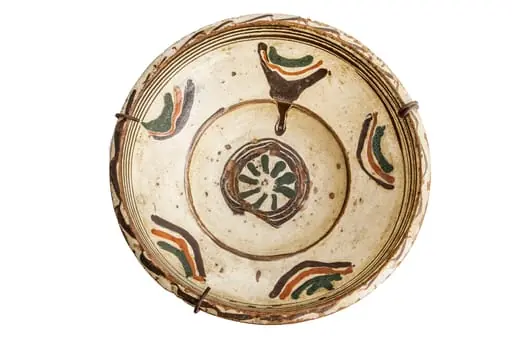 Formă tronconică; fond alb fildeșiu; pe fundul vasului dispusă central o floare cu petale de culoare verde înscrisă într-o bandă circulară formată din mai multe cercuri de culoare maro. Pereții vasului sînt decorați cu cinci grupe de semicercuri; fiecare grup format din trei semicercuri colorate în verde, maro și portocaliu neglijent realizate (în cazul unuia culoarea s-a scurs). Buza este decorată cu un val circular de culoare maro închis. Piesa reprezintă una dintre primele achiziții ale lui Alexandru Tzigara Samurcaș. Folosită la decorarea interiorului țărănesc în așa numita - cameră bună.
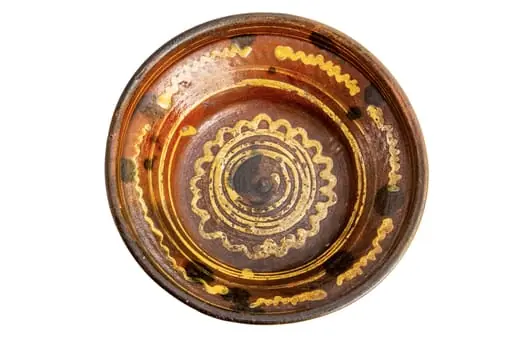 Formă tronconică; fond cărămiziu; culori: galben, verde, brun. În centru este amplasată o spirală de culoare galbenă trasată cu cornul înscrisă într-un val circular de culoare similară care sugerează un soare; pe perete strachinei sînt amplasate șase segmente de linie vălurită de culoare galbenă și pete de culoare brună.
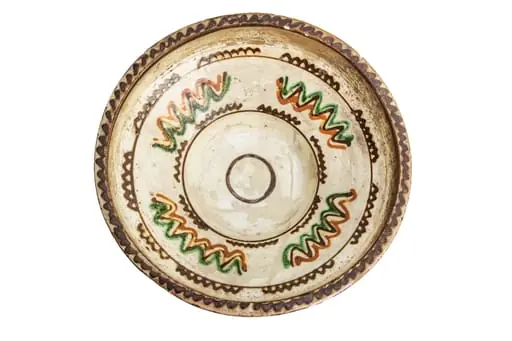 Formă tronconică; fond alb fildeșiu; pe fundul vasului este amplasat un cerc de culoare maro; pereții sînt decorați cu patru segmente de linii în zig - zag cu contururi triple: verde, maro și cărămiziu; întreaga compoziție este înscrisă într-un cerc de culoare maro care are în exterior nouă segmente de linie vălurită de culoare maro. Buza este decorată cu un val circular de culoare maro închis. Piesa reprezintă una dintre primele achiziții ale lui Alexandru Tzigara Samurcaș. Folosită la decorarea interiorului țărănesc în așa numita - cameră bună.
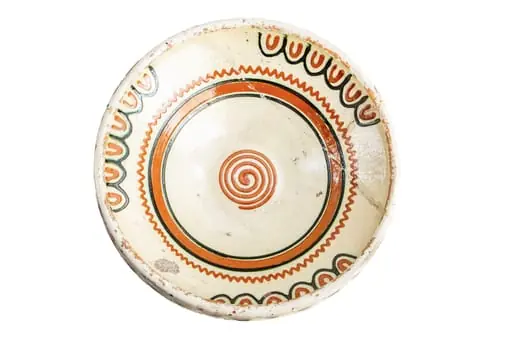 Formă tronconică; fond alb. În centru vasului este amplasată o spirală de culoare cărămizie încadrată de o bandă și un val circular de aceeași culoare. Sub buza vasului sînt amplasate trei grupuri de semicercuri de culoare verde închis, fiecare semicerc are în interior un altul, mai mic de culoare cărămizie. Sub buza vasului, la exterior este amplasat un val circular de culoare verde decorat cu cercuri de culoare cărămizie. Folosită la decorarea interiorului țărănesc în așa numita - cameră bună.
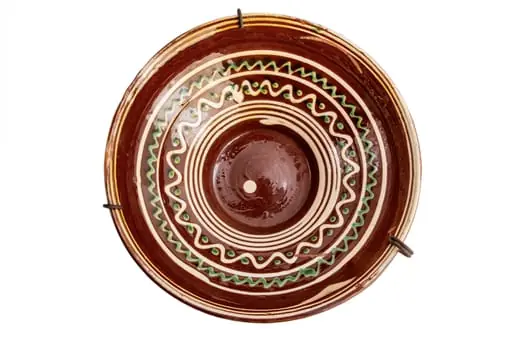 Formă tronconică; fond cărămiziu închis; culori: alb, verde; decorul geometrizant constă într-un cerc de culoare albă dispus pe fundul farfuriei încadrat de patru cercuri concentrice de culoare albă. Pe peretele farfuriei sînt dispuse două registre decorative delimitate de cercuri de culoare albă; în registrul inferior este amplasată o linie vălurită de culoare albă cu puncte verzi sugerînd un vrej; în registrul superior un zig -zag de culoare verde dispus circular. Sub buză sînt plasate două cercuri de culoare albă.
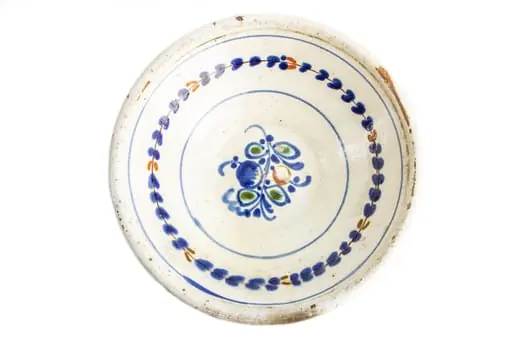 Formă tronconică; fond alb; culori: albastru, verde, cărămiziu; în centrul farfuriei este amplasat un buchet din flori albastre și una de culoare cărămizie, cu frunze verzi, înscris într-un cerc de culoare albastră. Pe perete este amplasat un vrej circular cu frunze albastre și cîteva de culoare cărămizie. Sub buză este dispus un cerc albastru.
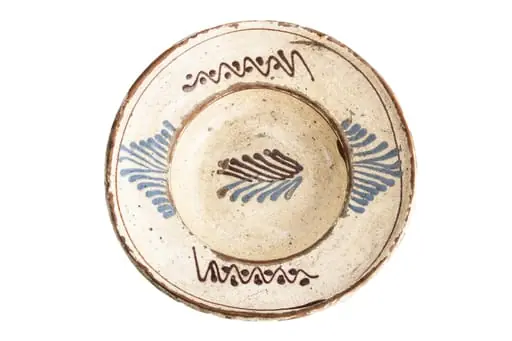 Formă tronconică; fond alb fildeșiu; în centrul vasului încadrată de un cerc de culoare maro este dispusă o ramură de brad colorată pe o parte maro, pe cealaltă în albastru. Pe peretele vasului sînt amplasate două grupuri de frunze stilizate de culoare albastră dispuse sub forma unor unghiuri între care sînt intecalate două linii vălurite de culoare maro cu puncte de culoare similară. Sub buza vasului este amplasat un cerc de culare maro.
 Formă tronconică; fond alb; în centrul vasului este amplasat un un cerc de culoare maro înscris în altul de culoare similară. Pe peretele vasului sînt dispuse câteva registre decorative: unul circular în care sînt plasate segmente de val de culoare verde, un altul mai lat decorat cu semicercuri cu contururi duble de culoare maro și verde, punctate la exterior; sub buza vasului în alt registru circular sînt amplasate linii vălurite de culoare cărămizie; buza vasului decorată cu un val circular de culoare maro închis. Folosită la decorarea interiorului țărănesc în așa numita - cameră bună.