Artwork
Formă tronconică; fond alb; culori: verde. În centru vasului este amplasată o frunză stilizată de culoare verde. Pe peretele vasului sînt dispuse trei ramuri de brad de culoare verde. Folosită la decorarea interiorului țărănesc în așa numita - cameră bună.
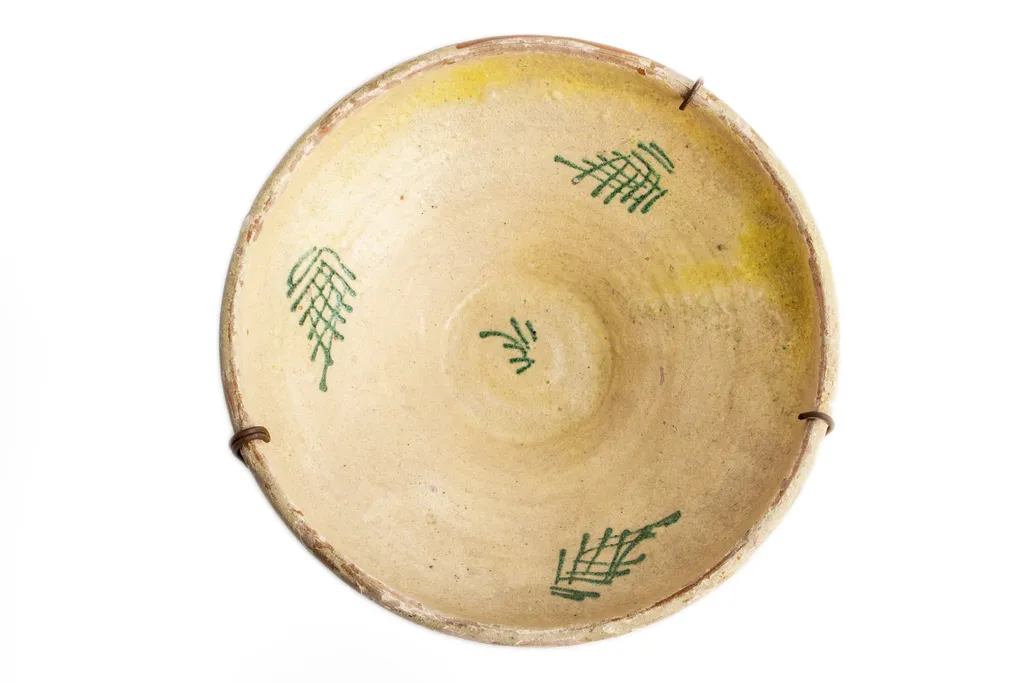
Formă tronconică; fond alb; culori: verde. În centru vasului este amplasată o frunză stilizată de culoare verde. Pe peretele vasului sînt dispuse trei ramuri de brad de culoare verde. Folosită la decorarea interiorului țărănesc în așa numita - cameră bună. is a print by Unknown. It dates from 1850 and is held in the collection of the Romanian Peasant Museum. A modest ceramic bowl, its surface glazed in a pale off-white, features minimal decoration in green pigment.
About this work
Overview
Two small handles flank its rim, and the form shows signs of handcrafting—slightly irregular edges, uneven thickness.
A modest ceramic bowl, its surface glazed in a pale off-white, features minimal decoration in green pigment. Two small handles flank its rim, and the form shows signs of handcrafting—slightly irregular edges, uneven thickness. The design is restrained: one central leaf and three pine branches, rendered with loose, unrefined strokes. Its function was domestic, not ceremonial, yet it held visual significance in the home.
Subject & Meaning
The stylized leaf and pine branches evoke natural elements familiar in rural life, possibly symbolizing continuity, resilience, or seasonal cycles. Their placement within the interior’s 'good room' suggests they were more than ornament—they carried cultural resonance, anchoring the space to the rhythms of nature and tradition without overt religious or mythological reference.
Technique & Style
Painted by hand with crude brushes or reed tools, the green motifs appear unpolished, their lines uneven and spontaneous. The pigment, likely mineral-based, sits lightly on the clay surface, showing wear consistent with use. The contrast between the muted background and bold green forms emphasizes simplicity over detail, reflecting a vernacular aesthetic rooted in practicality and local materials.
History & Provenance
Produced in a rural ceramic tradition, likely in the late 19th or early 20th century, this bowl was part of everyday domestic life rather than elite art production. Its survival suggests it was valued enough to be preserved, possibly in the ceremonial 'good room' of a peasant household. Similar pieces are documented in regional ethnographic collections, though this specific object’s origin remains unrecorded.
Context
In traditional Romanian households, the 'good room' served as a space for guests and special occasions, often decorated with handmade objects that signaled identity and care. This bowl, though unassuming, contributed to that atmosphere—its green motifs echoing the surrounding landscape and reinforcing a connection between the interior and the natural world beyond the home.
Legacy
Though not widely known outside regional collections, such objects represent a quiet continuity in folk art traditions. They challenge distinctions between utility and art, offering insight into how ordinary people imbued daily life with symbolic meaning. Today, institutions like the Museum of Ethnography preserve these items as records of non-elite cultural expression.
Artist & collection

 Domestic Scene
 Giacomo and Cardinal Marco, investing Andrea, Abbot of San Zeno, with his Benefice
 The Nymph of Fontainebleau
 Portrait of a Woman
 Madonna and Child with Saints in the Enclosed Garden
 Venus and Minerva
 Family Group of Four on Sofa
 Wall painting from Room H of the Villa of P. Fannius Synistor at Boscoreale
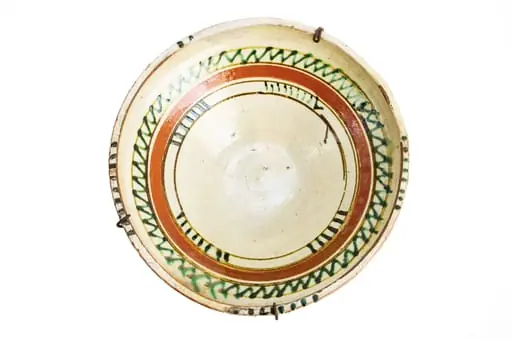 Formă tronconică; fond alb; decorul amplasat pe pereții vasului constă într-un cerc de culoare maro care are în exterior grupuri de linii verzi dispuse oblic; în planul următor o bandă circulară de culoare cărămizie încadrată de o linie circulară în zig-zag de culoare verde. Folosită la decorarea interiorului țărănesc în așa numita - cameră bună.
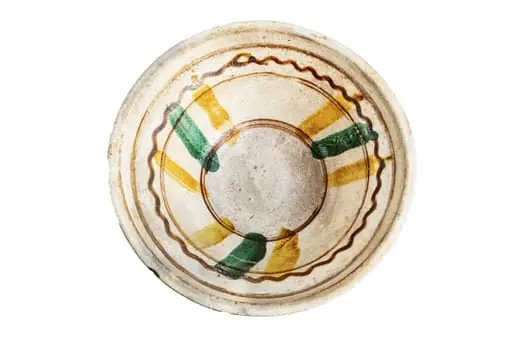 Formă tronconică; fond alb. În partea centrală este amplasat un cerc de culoare maro. Pe peretele vasului sînt amplasate trei grupuri decorative formate din trei linii: două de culoare galbenă și una verde, dispuse oblic, trasate cu pensula. În planul următor este amplasat un val circular și un cerc, ambele de culoare maro. Folosită la decorarea interiorului țărănesc în așa numita - cameră bună.
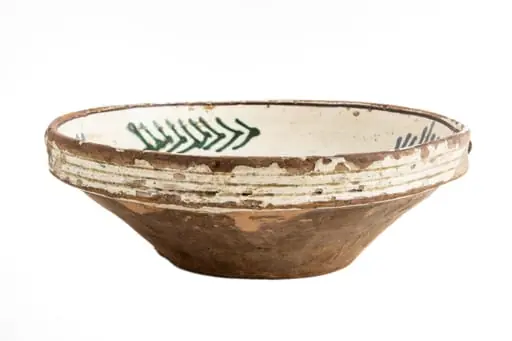 Formă tronconică; fond alb fildeșiu; în centrul vasului este dispusă orizontal o ramură de brad cu frunze de de culoare verde și albastră înscrisă într-un cerc. Pe peretele vasului sînt amplasate patru ramuri de brad, două de culoare albastră și două de culoare verde alternînd cromatic. Sub buza vasului este amplasat un cerc de culare maro.
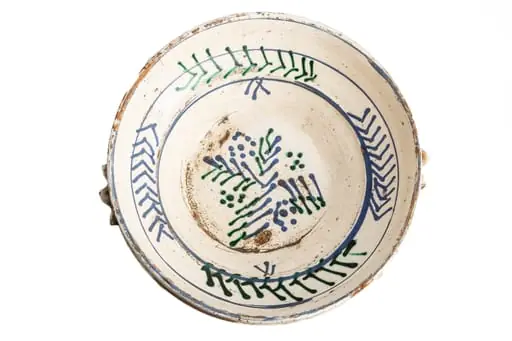 Formă tronconică; fond alb fildeșiu; în centrul vasului este dispusă o compoziție formată din ramuri de brad de culoare verde și albastră și puncte de culoare verde. Pe peretele farfuriei într-o bandă circulară delimitată de două cercuri albastre sînt amplasate patru ramuri de brad, două de culoare albastră și două de culoare verde alternînd cromatic. Sub buza vasului este amplasat un cerc de culare albastră.
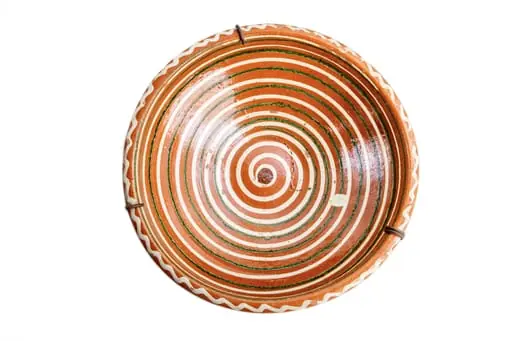 Formă tronconică; fond cărămiziu; decorul amplasat pe toată suprafața constă într-o spirală de culoare albă dublată discret de una de culoare verde. Buza vasului este decorată cu un val circular de culoare albă. Folosită la decorarea interiorului țărănesc în așa numita - cameră bună.
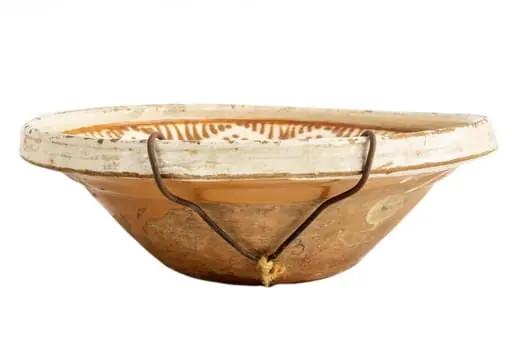 Formă tronconică; fond alb; culori: cărămiziu; albastru; verde; în centru vasului este dispus un vrej circular cu frunze de culoare verde, cărămizie și albastră alternînd cromatic, înscris într-un cerc de culoare cărămizie; pe peretele vasului este amplasată o stea, spațiul dintre raze este decorat cu linii verticale, paralele, grupate sub forma unor triunghiuri cu vărful orientat către centru. Sub buza vasului este amplasat un cerc.
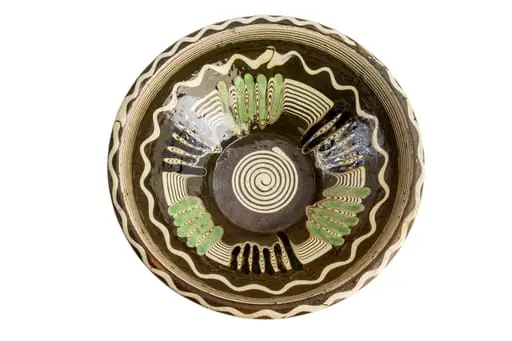 Formă tronconică; fond brun închis; culori: alb, verde. În centrul vasului este amplasată o spirală de culoare albă. Pe peretele vasului în partea inferioră a vasului sînt amplasate grupuri de semicercuri de culoare albă, paralele, jirăvite cu gaița și decorate cu grupuri de linii oblice de culoare verde jirăvite și ele. Sub buza farfuriei este dispus un vrej circular de culoare albă. Buza vasului decorată cu un val circular. Folosită la decorarea interiorului țărănesc în așa numita - cameră bună.
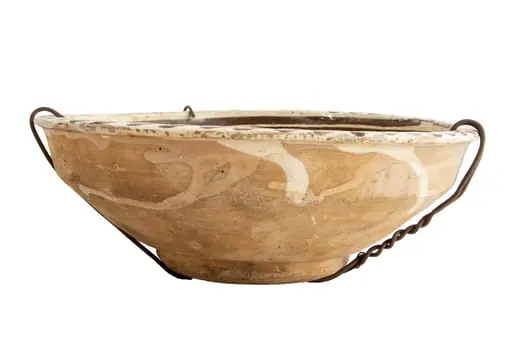 Formă tronconică; fond alb fildeșiu; pe fundul vasului este amplasată o spirală de culoare maro închis încadrată de semicercuri cu contur maro și interior de culoare verde; pe peretele vasului este amplasată o bandă circulară mai lată decorată cu motivul specific centrului: pînza de păianjen - realizată prin tehnică jirăvirii cu gaița. Întreaga compoziție este încadrată de un soare stilizat cu raze de culoare galben - portocaliu. Buza este decorată cu un val circular de culoare brună. Piesa reprezintă una dintre primele achiziții ale lui Alexandru Tzigara Samurcaș. Folosită la decorarea interiorului țărănesc în așa numita - cameră bună
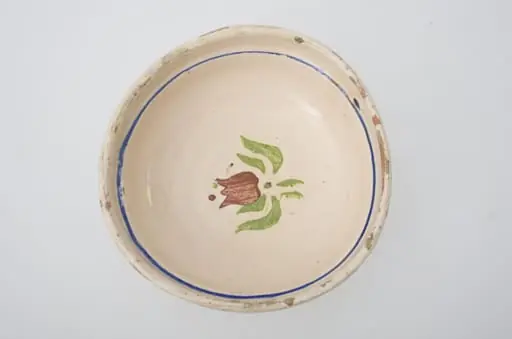 Blid de formă tronconică, adâncită; este smălțuit interior și exterior (doar buza); este decorat cu motive geometrice pe margine: linie; în centru este decorat cu motive florale: lalea. Cromatică: fond crem, maro, verde, albastru.
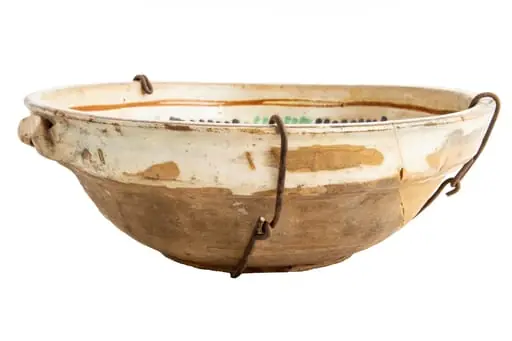 Formă tronconică; fond alb; pe fundul vasului este amplasată o spirală de culoare cărămizie încadrată de patru ramuri de brad; două de culoare albastră, una cărămizie și una verde. Sub buza vasului într-o bandă circulară delimitată de cercuri de culoare cărămizie sînt amplasate grupuri de linii de culoare albastră, verde, cărămizie, dispuse oblic, alternînd cromatic. Folosită la decorarea interiorului țărănesc în așa numita - cameră bună.
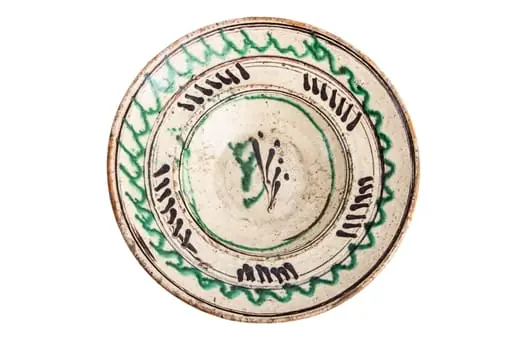 Formă tronconică; fond alb culori: verde, maro. În centrul farfuriei este amplasată o floare stilizată colorată cu verde și maro, trasată neglijent, înscrisă într-un cerc de culoare verde; pe peretele farfuriei sînt amplasate două registre decorative separate de cercuri de culoare maro; în cel înferior sînt amplasate cinci grupuri de linii de culoare maro dispuse oblic; în registrul superior sub buza vasului este dispusă o linie circulară în zig - zag de culoare verde.