Artwork
formă tronconică; fond alb fildeșiu; în centru vasului este amplasată o floare stilizată cu petale portocalii încadrată de cercuri concentrice de culoare brun închis. Pe peretele farfuriei este amplasată o stea cu patru raze; în interiorul fiecărei raze sînt amplasate linii oblice, paralele, de culoare brună între care sînt intercalate puncte de culoare portocalie. La exterior între razele stelei decorul este similar, excepție face doar culoarea punctelor: brun închis. Sub buza vasului sînt dispuse cercuri concentrice de culoare brună; pe buză esre amplasată o linie vălurită de culoare similară.
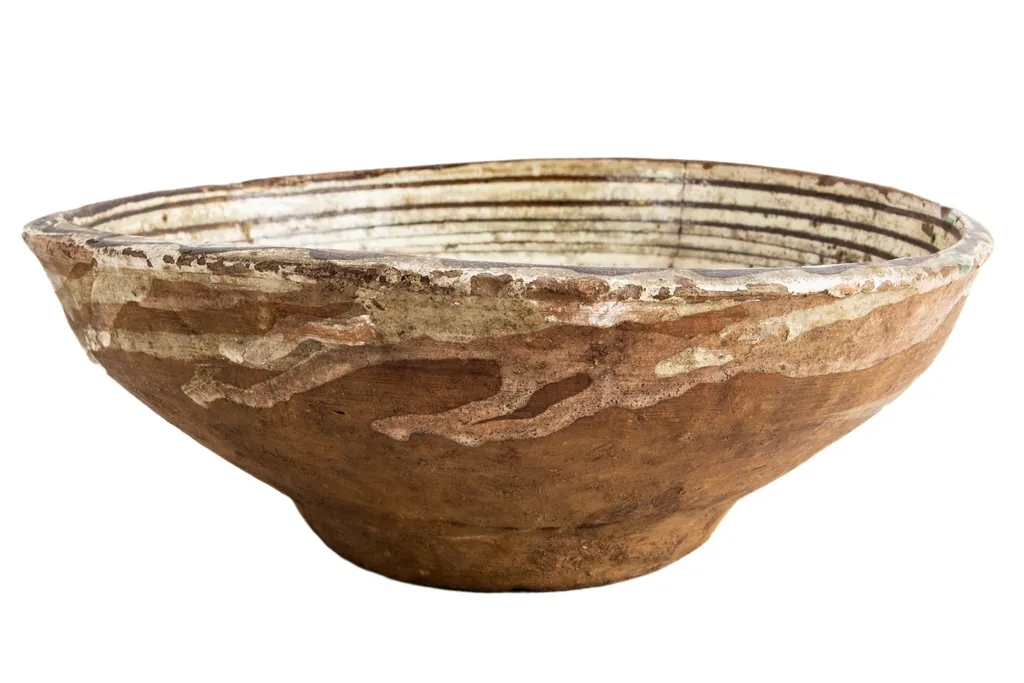
formă tronconică; fond alb fildeșiu; în centru vasului este amplasată o floare stilizată cu petale portocalii încadrată de cercuri concentrice de culoare brun închis. Pe peretele farfuriei este amplasată o stea cu patru raze; în interiorul fiecărei raze sînt amplasate linii oblice, paralele, de culoare brună între care sînt intercalate puncte de culoare portocalie. La exterior între razele stelei decorul este similar, excepție face doar culoarea punctelor: brun închis. Sub buza vasului sînt dispuse cercuri concentrice de culoare brună; pe buză esre amplasată o linie vălurită de culoare similară. is a print by Unknown. It dates from 1850 and is held in the collection of the Romanian Peasant Museum.
About this work
Overview
The object is a circular, low‑profile bowl of clay, its exterior showing signs of wear such as cracks and small areas where the surface has chipped. The overall palette is dominated by earthy brown tones, accented by patches of faded white and darker spots near the rim.
Subject & Meaning
Inside the vessel, a stylized orange flower occupies the central space, encircled by concentric dark brown rings. Adjacent to the flower, a four‑pointed star is rendered, each arm filled with slanted brown lines interspersed with orange dots; the spaces between the star’s arms repeat this motif using only brown dots.
Technique & Style
The decorative scheme relies on painted appliqués applied to the ceramic surface. Concentric circles, linear hatching and dotted patterns create a rhythmic visual language, while the wavy line that follows the rim adds a subtle, organic counterpoint to the geometric motifs.
History & Provenance
The bowl is presented as an image rather than a physical object, suggesting it may be a digitized record of a museum piece. No specific acquisition details, maker’s name, or date of manufacture are provided in the source material.
Context
Such painted motifs—stylized flora, star symbols and repetitive concentric designs—are common in folk pottery traditions, where functional vessels often serve as canvases for symbolic or decorative expression linked to local aesthetic conventions.
Artist & collection

 Domestic Scene
 Giacomo and Cardinal Marco, investing Andrea, Abbot of San Zeno, with his Benefice
 The Nymph of Fontainebleau
 Portrait of a Woman
 Madonna and Child with Saints in the Enclosed Garden
 Venus and Minerva
 Family Group of Four on Sofa
 Wall painting from Room H of the Villa of P. Fannius Synistor at Boscoreale
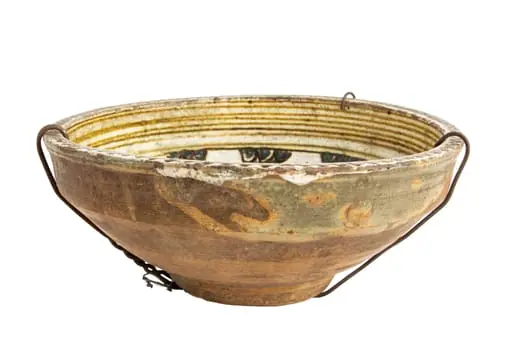 Formă tronconică; fond alb. Decorul, pictat pe fond alb și amplasat în centrul farfuriei, este reprezentat de o spirală dispusă central, de culoare maro încadrată de un soare stilizat cu șase raze. Pe peretele vasului este amplasat un soare de culoare albă cu nouă raze. Între razele soarelui sînt amplasate triunghiuri de culoare maro închis formate din alăturarea unor semicercuri. Sub buza vasului sînt amplasate mai multe cercuri concentrice de culoare maro. Buza farfuriei este decorată cu un val de culoare maro Folosită la decorarea interiorului țărănesc în așa numita - cameră bună.
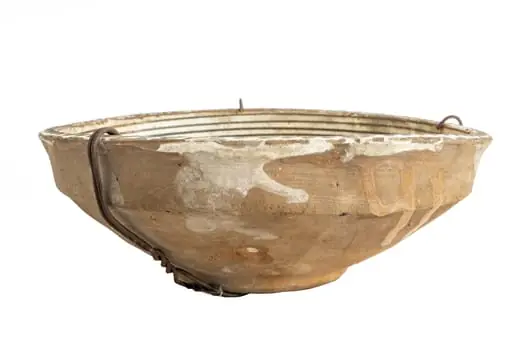 Formă tronconică; fond alb; în centrul vasului este amplasat un un cerc de culoare maro înscris în altul de culoare similară. Pe peretele vasului sînt dispuse câteva registre decorative: unul circular în care sînt plasate segmente de val de culoare verde, un altul mai lat decorat cu semicercuri cu contururi duble de culoare maro și verde, punctate la exterior; sub buza vasului în alt registru circular sînt amplasate linii vălurite de culoare cărămizie; buza vasului decorată cu un val circular de culoare maro închis. Folosită la decorarea interiorului țărănesc în așa numita - cameră bună.
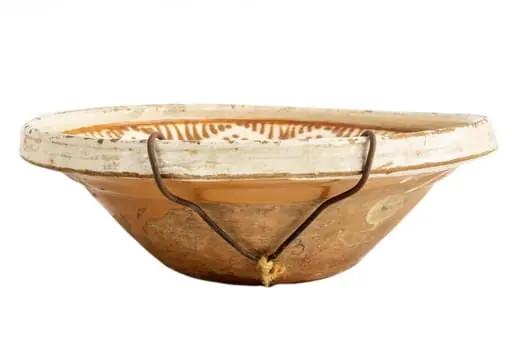 Formă tronconică; fond alb; culori: cărămiziu; albastru; verde; în centru vasului este dispus un vrej circular cu frunze de culoare verde, cărămizie și albastră alternînd cromatic, înscris într-un cerc de culoare cărămizie; pe peretele vasului este amplasată o stea, spațiul dintre raze este decorat cu linii verticale, paralele, grupate sub forma unor triunghiuri cu vărful orientat către centru. Sub buza vasului este amplasat un cerc.
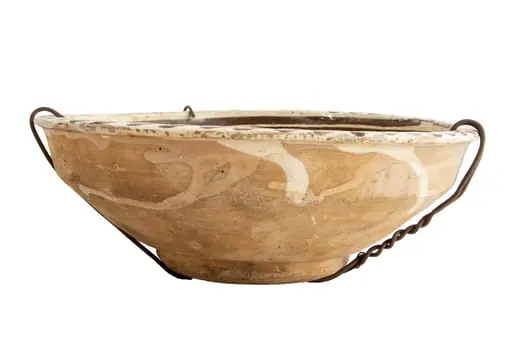 Formă tronconică; fond alb fildeșiu; pe fundul vasului este amplasată o spirală de culoare maro închis încadrată de semicercuri cu contur maro și interior de culoare verde; pe peretele vasului este amplasată o bandă circulară mai lată decorată cu motivul specific centrului: pînza de păianjen - realizată prin tehnică jirăvirii cu gaița. Întreaga compoziție este încadrată de un soare stilizat cu raze de culoare galben - portocaliu. Buza este decorată cu un val circular de culoare brună. Piesa reprezintă una dintre primele achiziții ale lui Alexandru Tzigara Samurcaș. Folosită la decorarea interiorului țărănesc în așa numita - cameră bună
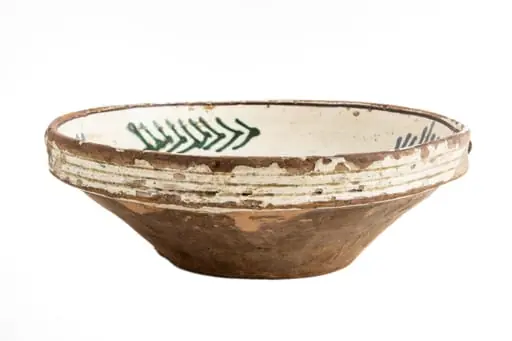 Formă tronconică; fond alb fildeșiu; în centrul vasului este dispusă orizontal o ramură de brad cu frunze de de culoare verde și albastră înscrisă într-un cerc. Pe peretele vasului sînt amplasate patru ramuri de brad, două de culoare albastră și două de culoare verde alternînd cromatic. Sub buza vasului este amplasat un cerc de culare maro.
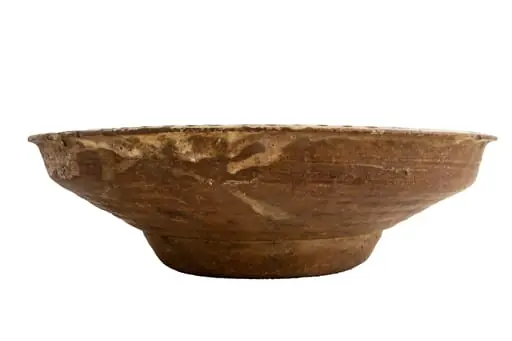 Formă tronconică; fond alb fildeșiu; pe fundul vasului este dispusă o bandă circulară de culoare cărămizie; pe umărul vasului sînt amplasate două cercuri realizate din puncte de culoare verde între care se intercalează o bandă circulară mai lată decorată cu motivul specific centrului: pînza de păianjen - realizată prin tehnică jirăvirii cu gaița. Pe pînza de păianjen sânt amplasate mici pete de culoare cărămizie. Buza este decorată cu un val circular de culoare brună. Piesa reprezintă una dintre primele achiziții ale lui Alexandru Tzigara Samurcaș. Folosită la decorarea interiorului țărănesc în așa numita - cameră bună.
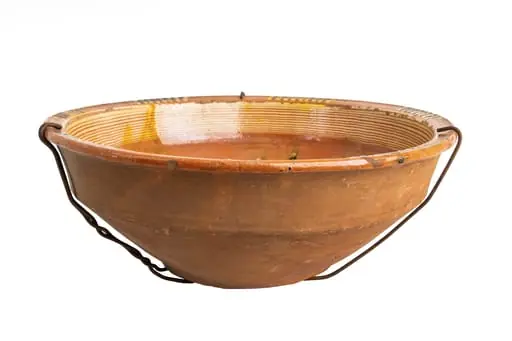 Formă tronconică; fond cărămiziu; pe fundul vasului, în centru este dispusă o serie de cercuri concentrice de culoare albă încadrate de un vrej circular cu frunze de culoare brun închis. Pe peretele farfuriei este amplasat un registru compus din cercuri concentrice de culoare albă, subțiri ,decorat cu linii verticale de culoare albă cu puncte brun închis. Pe umărul vasului sînt dispuse vrejuri semicirculare de culoare albă, respectiv galbenă cu frunze brune. Buza vasului decorată cu vrejuri similare alternînd cromatic. Folosită la decorarea interiorului țărănesc în așa numita - cameră bună.
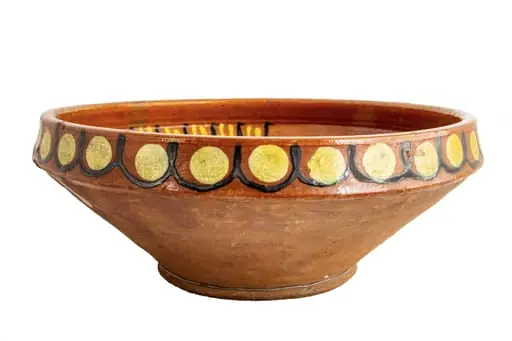 Formă tronconică; fond cărămiziu. Decorul constă într-o spirală de culoare galbenă amplasată central pe fundul vasului, o bandă circulară de culoare galbenă încadrată de două cercuri de culoare brun închis și o linie circulară în zig -zag de culoare galbenă. Pe peretele vasului sub buză sînt dispuse trei grupuri de semicercuri cu conturul exterior de culoare brun închis; cel înterior fiind de culoare galbenă. La exterior sub buză este amplasat un șir de semicercuri de culoare brun închis; fiecare semicerc are în interior un cerc de culoare galbenă. Folosită la decorarea interiorului țărănesc în așa numita - cameră bună.
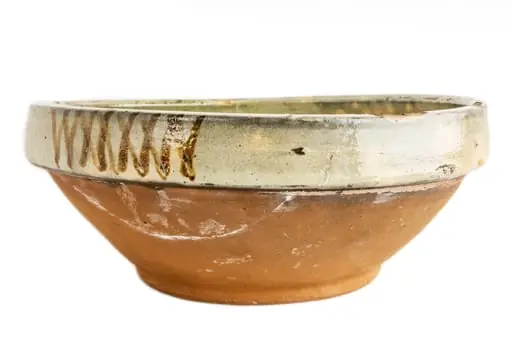 Formă tronconică; fond alb - cenușiu; în centru este amplasată o floare cu petale verzi peste care a fost suprapusă o alta cu petale de culoare cărămizie; sub buza vasului este dispus un cerc de culoare maro. În exterior sub buza vasului pe un fond alb sînt amplasate romburi de culoare maro cu galben. Folosită la decorarea interiorului țărănesc în așa numita - cameră bună.
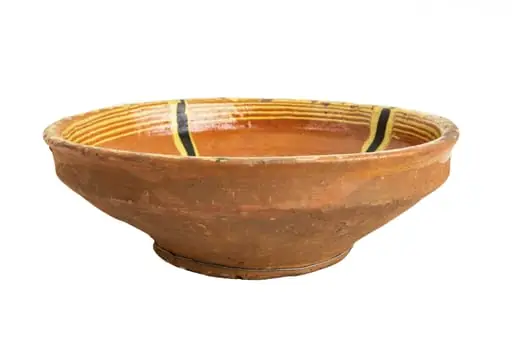 Formă tronconică; fond cărămiziu. Pe fundul vasului, în centru este amplasată o spirală de culoare galbenă încadrată de o serie de cercuri concentrice subțiri de aceeași culoare. Pe peretele vasului sînt dispuse vertical patru linii de culoare brună cu contururi galbene. Buza vasului este decorată cu un val circular de culoare galbenă.