Artwork
Formă tronconică; fond cărămiziu; culori: galben, verde. În centru este amplasată o spirală de culoare galbenă trasată cu cornul și pete de culoare verde realizate prin stropire cu pensula; pe perete strachinei este amplasat un vrej de culoare galbenă, două cercuri concentrice de culoare similară și șase grupuri de semicercuri galbene și pete de culoare verde.
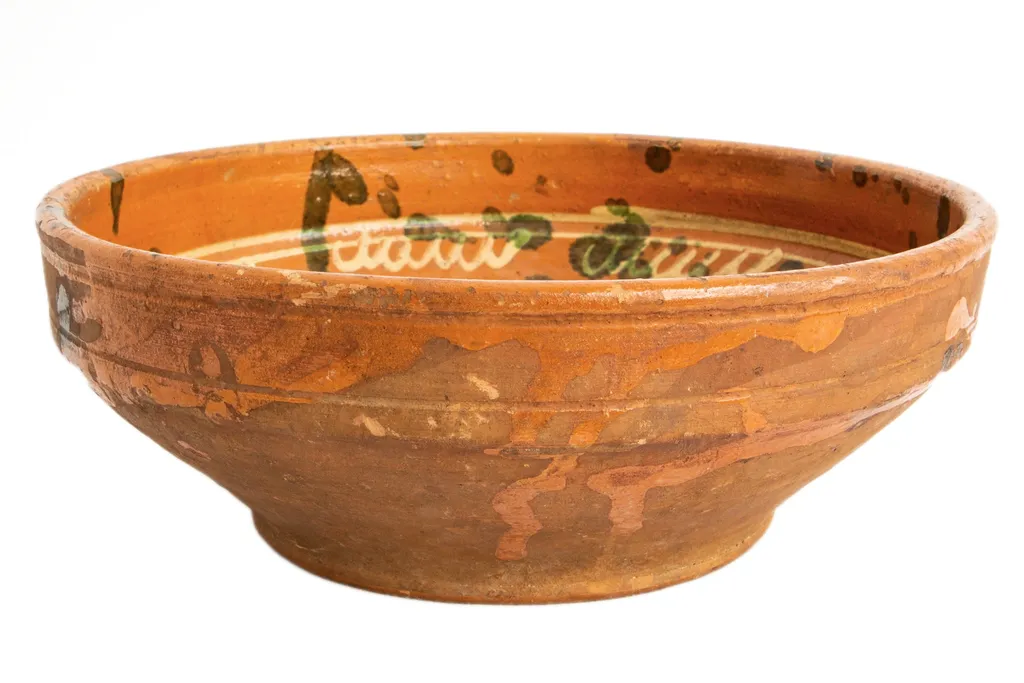
Formă tronconică; fond cărămiziu; culori: galben, verde. În centru este amplasată o spirală de culoare galbenă trasată cu cornul și pete de culoare verde realizate prin stropire cu pensula; pe perete strachinei este amplasat un vrej de culoare galbenă, două cercuri concentrice de culoare similară și șase grupuri de semicercuri galbene și pete de culoare verde. is a print by Unknown. It dates from 1978 and is held in the collection of the Romanian Peasant Museum. This is a hand-formed clay vessel with a conical shape and a weathered, earth-toned exterior.
About this work
Overview
This is a hand-formed clay vessel with a conical shape and a weathered, earth-toned exterior.
This is a hand-formed clay vessel with a conical shape and a weathered, earth-toned exterior. Its surface shows signs of use and aging, with muted patches of brown and orange. The interior features minimal decoration, centered around a faint yellow spiral and scattered green pigment marks, suggesting deliberate but unadorned artistic intent. The overall appearance reflects utilitarian pottery with subtle ornamental additions.
Subject & Meaning
The decoration lacks figurative elements, focusing instead on abstract geometric forms: a central spiral, concentric circles, semicircular clusters, and isolated dots. These patterns may have held symbolic significance within the culture that produced them, possibly relating to natural cycles, cosmology, or ritual practice. Their placement inside the vessel suggests the design was intended for private or ceremonial viewing rather than public display.
Technique & Style
The yellow spiral and lines were likely drawn with a pointed tool, while the green marks were applied by flicking pigment-laden brushes or reeds. The pigment, possibly mineral-based, was applied sparingly against the clay’s natural hue. The style is restrained, emphasizing repetition and spatial balance over complexity. The brushwork is loose, indicating a direct, immediate method of application without preliminary sketching.
History & Provenance
The vessel originates from a prehistoric or early historic settlement in the Carpathian region, likely dating to the late Neolithic or early Bronze Age. Its material and decorative style align with pottery traditions found in archaeological contexts across modern-day Romania and Moldova. It was likely recovered from a domestic or burial site, though its exact excavation history remains undocumented in public records.
Context
This piece belongs to a broader tradition of early ceramic art in Eastern Europe, where functional vessels often bore minimal, non-representational decoration. Similar motifs appear on contemporaneous pottery from the Cucuteni-Trypillia and Gumelnița cultures. The use of limited color palettes and repetitive forms suggests shared visual languages across regional communities, possibly linked through trade or cultural exchange.
Legacy
The vessel contributes to understanding the development of symbolic expression in early pottery traditions. Its simplicity underscores how meaning could be conveyed through form and minimal ornamentation. Today, it is held in the collection of the Museum of Ethnography, where it serves as a reference for studying the aesthetic choices of prehistoric potters and the continuity of decorative motifs in later folk ceramics.
Artist & collection

 Domestic Scene
 Giacomo and Cardinal Marco, investing Andrea, Abbot of San Zeno, with his Benefice
 The Nymph of Fontainebleau
 Portrait of a Woman
 Madonna and Child with Saints in the Enclosed Garden
 Venus and Minerva
 Family Group of Four on Sofa
 Wall painting from Room H of the Villa of P. Fannius Synistor at Boscoreale
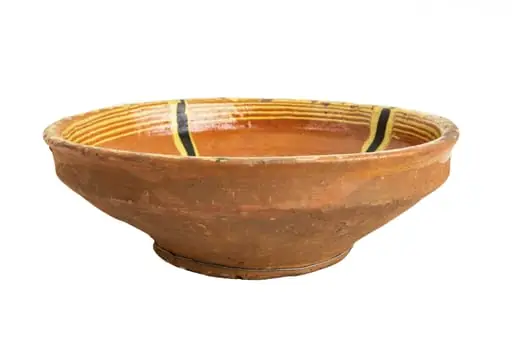 Formă tronconică; fond cărămiziu. Pe fundul vasului, în centru este amplasată o spirală de culoare galbenă încadrată de o serie de cercuri concentrice subțiri de aceeași culoare. Pe peretele vasului sînt dispuse vertical patru linii de culoare brună cu contururi galbene. Buza vasului este decorată cu un val circular de culoare galbenă.
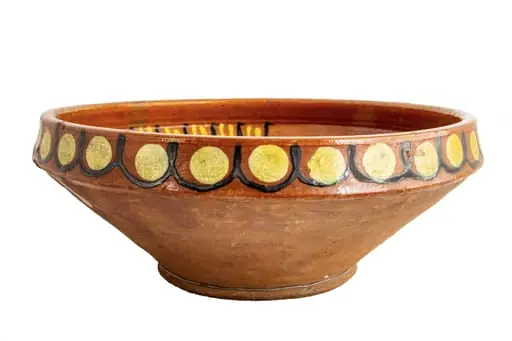 Formă tronconică; fond cărămiziu. Decorul constă într-o spirală de culoare galbenă amplasată central pe fundul vasului, o bandă circulară de culoare galbenă încadrată de două cercuri de culoare brun închis și o linie circulară în zig -zag de culoare galbenă. Pe peretele vasului sub buză sînt dispuse trei grupuri de semicercuri cu conturul exterior de culoare brun închis; cel înterior fiind de culoare galbenă. La exterior sub buză este amplasat un șir de semicercuri de culoare brun închis; fiecare semicerc are în interior un cerc de culoare galbenă. Folosită la decorarea interiorului țărănesc în așa numita - cameră bună.
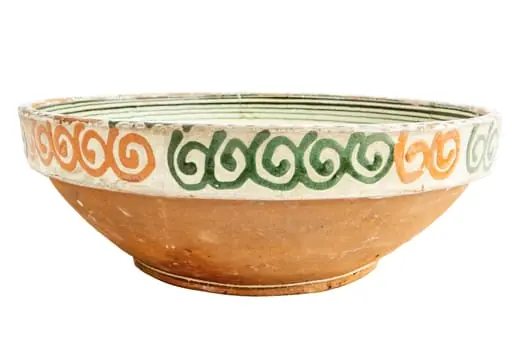 Formă tronconică; fond alb. În centru un grup de pete de culoare verde, galbenă, portocalie, cărămizie, realizat prin stropire cu pensula este încadrat de o bandă circulară jirăvită cu gaița, de culoare verde și de un val circular cărămiziu. Buza vasului decorată cu un val de culoare verde. Folosită la decorarea interiorului țărănesc în așa numita - cameră bună.
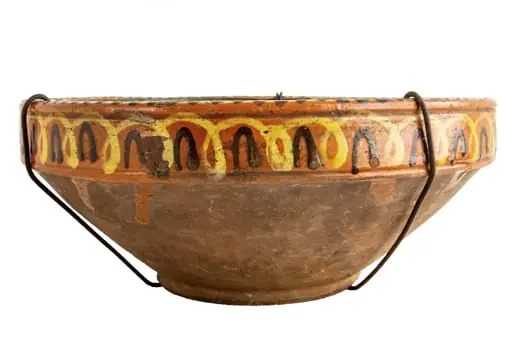 Formă tronconică; fond galben; pe fundul vasului este amplasată o bandă circulară de culoare verde închis încadrată de o altă bandă circulară decorată cu grupuri de linii paralele de culoare verde închis dispuse oblic; spațiul dintre linii ușor mai deschis la culoare. În exteriorul acestei compoziții sînt amplasate șiruri de semicercuri cărămizii cu puncte de culoare verde în interior. Pe peretele vasului este dispusă o altă bandă circulară decorată similar cu cea descrisă anterior, încadrată de un val circular de culoare cărămizie. Buza vasului decorată cu un val de culoare verde. Sub buză, pe exterior este amplasat un meandru de culoare galbenă și brun închis. Folosită la decorare interiorului țărănesc în așa numita - cameră bună.
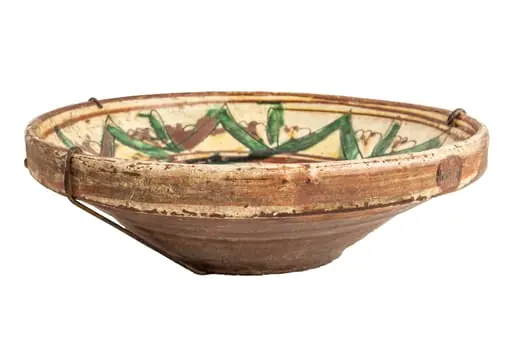 Formă tronconică; fond alb gălbui. În parte centrală, într-un cerc de culoare maro este amplasat un buchet de flori format din patru lalele de culoare verde, cu frunze de culoare similară. Pe peretele farfuriei este amplasat un soare cu raze de culoare verde. Contururile florilor și al soarelui sînt realizate în tehnica sgrafițării. Folosită la decorarea interiorului țărănesc în așa numita - cameră bună.
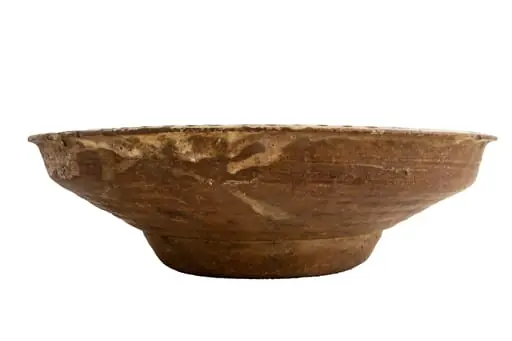 Formă tronconică; fond alb fildeșiu; pe fundul vasului este dispusă o bandă circulară de culoare cărămizie; pe umărul vasului sînt amplasate două cercuri realizate din puncte de culoare verde între care se intercalează o bandă circulară mai lată decorată cu motivul specific centrului: pînza de păianjen - realizată prin tehnică jirăvirii cu gaița. Pe pînza de păianjen sânt amplasate mici pete de culoare cărămizie. Buza este decorată cu un val circular de culoare brună. Piesa reprezintă una dintre primele achiziții ale lui Alexandru Tzigara Samurcaș. Folosită la decorarea interiorului țărănesc în așa numita - cameră bună.
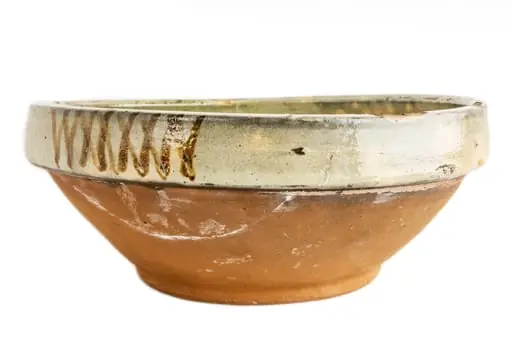 Formă tronconică; fond alb - cenușiu; în centru este amplasată o floare cu petale verzi peste care a fost suprapusă o alta cu petale de culoare cărămizie; sub buza vasului este dispus un cerc de culoare maro. În exterior sub buza vasului pe un fond alb sînt amplasate romburi de culoare maro cu galben. Folosită la decorarea interiorului țărănesc în așa numita - cameră bună.
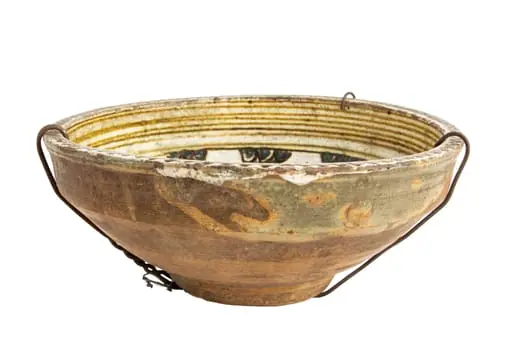 Formă tronconică; fond alb. Decorul, pictat pe fond alb și amplasat în centrul farfuriei, este reprezentat de o spirală dispusă central, de culoare maro încadrată de un soare stilizat cu șase raze. Pe peretele vasului este amplasat un soare de culoare albă cu nouă raze. Între razele soarelui sînt amplasate triunghiuri de culoare maro închis formate din alăturarea unor semicercuri. Sub buza vasului sînt amplasate mai multe cercuri concentrice de culoare maro. Buza farfuriei este decorată cu un val de culoare maro Folosită la decorarea interiorului țărănesc în așa numita - cameră bună.
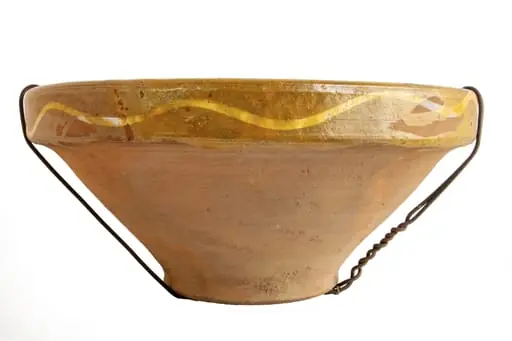 Formă tronconică; fond galben - cărămiziu. Decorul amplasat pe pereții vasului constă în trei grupuri de motive scheomorfe de culoare galbenă; fiecare grup este format din două greble.
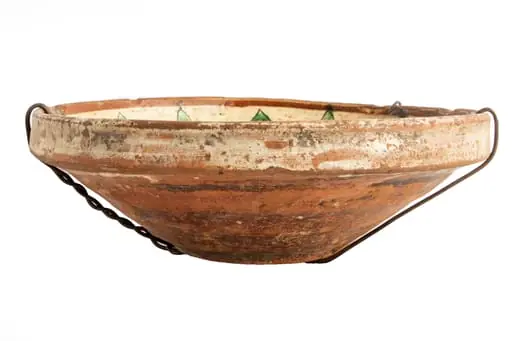 Formă tronconică; fond alb. În partea centrală în interiorul unui cerc de culoare maro este amplasată o compoziție florală formată dintr-o floare cu petale de culoare verde și galbenă încadrată de patru lalele cu petale verzi și corolă galbenă, care alternează decorativ cu alți patru clopoței. Contururile florilor sînt realizate prin zgrafitare. Pe peretele vasului amplasat un soare cu contururi de culoare verde și raze galbene. Folosită la decorarea interiorului țărănesc în așa numita - cameră bună dar și în bucătărie.
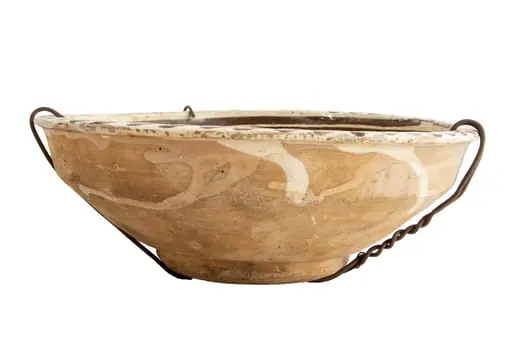 Formă tronconică; fond alb fildeșiu; pe fundul vasului este amplasată o spirală de culoare maro închis încadrată de semicercuri cu contur maro și interior de culoare verde; pe peretele vasului este amplasată o bandă circulară mai lată decorată cu motivul specific centrului: pînza de păianjen - realizată prin tehnică jirăvirii cu gaița. Întreaga compoziție este încadrată de un soare stilizat cu raze de culoare galben - portocaliu. Buza este decorată cu un val circular de culoare brună. Piesa reprezintă una dintre primele achiziții ale lui Alexandru Tzigara Samurcaș. Folosită la decorarea interiorului țărănesc în așa numita - cameră bună