Artwork
Formă tronconică; fond alb. În centru un grup de pete de culoare verde, galbenă, portocalie, cărămizie, realizat prin stropire cu pensula este încadrat de o bandă circulară jirăvită cu gaița, de culoare verde și de un val circular cărămiziu. Buza vasului decorată cu un val de culoare verde. Folosită la decorarea interiorului țărănesc în așa numita - cameră bună.
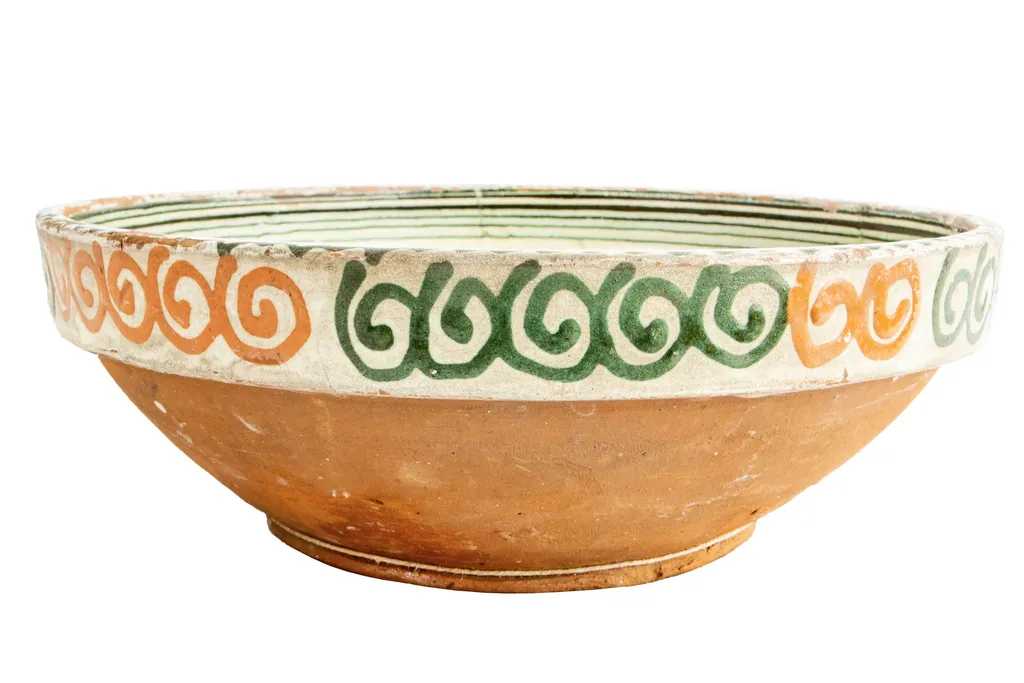
Formă tronconică; fond alb. În centru un grup de pete de culoare verde, galbenă, portocalie, cărămizie, realizat prin stropire cu pensula este încadrat de o bandă circulară jirăvită cu gaița, de culoare verde și de un val circular cărămiziu. Buza vasului decorată cu un val de culoare verde. Folosită la decorarea interiorului țărănesc în așa numita - cameră bună. is a print by Unknown. It dates from 1906 and is held in the collection of the Romanian Peasant Museum. This shallow clay bowl, dated to around 1906, features a plain, wide form typical of domestic pottery from rural Romania.
About this work
Inside, the bowl has a white background with splashes of green, yellow, orange, and brown—like someone flicked paint with a brush.
This is a simple clay bowl with a wide, shallow shape. The rim is painted in a repeating wave pattern of green and orange. Inside, the bowl has a white background with splashes of green, yellow, orange, and brown—like someone flicked paint with a brush. The colors are bright but a little faded, and the bowl looks old.
The bowl was likely used to decorate a special room in a traditional home, called the "cameră bună" or "good room." It’s not signed, so we don’t know who made it, but it’s from around 1906.
Check out the Museum of Ethnography to see more everyday objects like this one.
Overview
This shallow clay bowl, dated to around 1906, features a plain, wide form typical of domestic pottery from rural Romania. Its surface is minimally treated—white-glazed inside and decorated with hand-applied color splashes and a single painted band along the rim. No maker’s mark is present, suggesting it was crafted for local use rather than commercial sale. It reflects the informal, functional aesthetics of household objects in early 20th-century peasant homes.
Subject & Meaning
The interior’s irregular splashes of green, yellow, orange, and brick-red appear spontaneous, possibly mimicking natural patterns or seasonal hues. These marks, applied by flicking a brush, were not symbolic in a formal sense but carried cultural weight as expressions of vitality and care within the home. The vessel was displayed in the cameră bună—the best room of a peasant household—where it served as a quiet emblem of domestic pride and aesthetic attention.
Technique & Style
The decoration was executed using a direct, unrefined method: pigment was flicked onto the clay surface to create dappled color fields, while the rim was edged with a continuous wave motif in green and orange. The technique required no specialized tools, relying on the potter’s hand and intuition. The colors, though once vivid, have softened with time, revealing the material’s organic aging and the work’s intimate, non-industrial origins.
History & Provenance
The bowl was likely produced in a rural workshop or by a household member in early 20th-century Romania, possibly in the Moldavia or Transylvania regions. It entered museum collections in the 20th century as part of broader efforts to document folk material culture. Its lack of signature and documented origin reflects the anonymity common among artisans whose work was valued for utility and tradition rather than individual authorship.
Context
In traditional Romanian peasant homes, the cameră bună was reserved for guests and special occasions, often furnished with handcrafted items that signaled respectability and cultural continuity. This bowl, though simple, was part of a larger visual language of domestic decoration—where color, pattern, and placement communicated social values. Its presence in such a space elevated everyday objects into markers of identity and belonging.
Legacy
Today, the bowl is preserved as an example of vernacular ceramic practice, illustrating how ordinary households engaged with color and form without formal training. It contributes to ethnographic records that highlight the quiet creativity embedded in rural life. Museums display such objects not as art in the elite sense, but as evidence of lived culture—where beauty arose from necessity and familiarity.
Artist & collection

 Domestic Scene
 Giacomo and Cardinal Marco, investing Andrea, Abbot of San Zeno, with his Benefice
 The Nymph of Fontainebleau
 Portrait of a Woman
 Madonna and Child with Saints in the Enclosed Garden
 Venus and Minerva
 Family Group of Four on Sofa
 Wall painting from Room H of the Villa of P. Fannius Synistor at Boscoreale
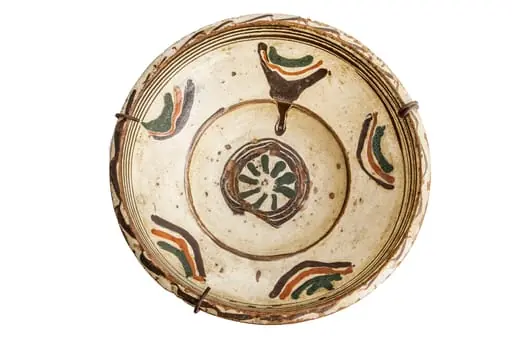 Formă tronconică; fond alb fildeșiu; pe fundul vasului dispusă central o floare cu petale de culoare verde înscrisă într-o bandă circulară formată din mai multe cercuri de culoare maro. Pereții vasului sînt decorați cu cinci grupe de semicercuri; fiecare grup format din trei semicercuri colorate în verde, maro și portocaliu neglijent realizate (în cazul unuia culoarea s-a scurs). Buza este decorată cu un val circular de culoare maro închis. Piesa reprezintă una dintre primele achiziții ale lui Alexandru Tzigara Samurcaș. Folosită la decorarea interiorului țărănesc în așa numita - cameră bună.
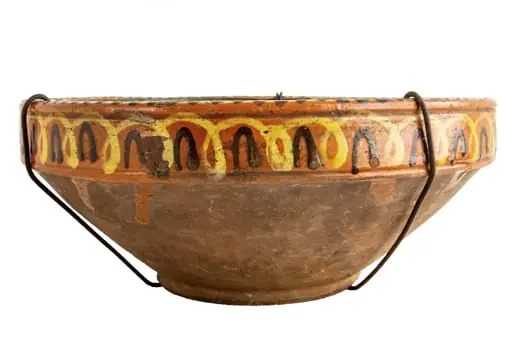 Formă tronconică; fond galben; pe fundul vasului este amplasată o bandă circulară de culoare verde închis încadrată de o altă bandă circulară decorată cu grupuri de linii paralele de culoare verde închis dispuse oblic; spațiul dintre linii ușor mai deschis la culoare. În exteriorul acestei compoziții sînt amplasate șiruri de semicercuri cărămizii cu puncte de culoare verde în interior. Pe peretele vasului este dispusă o altă bandă circulară decorată similar cu cea descrisă anterior, încadrată de un val circular de culoare cărămizie. Buza vasului decorată cu un val de culoare verde. Sub buză, pe exterior este amplasat un meandru de culoare galbenă și brun închis. Folosită la decorare interiorului țărănesc în așa numita - cameră bună.
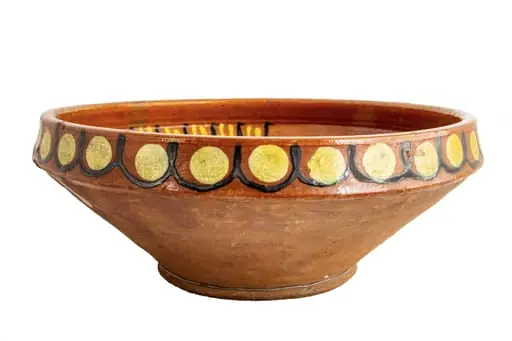 Formă tronconică; fond cărămiziu. Decorul constă într-o spirală de culoare galbenă amplasată central pe fundul vasului, o bandă circulară de culoare galbenă încadrată de două cercuri de culoare brun închis și o linie circulară în zig -zag de culoare galbenă. Pe peretele vasului sub buză sînt dispuse trei grupuri de semicercuri cu conturul exterior de culoare brun închis; cel înterior fiind de culoare galbenă. La exterior sub buză este amplasat un șir de semicercuri de culoare brun închis; fiecare semicerc are în interior un cerc de culoare galbenă. Folosită la decorarea interiorului țărănesc în așa numita - cameră bună.
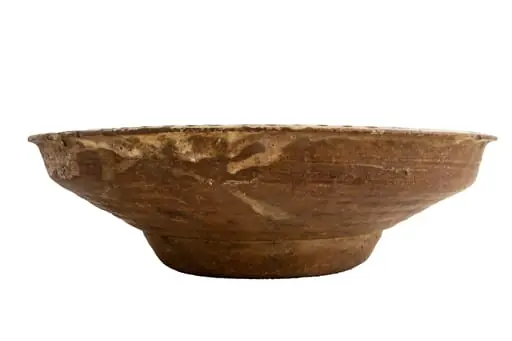 Formă tronconică; fond alb fildeșiu; pe fundul vasului este dispusă o bandă circulară de culoare cărămizie; pe umărul vasului sînt amplasate două cercuri realizate din puncte de culoare verde între care se intercalează o bandă circulară mai lată decorată cu motivul specific centrului: pînza de păianjen - realizată prin tehnică jirăvirii cu gaița. Pe pînza de păianjen sânt amplasate mici pete de culoare cărămizie. Buza este decorată cu un val circular de culoare brună. Piesa reprezintă una dintre primele achiziții ale lui Alexandru Tzigara Samurcaș. Folosită la decorarea interiorului țărănesc în așa numita - cameră bună.
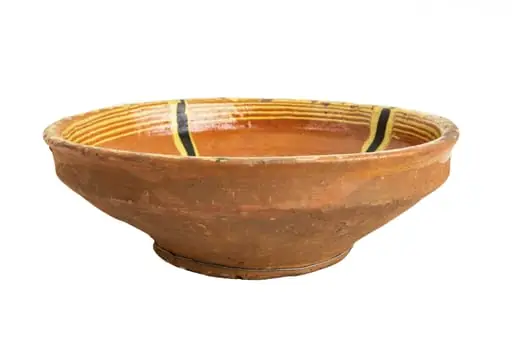 Formă tronconică; fond cărămiziu. Pe fundul vasului, în centru este amplasată o spirală de culoare galbenă încadrată de o serie de cercuri concentrice subțiri de aceeași culoare. Pe peretele vasului sînt dispuse vertical patru linii de culoare brună cu contururi galbene. Buza vasului este decorată cu un val circular de culoare galbenă.
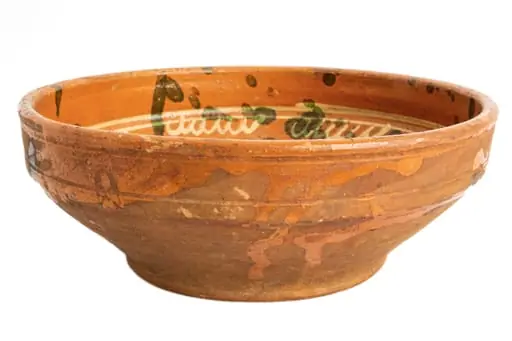 Formă tronconică; fond cărămiziu; culori: galben, verde. În centru este amplasată o spirală de culoare galbenă trasată cu cornul și pete de culoare verde realizate prin stropire cu pensula; pe perete strachinei este amplasat un vrej de culoare galbenă, două cercuri concentrice de culoare similară și șase grupuri de semicercuri galbene și pete de culoare verde.
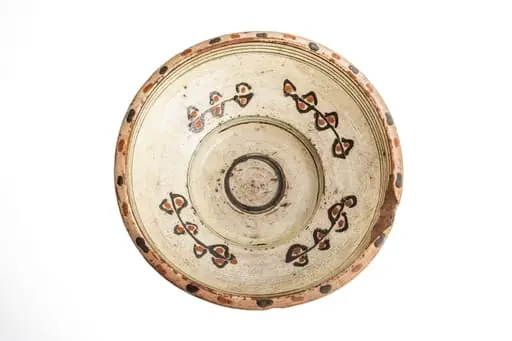 Formă tronconică; fond alb fildeșiu; în centrul farfuriei în partea centrală este amplasat un cerc de culoare brună; pe peretele vasului sînt dispuse patru vrejuri de culoare brună cu frunze portocalii; sub buză sînt amplasate cercuri concentrice de culoare brună; buza decorată cu pete de culoare brun și cărămiziu alternînd cromatic.
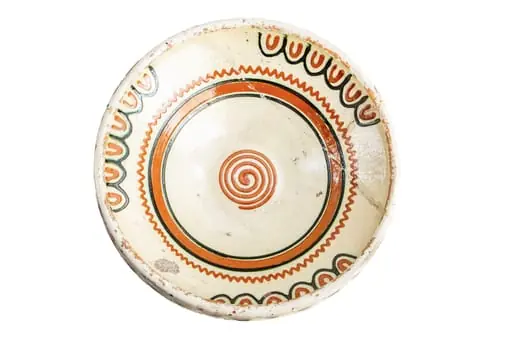 Formă tronconică; fond alb. În centru vasului este amplasată o spirală de culoare cărămizie încadrată de o bandă și un val circular de aceeași culoare. Sub buza vasului sînt amplasate trei grupuri de semicercuri de culoare verde închis, fiecare semicerc are în interior un altul, mai mic de culoare cărămizie. Sub buza vasului, la exterior este amplasat un val circular de culoare verde decorat cu cercuri de culoare cărămizie. Folosită la decorarea interiorului țărănesc în așa numita - cameră bună.
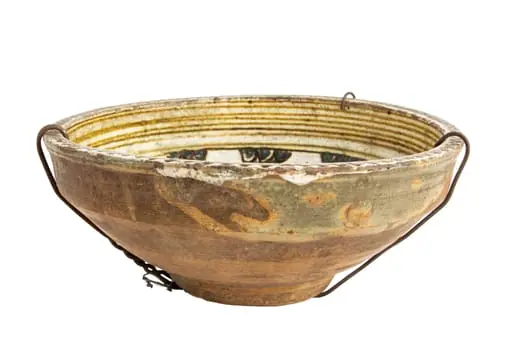 Formă tronconică; fond alb. Decorul, pictat pe fond alb și amplasat în centrul farfuriei, este reprezentat de o spirală dispusă central, de culoare maro încadrată de un soare stilizat cu șase raze. Pe peretele vasului este amplasat un soare de culoare albă cu nouă raze. Între razele soarelui sînt amplasate triunghiuri de culoare maro închis formate din alăturarea unor semicercuri. Sub buza vasului sînt amplasate mai multe cercuri concentrice de culoare maro. Buza farfuriei este decorată cu un val de culoare maro Folosită la decorarea interiorului țărănesc în așa numita - cameră bună.
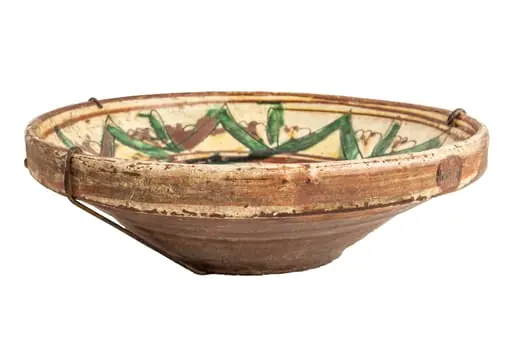 Formă tronconică; fond alb gălbui. În parte centrală, într-un cerc de culoare maro este amplasat un buchet de flori format din patru lalele de culoare verde, cu frunze de culoare similară. Pe peretele farfuriei este amplasat un soare cu raze de culoare verde. Contururile florilor și al soarelui sînt realizate în tehnica sgrafițării. Folosită la decorarea interiorului țărănesc în așa numita - cameră bună.