Artwork
Green Tara
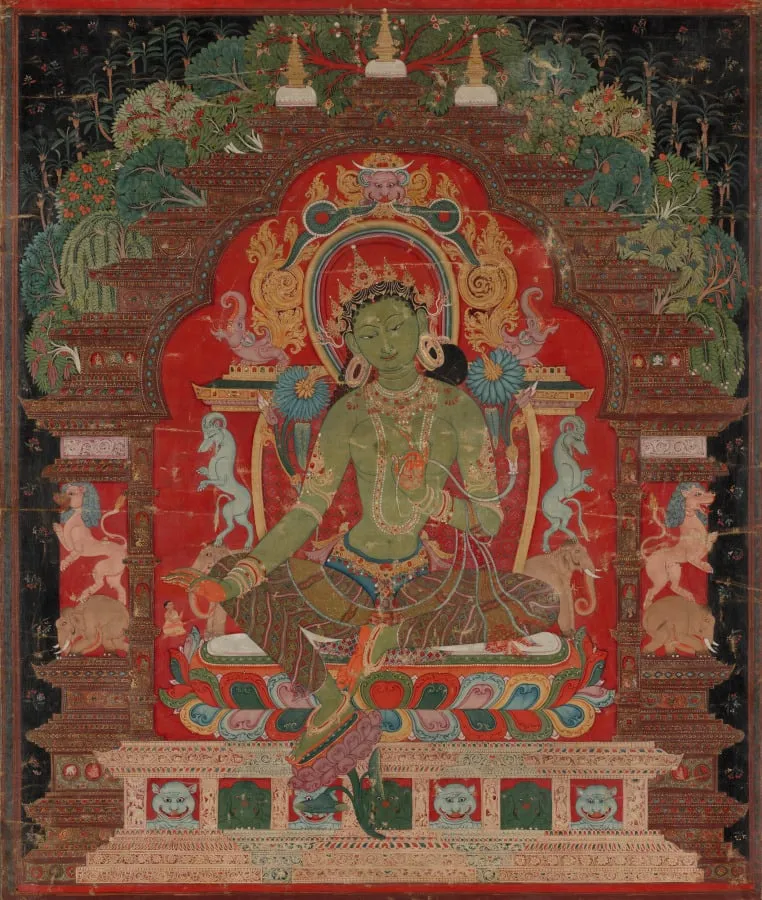
Green Tara is an unspecified painting by Aniko. It dates from 1264 and is held in the collection of the Cleveland Museum of Art.
About this work
Overview
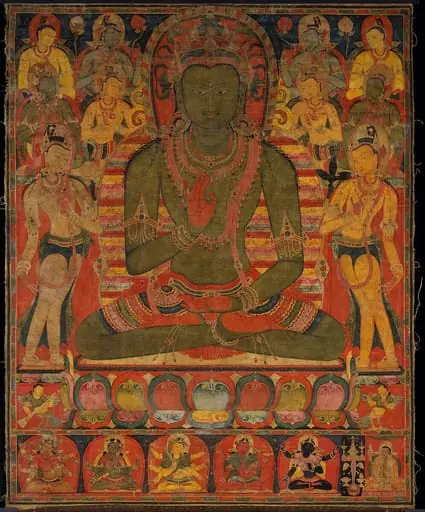
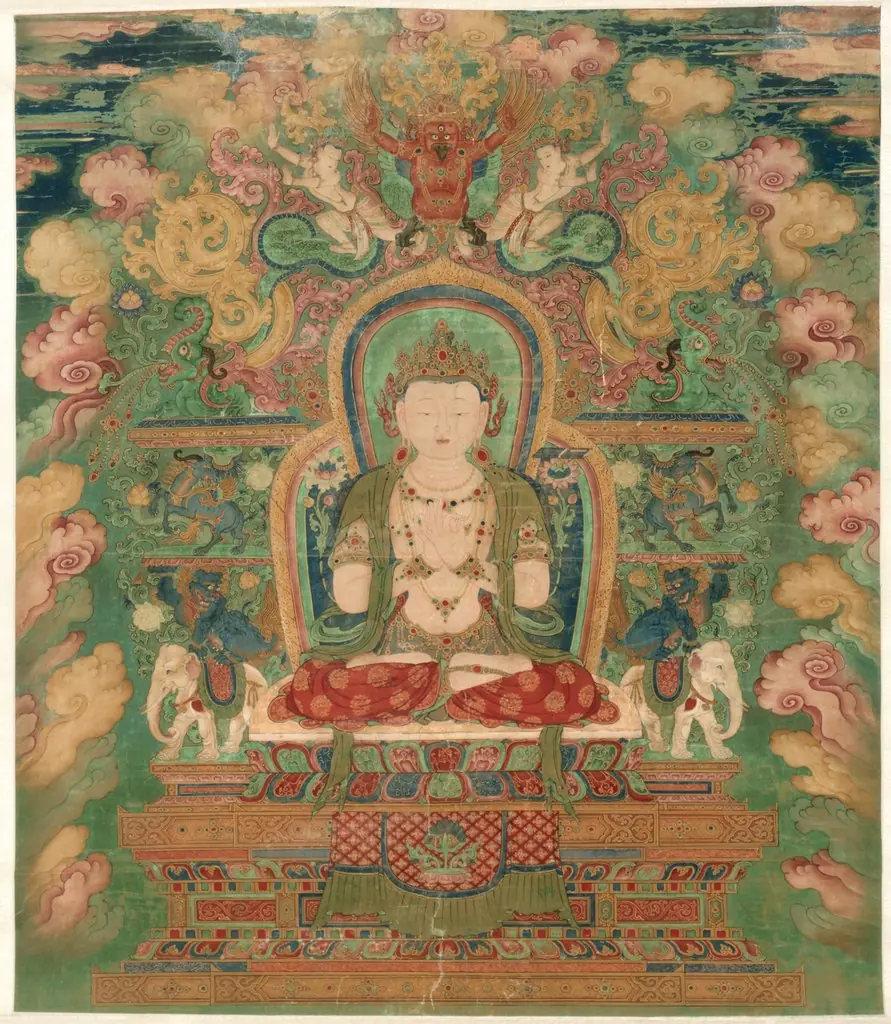
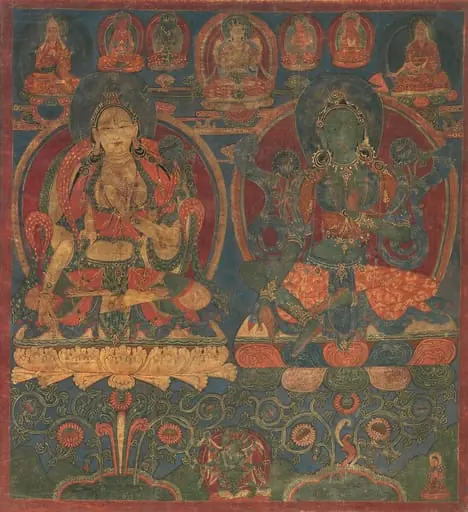
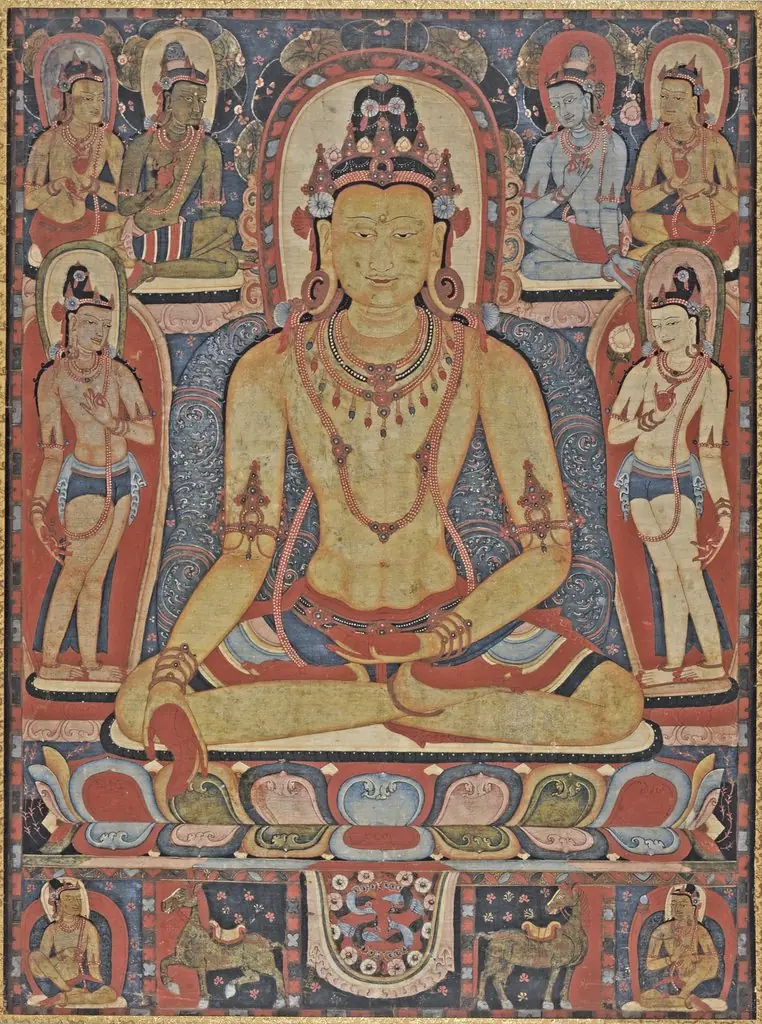
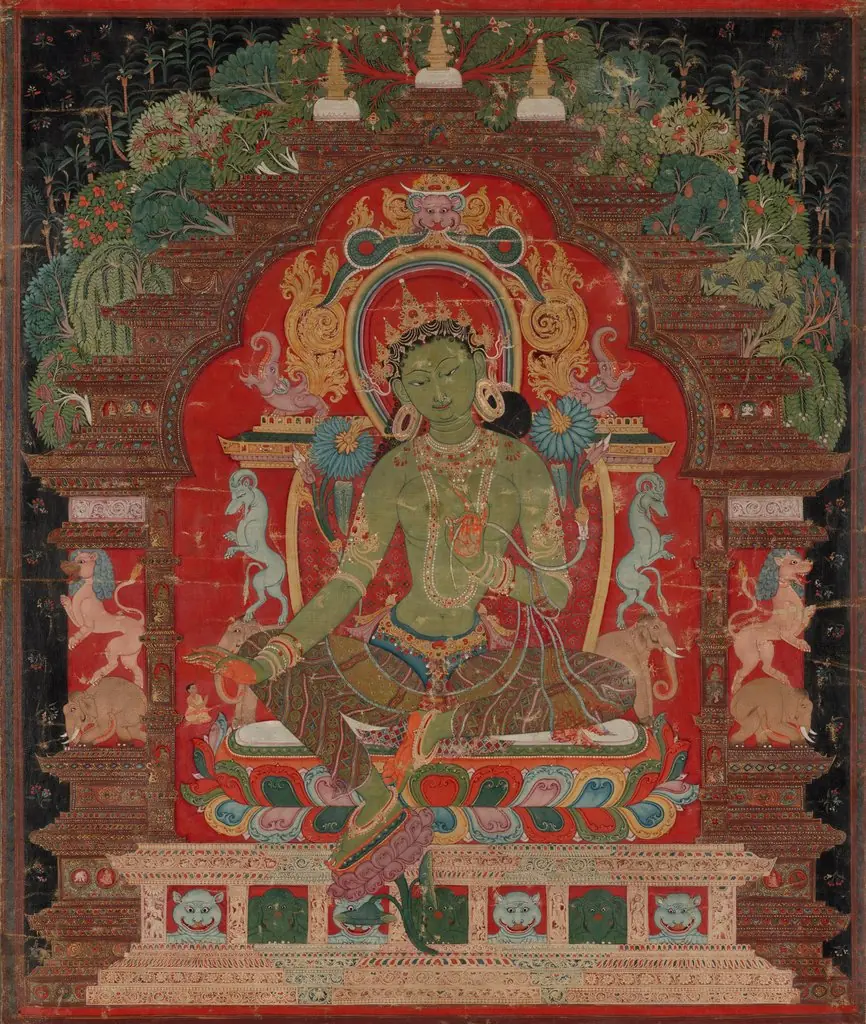
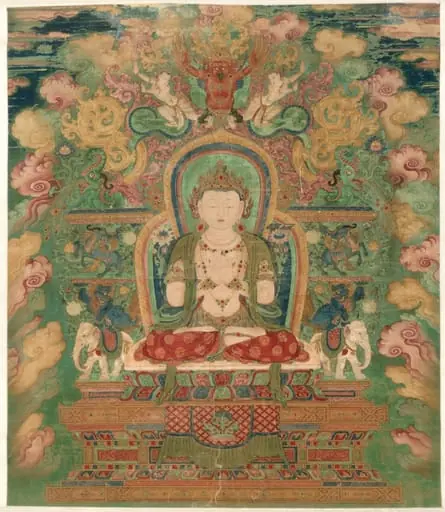
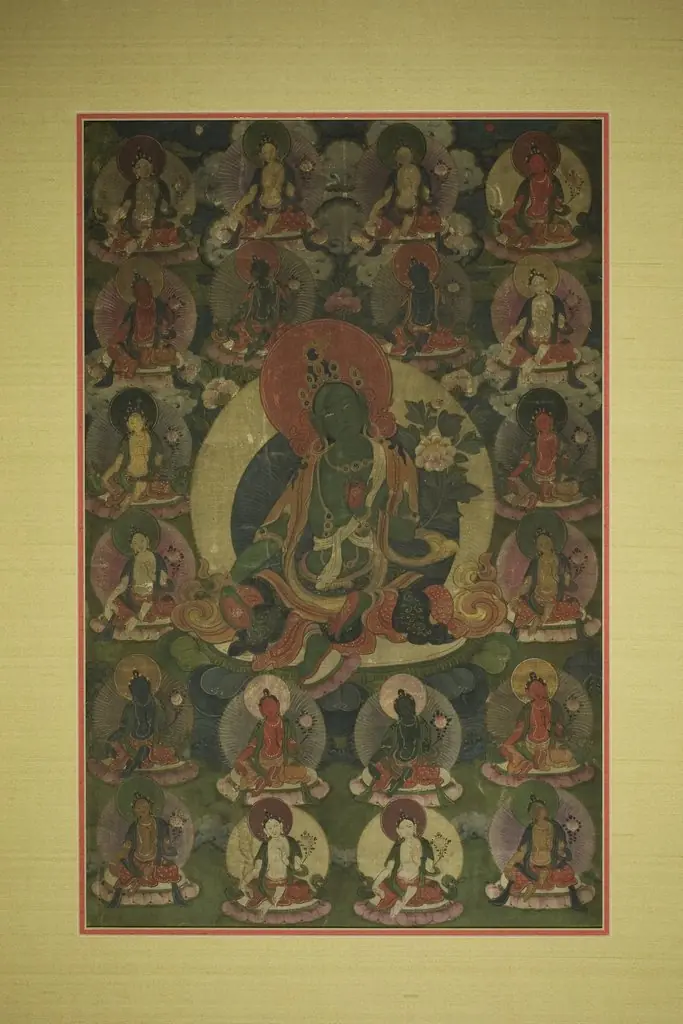
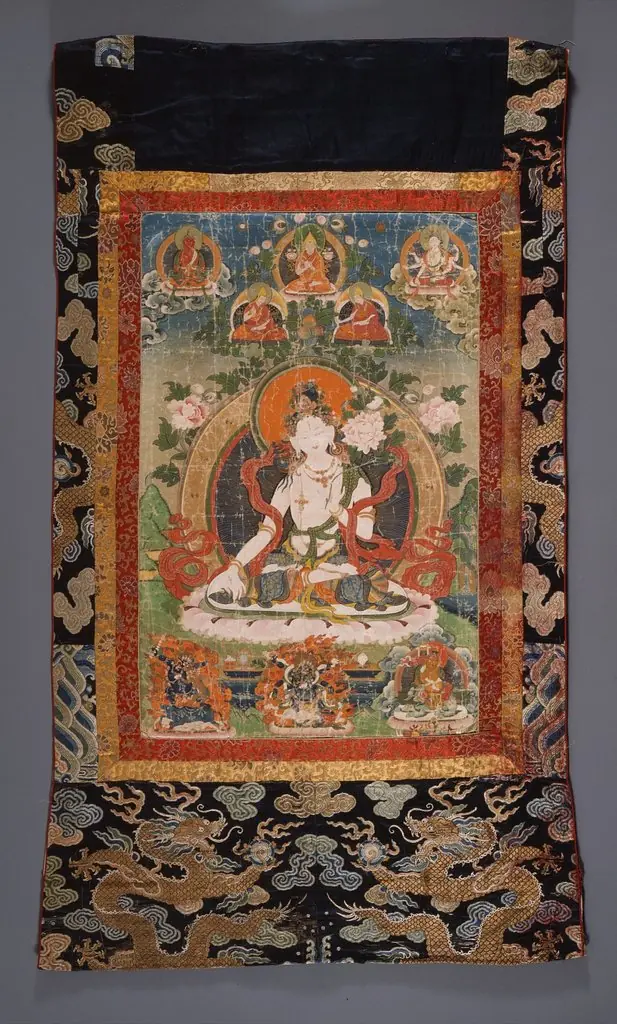
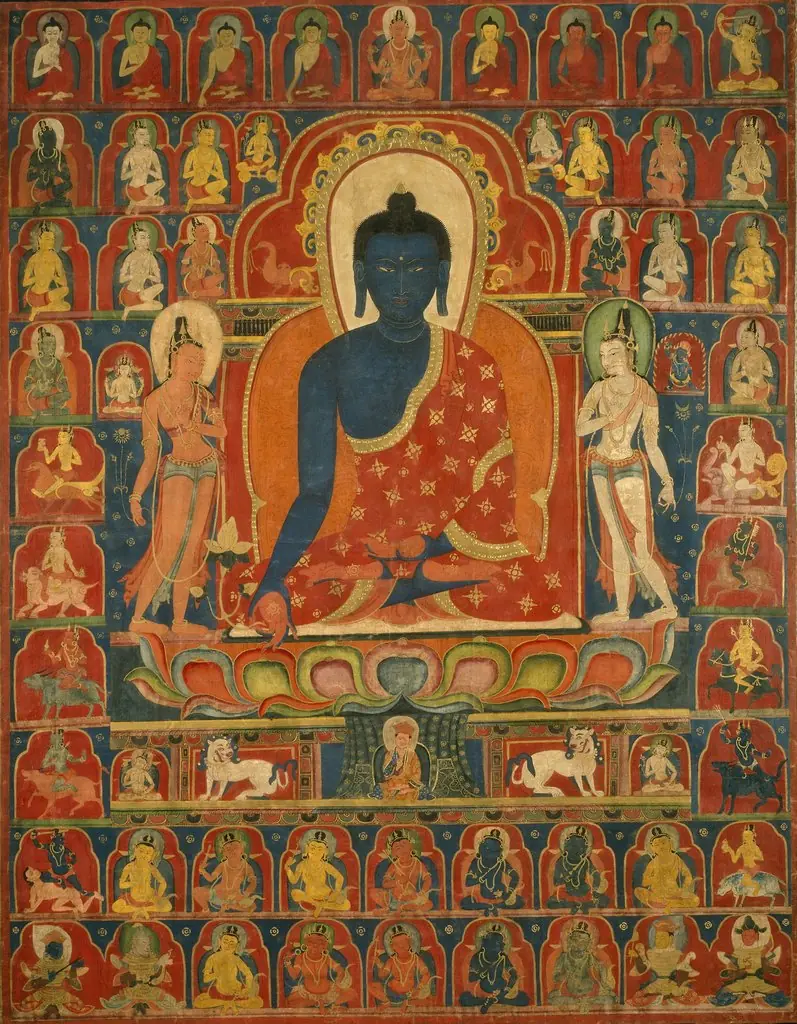
This Tibetan thangka depicts Green Tara, a compassionate female bodhisattva revered in Vajrayana Buddhism. Painted on cloth, it functions as a portable devotional object, designed to be rolled and carried for personal spiritual practice. The image is accompanied by sacred mantras inscribed on its reverse, transforming the textile into an active instrument of prayer and protection.
Subject & Meaning
Above her, the cosmic Buddha of the North signifies her connection to enlightened wisdom, reinforcing her role as a guide through worldly dangers.
Green Tara is portrayed as a swift protector who responds to suffering the moment it is invoked. Her green hue symbolizes active compassion and vitality, while her raised hand gestures reassurance—'fear not.' Seated on a lotus, she embodies purity and spiritual awakening. Above her, the cosmic Buddha of the North signifies her connection to enlightened wisdom, reinforcing her role as a guide through worldly dangers.
Technique & Style
The painting employs mineral pigments on cotton, with fine brushwork defining Tara’s delicate features and ornate jewelry. The vivid red background enhances the luminosity of her green skin, creating a striking contrast typical of Himalayan devotional art. The composition is symmetrical and hieratic, prioritizing symbolic clarity over naturalism, consistent with traditional thangka conventions.
History & Provenance
Scholars attribute this work to Aniko, a renowned Nepalese artist active in Tibet during the late 13th century. His influence is evident in the refined linearity and stylistic harmony, bridging Newari artistic traditions with Tibetan religious needs. The painting likely originated in a monastic context, possibly commissioned for a high-ranking lama or royal patron seeking spiritual safeguarding.
Context
In Tibetan Buddhist practice, thangkas like this one were not merely decorative but integral to meditation and ritual. Carried by travelers or kept in home altars, they served as tangible links to divine presence. Green Tara’s specific role as a protector aligned with the anxieties of daily life, making her image especially vital in a region marked by geographic isolation and political instability.
Legacy
Aniko’s work helped shape the visual language of Tibetan Buddhist art, blending Nepalese aesthetics with Tibetan doctrinal priorities. This thangka exemplifies how devotional imagery functioned as both spiritual technology and cultural artifact. Its survival offers insight into the transmission of artistic and religious ideas across the Himalayas during the Yuan dynasty period.
Artist & collection
Artist
This Tibetan artist made gilt-metal sculptures of Buddhist deities in the 1200s. One of their surviving works is the Green Tara, a standing female figure cast in bronze and set with semiprecious stones. The piece…