Artwork
Fujiwara no Muchimaro
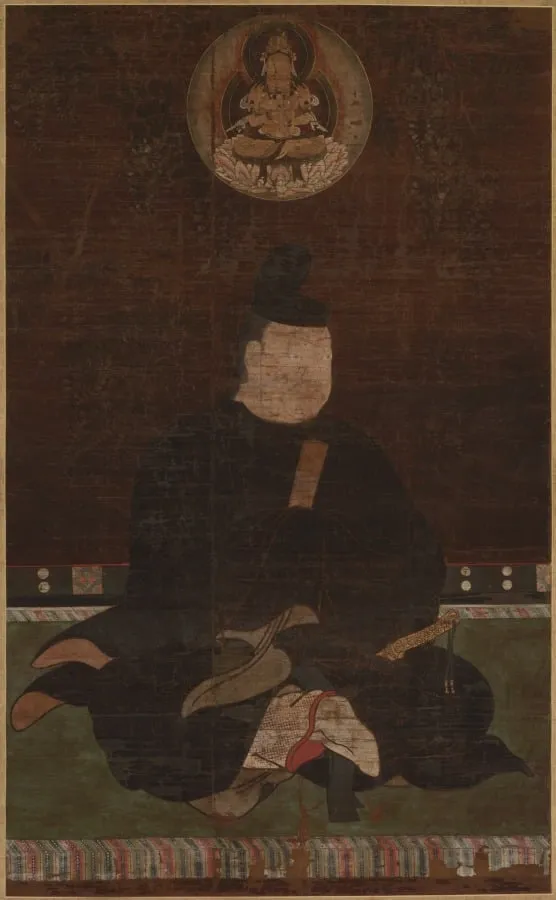
Fujiwara no Muchimaro is an unspecified painting by Unknown. It dates from 1266 and is held in the collection of the Cleveland Museum of Art.
About this work
You see a serious man in old Japanese robes, seated on the floor, with a small golden Buddha floating above his head.
You see a serious man in old Japanese robes, seated on the floor, with a small golden Buddha floating above his head.
This painting was made hundreds of years after the man died. The floating Buddha shows he wasn’t just a person—he was seen as a living form of the divine. It’s like a family photo with a halo.
Look up more about Japan, Kamakura period (1185–1333) to see how people back then mixed human power with holy images.
Overview
This painting depicts Fujiwara no Muchimaro, a prominent figure in Japanese history, seated on the floor in traditional attire. A small image of Buddha Dainichi Nyorai floats above his head.
Subject & Meaning
The portrait suggests that Muchimaro is an avatar of Dainichi Nyorai, implying a connection between powerful individuals and Buddhist deities. This representation reflects a belief that certain humans could be seen as manifestations of divine beings.
History & Provenance
The painting was created centuries after Muchimaro's death and is associated with Eizanji in Nara, a temple founded by him. Eizanji was once a branch temple of Kōfukuji, the Fujiwara family temple.
Context
The work is characteristic of the Kamakura period, when Buddhist imagery was often used to convey the divine or supernatural status of individuals.
Artist & collection

 Domestic Scene
 Giacomo and Cardinal Marco, investing Andrea, Abbot of San Zeno, with his Benefice
 The Nymph of Fontainebleau
 Portrait of a Woman
 Madonna and Child with Saints in the Enclosed Garden
 Venus and Minerva
 Family Group of Four on Sofa
 Wall painting from Room H of the Villa of P. Fannius Synistor at Boscoreale
 Matsumoto Koshiro IV as Gorobei, the Fish Seller from Sanya
 A High-ranking Noble in Priest's Robe
 Portrait of Hojo Ujinaga
 Portrait of Priest Dazhi (1048–1116), Master of Law
 Portrait of Priest Pyeongwondang
 宋高宗坐像 軸
 旧山宗英像|Portrait of Kyūzan Sōei
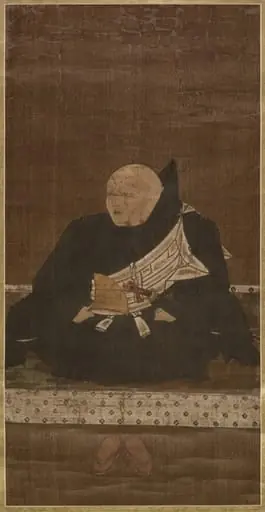 A High-ranking Noble in Priest's Robe
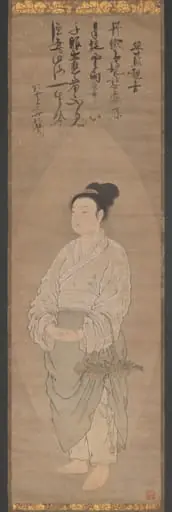 Fish Basket Kannon (Gyoran Kannon)