Artwork
Portrait of Priest Pyeongwondang
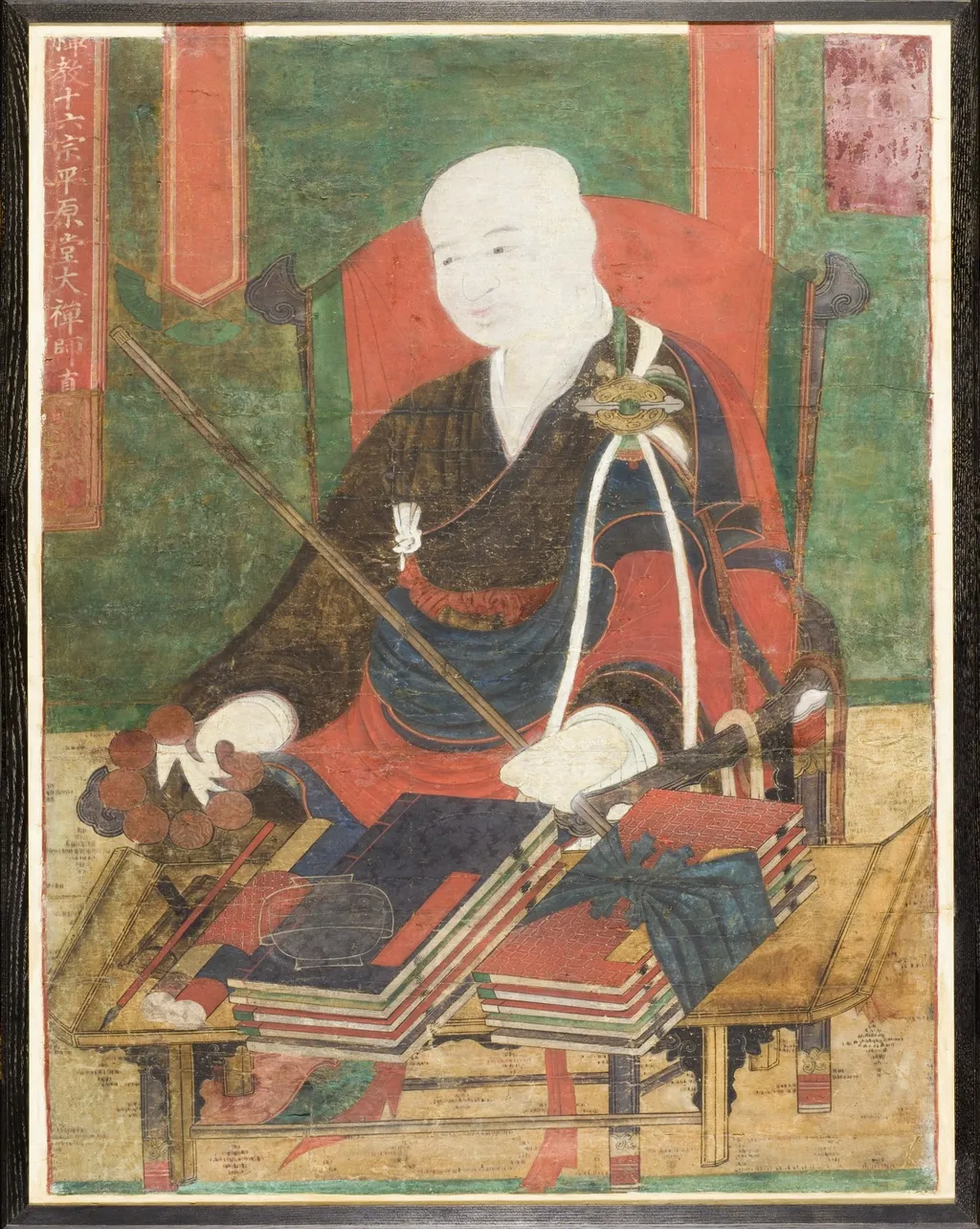
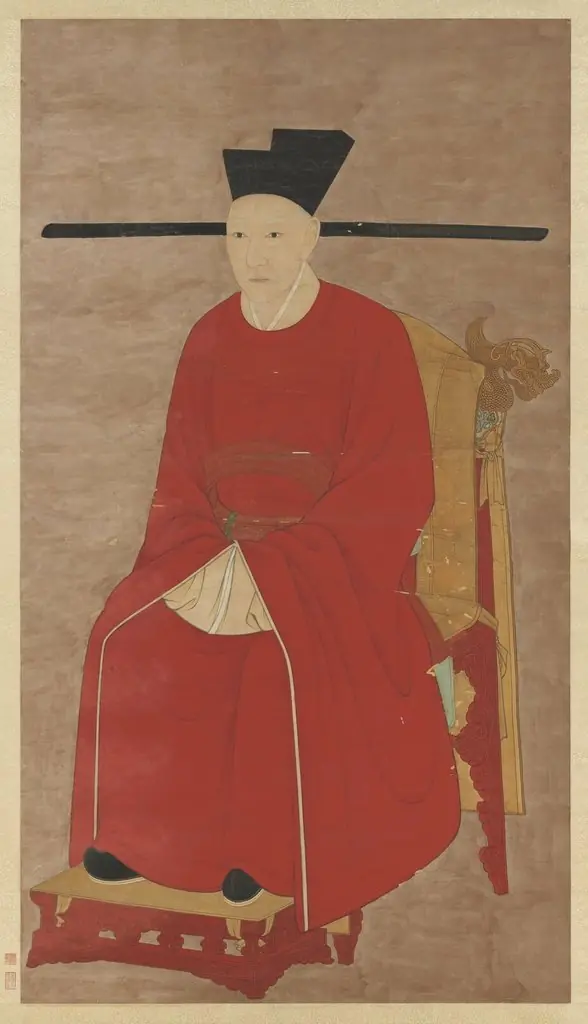
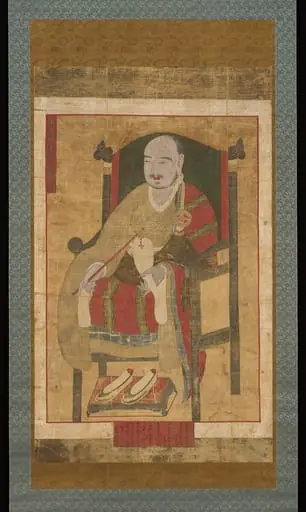
Portrait of Priest Pyeongwondang is an unspecified painting by Unknown. It dates from 1850 and is held in the collection of the Los Angeles County Museum of Art. This portrait depicts Pyeongwondang, a Buddhist priest, seated calmly in a red chair within a softly lit interior.
About this work
Overview
The composition centers on his stillness, framed by green walls and hanging red banners that frame the space without overwhelming it.
This portrait depicts Pyeongwondang, a Buddhist priest, seated calmly in a red chair within a softly lit interior. The composition centers on his stillness, framed by green walls and hanging red banners that frame the space without overwhelming it. His attire—dark robe, blue sash, and red skirt—contrasts subtly with the pale tone of his face, emphasizing his serene demeanor. The presence of books and scrolls on a low table suggests scholarly devotion.
Subject & Meaning
Pyeongwondang is portrayed not as a figure of authority, but as a contemplative scholar-monk. The staff in his hand symbolizes spiritual guidance and stability, while the books and scrolls signify his engagement with sacred texts. The white-painted face and gentle expression convey inner peace and detachment from worldly concerns, aligning with Buddhist ideals of mindfulness and quiet wisdom.
Technique & Style
The artist employs muted tonal contrasts to model the priest’s face and robes, suggesting volume without harsh shadows. The background’s flat green walls and suspended banners create a shallow, intimate space, focusing attention on the figure. Delicate brushwork defines textures—fabric folds, beard strands, and scroll edges—while the color palette remains restrained, enhancing the painting’s meditative tone.
History & Provenance
The painting originates from the late Joseon period, likely commissioned by a temple or disciple to honor Pyeongwondang’s spiritual legacy. Its preservation suggests continued reverence within a monastic context. While the artist’s name is unrecorded, the work reflects the tradition of portrait painting among Korean Buddhist clergy, where likeness served as a vessel for veneration rather than individual glorification.
Context
During the late Joseon dynasty, Buddhist portraiture flourished despite Confucian dominance in court culture. Monasteries maintained artistic practices to commemorate revered monks, blending religious symbolism with refined aesthetics. This portrait fits within that tradition—its quiet dignity and restrained decoration reflect the values of humility and inner discipline central to Korean Seon Buddhism.
Legacy
The painting endures as a quiet testament to the persistence of Buddhist visual culture in Korea. It offers insight into how spiritual identity was conveyed through understated composition and symbolic objects, rather than grandeur. Contemporary scholars value it for its embodiment of monastic ideals and its contribution to understanding non-courtly artistic expression in early modern Korea.
Artist & collection

 Domestic Scene
 Giacomo and Cardinal Marco, investing Andrea, Abbot of San Zeno, with his Benefice
 The Nymph of Fontainebleau
 Portrait of a Woman
 Madonna and Child with Saints in the Enclosed Garden
 Venus and Minerva
 Family Group of Four on Sofa
 Wall painting from Room H of the Villa of P. Fannius Synistor at Boscoreale