Artwork
Gauri Ragini
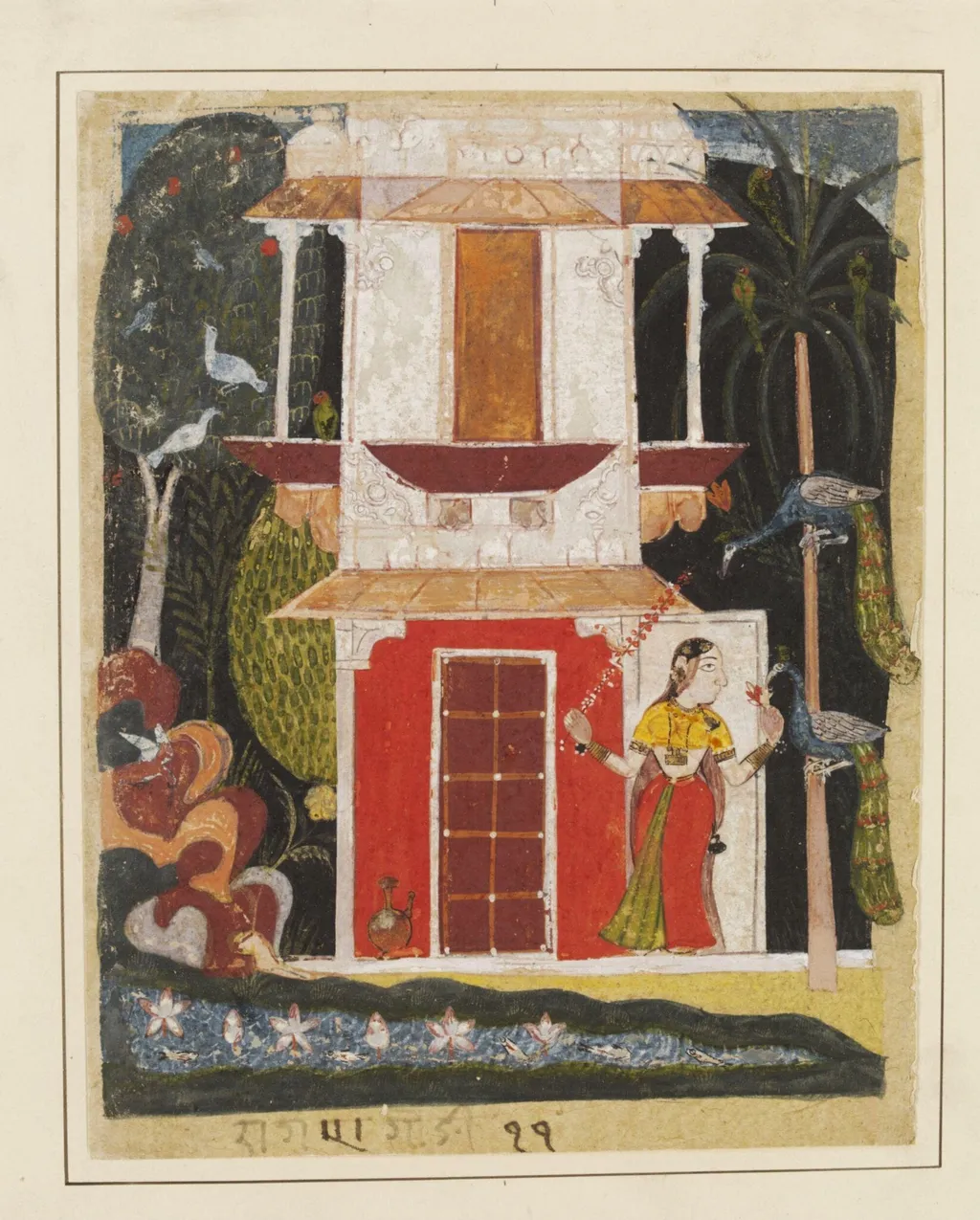
Gauri Ragini is a paint painting by the Mughal Painting artist Unknown. It dates from 1650 and is held in the collection of the Victoria and Albert Museum.
About this work
Overview
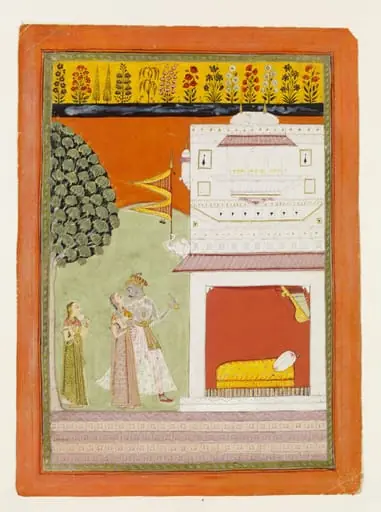
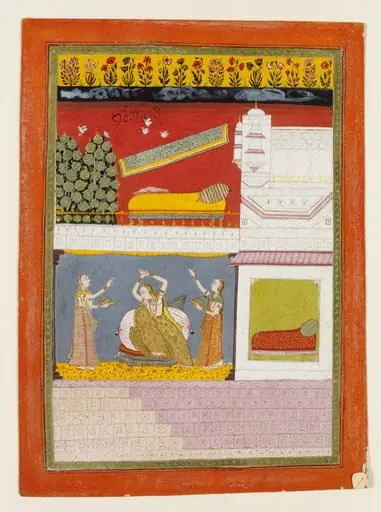
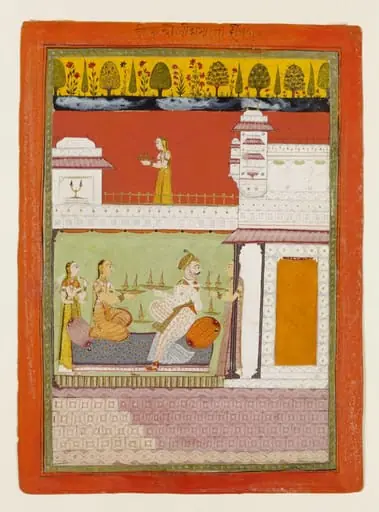
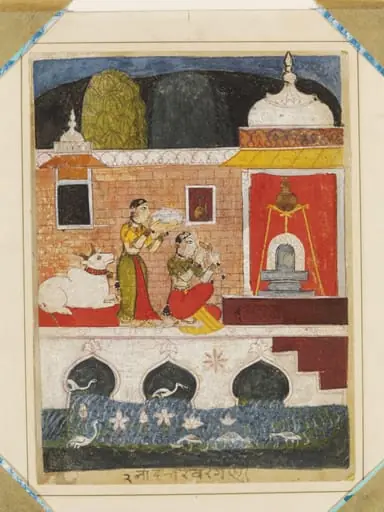
Gauri Ragini is a 17th-century painting (1650) created with opaque watercolour on paper, rooted in the Ragamala tradition.
Subject & Meaning
The painting portrays a serene scene of a woman, identified as Gauri Ragini, standing before a red building. She is adorned in a yellow top, red skirt, and green sash, with a flower in her hair and hand. A peacock perched on a nearby pole captures her attention, symbolizing beauty and tranquility.
Technique & Style
Executed in opaque watercolour on paper, the work blends warm and cool tones. Vibrant hues of the subject's attire and the building contrast with the muted, lush forest background, achieving a harmonious balance.
History & Provenance
Created in 1650 as part of the Ragamala series, specific provenance details are not provided in the available information.
Context
Ragamala paintings, like Gauri Ragini, were part of a tradition that visually represented musical modes (ragas) and their emotional essences, often through serene and symbolic scenes.
Legacy
As a piece of the Ragamala tradition, Gauri Ragini contributes to the understanding and appreciation of 17th-century Indian art's thematic and aesthetic depths, though its individual impact is not elaborated in the provided sources.
Artist & collection

 Domestic Scene
 Giacomo and Cardinal Marco, investing Andrea, Abbot of San Zeno, with his Benefice
 The Nymph of Fontainebleau
 Portrait of a Woman
 Madonna and Child with Saints in the Enclosed Garden
 Venus and Minerva
 Family Group of Four on Sofa
 Wall painting from Room H of the Villa of P. Fannius Synistor at Boscoreale