Artwork
Varara Ragini
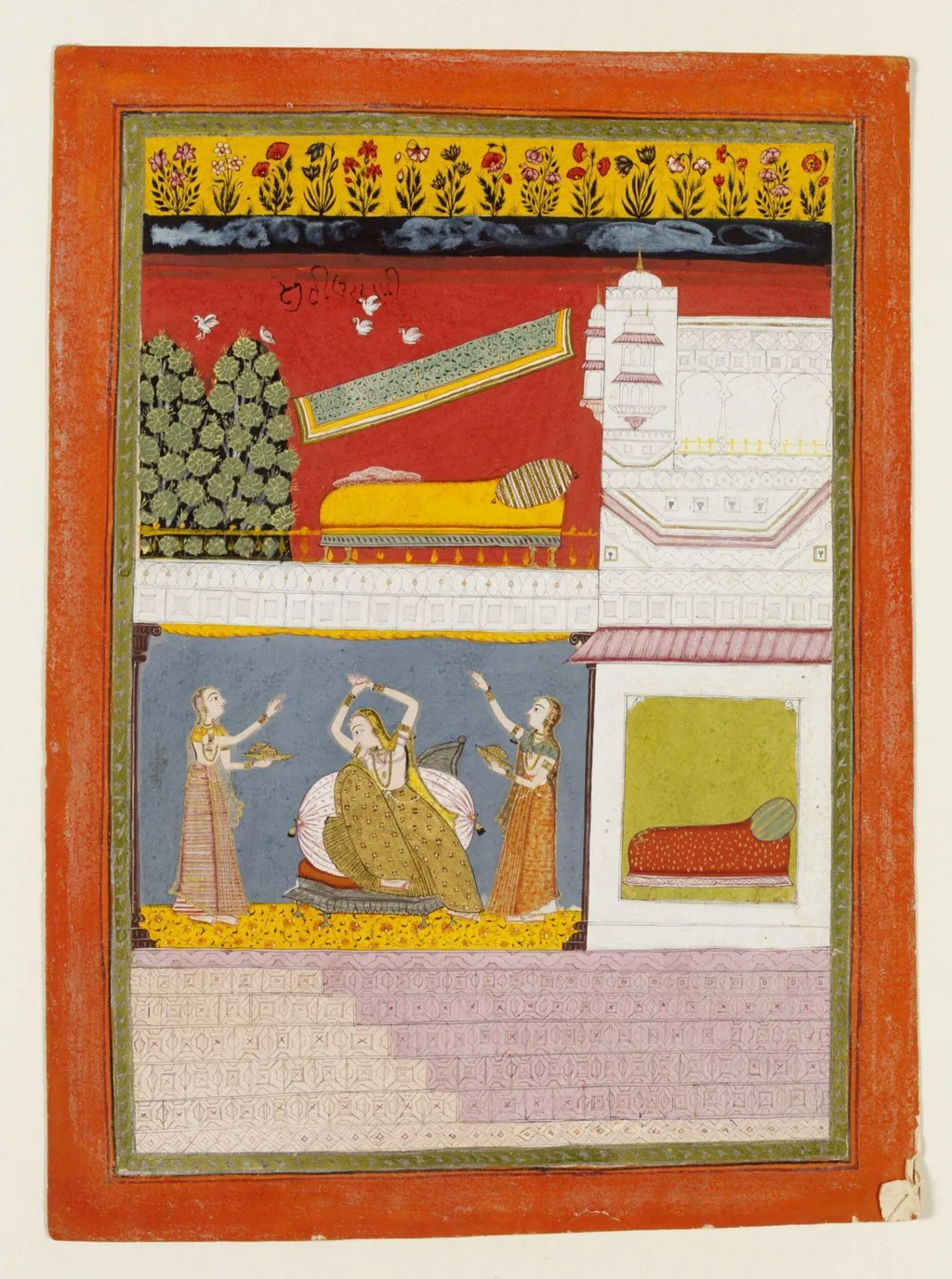
Varara Ragini is a paint painting by the Baroque artist Unknown. It dates from 1680 and is held in the collection of the Victoria and Albert Museum.
About this work
Overview
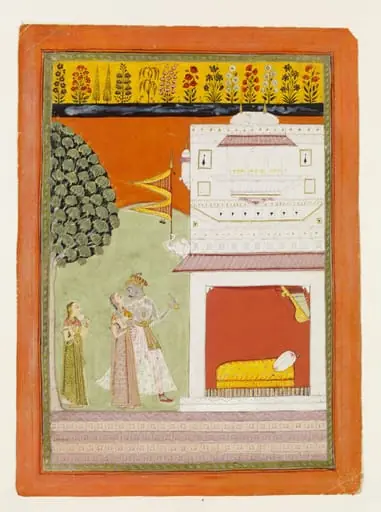
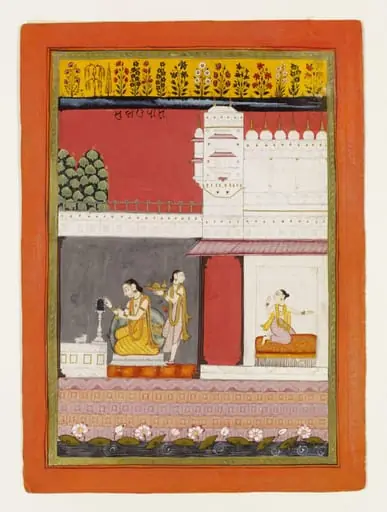
A modest bedroom occupies the right side of the composition, while a terrace with a bed appears in the upper register, linking interior and exterior spaces.
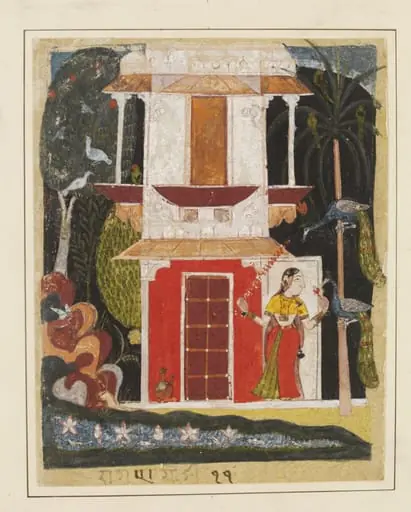
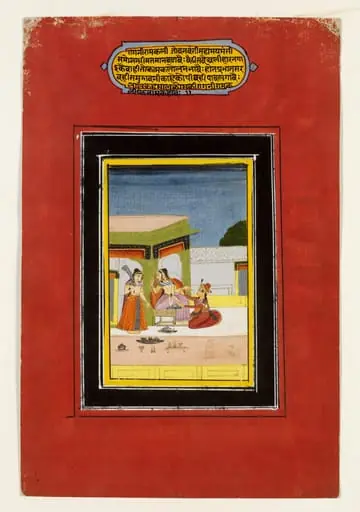
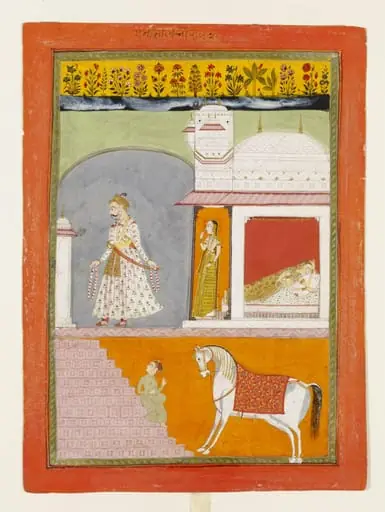
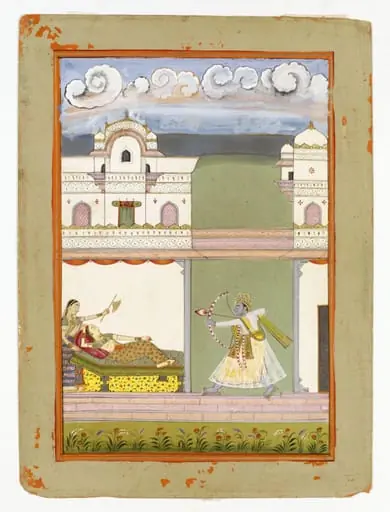
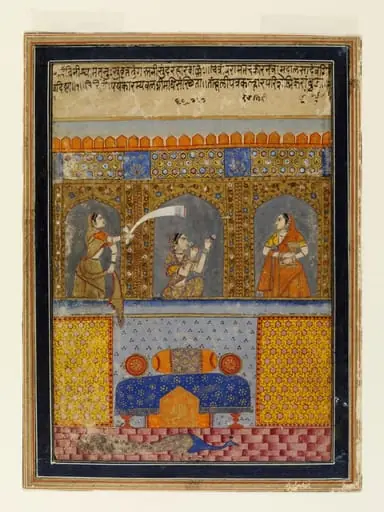
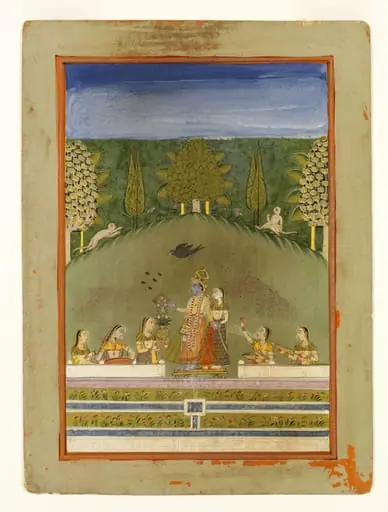
Created in 1680, this work is a Ragamala illustration titled Varara Ragini. Executed in opaque water‑colour on paper, it presents a domestic interior where a central female figure raises her arms in a gesture of distress, flanked by two attendants. A modest bedroom occupies the right side of the composition, while a terrace with a bed appears in the upper register, linking interior and exterior spaces.
Subject & Meaning
The scene visualises the musical mode Varari Ragini, a raga associated with plaintive emotion. The distressed woman, possibly embodying the raga’s affect, is supported by two maidservants—one holding a fan, the other a small object—suggesting assistance or consolation. The inclusion of a bed and a terrace may allude to themes of longing and separation that are typical of the ragini’s lyrical content.
Technique & Style
The artist employed opaque water‑colour pigments, allowing for vivid, saturated hues of red, yellow, and green. Fine brushwork delineates intricate patterns on clothing and furnishings, while the red wall and yellow border frame the composition. Linear perspective is suggested by the placement of the window, tree, and distant tower, creating a lively yet controlled visual narrative characteristic of late‑Mughal court painting.
History & Provenance
The painting belongs to a series of Ragamala illustrations catalogued as IS. 64‑1952, which follow a standardized iconographic program for Varari Ragini. It contrasts with a related piece, IS.77‑1952, whose local variations deviate from the conventional representation. The work’s provenance traces to a collection of Indian court paintings acquired by European collectors in the 19th century, though its exact ownership lineage remains partially documented.
Context
Ragamala paintings served as visual counterparts to Indian classical music, translating melodic modes into narrative scenes. Produced during the late Mughal period, this piece reflects the court’s patronage of interdisciplinary arts, merging music, poetry, and visual culture. The emphasis on emotional expression and detailed domestic settings aligns with broader trends in South Asian miniature painting of the 17th century.
Artist & collection

 Domestic Scene
 Giacomo and Cardinal Marco, investing Andrea, Abbot of San Zeno, with his Benefice
 The Nymph of Fontainebleau
 Portrait of a Woman
 Madonna and Child with Saints in the Enclosed Garden
 Venus and Minerva
 Family Group of Four on Sofa
 Wall painting from Room H of the Villa of P. Fannius Synistor at Boscoreale