Artwork
Pancham Ragini
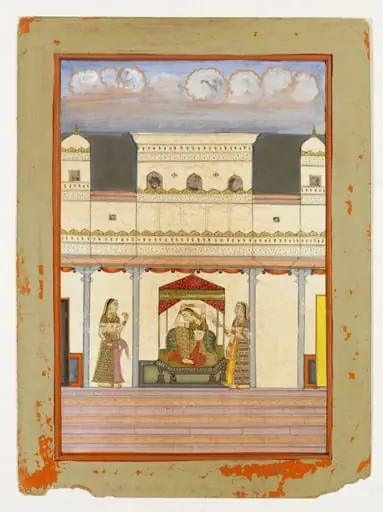
Pancham Ragini is a paint painting by the Baroque artist Unknown. It dates from 1680 and is held in the collection of the Victoria and Albert Museum.
About this work
Overview
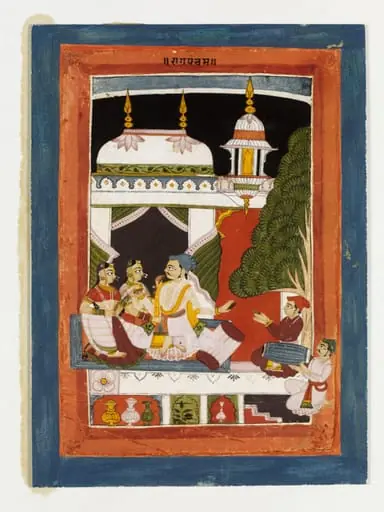
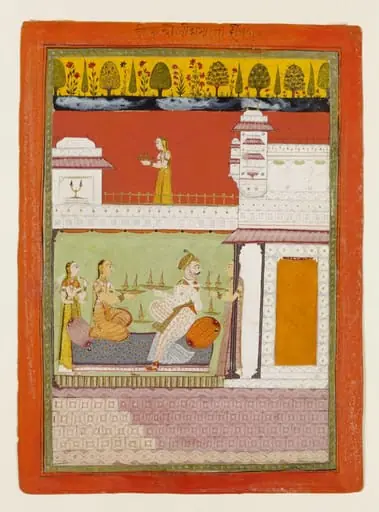
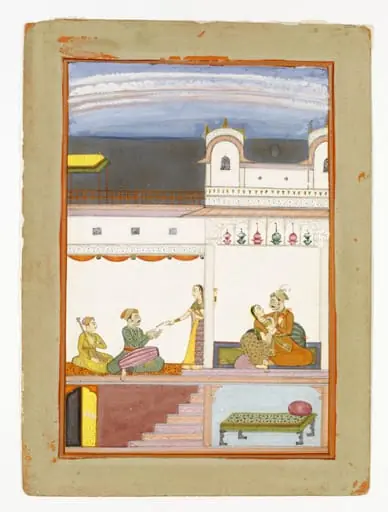
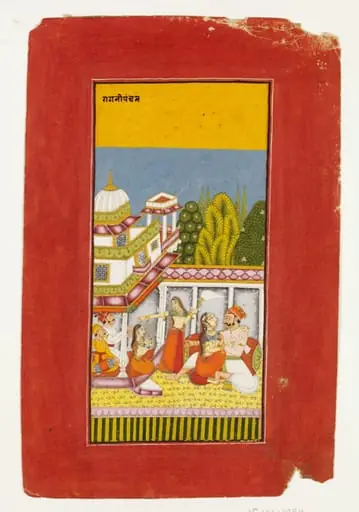
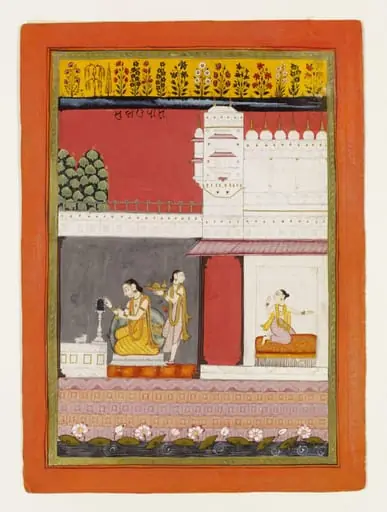
Executed in the Rajasthani style, it presents two simultaneous scenes within a single frame, bound by a decorative border of floral motifs.
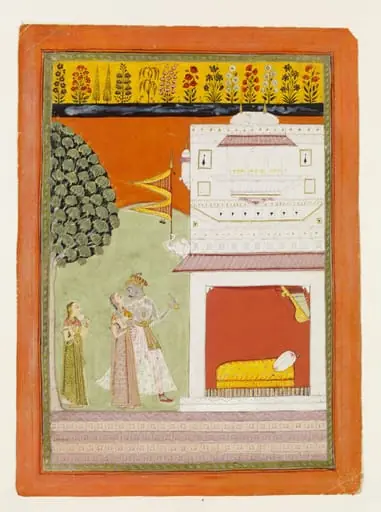
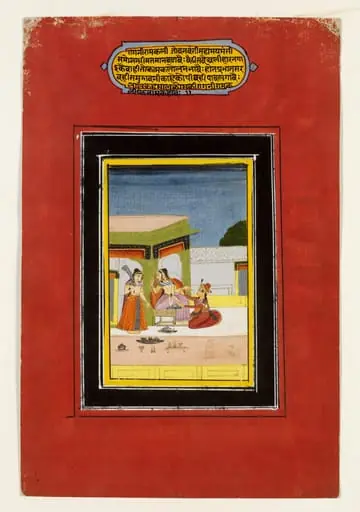
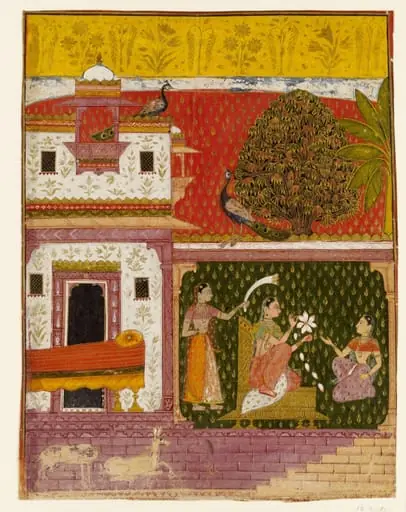
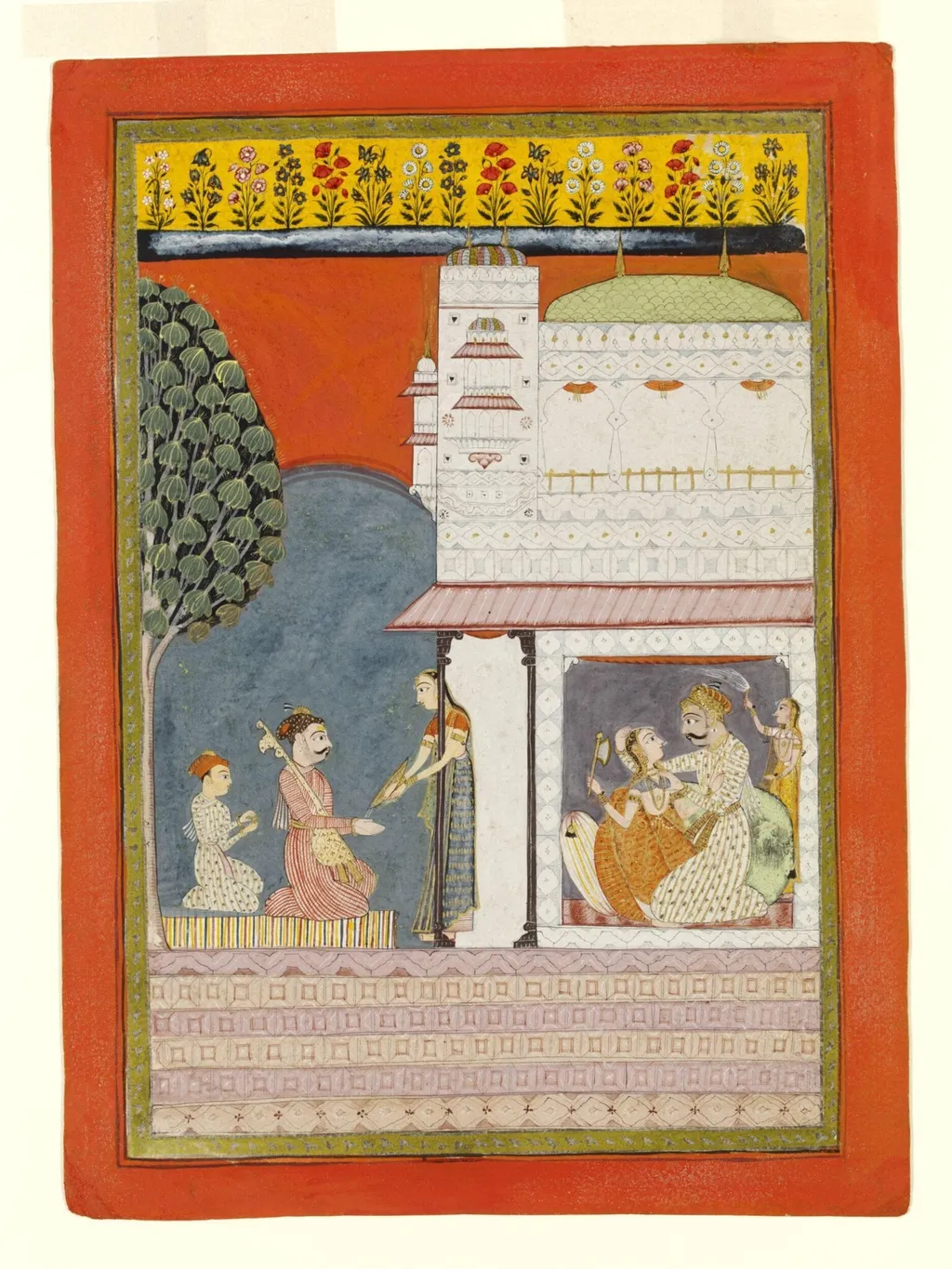
This opaque watercolor on paper, dated to 1680, illustrates Pancham Ragini, one of the melodic modes in the Ragamala tradition. Executed in the Rajasthani style, it presents two simultaneous scenes within a single frame, bound by a decorative border of floral motifs. The composition is densely populated with figures, architecture, and intricate patterns, all rendered in vivid mineral pigments and gold leaf, characteristic of courtly Indian painting of the period.
Subject & Meaning
Pancham Ragini is personified through scenes of domestic intimacy and musical devotion. On the right, a couple engages in music-making under a green canopy, symbolizing the emotional resonance of the raga. To the left, a musician receives rice from a servant, suggesting ritual offering and the connection between sustenance and art. The presence of a fly-whisk and attendants underscores the refined, courtly setting, aligning the raga with aristocratic leisure and spiritual harmony.
Technique & Style
The painting employs fine brushwork and layered opaque pigments to achieve luminous color and sharp detail. Gold accents highlight textiles and architecture, while the use of flat, saturated hues—deep reds, emerald greens, and cobalt blues—creates visual rhythm. Patterns on fabrics, floors, and canopies are meticulously rendered, reflecting a tradition that values ornamental richness over spatial depth. The figures are stylized, with elongated eyes and graceful postures typical of Rajasthani miniatures.
History & Provenance
This work is part of a larger Ragamala series commissioned by a Rajput court, likely in the late 17th century. It shares stylistic and thematic links with another known painting in the collection, IS. 64-1952, suggesting a unified program. The painting remained in private Indian collections before entering a Western museum, where it was cataloged as part of a broader effort to document South Asian visual culture.
Context
Ragamala paintings emerged as visual interpretations of North Indian musical modes, blending poetry, devotion, and courtly life. Created for royal libraries or private contemplation, they reflect the syncretic culture of Rajput courts, where Hindu devotional traditions merged with Persian artistic influences. The emphasis on music, nature, and intimate moments aligns with broader Indian aesthetic principles that equate emotion with form.
Legacy
Though not widely known outside specialist circles, this painting exemplifies the sophistication of pre-colonial Indian visual culture. Its preservation offers insight into how music was conceptualized through imagery, influencing later studies of Indian aesthetics. Unlike Western traditions that prioritized perspective, this work’s layered symbolism and decorative density continue to inform contemporary understandings of non-Western narrative art.
Artist & collection

 Domestic Scene
 Giacomo and Cardinal Marco, investing Andrea, Abbot of San Zeno, with his Benefice
 The Nymph of Fontainebleau
 Portrait of a Woman
 Madonna and Child with Saints in the Enclosed Garden
 Venus and Minerva
 Family Group of Four on Sofa
 Wall painting from Room H of the Villa of P. Fannius Synistor at Boscoreale