Artwork
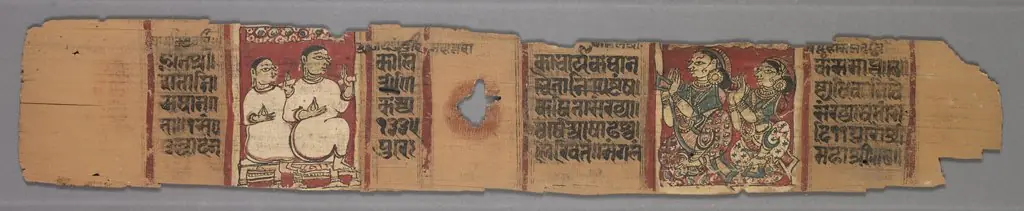
Genealogical text, folio 167 (verso) from a Kalpa-sutra and Story of Kalakacharya

Genealogical text, folio 167 (verso) from a Kalpa-sutra and Story of Kalakacharya is an unspecified painting by the Mughal Painting artist Unknown. It dates from 1278 and is held in the collection of the Cleveland Museum of Art. This folio, the verso of folio 167 from a Jain manuscript, contains a genealogical record of the donor’s lineage.
About this work
Overview
Such genealogies served to authenticate the donor’s social and religious standing, anchoring the sacred text in a specific historical and familial context.
This folio, the verso of folio 167 from a Jain manuscript, contains a genealogical record of the donor’s lineage. It follows a colophon on the recto that notes the manuscript’s creation date and location. The text is meticulously inscribed in black ink on a red ground, typical of western Indian Jain codices. Such genealogies served to authenticate the donor’s social and religious standing, anchoring the sacred text in a specific historical and familial context.
Subject & Meaning
The text traces the donor’s ancestry through the Shaurani branch of the Ukesa family, a prominent lineage in Gujarat. By recording names across generations, the manuscript affirms the donor’s legitimacy and piety, aligning their patronage with established religious authority. This was not mere decoration but a declaration of identity, embedding the spiritual act of manuscript production within a broader social and dynastic framework.
Technique & Style
The script is rendered in fine, uniform black ink on a rich red background, a hallmark of Gujarat’s Jain manuscript tradition. Letters are tightly spaced and precisely formed, reflecting the disciplined hand of trained scribes. The absence of illustration emphasizes textual authority; the genealogy’s power lies in its legibility and order, reinforcing the value placed on lineage and written record in Jain devotional culture.
History & Provenance
The manuscript was produced in Palanpur (Pahladanapura), a center of Jain learning and manuscript production in medieval Gujarat. The colophon on the recto and genealogy on the verso suggest it was completed in the late medieval period, likely between the 14th and 16th centuries. The genealogy may have continued on a subsequent folio, now lost, which was common in extended donor records of this type.
Context
In Jain manuscript culture, concluding a sacred text with a donor’s genealogy was a standard practice, akin to a formal attestation. These records linked religious merit to social status, ensuring that patronage was remembered and honored. Similar genealogies appear in other Jain texts from Gujarat, reflecting a regional tradition that valued lineage as both spiritual and civic capital.
Legacy
This folio contributes to a broader corpus of Jain donor records that help scholars reconstruct the social networks of medieval Gujarat. Its preservation allows modern researchers to trace family lineages, regional patronage patterns, and the interplay between religious devotion and aristocratic identity. Such texts remain vital sources for understanding the material and social history of Jain communities.
Artist & collection

 Domestic Scene
 Giacomo and Cardinal Marco, investing Andrea, Abbot of San Zeno, with his Benefice
 The Nymph of Fontainebleau
 Portrait of a Woman
 Madonna and Child with Saints in the Enclosed Garden
 Venus and Minerva
 Family Group of Four on Sofa
 Wall painting from Room H of the Villa of P. Fannius Synistor at Boscoreale
 Folio 141 (recto), from a Kalpa-sutra and Story of Kalakacharya
 Folio 167, from a Kalpa-sutra and Story of Kalakacharya: two nuns teaching lay women (recto); genealogical text (verso)
 Genealogical text, folio 167 (verso) from a Kalpa-sutra and Story of Kalakacharya
 Leaf from a Jain Manuscript: The Story of Kalakacharya: Colophon Page, Text (recto)
 Folio (recto) from a Kalpa-sutra and Story of Kalakacharya of Devachandra: Text
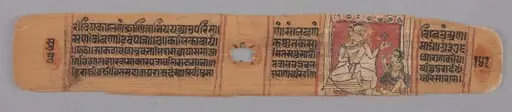 Monk Holding a Flower Venerated by a Lay Disciple: Folio 141 (verso), from a Kalpa-sutra and Story of Kalakacharya
 Folio 167, from a Kalpa-sutra and Story of Kalakacharya: two nuns teaching lay women (recto); genealogical text (verso)
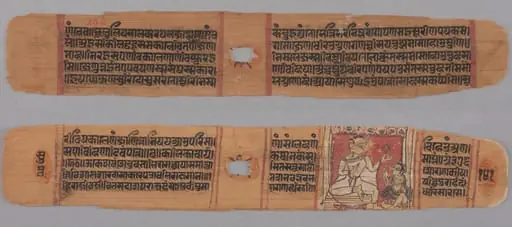 Folio 141, from a Kalpa-sutra and Story of Kalakacharya: Text (recto); Monk Holding a Flower Venerated by a Lay disciple (verso)
 Leaf from a Jain Manuscript: Kalpa-sutra: Text (verso)
 Leaf from a Jain Manuscript: Kalpa-sutra: Enthroned Monk (recto); Leaf from a Jain Manuscript: Kalpa-sutra: Text (verso)
 Leaf from a Jain Manuscript: Kalpa-sutra (verso)