Artwork
Hanuman
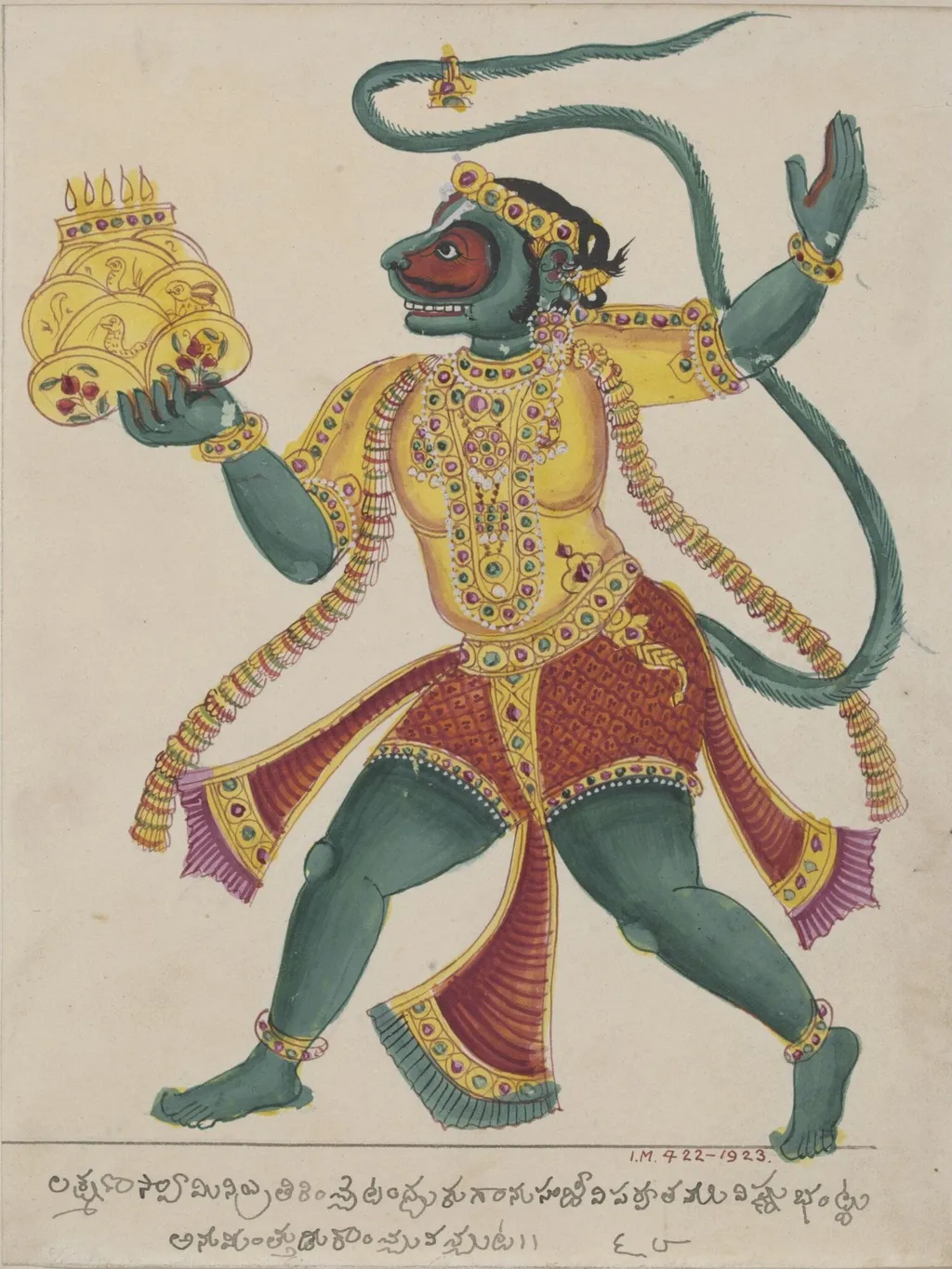
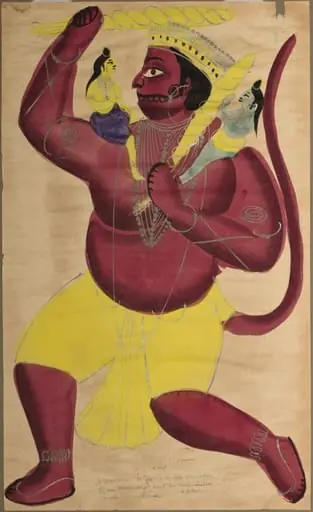
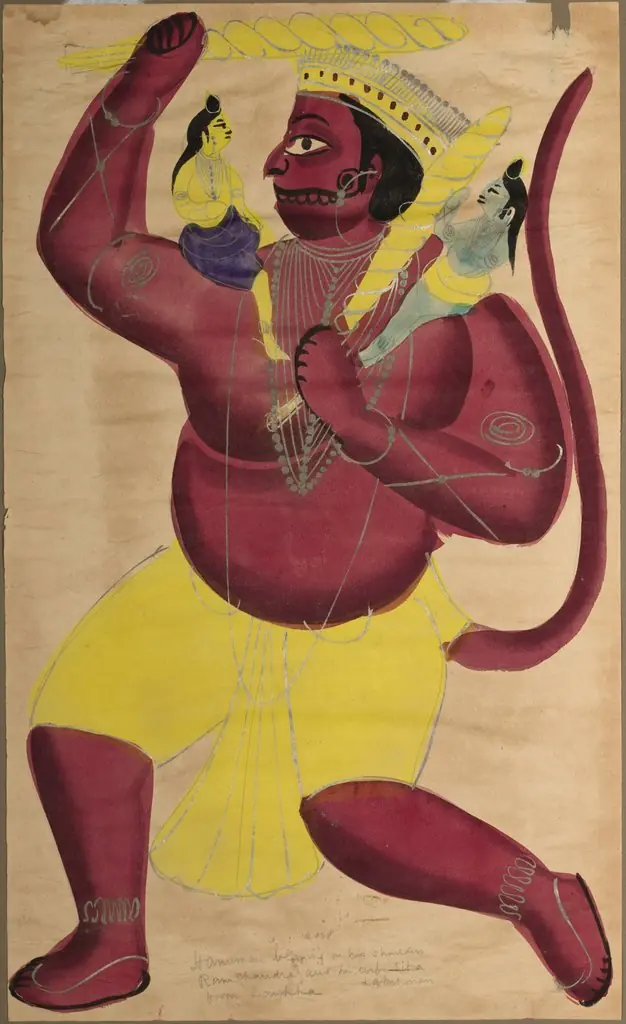
Hanuman is a paint painting by the Patna School of Painting artist Unknown. It dates from 1820 and is held in the collection of the Victoria and Albert Museum. This painting is one of a hundred devotional images created in South India, illustrating episodes from the Ramayana.
About this work
Overview
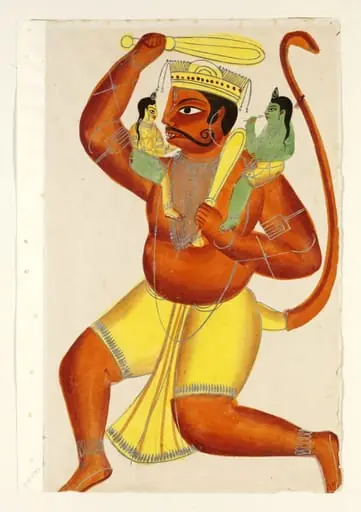
It portrays Hanuman, the devoted monkey god, in a dynamic moment as he carries the Himalayan mountain to retrieve life-saving herbs.
This painting is one of a hundred devotional images created in South India, illustrating episodes from the Ramayana. It portrays Hanuman, the devoted monkey god, in a dynamic moment as he carries the Himalayan mountain to retrieve life-saving herbs. The composition emphasizes movement and divine energy, rendered with vivid pigments and intricate detailing characteristic of regional manuscript illustration traditions.
Subject & Meaning
Hanuman is depicted fulfilling a pivotal act of devotion: transporting the mountain containing medicinal plants to heal Lakshmana, Rama’s wounded brother. The golden vessel in his hand, inscribed with miniature figures, symbolizes the sacred herbs within. His four arms and muscular form convey supernatural strength, while his posture suggests urgency and divine purpose, reinforcing his role as a protector and servant of dharma.
Technique & Style
The figure is rendered with bold black outlines and luminous yellow and red pigments, typical of South Indian miniature painting. Jewel-like patterns adorn his body and garments, enhancing his divine status. The elongated tail and dancer-like stance introduce rhythmic motion, while the flat, unadorned background focuses attention entirely on the figure, a hallmark of devotional illustration from this tradition.
History & Provenance
The painting originates from a series commissioned in the late 17th or early 18th century, likely in the Tamil or Kannada-speaking regions of South India. Such illustrated manuscripts were produced for temple or royal patrons as aids to ritual recitation and devotion. The work entered the Victoria and Albert Museum’s collection through colonial-era acquisitions, preserving a rare example of regional religious art.
Context
These paintings emerged within a broader tradition of illustrated Hindu epics, where visual storytelling supported oral recitations in temple and court settings. Artists followed established iconographic conventions but infused local stylistic elements, such as vibrant color palettes and stylized anatomy. The emphasis on Hanuman’s physicality reflects his popularity as a symbol of loyalty, strength, and unwavering service.
Legacy
The painting exemplifies how devotional art in South India merged narrative clarity with aesthetic richness. Its stylistic features influenced later regional painting schools and continue to inform contemporary representations of Hindu deities. As a surviving fragment of a larger manuscript, it offers insight into the material culture of religious practice and the enduring visual language of the Ramayana.
Artist & collection

 Domestic Scene
 Giacomo and Cardinal Marco, investing Andrea, Abbot of San Zeno, with his Benefice
 The Nymph of Fontainebleau
 Portrait of a Woman
 Madonna and Child with Saints in the Enclosed Garden
 Venus and Minerva
 Family Group of Four on Sofa
 Wall painting from Room H of the Villa of P. Fannius Synistor at Boscoreale