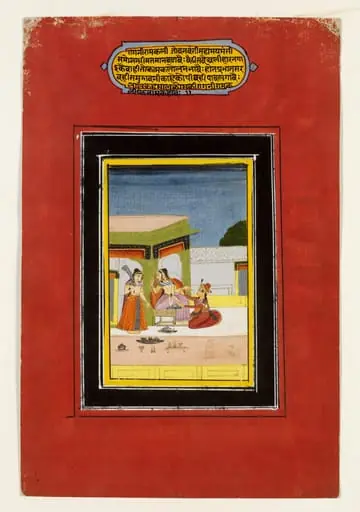
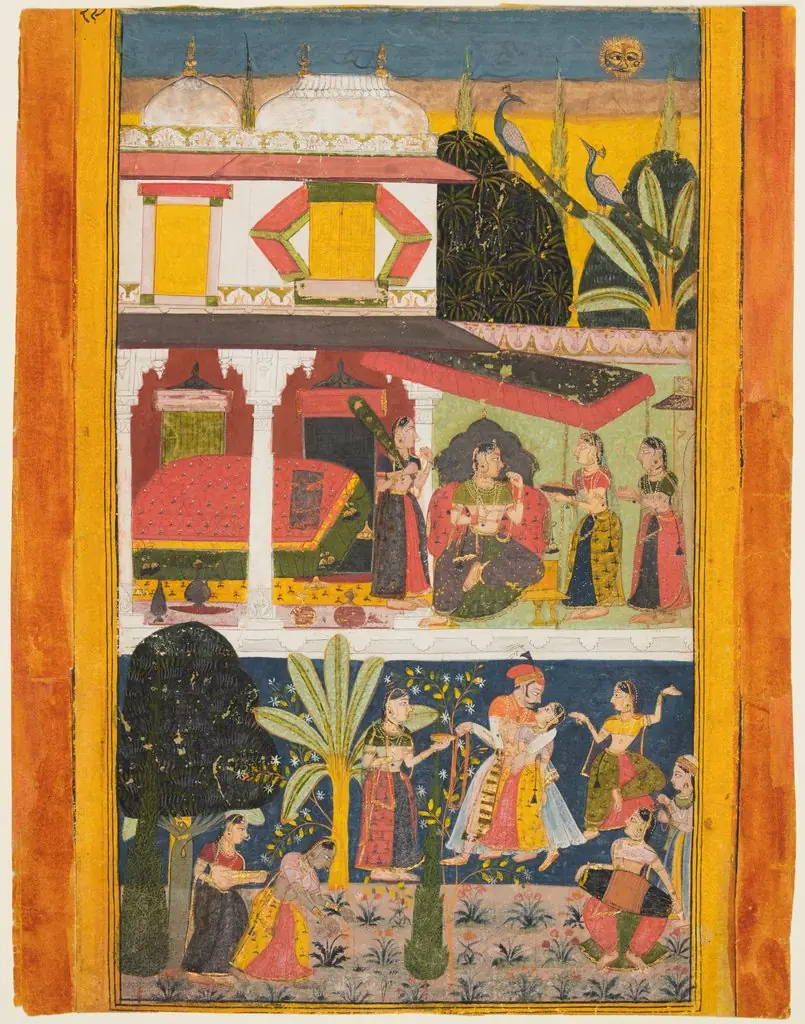
Artwork
Illustration to the Musical Mode Malasari Ragini
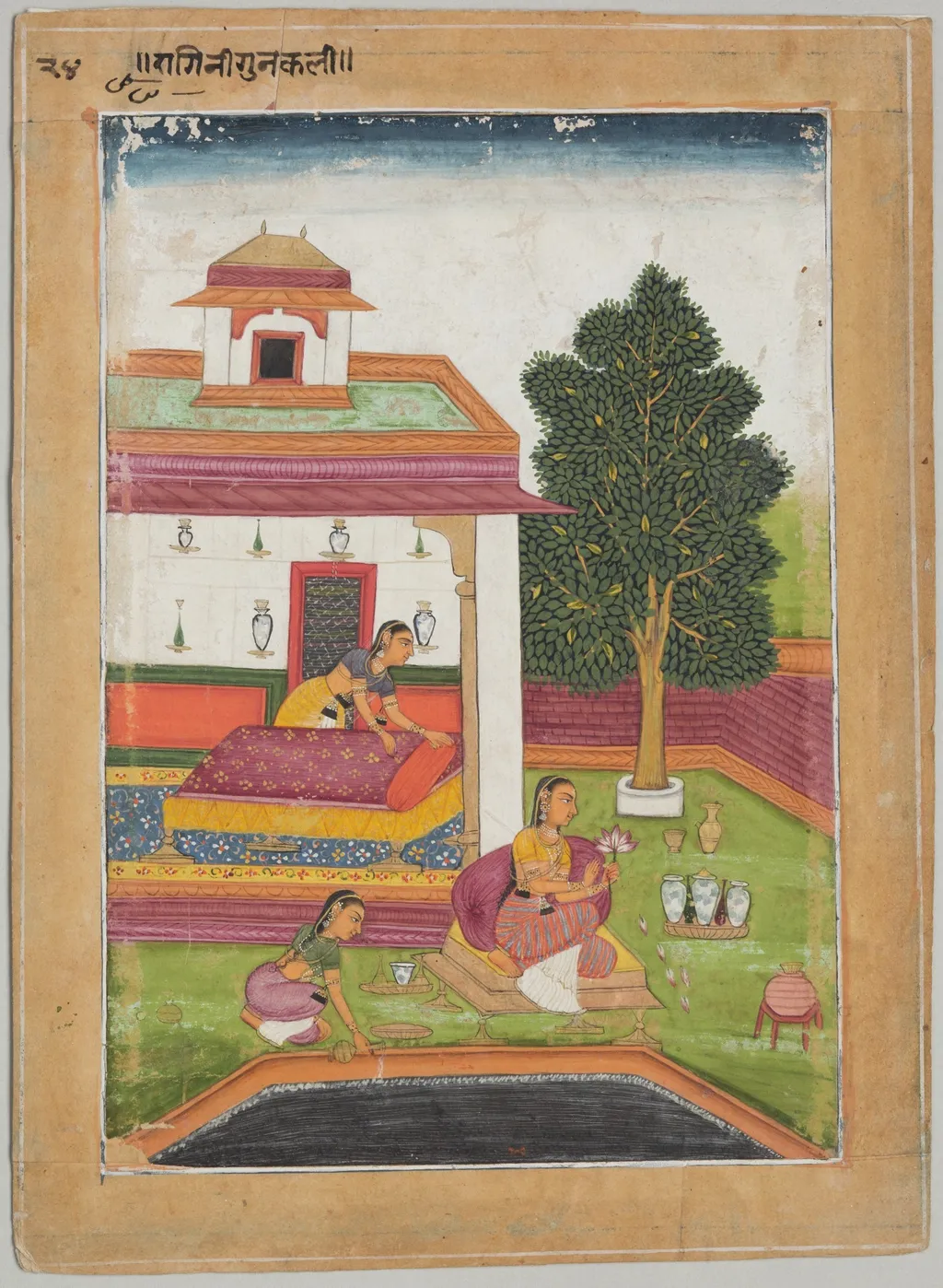
Illustration to the Musical Mode Malasari Ragini is an unspecified painting by the Mughal Painting artist Unknown. It dates from 1650 and is held in the collection of the Detroit Institute of Arts. This small-scale painting belongs to a series illustrating raginis, musical modes personified as feminine figures in Indian tradition.
About this work
Overview
This small-scale painting belongs to a series illustrating raginis, musical modes personified as feminine figures in Indian tradition.
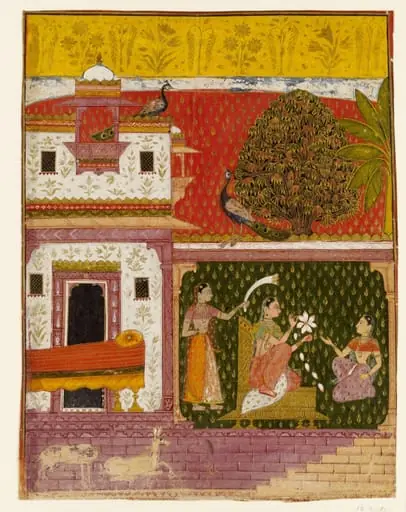
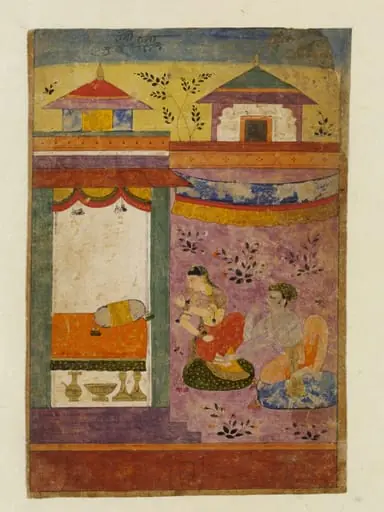
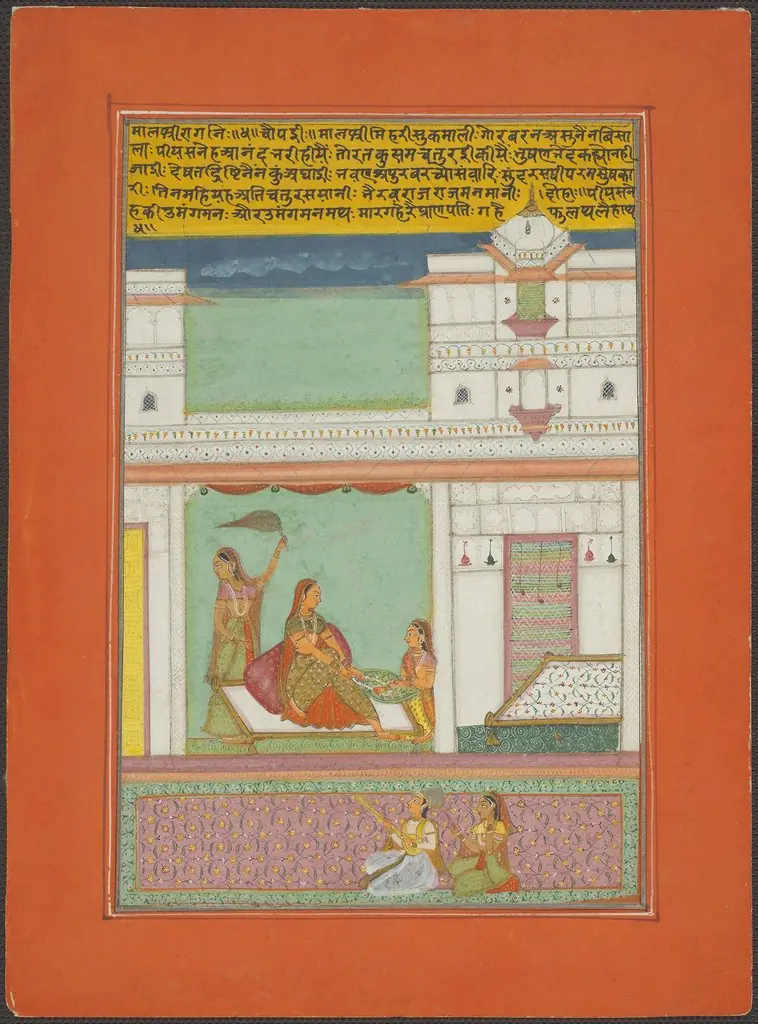
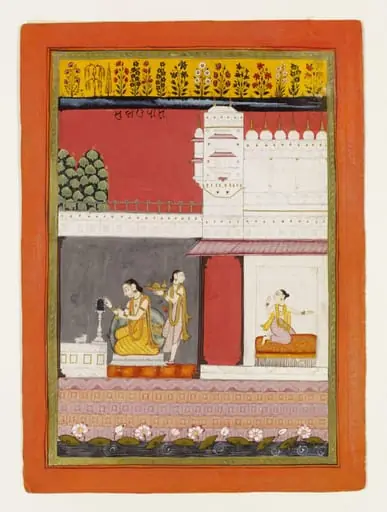
This small-scale painting belongs to a series illustrating raginis, musical modes personified as feminine figures in Indian tradition. Depicted in a private courtyard, three women engage in quiet, intimate activities, their postures and attire reflecting the mood associated with the Malasari Ragini. The scene is rendered with meticulous detail, emphasizing texture, color, and spatial harmony without narrative drama.
Subject & Meaning
The three women represent the emotional essence of the Malasari Ragini, a mode linked to longing and contemplation. Their arrangement—seated, elevated, and grounded—suggests a hierarchy of presence or inner states. The flower held by the woman on the platform may symbolize fleeting beauty, while the crouching figure’s gesture implies quiet ritual or preparation, reinforcing the mode’s introspective character.
Technique & Style
The painting employs fine brushwork to render intricate patterns on textiles and architectural elements. Colors are rich and layered, with gold and vermilion accents enhancing the decorative quality. The composition is flattened, with no perspective, typical of Rajput miniature traditions. Details like the pond’s ripples and the tree’s leaves are rendered with precision, contributing to a sense of contained, lyrical space.
History & Provenance
Created in the late 17th or early 18th century, likely in a Rajput court workshop, this piece was part of a larger musical manuscript cycle. Such illustrations were commissioned by nobility to accompany poetic texts on ragas. Its survival suggests it was preserved in a royal collection, possibly in Rajasthan or the Punjab hills, before entering modern institutional holdings.
Context
Ragini paintings emerged from the fusion of devotional poetry, classical music, and courtly aesthetics in North India. Each mode was visualized through a female figure in a specific setting, linking sound to emotion and season. The courtyard setting reflects domestic spaces where music was performed privately, often by women, making this image both artistic and culturally grounded.
Legacy
Though not widely known outside specialized collections, such illustrations remain vital to understanding how Indian musical theory was visualized. They influenced later regional styles and continue to inform contemporary studies of gender, performance, and symbolism in pre-colonial Indian art. Their quiet intensity offers a counterpoint to more overtly dramatic narratives of the period.
Artist & collection

 Domestic Scene
 Giacomo and Cardinal Marco, investing Andrea, Abbot of San Zeno, with his Benefice
 The Nymph of Fontainebleau
 Portrait of a Woman
 Madonna and Child with Saints in the Enclosed Garden
 Venus and Minerva
 Family Group of Four on Sofa
 Wall painting from Room H of the Villa of P. Fannius Synistor at Boscoreale