Artwork
Hotei with Daoist Immortals: Immortal with Gourd and Dragon
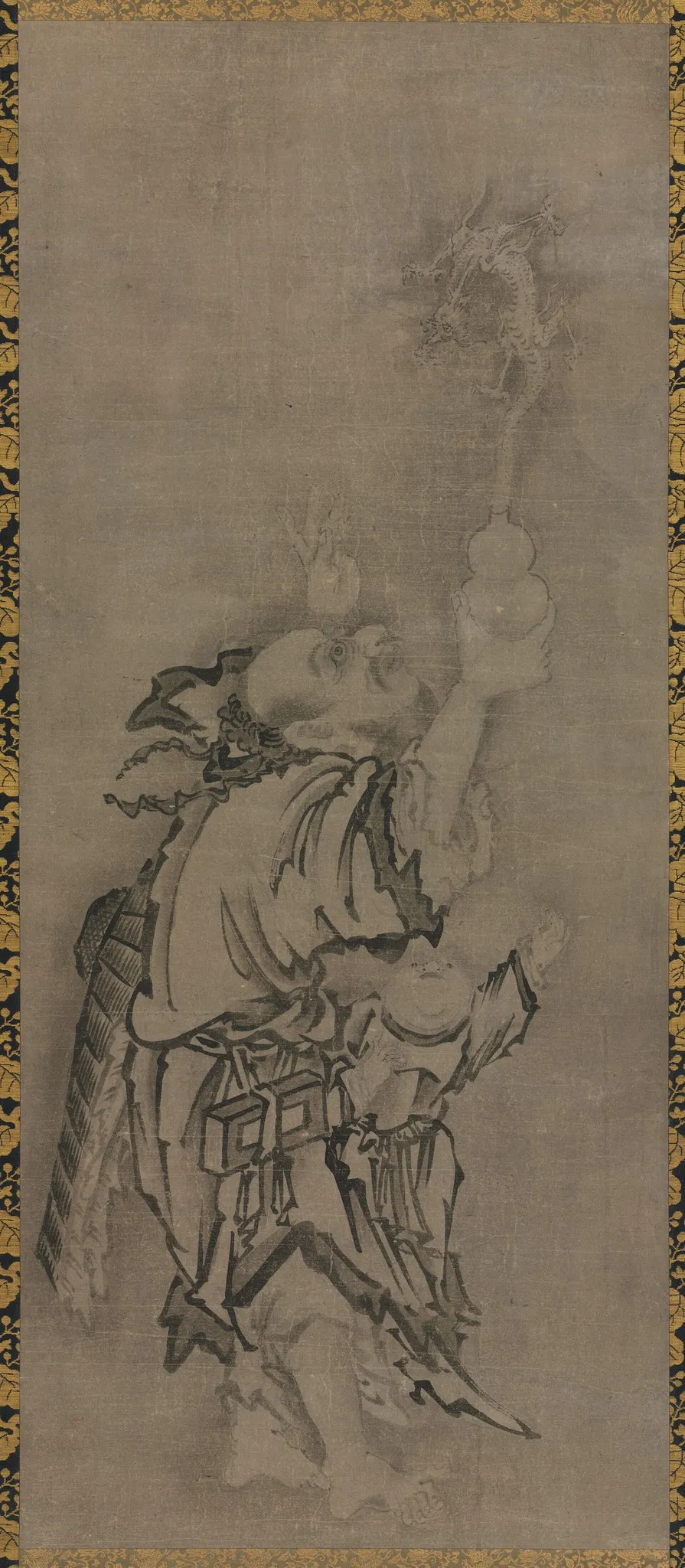
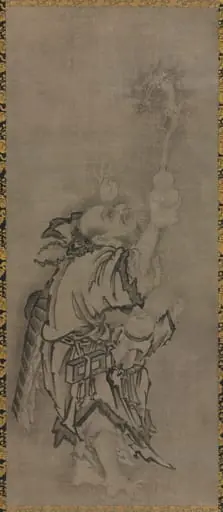
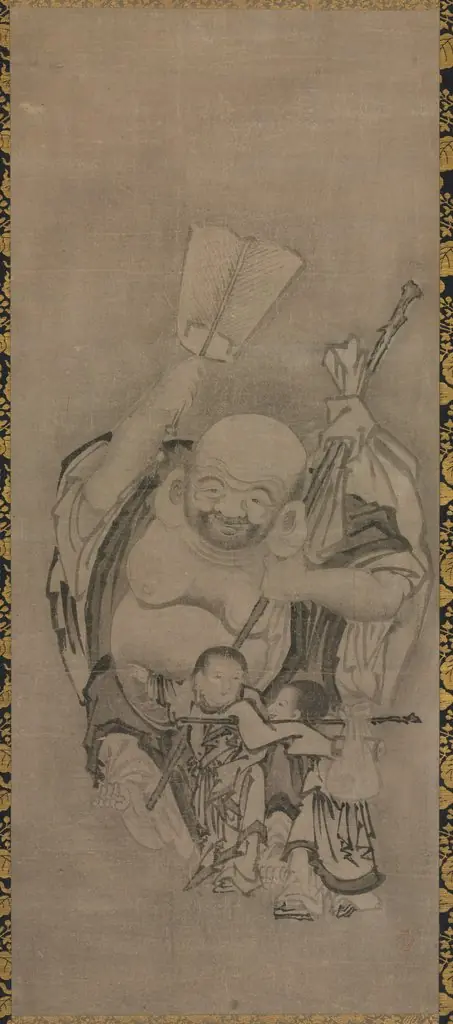
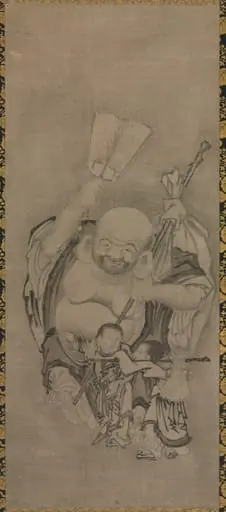
Hotei with Daoist Immortals: Immortal with Gourd and Dragon is an unspecified painting by Unknown. It dates from 1593 and is held in the collection of the Cleveland Museum of Art. The work depicts a rotund, smiling deity clutching a gourd and a scroll, accompanied by two ethereal companions who ascend behind him.
About this work
Overview
One of the attendants grasps a stylized dragon, while the composition is set against a largely empty backdrop framed by a thin gold border.
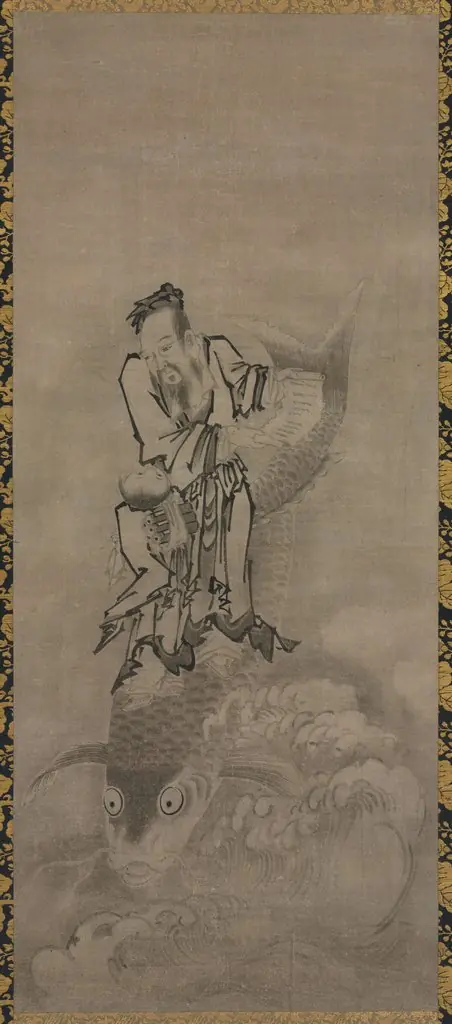
The work depicts a rotund, smiling deity clutching a gourd and a scroll, accompanied by two ethereal companions who ascend behind him. One of the attendants grasps a stylized dragon, while the composition is set against a largely empty backdrop framed by a thin gold border. The scene conveys a lighthearted, almost whimsical atmosphere through its minimal setting and playful arrangement of figures.
Subject & Meaning
The central figure represents Hotei, one of the Seven Lucky Gods, traditionally associated with abundance and contentment. The gourd he holds symbolizes nourishment and the scroll may allude to wisdom or the transmission of teachings. The accompanying figures are Daoist immortals, their upward motion suggesting transcendence, while the dragon they bear evokes power and protection within Chinese mythological symbolism.
Technique & Style
Executed with bold, sketch‑like lines, the drawing resembles a rapid charcoal study, emphasizing movement and mass. The strokes are uneven and fluid, giving the figures a sense of immediacy and vitality. Contrast is achieved through the stark black outlines against the largely blank background, while the thin gold border provides a subtle decorative frame without detracting from the dynamic line work.
History & Provenance
The piece originates from a tradition of East Asian ink painting that blends Buddhist and Daoist iconography, typical of the late Ming to early Qing periods. It has circulated among private collections before entering a museum setting, where it was catalogued as a representative example of syncretic religious art in the region.
Context
During the era of its creation, artists frequently merged Buddhist figures like Hotei with Daoist motifs, reflecting a cultural milieu where religious boundaries were porous. The inclusion of a dragon and the floating immortals aligns with contemporary visual conventions that conveyed spiritual ascent and protective forces within a single composition.
Artist & collection

 Domestic Scene
 Giacomo and Cardinal Marco, investing Andrea, Abbot of San Zeno, with his Benefice
 The Nymph of Fontainebleau
 Portrait of a Woman
 Madonna and Child with Saints in the Enclosed Garden
 Venus and Minerva
 Family Group of Four on Sofa
 Wall painting from Room H of the Villa of P. Fannius Synistor at Boscoreale