Artwork
Icoaării
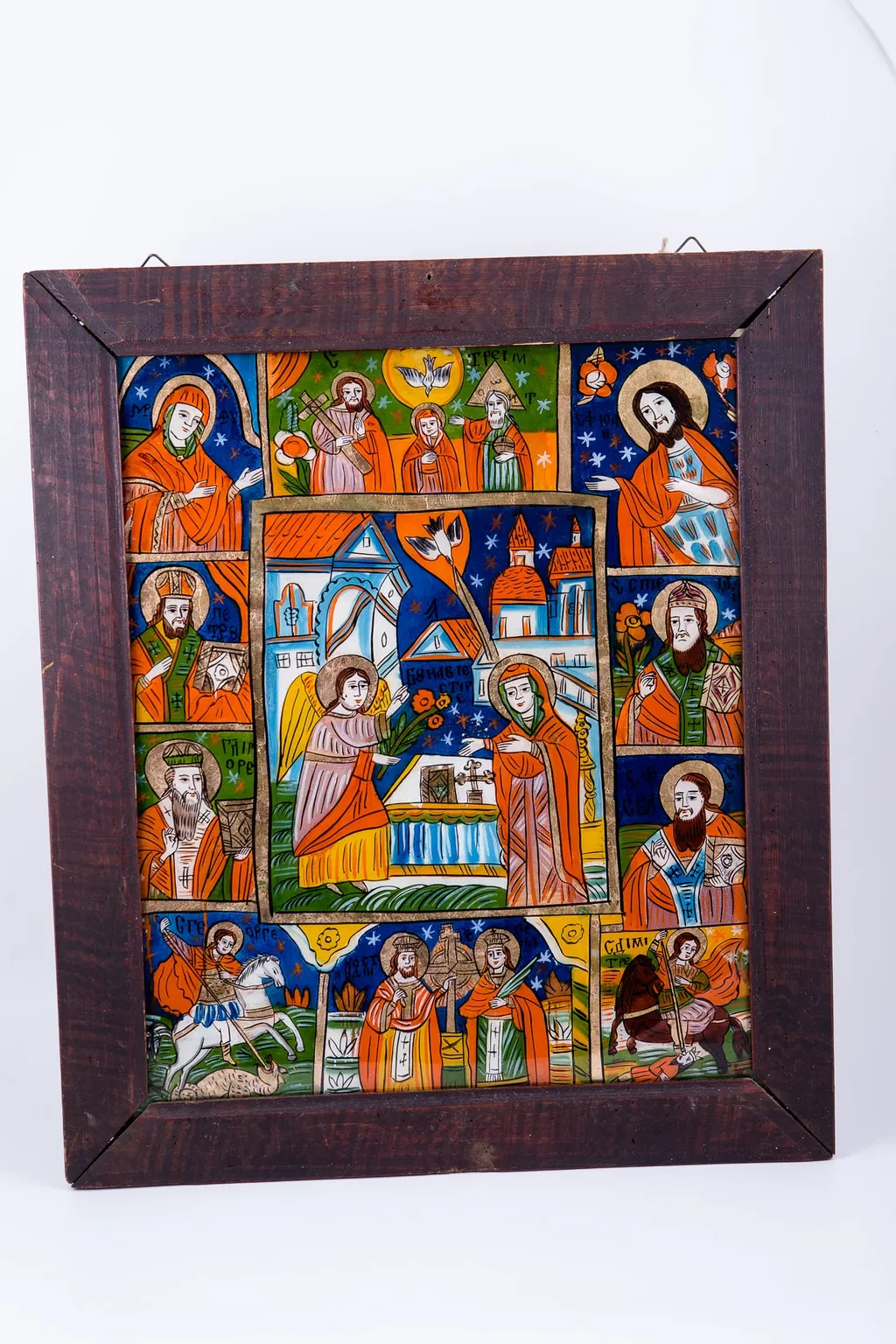
Icoaării is a drawing by Unknown. It dates from 1850 and is held in the collection of the ASTRA National Museum Complex. This work is a small, framed panel painted with vivid, flat colors and simplified forms.
About this work
Overview
The background is a uniform blue, and all elements are enclosed within a rigid, decorative structure, suggesting a devotional or instructional purpose.
This work is a small, framed panel painted with vivid, flat colors and simplified forms. Its composition centers on two women seated at a table with flowers, surrounded by smaller narrative scenes: a mounted knight, a town gathering, and haloed figures. The background is a uniform blue, and all elements are enclosed within a rigid, decorative structure, suggesting a devotional or instructional purpose.
Subject & Meaning
The central figures may represent saints or biblical women, possibly engaged in contemplation or ritual. Surrounding scenes likely depict episodes from hagiography or sacred history, while the haloed figures suggest divine presence. Inscriptions near each figure function as identifiers, guiding viewers through a visual narrative rooted in religious tradition, possibly intended for private devotion.
Technique & Style
The painting employs a flat, two-dimensional style with no attempt at perspective. Figures are outlined clearly and dressed in bold, non-naturalistic hues—orange, green, and white—enhancing their symbolic rather than realistic presence. The decorative quality resembles manuscript illumination or folk art, prioritizing clarity and spiritual symbolism over spatial depth or anatomical accuracy.
History & Provenance
The work’s wooden frame and stylistic features suggest a late medieval or early Renaissance origin, possibly from a region with strong iconographic traditions. Its intimate scale and devotional content point to private ownership, perhaps commissioned by a lay patron. The presence of inscriptions implies literacy among its intended audience, though its exact origin and early ownership remain undocumented.
Context
This piece aligns with regional traditions of devotional panel painting that blended narrative storytelling with symbolic imagery. Similar works appear in Eastern European and Balkan religious art, where flat compositions and labeled figures served to educate the faithful. The inclusion of secular scenes like the knight and town suggests an integration of daily life into sacred storytelling.
Legacy
Though not widely known in major art historical narratives, this work exemplifies a persistent vernacular approach to religious imagery that persisted beyond the Renaissance. Its emphasis on clarity, symbolism, and inscription influenced later folk and liturgical art, preserving a visual language that prioritized spiritual meaning over naturalism.
Artist & collection

 Domestic Scene
 Giacomo and Cardinal Marco, investing Andrea, Abbot of San Zeno, with his Benefice
 The Nymph of Fontainebleau
 Portrait of a Woman
 Madonna and Child with Saints in the Enclosed Garden
 Venus and Minerva
 Family Group of Four on Sofa
 Wall painting from Room H of the Villa of P. Fannius Synistor at Boscoreale
 IcoaȚări
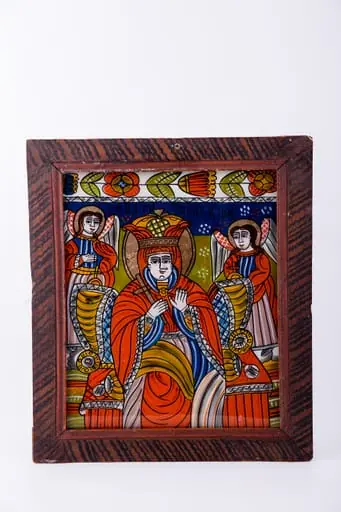 Sfânta Mare Cuvioasă Parascheva de la Iași este așezată pe tron împărătesc, având crucea în mâna dreaptă. Este îmbrăcată în veșmânt roșu vermillon, cu interiorul căptușit cu galben și albastru. Peste maforionul roșu, sfânta cuvioasă are coroniță și aureolă. În spatele tronului, stânga și dreapta, este câte un înger păzitor. În registrul superior este un segment de ghirlandă decorativă, cu flori și frunze. Fondul icoanei este împărțit în o treime de cer albastru și doua treimi vegetație de deal verde, lipite prin stele albe. Stelele sunt desenate asemenea unor floricele stilizate. Compoziția este elaborată și detaliile se întrepătrund armonios cu alternanța cromatică: roșu vermillon, galben, albastru, verde, alb. Este o icoană cu aer luminos, specific Țării Făgărașului. Inscripția în chirilică este pe albastrul cerului, în traducere Sfânta Paraschiva. Cromatica: albastru, roșu vermillon, galben, ocru, verde olive, alb, negru.
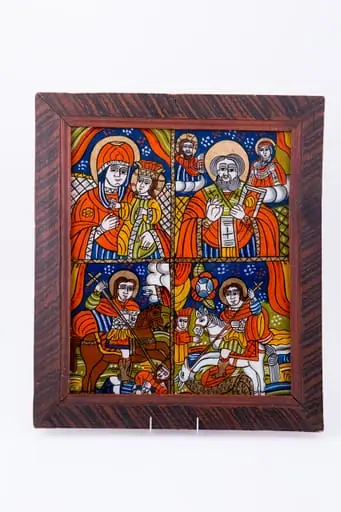 Icoana este pictată la confluența Țării Oltului cu Țara Făgărașului. Este împărțită in patru secvențe, asemenea unei ferestre în cruce. Asemenea unui prăznicar. În partea stîngă, sus, este pictată Maica Domnului Împărăteasă pe tron, cu Pruncul Iisus Hristos în brațe. În ordinea acelor de ceas, urmează Sfântul Mare Ierarh Nicolae, fpcătorul de minuni, În registrul inferior, în dreapta este Sfântul Mare Mucenic Gheorghe, purtător de biruință, omorând balaurul, fiind urmat de Sfântul Mare Mucenic Dimitrie, izvorâtor de mir. Compoziția este echilibrată și simetrică. Cromatica armonioasă, caracteristică picturii Țării Făgărașului. Pruncul Iisus Hristos din brațele Maicii Domnului se întâlnește cu Sfânta Evanghelie din mâna Sfântul Ierarh Nicolae. Cei doi sfinți mucenici martiri, militari au sulițele îndreptate înspre interior, omorând balaurul și omul cel rău. Calul Sfântului Gheorghe este alb, iar calul Sfântului Dimitrie este brun închis. Fondul întregii icoane, ca într-o armonie de unică tematică, este cerul albastru cu stele albe. Aureolele personajelor sunt aurii, prin lipirea foiței aurii. Sulițele, lăncile, balaurul și crucea de chenar interior sunt aurii. Cromatica este armonioasă și luminoasă: albastru-bleumarin, roșu vermillon, verde, galben-ocru, brun, negru, alb. Icoana este un prăznicar cu o tematică rară, din Țara Făgărașului.
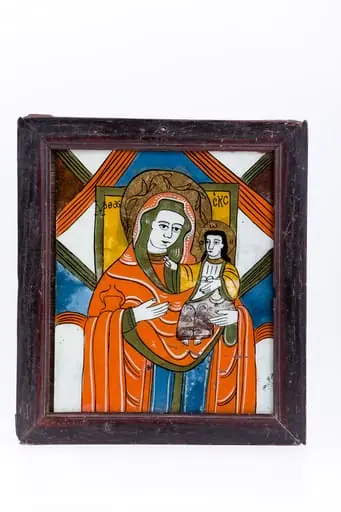 Maica Domnului îl ține în brațe pe Pruncul Iisus Hristos care Binecuvântează cu mâna dreaptă și arată înspre Maica Domnului. Maica Domnului arată calea cu mâna dreaptă, deci este Hodighitria. Maica Domnului este înveșmântată în mantie cu maforion roșu vermillon și sacos albastru, cu interiorul verde, are peste maforiom aureolă. Maforiomul este împodobit cu puncte mici albe. Pruncul Iisus Hristos este înveșmântat în gri și auriu ocru-brun-bronziu, cu interiorul căptușit cu verde și are aureolă. Fondul icoanei este format dintr-un caroiaj alb-albastru, cu marginile verzi și acajou-cărămizii. Compoziția geometrică, formată din romburi suprapuse, ne trimite gândul la nimbul de Slavă de Lumină de la Schimbarea la Față a Mântuitorului Iisus Hristos pe Muntele Tabor. Cromatica este armonioasă, tomnatică, specifică Niculei: roșu vermillon, alb, albastru cobalt, verde, kaki, auriu, ocru-brun-bronziu, brun, alb, negru. Inscripția din româno-chirilică se traduce MP IC XC Maica Domnului Iisus Hristos.
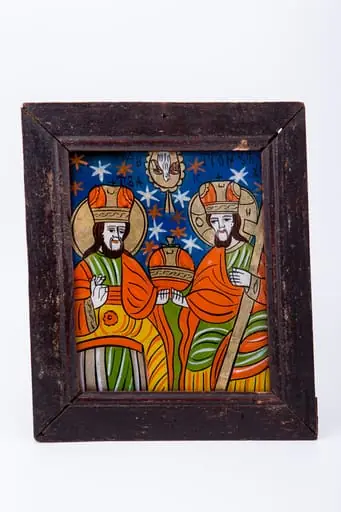 Sfânta Treime prezentă în această icoană este inedită pentru că Dumnezeu-Tatăl și Dumnezeu-Fiul sunt foarte asemănători. Fiul după Chiul și Asemănarea! Sunt înveșmântați în roșu vermillon, galben și verde. Dumnezeu-Fiul are mantia roșie peste umăr - omofor și ține Crucea Răstignirii în mână. Dumnezeu-Tatăl și Dumnezeu-Fiul susțin împreună sfera globului pământesc cu mâinile. În registrul superior, deasupra, este Sfântul Duh care se Pogoară sub forma unui porumbel alb, prin Cerurile deschise, pe un mănunchi de stele bronzii. Fondul este cerul albastru ceruleum cu elemente astrale: stele roșii și albe. Cromatica este armonioasă, luminoasă și puternic-vie, speifică Țării Oltului: roșu vermillon, verde, ocru, galben chihlimbar, albastru ceruleum, roșu stacojiu, alb, negru. Inscripția din româno-chirilică se traduce Sfânta Treime Dumnezeu Tatăl.