Artwork
Icoamnul
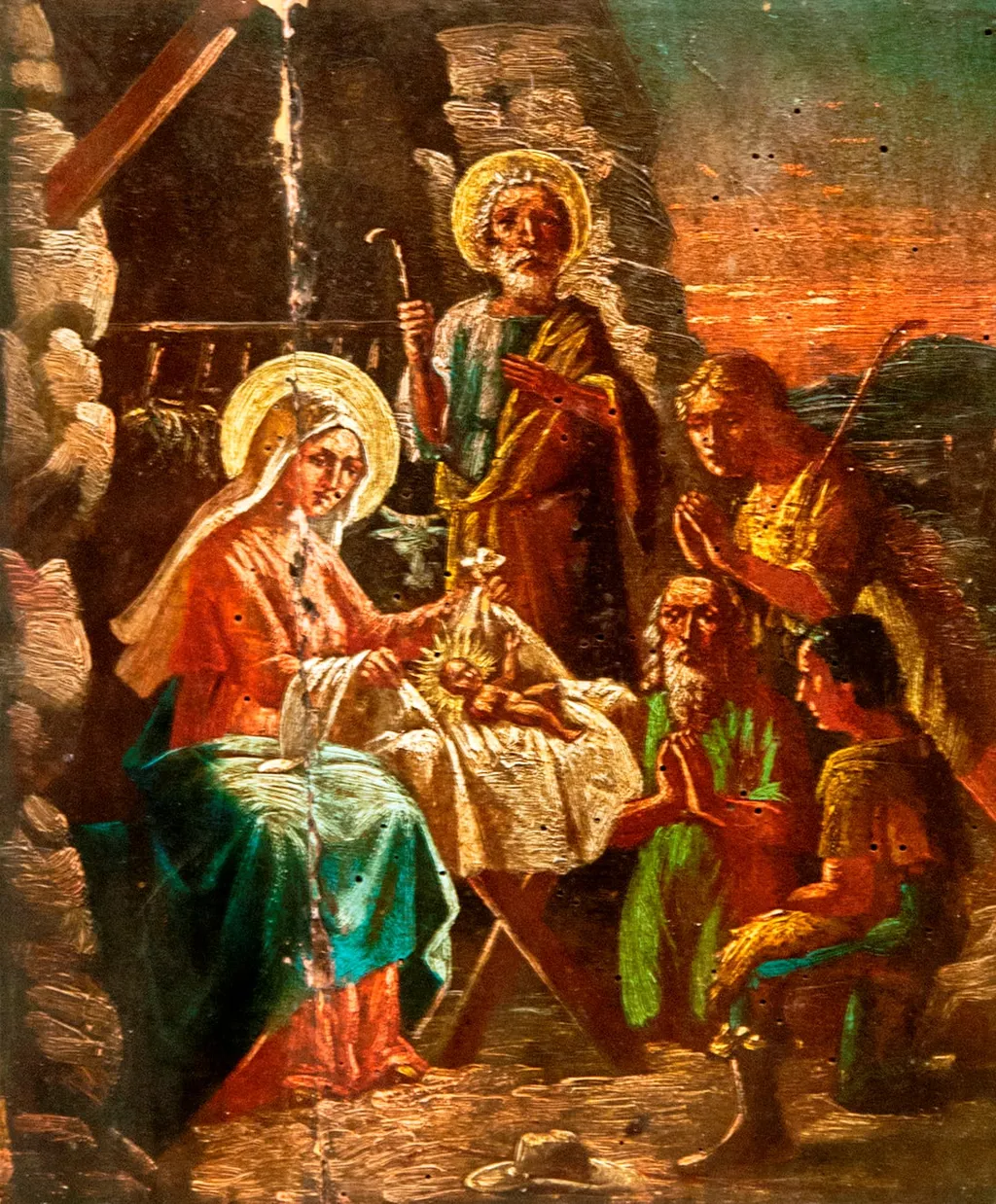
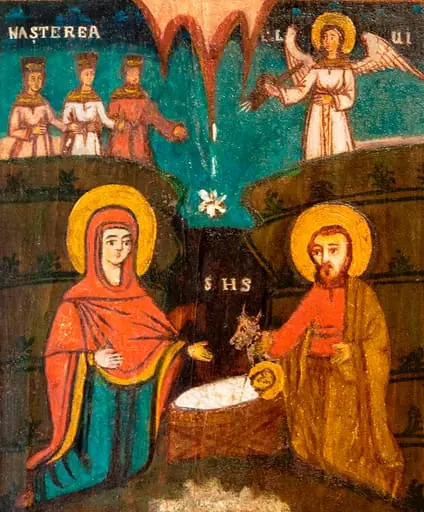
Icoamnul is a drawing by Unknown. It dates from 1850 and is held in the collection of the "Dimitrie Gusti" National Village Museum. A small group of five figures is depicted in close proximity, arranged around a low surface.
About this work
Overview
Two central figures sit, one holding a wrapped cloth bundle, while others stand nearby or play a stringed instrument.
A small group of five figures is depicted in close proximity, arranged around a low surface. Two central figures sit, one holding a wrapped cloth bundle, while others stand nearby or play a stringed instrument. Earth-toned pigments dominate, with gold halos marking the seated individuals. The background is dark and rough, suggesting weathered stone, enhancing the intimate, quiet atmosphere of the scene.
Subject & Meaning
The figures appear to be engaged in a moment of quiet ritual or contemplation. The wrapped object held by the seated figure may signify a sacred item or offering. The presence of a musical instrument and staff suggests ceremonial roles, while the halos imply spiritual significance. The grouping conveys reverence, possibly depicting a religious or ancestral gathering.
Technique & Style
Shading is achieved through fine cross-hatching, creating depth without bold contrasts. The figures are rendered with restrained lines, emphasizing form over detail. Earth pigments—browns, greens, muted reds—are applied thinly, allowing the texture of the surface to show through. Gold halos are applied with precision, distinguishing the seated figures without overt embellishment.
History & Provenance
The work’s origin and early ownership are undocumented. Its style suggests a pre-modern tradition, possibly from a region where devotional drawing was practiced on portable supports. No records link it to known artists or collections prior to its modern identification, leaving its historical context partially obscured.
Context
The composition aligns with regional practices in which sacred narratives were conveyed through intimate, non-monumental drawings. Similar imagery appears in devotional manuscripts and ritual objects from cultures that valued quiet, personal worship. The use of halos and symbolic objects reflects a visual language rooted in spiritual representation rather than naturalism.
Legacy
This drawing survives as a quiet example of pre-modern devotional art, valued for its restraint and emotional resonance. It contributes to understanding how spiritual themes were rendered in non-elite, portable formats. Its preservation offers insight into localized artistic traditions that rarely entered major institutional collections.
Artist & collection
Museum
"Dimitrie Gusti" National Village Museum
Continue through works from the same source collection.
 Domestic Scene
 Giacomo and Cardinal Marco, investing Andrea, Abbot of San Zeno, with his Benefice
 The Nymph of Fontainebleau
 Portrait of a Woman
 Madonna and Child with Saints in the Enclosed Garden
 Venus and Minerva
 Family Group of Four on Sofa
 Wall painting from Room H of the Villa of P. Fannius Synistor at Boscoreale