Artwork
Icoană pe lemn: Înălțarea Domnului
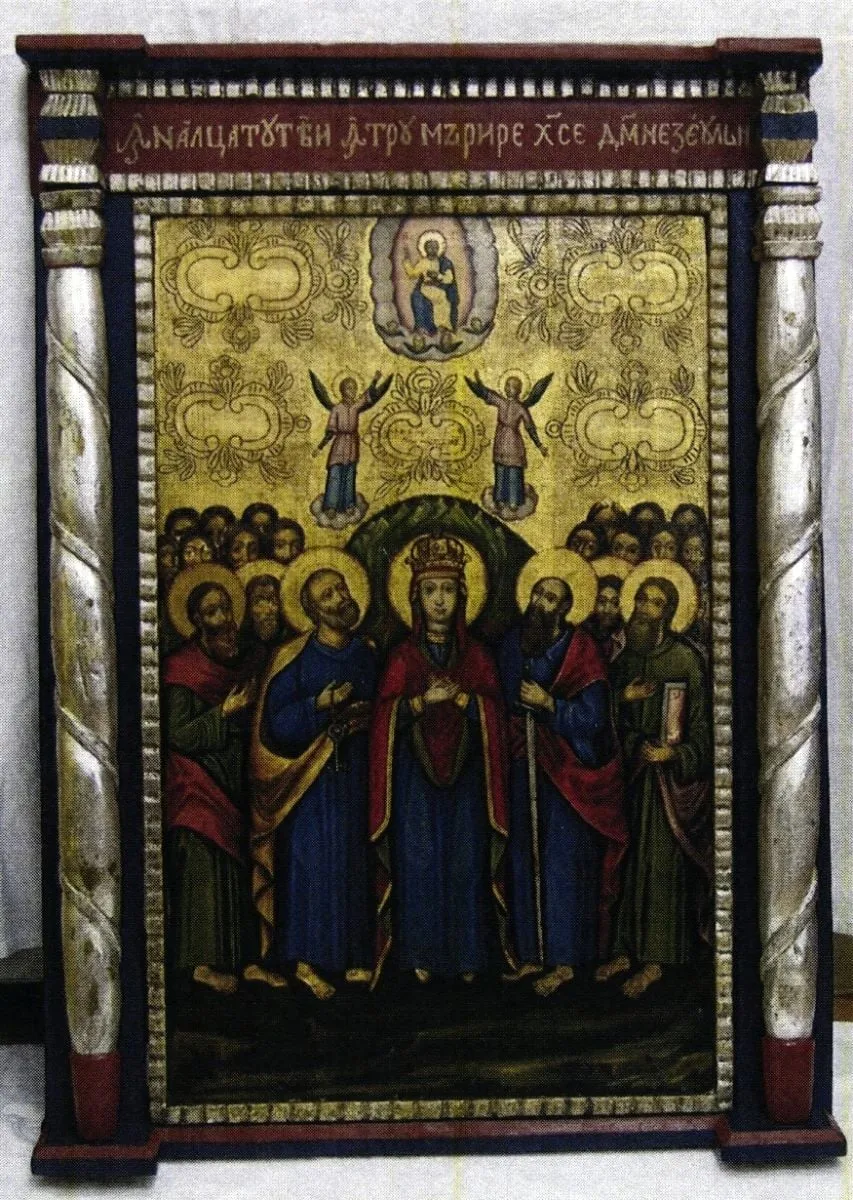
Icoană pe lemn: Înălțarea Domnului is a drawing by the Romanticist artist Unknown. It dates from 1810 and is held in the collection of the National Museum of Bukovina.
About this work
If you're interested in learning more about this style of art, you might want to check out the Romanticism movement.
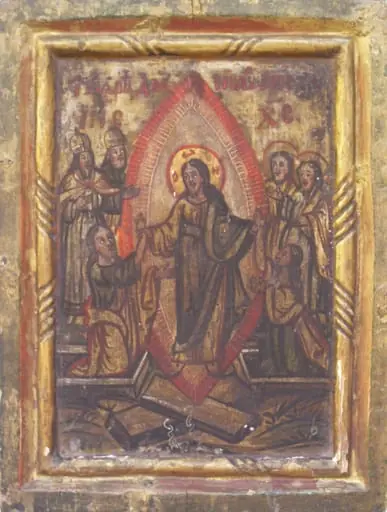
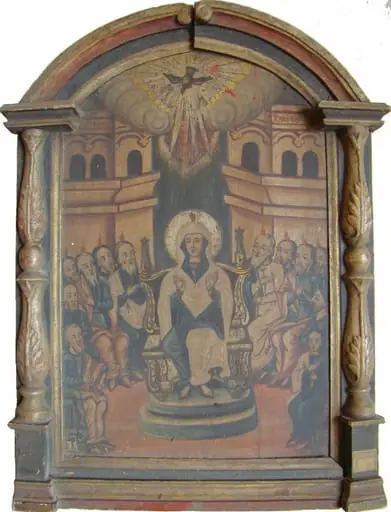
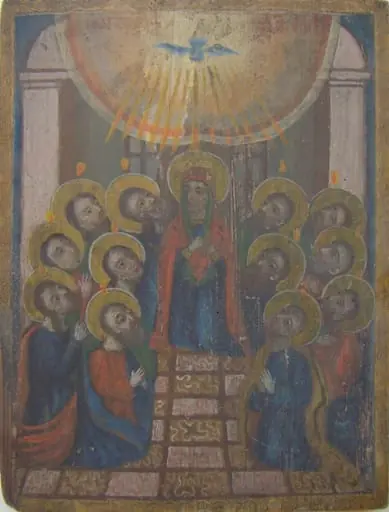
This painting shows a group of people gathered around a central figure, who is standing in a doorway. The figure is wearing a red robe and a gold crown, and is surrounded by a halo of light. The people around the figure are all looking up at it with their hands raised in prayer.
The painting is done in a style that is reminiscent of religious art from the 19th century. The colors are muted, and the brushstrokes are bold and expressive. The overall effect is one of reverence and awe.
If you're interested in learning more about this style of art, you might want to check out the Romanticism movement.
Overview
Icoană pe lemn: Înălțarea Domnului is a wooden panel painting depicting a solemn religious scene. A central figure, adorned with a red robe and gold crown, stands in a doorway surrounded by a halo, drawing the devout attention of a gathered group.
Subject & Meaning
The painting illustrates the Ascension of the Lord, a pivotal Christian event. The composition conveys reverence and awe through the postures and expressions of the worshippers, emphasizing spiritual elevation and connection with the divine.
Technique & Style
Executed in a 19th-century religious art style, the work features muted color tones and bold, expressive brushstrokes, characteristic of a more emotive and less detailed approach, akin to certain aspects of Romanticism in its emphasis on feeling.
History & Provenance
No specific historical or provenance details are provided for this work, highlighting its style as broadly reminiscent of 19th-century religious art traditions.
Context
While not directly attributed to the Romanticism movement, the painting's expressive brushwork and focus on evoking emotion through religious subject matter share thematic similarities with Romantic artistic principles.
Legacy
The legacy of this specific work is not detailed, though it reflects and contributes to the enduring tradition of religious art in conveying spiritual themes and emotions through visual representation.
Artist & collection
 Domestic Scene
 Giacomo and Cardinal Marco, investing Andrea, Abbot of San Zeno, with his Benefice
 The Nymph of Fontainebleau
 Portrait of a Woman
 Madonna and Child with Saints in the Enclosed Garden
 Venus and Minerva
 Family Group of Four on Sofa
 Wall painting from Room H of the Villa of P. Fannius Synistor at Boscoreale