Artwork
Icoana are o tematică iconografică foarte rară: în cea dintâi parte, este Sfânta Treime: Mântuitorul Iisus Hristos Răstignit pe brațele Lui Dumnezeu-Tatăl și ținut în veșmântul roșu al Pătimirii și Jertfei. Dumnezeu-Tatăl, Împărat al Cerurilor, are pe cap coroană și aureolă triunghiulară, reprezentând Sfânta Treime. Sfântul Duh este reprezentat prin porumbelul alb. Sfânta Treime are în registrul inferior o mandorlă de nouri rotunzi albi-albaștri și în registrul superior o ghirlandă din trandafiri și ramuri cu măceșe, simbolizând Grădina Raiului. În cea de-a doua parte, în dreapta, este Maica Domnului Împărăteasă ținând în brațe pe genunchi Trupul Mântuitorului Iisus Hristos, coborât de pe Cruce, plâns, jelit. Este asemenea unei Piete. Icoana este deosebită și foarte rară, prin compoziția tematică și viziunea iconografică greco-catolică. Fondul icoanei este alb-ivoriu-crem, în registrul superior și galben-solar, în registrul inferior. Cromatica este armonioasă: roșu vermillon-trandafiriu, brun-roșcat-acajou, galben-solar, albastru bleu-ciel, gri, alb , negru. Icoana este din Nordul Transilvaniei, Nicula.
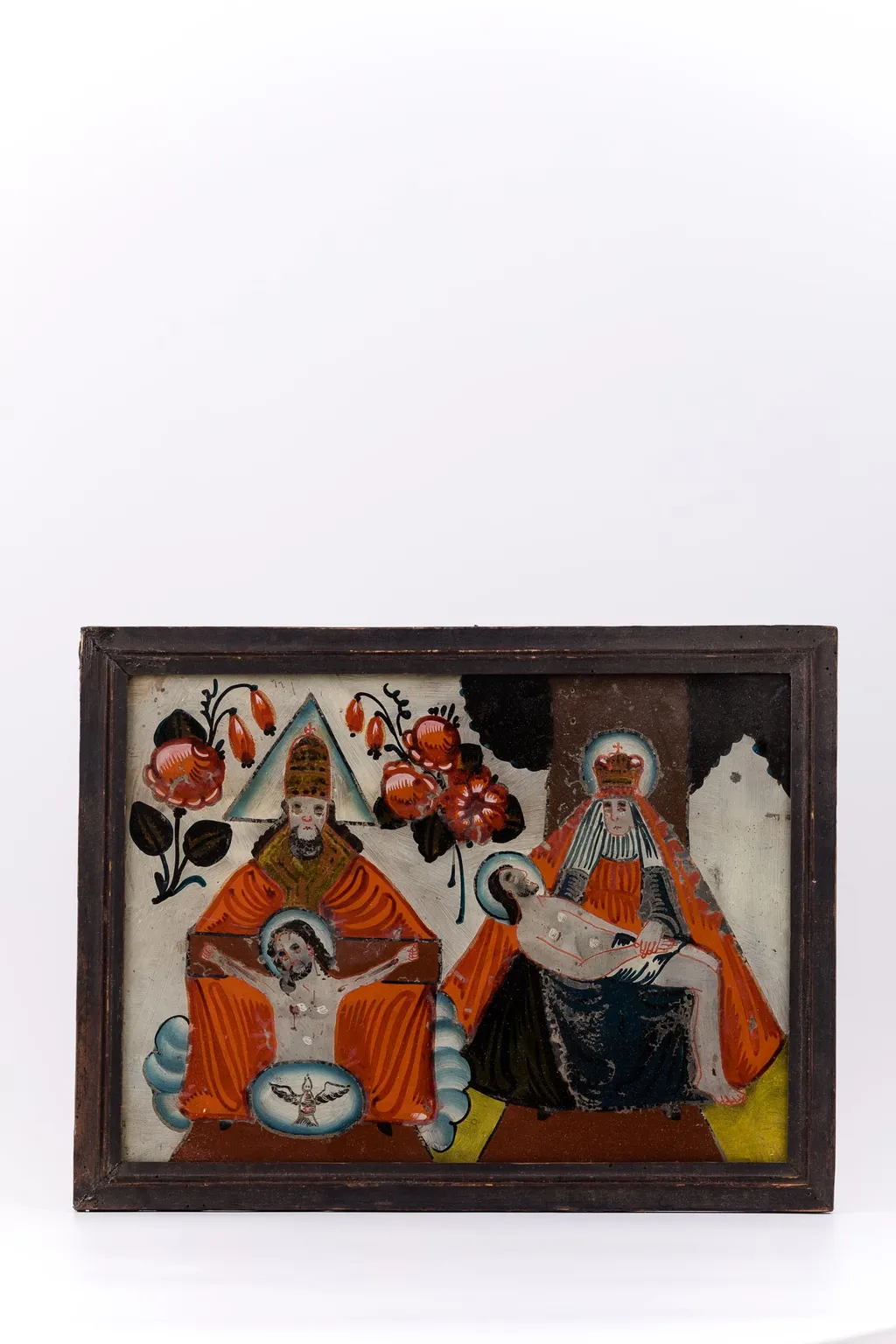
Icoana are o tematică iconografică foarte rară: în cea dintâi parte, este Sfânta Treime: Mântuitorul Iisus Hristos Răstignit pe brațele Lui Dumnezeu-Tatăl și ținut în veșmântul roșu al Pătimirii și Jertfei. Dumnezeu-Tatăl, Împărat al Cerurilor, are pe cap coroană și aureolă triunghiulară, reprezentând Sfânta Treime. Sfântul Duh este reprezentat prin porumbelul alb. Sfânta Treime are în registrul inferior o mandorlă de nouri rotunzi albi-albaștri și în registrul superior o ghirlandă din trandafiri și ramuri cu măceșe, simbolizând Grădina Raiului. În cea de-a doua parte, în dreapta, este Maica Domnului Împărăteasă ținând în brațe pe genunchi Trupul Mântuitorului Iisus Hristos, coborât de pe Cruce, plâns, jelit. Este asemenea unei Piete. Icoana este deosebită și foarte rară, prin compoziția tematică și viziunea iconografică greco-catolică. Fondul icoanei este alb-ivoriu-crem, în registrul superior și galben-solar, în registrul inferior. Cromatica este armonioasă: roșu vermillon-trandafiriu, brun-roșcat-acajou, galben-solar, albastru bleu-ciel, gri, alb , negru. Icoana este din Nordul Transilvaniei, Nicula. is a drawing by Unknown. It dates from 1850 and is held in the collection of the ASTRA National Museum Complex.
About this work
Overview
This icon, originating from Nicula in the northern part of Transylvania, presents a rare dual composition that merges the theological depiction of the Holy Trinity with a Pietà scene. The work is executed on a creamy ivory background that shifts to a golden tone in the lower register, employing a harmonious palette of vermilion, ochre, sky‑blue, brown and black.
Subject & Meaning
The upper half portrays the Trinity: Christ crucified on the arm of God the Father, who wears a crown and a triangular aureole signifying the three persons.
The upper half portrays the Trinity: Christ crucified on the arm of God the Father, who wears a crown and a triangular aureole signifying the three persons. The Holy Spirit appears as a white dove above them. Beneath, a round cloud motif and a garland of roses and bramble branches evoke the heavenly garden. The lower right panel shows the Virgin Mary, crowned as Empress, cradling the dead Christ on her knees, echoing the traditional Pietà.
Technique & Style
Rendered in a folk‑art idiom, the icon features bold outlines and vivid coloration. The upper register’s ivory‑cream surface contrasts with the lower register’s solar yellow, while the chromatic scheme balances warm reds and browns with cool blues and greys, creating a cohesive visual rhythm typical of Greek‑Catholic iconography in the region.
History & Provenance
The piece belongs to the religious artistic tradition of northern Transylvania and reflects the Greek‑Catholic iconographic program that was uncommon in local churches. It is currently housed in the Museum of Ethnography, where it is displayed as an example of the area’s distinctive devotional art.
Artist & collection

 Domestic Scene
 Giacomo and Cardinal Marco, investing Andrea, Abbot of San Zeno, with his Benefice
 The Nymph of Fontainebleau
 Portrait of a Woman
 Madonna and Child with Saints in the Enclosed Garden
 Venus and Minerva
 Family Group of Four on Sofa
 Wall painting from Room H of the Villa of P. Fannius Synistor at Boscoreale
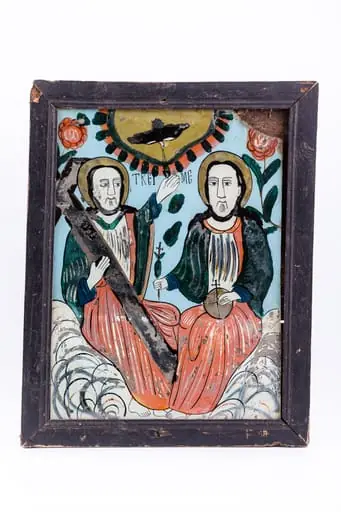 Icoana reprezintă Sfânta Treime. Dumnezeu-Tatăl are globul pământesc, pe genunchi și în mâna dreaptă are o cruce de mână. Dumnezeu-Fiul este alături, ține Crucea pe umărul drept și cu mâna stângă arată înspre Sfântul Duh, Pogorându-se ca un porumbel, astfel reunindu-Se Sfânta Treime. Dumnezeu-Tatăl și Dumnezeu-Fiul sunt îmbrăcați în veșminte în combinație de albastru cobalt, gri cenușiu-antracit și roșu vermillon. Se remarcă desenul fin al broderiei mânecii Tatălui Ceresc. Sfântul Duh se pogoară din miezul galben-solar, deschiderea Cerurilor, cu raze de lumină. Inscripția din româno-chirilică se traduce Treime. În registrul superior, fondul icoanei este cerul albastru bleu-ciel senin, cu câte o rujă - trandafir roșu - în colțurile din stânga și dreapta. În miezul rujelor este semnul zăluței albe, șerpuitoare. În registrul inferior sunt câmpuri de nouri albi-gri, mandorle peste mandorle. Cromatica este luminoasă și armonioasă: roșu vermillon, albastru bleu-ciel, albastru cobalt, alb, gri-antracit, ocru-muștar, alb, negru. Icoana este de Nicula.
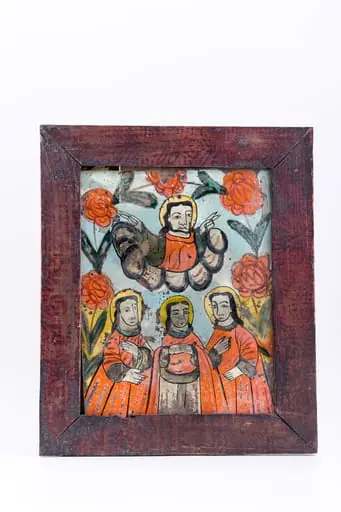 Icoana reprezintă unul dintre praznicele împărătești foarte importante, Înălțarea Domnului Iisus Hristos, care are loc la 40 de zile după Învierea Domnului Iisus Hristos. Icoana este împărțită în două registre, printr-o mandorlă de nouri rotunzi albi-gri. În registrul superior, deasupra mandorlei, este Mântuitorul Iisus Hristos Înălțat la Ceruri și Binecuvântând, spunând: Eu sunt cu voi și nimeni împotriva voastră! În registrul inferior, pe pământ este Maica Domnului, cu doi dintre cei 12 ucenici, prezenți la Înălțare. Întreaga compoziție este încadrată de un chenar decorativ fitomorf, format dintr-o ghirlandă de ruje - 5 trandafiri roșii, cu frunze verzi. Numărul de 5 poate fi interpretat pe de o parte, cele 5 răni ale Mântuitorului Iisus Hristos, și pe de altă parte, cele 50 de zile până la Praznicul Pogorârii Duhului Sfânt - Rusaliile, Cincizecimea. Icoana este de Nicula. Cromatica este luminoasă și armonioasă: roșu vermillon, galben chihlimbar, albastru bleu-ciel, verde brad, gri, alb, negru.
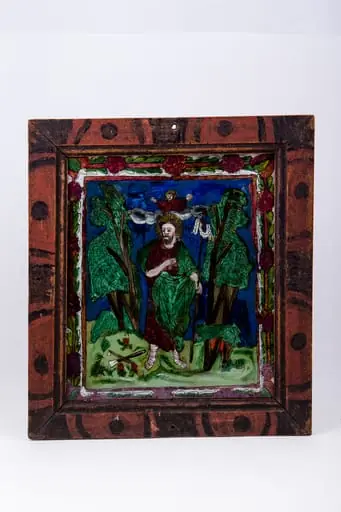 Icoana îi reprezintă împreună pe Sfântul Ioan Botezătorul și Înaintemergătorul Mântuitorului Iisus Hristos și pe Dumnezeu Tatăl. Sfântul Ioan Botezătorul este îmbrăcat într-un himation sau o sarică de păr de cămilă, încins la brâu și cu o mantie de culoare verde, și aripi albastre turcoaz-smarald de înger. Fondul este albastru cu o pădure de copaci verzi, în pustietate. Desenul este foarte sigur și detaliile realizate minuțios, trăsăturile chipurilor fiind foarte expresive și pictate cu măiestrie. Deasupra Sfântului Ioan Botezătorul este Dumnezeu-Tatăl, din deschiderea Cerurilor, cu mâinile ridicate, ocrotind, acoperind și binecuvântând. Cromatica este armonioasă, dar mai rece, și întunecată, specifică picturii Mărginimii Sibiului: verde mușchi de pădure, albastru ceruleum, acajou, brun, stacojiu, alb, negru. Inscipția din româno-chirilică se traduce Sf Ioan IC XC Iisus Hristos.
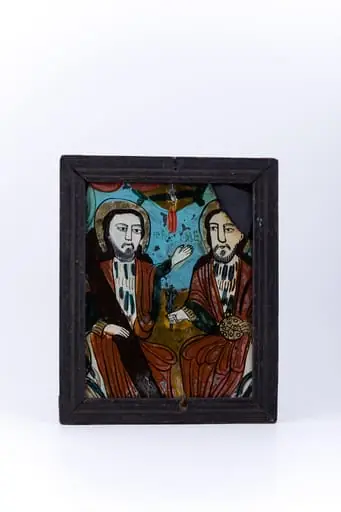 Icoana reprezintă Sfânta Treime. Dumnezeu-Tatăl are globul pământesc bronziu pe genunchi și arătă cu mâna dreaptă, în care are sceptrul împărătesc cu crucea, Bincuvântând întreaga lume. Dumnezeu-Fiul are Crucea pe umărul drept. Dumnezeu-Tatăl și Dumnezeu-Fiul sunt înveșmântați în roșu vermillon-acajou, cu sacosuri albe, dungate cu liniuțe subțiri albastre. Amândoi-dimpreună se sprijină cu picioarele pe o mandorlă de nouri albi-gri, rotunzi și bogați, fiind așezați ca pe un tron împărătesc. Deasupra, în registrul superior este un spațiu luminos de auriu de chihlimbar, din care pe un mănunchi de raze luminoase, se pogoară Sfântul Duh, sub forma porumbelului alb. Astfel este prezentă întreaga Sfântă Treime. Între Dumnzeu-Tatăl, Fiul și Sfântul Duh este un spațiu galben-auriu. Fondul icoanei este cerul albastru cerulem-regal, încadrat de un chenar decorativ geometrizant format din semicercuri roșii, asemenea unor petale de ruje. Inscripția din româno-chirilică se traduce Treime. Cromatica este luminoasă și armonioasă: roșu vermillon-acajou, verde văratic-mușchi de pădure, albastru ceruleum-regal, auriu-bronziu, galben-chihlimbar, gri, brun, alb, negru. Icoana este din Nordul Transilvaniei, Nicula.
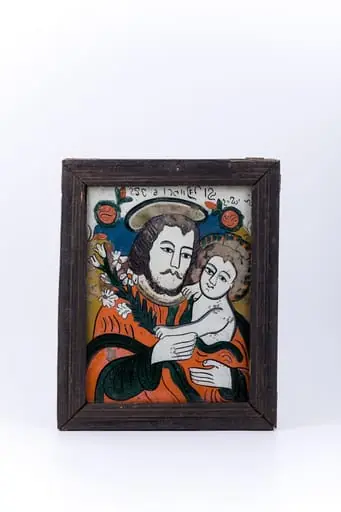 Icoana îi reprezintă pe Sfântul și Dreptul Iosif, Logodnicul PreaCuratei Fecioarei Maria, cu Pruncul Iisus Hristos în brațe. Icoana este mai rară, din punctul de vedere al tematicii compoziționale abordate. Sfântul Iosif este înveșmântat cu un hiton - tunică roșie vermillon, cu mânecile și bordura verde mușchi-de-pădure sau nuanță de China. Pruncul Iisus este dezbrăcat, dar acoperit de veșmântului protector al Sfântului Iosif. În mâna dreaptă Dreptul Iosif Logodnicul ține o ramură de crin, simbolul Fecioriei și a BuneiVestiri. Crinul este ținut împreună cu mânuța Pruncului Sfânt. Aureola Sfântului Iosif este mai aparte, asemenea sfinților catolici. Fondul icoanei este cerul albastru regal, în registrul superior, un câmp luminos de galben-bronziu, în registrele inferior și mediu, pe laterale și un chenar decorativ geometrizant alb-ivoriu. În registrul superior, asemenea unei arcade de boltă, este o ghirlandă de ruje roz - 2 elemente florale. Inscripția din româno-chirilică se traduce Sf Iosif și Iisus. Cromatica este armonioasă și luminos-pastelată: roșu vermillon, verde mușchi-de-pădure, albastru regal, alb-ivoriu, crem, bej, nisipiu, galben-ocru, bronziu, alb, negru. Icoana este din Nordul Transilvaniei, Nicula.
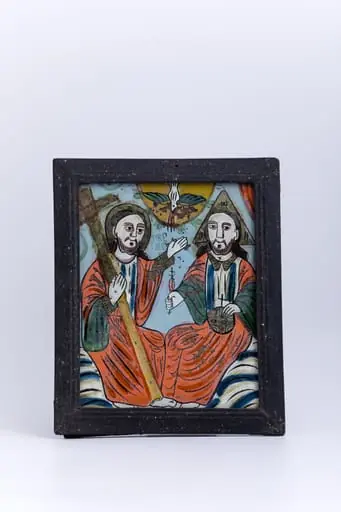 Icoana reprezintă Sfânta Treime. Dumnezeu-Tatăl are globul pământesc albastru pe genunchi și arătă către Fiul Iisus Hristos Binecuvântând lumea. Dumnezeu-Fiul are Crucea galbenă-aurie pe umărul drept și arătă către Dumnezeu-Tatăl. Dumnezeu-Tatăl și Dumnezeu-Fiul sunt înveșmântați în roșu vermillon și verde smarald cu albastru cobalt. Deasupra, în registrul superior este un soare galben, din care pe un mănunchi de raze luminoase, se pogoară Sfântul Duh, sub forma porumbelului alb. Astfel este prezentă întreaga Sfântă Treime. Între Dumnezeu-Tatăl și Fiul este un spațiu luminos de galben. Fondul icoanei este cerul albastru cobalt-regal, înconjurat de lumina galbenă-solară. Cromatica este luminoasă și armonioasă: roșu vermillon, albastru regal și cobalt, galben chihlimbar, verde smarald, gri, alb, negru.Inscripția din româno-chirilică se traduce Treime. Icoana este din Nordul Transilvaniei, Nicula.
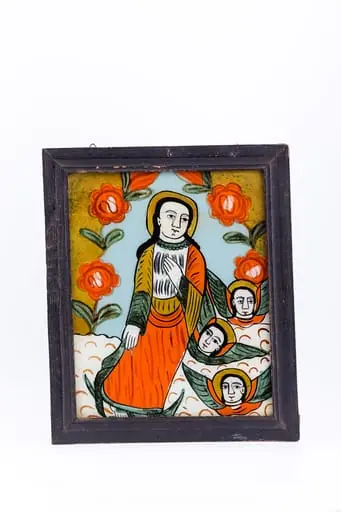 Icoana reprezintă o Sfântă Cuvioasă, împreună cu trei îngeri serafimi și heruvimi. Sfânta este îmbrăcată în veșmânt în combinație de roșu vermillon, orange-ocru, verde-gri, alb. Se observă broderia cămășii interioare. Are mâna stângă ținută în dreptul inimii, în semn de închinăciune. În stânga Sfintei sunt trei îngeri cu aripile verzi-gri, lipiți de poala veșmântului Sfintei, ocrotindu-se reciproc. În registrul inferior, icoana are fondul format din valurile unei mări, alb cu crem-ocru, pe care merg Sfânta și Îngerii. În registrul superior, este cerul albastru bleu-ciel senin, încadrat de lumină de ocru de pe marginile icoanei, pe care este pictată o ghirlandă de ruje, formând un armonios chenar decorativ fitomorf. Icoana este rară, din punctul de vedere al tematicii iconografice abordate. Icoana este de Nicula, având o cromatică armonioasă, caldă și autumnală: roșu vermillon, albastru bleu-ciel, verde-gri, galben-ocru, orange-ocru, bej, crem, alb, negru.
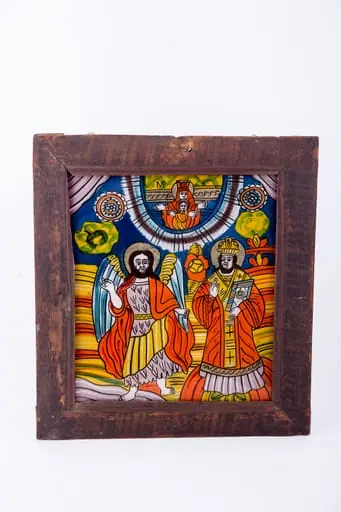 Icoana îi reprezintă pe Sfântul Ioan Botezătorul și Înaintemergătorul Mântuitorului Iisus Hristos și pe Sfântul Mare Ierarh Vasile cel Mare. Cel dintâi este simbolul pocăinței și cel de-al doilea este asprimea dezlegărilor. Sfântul Ioan Botezătorul este îmbrăcat cu o mantie roșie vermillon și ocru și un himation gri-brun sau o haină din păr de cămilă. Este desculț și are aripi de înger. Sfântul Mare Ierarh Vasile cel Mare este îmbrăcat în veșminte liturgice de arhiereu, cu mantie roșie vermillon, sacos alb-gri, epitrahil-patrafir galben, mithră mitopolitană și ține în mâna stânga Sfânta Evanghelie închisă și cu mâna dreaptă binecuvintează. În registrul superior, într-un semicerc de raze, asemenea unei mandorle de nouri, ca într-o deschidere de Ceruri, este Maica Domnului cu Pruncul Iisus Hristos în brațe, amândoi arătând Calea, ocrotind, păzind și binecuvântând. Maica Domnului este Orantă, adică rugătoare. Fondul icoanei este albastru ceruleum, pe care sunt câteva flori mari galben-verzi și doi aștri decorativi. Soarele, luna, stelele și florile adeseori se suprapun simbolic și semantic în icoanele din Țara Oltului. Cromatica este armonioasă, luminoasă și vie: roșu vermillon, galben, ocru, verde, albastru ceruleuum, alb, negru.
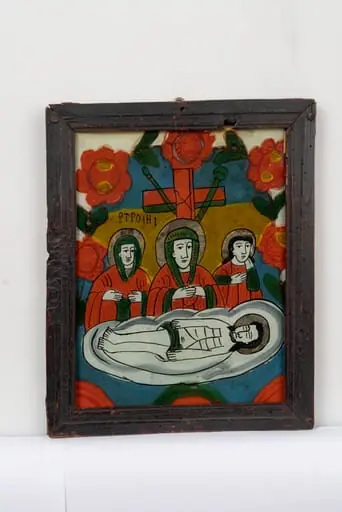 Tema icoanei face parte din ciclul Patimilor Mântuitorului și înfățișează Prohodul Domnului. Alături de Hristos așezat pe piatră sunt reprezentate doar trei personaje. Maica Domnului, în centru, cu mâinile împreunate la piept, are de-o parte un apostol, iar de cealaltă parte una dintre femeile mironosițe, probabil Maria Magdalena. În spate se profilează crucea lui Hristos și însemnele patimilor - sulița și buretele. Un șirag de rozete ornamentează fondul icoanei. Cromatica icoanei se compune din tonuri de roșu vermillon, ocru galben, alb, verde, albastru, negru și gri. Rama icoanei e profilată, băițuită și e formată din îmbinarea a patru baghete de lemn.