Artwork
Icoana este pictată pe sticlă, având menționat cuvântul „Nicolae” în românește cu caractere latine. Aceasta este o pictură în ulei, datând din a doua jumătate a secolului al XX-lea. Icoana este înrămată cu o bordură din lemn de esență moale, vopsit în negru. În partea superioară la mijloc rama prezintă un orificiu pentru atârnare. Pe spate icoana este întărită cu o placă din lemn de esență moale, fixată cu holdșuruburi. În partea superioară, cu o tablă, este fixată o sârmă pentru atârnare de cui. Cromatică: negru, alb, maro, galben, roșu, cărămiziu, albastru.
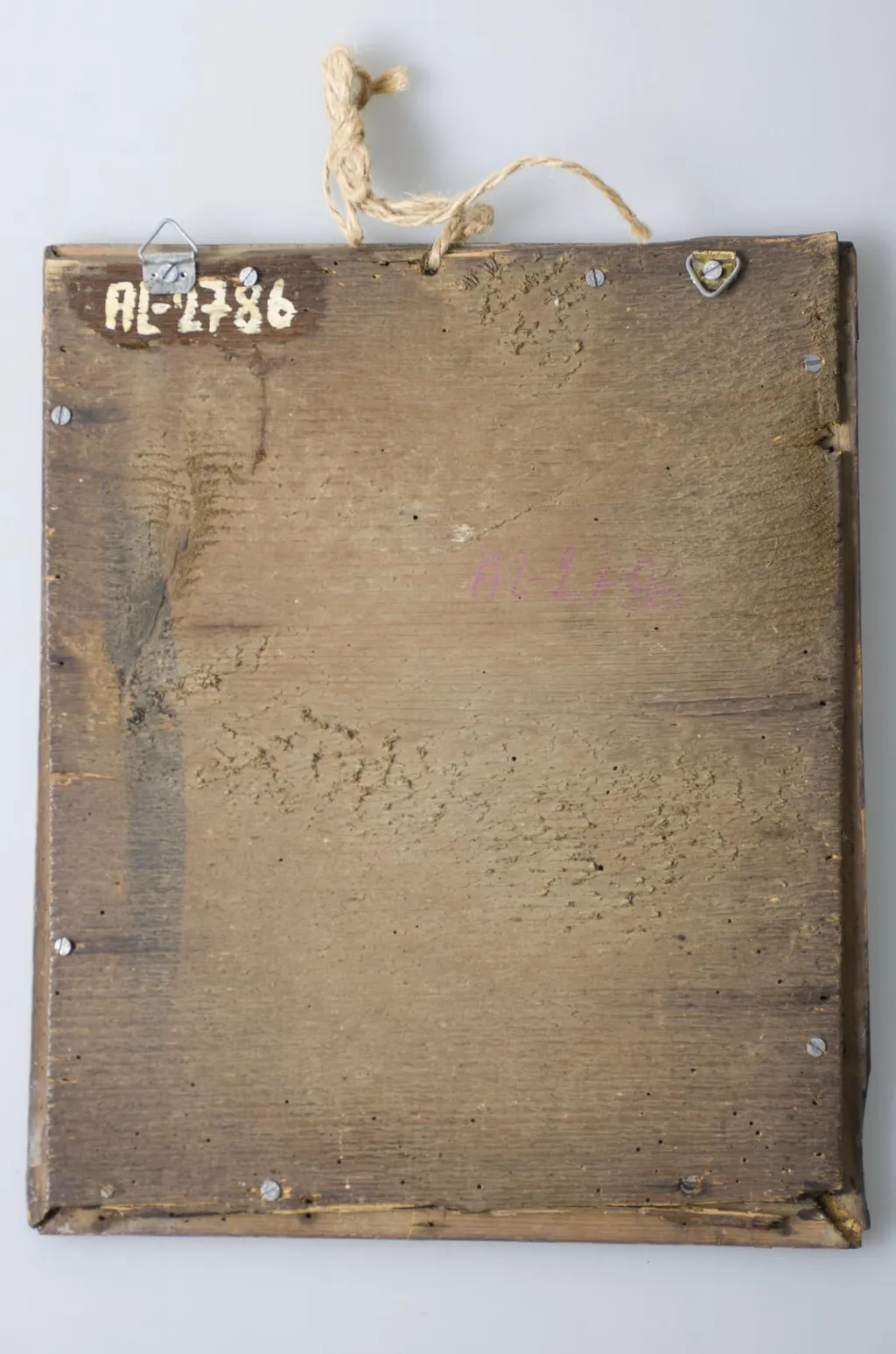
Icoana este pictată pe sticlă, având menționat cuvântul „Nicolae” în românește cu caractere latine. Aceasta este o pictură în ulei, datând din a doua jumătate a secolului al XX-lea. Icoana este înrămată cu o bordură din lemn de esență moale, vopsit în negru. În partea superioară la mijloc rama prezintă un orificiu pentru atârnare. Pe spate icoana este întărită cu o placă din lemn de esență moale, fixată cu holdșuruburi. În partea superioară, cu o tablă, este fixată o sârmă pentru atârnare de cui. Cromatică: negru, alb, maro, galben, roșu, cărămiziu, albastru. is a drawing by Unknown. It dates from 1850 and is held in the collection of the ASTRA National Museum Complex. The work is a painted icon executed in oil on glass, dating from the latter half of the twentieth century.
About this work
The board is attached to a frame with screws and has a piece of twine at the top for hanging.
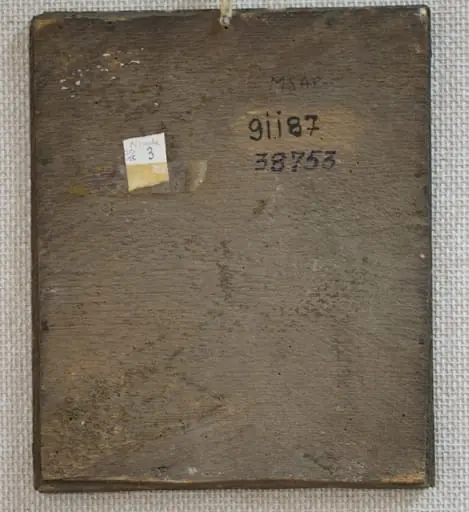
This image shows the back of a painting, which appears to be on a wooden board. The board is attached to a frame with screws and has a piece of twine at the top for hanging.
The frame is made of softwood, painted black, and has a hole in the middle for hanging. The back of the painting is also attached to a piece of softwood with screws. The painting is likely from the second half of the 20th century.
The painting depicts a saint, and its style is reminiscent of traditional folk art. To learn more about this style, look up the subject "saint".
Overview
The work is a painted icon executed in oil on glass, dating from the latter half of the twentieth century. Its surface bears the Romanian name “Nicolae” rendered in Latin letters. The piece is mounted in a soft‑wood frame painted black, with a central hanging hole and a supporting wooden backing secured by screws.
Subject & Meaning
The image portrays a saint, a common devotional figure in Eastern European folk iconography. The inclusion of the name “Nicolae” suggests a personal dedication or patronage, linking the work to a specific individual or community.
Technique & Style
Oil paint applied to glass gives the icon a glossy, luminous quality, while the composition follows the conventions of traditional folk art, employing a limited palette of black, white, brown, yellow, red, brick and blue. The stylized rendering and bold colors reflect vernacular religious visual language rather than academic realism.
Context
Icons of this type were commonly produced in Romanian and broader Balkan folk traditions during the post‑war period, serving both private devotional purposes and communal commemoration. The use of glass as a support reflects a mid‑century adaptation of older wooden panel practices.
Artist & collection

 Domestic Scene
 Giacomo and Cardinal Marco, investing Andrea, Abbot of San Zeno, with his Benefice
 The Nymph of Fontainebleau
 Portrait of a Woman
 Madonna and Child with Saints in the Enclosed Garden
 Venus and Minerva
 Family Group of Four on Sofa
 Wall painting from Room H of the Villa of P. Fannius Synistor at Boscoreale
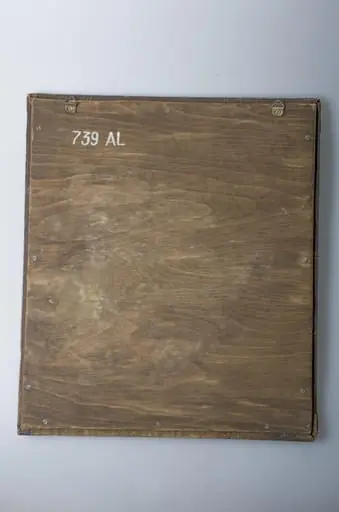 Icoana este pictată pe sticlă, reprezentând încoronarea Maicii Domnului de către Sfânta Treime. Iisus este reprezentat purtând crucea pe umărul stâng, iar cu dreapta ținând mitra. Dumnezeu Tatăl este ilustrat cu barbă, ținând mitra cu o mână deasupra capului Maicii Domnului, iar cu mâna stângă protejând globul pământesc. În partea centrală sunt scrise cu caractere chirilice cuvintele „Sf Treime”. În registrul superior se află un porumbel reprezentând Sfântul Duh, care împrăștie raze pe pământ. De asemenea întâlnim reprezentări de nori și stele, sugerând că acest eveniment are loc în ceruri. Cromatica: roșu, verde, albastru, alb, negru, gri, ocru.
 Icoaenel
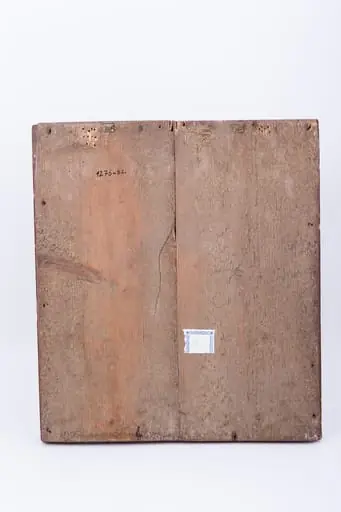 Icoana Îl reprezintă pe Dumnezeu-Tatăl în Trei Fețe, Sfânta Treime sau Sfânta Troiță. Este redat șezând pe un tron arhieresc, cu o structură bogat ornamentată decorativ, cu elemente geometrizante. De remarcat este și perna rulou albastră cu ciucuri galbeni. Veșmântul arhieresc este roșu vermillon, cu elemente brun-bronzii. Aureola este și rotundă și hexagonală, înscrisă și circumscrisă. Fondul este albastru cobalt. Icoana este de Mărginimea Sibiului. Cromatica este puternic-vie: albastru cobalt, brun, bronziu, roșu vermillon, alb, negru.
 Icoa cen
 La împlinirea a trei ani de la Nașterea Preacuratei Fecioare Maria, Drepții Părinți Ioachim și Ana, aducându-și aminte de făgăduința făcută, ca să dea în dar Lui Dumnezeu pe cea născută, cheamă toate rudeniile de neam împărătesc și arhieresc, și cete de fecioare, cu făclii aprinse, pentru a o conduce pe Pruncă la Templu. Icoana este bogată în narațiune, numărul personajelor este foarte mare, realizându-se trei cortegii unduitoare: oamenii, îngerii și Împărăția Cerurilor. Aducerea la Templu, în Biserică, este deja o ridicare la Ceruri, prin creșterea duhovnicească. Mandorlele de nouri, se întrepătrund armonios cu elementele de arhitectură ale cetații și Bisericii, creându-se drumuri spațiale, dar și ideatice. Personajele sunt pictate mai mult din profil și semiprofil, o caracteristică a zugravului iconar Ioan Pop de Făgăraș. Cromatica este vie, luminoasă, bucuroasă: roșu, galben chihlimbar, albastru ceruleum, albastru bleuciel, verde, brun, bej, gri, alb, negru. Inscripția din româno-chirilică se traduce: Intrarea în Biserică a PreaSfintei noastre Născătoare de Dumnezeu 1865. Icoana are semnătura zugravului iconar, ascunsă și dezvăluită totodată, pe chenarul decorativ geometrizant auriu-bronziu: Ioan Pop Zugrav la Făgăraș la anul 1865. Icoana este deosebită, o bijuterie a colecției de icoane a Muzeului ASTRA.
 Sfântul Mare Mucenic Gheorghe este așezat călare pe un cal alb, cu șaua și elementele de harnașament albastre, omorând balaurul albastru-gri cu lancea, pe care o ține cu amândouă mâinile. Balaurul este pictat cu albastru-gri, având corpul de reptilă. Fondul este albastru bleu-ciel, în registrul superior și roșu-galben-albastru, în cel inferior, în centrul icoanei ușor întrepătrundu-se toate culorile. Se remarcă un câmp deosebit galben, cu tușe subțiri albastre paralel-oblice. Tunica Sfântului Mucenic Purtător de Biruință este roșie cu verde, având pantalonii albaștri și cămașă de cavaler roșie. Mantia fluturândă a Sfântului Mucenic este albastră-regal. În registrul superior, pe cer, sunt 9 elemente florale roșii cu frunze lungi verzi, echilibrând întreaga compoziție. Rujele din ghirlanda decorativ-ancadratoare au motivul zăluței albe în interior. Fiind o icoană de Nicula, imaginea picturală este armonioasă, cu un desen simplu, curat. Cromatica este armonioasă; roșu vermillon-roz, albastru bleu-ciel și cobalt, verde brad, ocru, brun, gri, alb și negru. Inscripția din româno-chirilică se traduce Sf Gheorghe. Icoana este de Nicula-Gherla.