Artwork
Icoana este pictată pe sticlă, reprezentând încoronarea Maicii Domnului de către Sfânta Treime. Iisus este reprezentat purtând crucea pe umărul stâng, iar cu dreapta ținând mitra. Dumnezeu Tatăl este ilustrat cu barbă, ținând mitra cu o mână deasupra capului Maicii Domnului, iar cu mâna stângă protejând globul pământesc. În partea centrală sunt scrise cu caractere chirilice cuvintele „Sf Treime”. În registrul superior se află un porumbel reprezentând Sfântul Duh, care împrăștie raze pe pământ. De asemenea întâlnim reprezentări de nori și stele, sugerând că acest eveniment are loc în ceruri. Cromatica: roșu, verde, albastru, alb, negru, gri, ocru.
Icoana este pictată pe sticlă, reprezentând încoronarea Maicii Domnului de către Sfânta Treime. Iisus este reprezentat purtând crucea pe umărul stâng, iar cu dreapta ținând mitra. Dumnezeu Tatăl este ilustrat cu barbă, ținând mitra cu o mână deasupra capului Maicii Domnului, iar cu mâna stângă protejând globul pământesc. În partea centrală sunt scrise cu caractere chirilice cuvintele „Sf Treime”. În registrul superior se află un porumbel reprezentând Sfântul Duh, care împrăștie raze pe pământ. De asemenea întâlnim reprezentări de nori și stele, sugerând că acest eveniment are loc în ceruri. Cromatica: roșu, verde, albastru, alb, negru, gri, ocru. is a drawing by Unknown. It dates from 1850 and is held in the collection of the ASTRA National Museum Complex. This artwork depicts the Coronation of the Virgin by the Holy Trinity, painted on glass.
About this work
Overview
The composition centers on divine figures in a celestial setting, with symbolic elements such as clouds and stars indicating a heavenly realm.
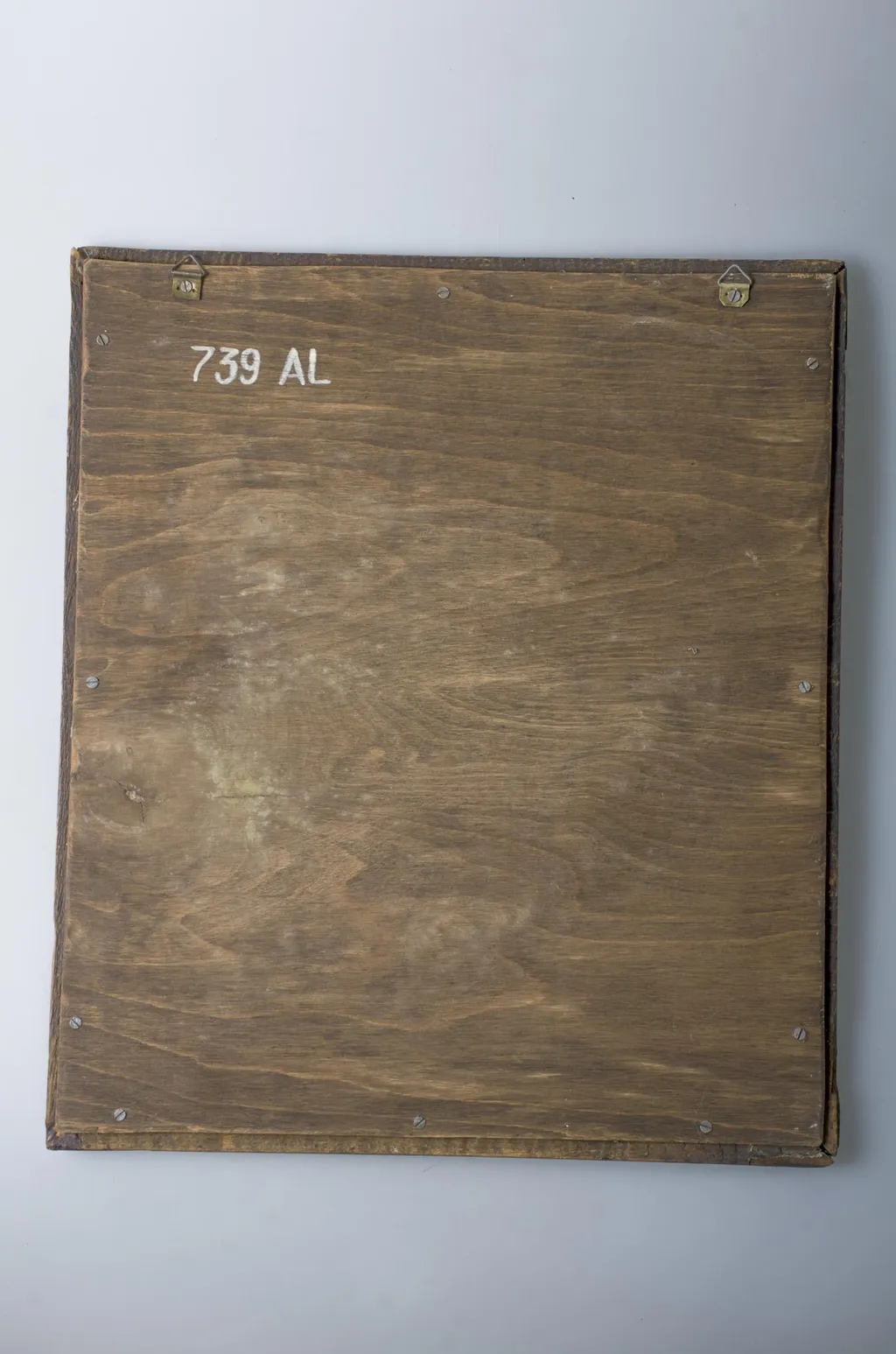
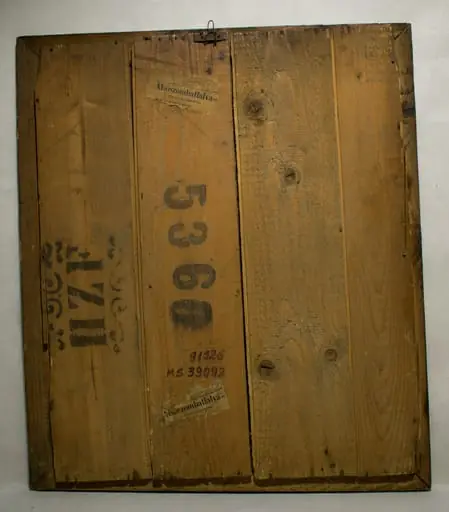
This artwork depicts the Coronation of the Virgin by the Holy Trinity, painted on glass. The composition centers on divine figures in a celestial setting, with symbolic elements such as clouds and stars indicating a heavenly realm. The reverse side reveals a wooden panel with metal mounting hooks, suggesting traditional craftsmanship and practical installation methods common in regional religious art.
Subject & Meaning
The scene illustrates the Virgin Mary being crowned by the Holy Trinity: God the Father, Christ bearing the cross and holding a mitre, and the Holy Spirit as a dove radiating light. The Cyrillic inscription 'Sf Treime' affirms the theological focus. The Father’s gesture over Mary and his protection of the globe signify divine authority and earthly stewardship, reinforcing Marian veneration within Orthodox tradition.
Technique & Style
Painted on glass using a palette of red, blue, green, white, black, gray, and ochre, the work employs flat, symbolic forms typical of folk religious iconography. Figures are arranged hierarchically, with minimal depth and clear outlines. The use of glass as a support, uncommon in mainstream icon painting, reflects localized adaptation of materials and devotional practices.
History & Provenance
The wooden backing, secured with visible screws and metal hooks, indicates a functional, possibly domestic or small-church installation. The white inscription '739 AL' on the reverse may be a catalog or inventory mark, though its origin is unverified. No inscriptions on the front identify the artist or date, suggesting anonymous, community-based production common in rural Orthodox regions.
Context
This piece aligns with Eastern Orthodox devotional traditions where Marian coronation imagery reinforced theological doctrines and communal faith. Its materials and mounting reflect accessible, vernacular art-making in areas where formal iconographic schools were less present. The fusion of sacred symbolism with practical construction points to a blend of spiritual intent and local resourcefulness.
Legacy
As a rare example of glass iconography, it contributes to understanding regional variations in Orthodox visual culture. Its survival offers insight into how religious imagery was produced and displayed outside major artistic centers. The work remains a quiet testament to the persistence of traditional iconography in everyday spiritual life, preserved through material simplicity rather than formal prestige.
Artist & collection

 Domestic Scene
 Giacomo and Cardinal Marco, investing Andrea, Abbot of San Zeno, with his Benefice
 The Nymph of Fontainebleau
 Portrait of a Woman
 Madonna and Child with Saints in the Enclosed Garden
 Venus and Minerva
 Family Group of Four on Sofa
 Wall painting from Room H of the Villa of P. Fannius Synistor at Boscoreale
 Icoaă di
 Scena Cinei celei de Taină se desfășoară într-un interior sugerat de elemente arhitectonice, coloane, candelabru, candele. În centrul icoanei este Mântuitorul Iisus Hristos binecuvântând mâncarea, la masă, alături de ucenici și apostoli. Cu brațul stâng îl ține lipit de piept pe Ioan cel iubit. Pe masă sunt așezate un potir pentru vin și tacâmuri și farfurioare mici.Personajele au chipurile expresive, veșmintele personajelor și faldurile feței de masă, cât și draperiile sunt pictate cu măiestrie de pictor. Veșmintele sunt predominant roșii. Cromatica este armonioasă și echilibrată, pornindu-se gradual dinspre exterior înspre interior, de la albastru spre alb, ajungându-se la albul luminos al mesei celor dăruite. Compoziția este încadrată de elemente de arhitectură, coloane, arcade, creându-se, astfel, intimitatea Cinei celei de Taină. Totul este concentric, strângându-se în jurul Potirului. Elemente de arhitectură se întrezăresc printre cele 5 coloane. Se întrezărește o cruce formată din axa verticală Potirul și candela și cea orizontală - brațele Îmbrățișării Mântuitorului - Dragostea jertfelnică atotcuprinzătoare. Icoana este a lui Savu Moga, din Arpașu de Sus, Țara Făgărașului. Icoana este datată 1877. Inscripția din româno-chirilică se traduce Cina cea de Taină.
 "Isea d
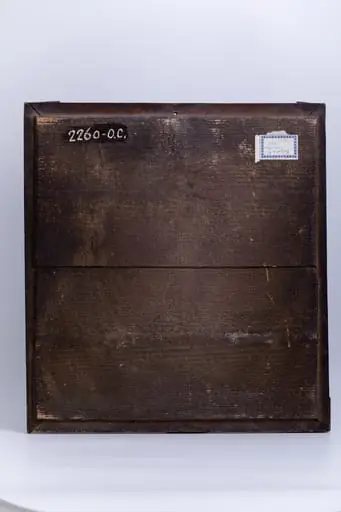 Icoana îi reprezintă pe cei doisprezece Apostoli cu Sfinții Apostoli Petru și Pavel, Petru cu cheile Împărăției Cerești în mână și pe Pavel cu sabia Cuvântului în mână. Sfinții Apostoli au mantiile roșii vermillon, înspre trandafiriu, și veșmintele în combinație de crem-rozaliu și ocru-orange, cu liniuțe albe-roșii. Toți cei 12 Apostoli țin chivotul Bisericii creștin-ortodoxe și sobornicești cu mânilie dimpreună. În registrul superior, dintr-o mandorlă este Dumnezeu-Tatăl Binecuvântând. Fondul icoanei este cerul albastru regal-cobalt. În registrul îndepărtat elementul de arhitectură reprezintă simbolic Biserica ortodoxă-creștină apostolică, pe care o poartă, ca pe un chivot, Sfinții Apostoli Petru și Pavel, propovăduind-o. Biserica, cheile și crucea sunt simboluri puternice. Compoziția este rezistentă și cromatica armonioasă: roșu vermillon-trandafiriu, albastru regal, cobalt și ceruleum, galben chihlimbar, ocru, brun, gri, alb zinc, negru, auriu. Inscripția din româno-chirilică se traduce Petru și Pavel. Icoana este din Țara Oltului, Șcheii Brașovului.
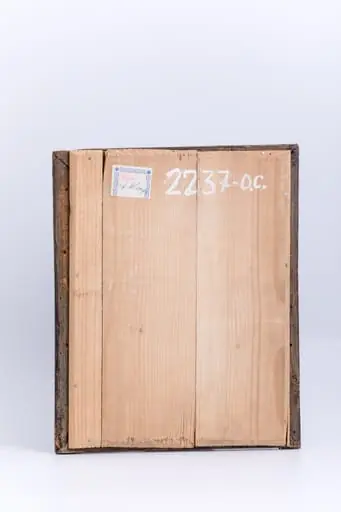 Sfântul Mare Mucenic Gheorghe este așezat călare pe un cal alb-gri, omorând balaurul verde-gri-antracit cu lancea, pe care o ține în amândouă mâinile. Fondul icoanei este cerul cobalt-senin, în registrul superior și alb-bej-bronziu în cel inferior, în centrul icoanei ușor întrepătrundu-se toate culorile. Tunica Sfântului Mucenic Purtător de Biruință este roșie vermillon, cu mânecile verzi, având pantalonii gri, cizme negre și tunică roșie-vermillon. Întreaga compoziție iconografică este încadrată de un chenar decorativ fitomorf, format dintr-o ghirlandă de 7 ruje - trandafiri sălbatici și bujori roșii și roz cu petale și pistil alternativ colorate cu albastru cobalt, roz și roșu vermillon. Ghirlanda excelează prin delicatețea desenului și bogăția cromatică armonioasă. Ziua de praznic a Sfântului Gheorghe este în 23 aprilie, primăvara, justificându-se pentru încă o dată prezența ghirlandei înflorite. Inscripția din româno-chirilică se traduce S. Georgie. Cromatica este armonioasă; roșu vermillon, roz, albastru cobalt, ceruleum, cobalt, gri antracit, ocru, bronziu, brun, crem, alb și negru. Icoana este din Nordul Transilvaniei, Nicula.
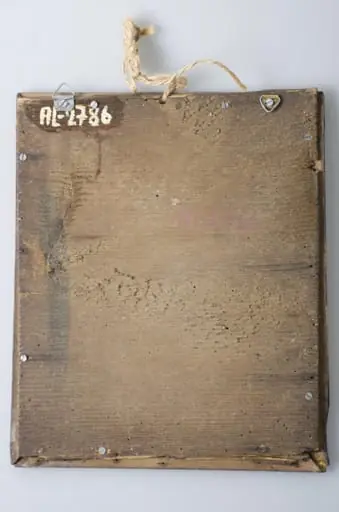 Icoana este pictată pe sticlă, având menționat cuvântul „Nicolae” în românește cu caractere latine. Aceasta este o pictură în ulei, datând din a doua jumătate a secolului al XX-lea. Icoana este înrămată cu o bordură din lemn de esență moale, vopsit în negru. În partea superioară la mijloc rama prezintă un orificiu pentru atârnare. Pe spate icoana este întărită cu o placă din lemn de esență moale, fixată cu holdșuruburi. În partea superioară, cu o tablă, este fixată o sârmă pentru atârnare de cui. Cromatică: negru, alb, maro, galben, roșu, cărămiziu, albastru.
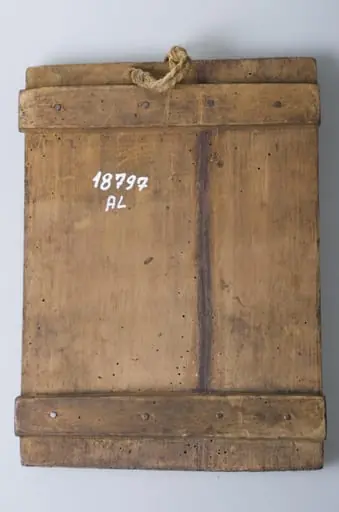 Icoană de formă rectangulară, pictată pe lemn în ulei, reprezentând tema „Izvorul tămăduirii”; Maica Domnului este redată în registrul superior, deasupra unei fântâni; în registrul inferior sunt redate două personaje care o venerează; imaginea este încadrată într-o ramă de culoare aurie înspre interior și albastră înspre exterior; pe verso-ul icoanei sunt prinși doi lați, bătuți în cuie; la partea superioară prezintă sistem de agățare cu funie.
 Icoana îi înfățișează pe Arhanghelii Mihail și Gavriil din ușor semiprofil, în picioare, ținând fiecare câte o sabie în mâna dinspre exterior. Mihail ține în mâna stângă un potir ridicat, iar Gavriil cumpăna(în iconografie și sabia și balanța fac parte dintre atributele arhanghelului Mihail). Amândoi sunt redați tineri, cu plete lungi, negre, fără barbă. Arhanghelul Mihail este înveșmântat militar, Arhanghelul Gavriil poartă veșminte lungi, în aceleași culori, decorate pe poale cu motiv fitomorf. Redați înaripați, în jurul capului au nimburi aurite, cu o porțiune incandescentă în jur.Plasați deasupra unor nori albi. Câmp albastru ultramarin, înstelat și decorat cu flori albe punctiforme. În planul doi o construcție cu elemente din arhitectura locală redate în stilul specific.Lateral și superior compoziția este încadrată de câte o ghirlandă din semicercuri duble hașurate. Paleta cromatică este armonioasă, dominată de roșu și bleumarin. Rama alcătuită din patru stinghii drepte, îmbinate oblic la colțuri, decorate vag cu un motiv vălurit dispus longitudinal. Dosul este relizat din scândură subțire de brad, dispusă orizontal.