Artwork
Icoana îl reprezintă pe Mântuitorul Iisus Hristos, copil fiind, redat semi-profil, înfășurat cu o mantie roșie vermillon, dar cu umerii goi de copilaș, ținând în mâini, globul pământesc cu crucea deasupra, asemnea unui chivot de biserică. Fondul icoanei este albastru cobalt, în centrul icoanei, creându-se un adânc veșnic. În marginile icoanei, fondul este alb-ivoriu, înconjurat de elemente decorative fitomorfe - 8 trandafiri, ruje, roșii, cu frunze verzi. În registrul inferior este galben-solar.
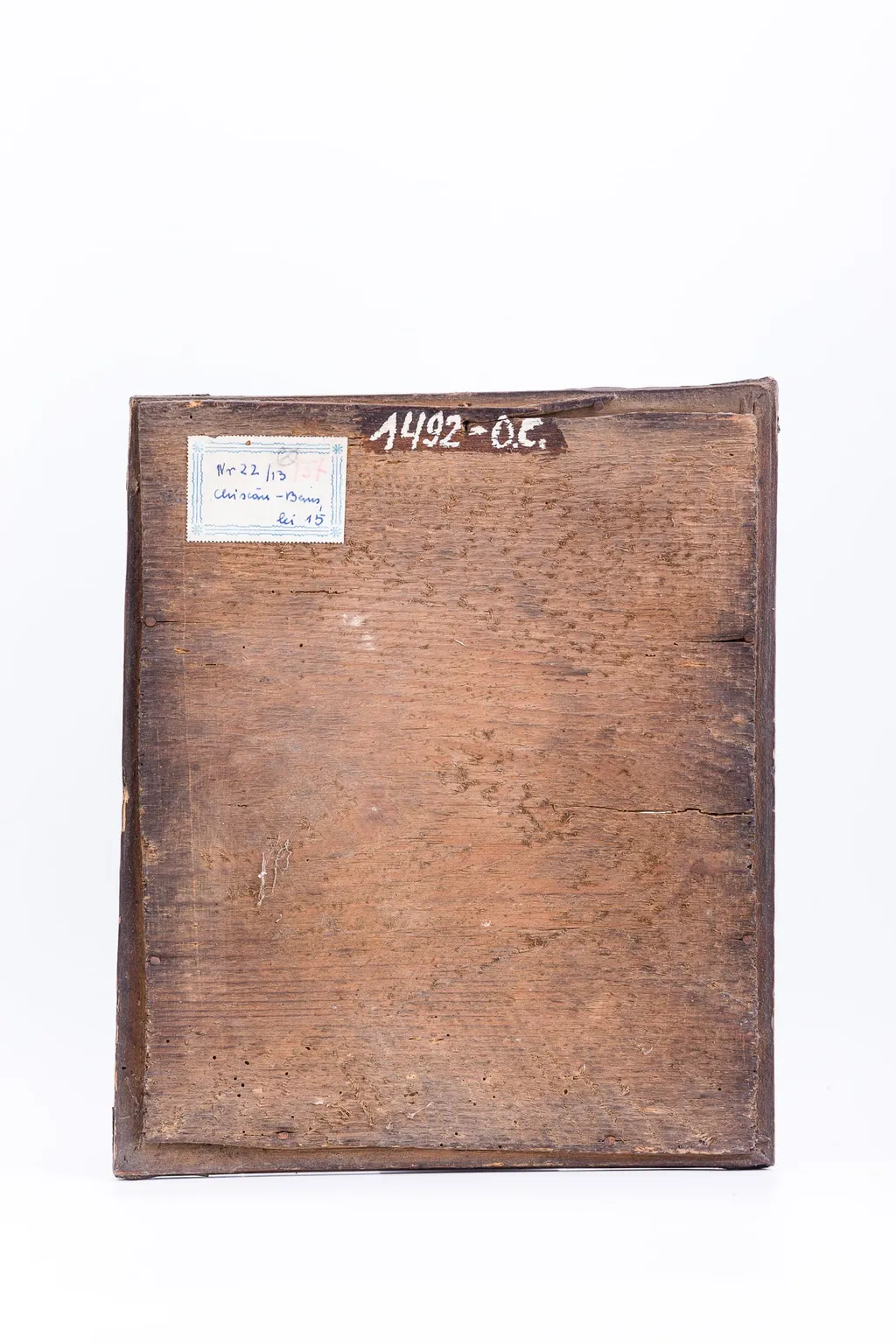
Icoana îl reprezintă pe Mântuitorul Iisus Hristos, copil fiind, redat semi-profil, înfășurat cu o mantie roșie vermillon, dar cu umerii goi de copilaș, ținând în mâini, globul pământesc cu crucea deasupra, asemnea unui chivot de biserică. Fondul icoanei este albastru cobalt, în centrul icoanei, creându-se un adânc veșnic. În marginile icoanei, fondul este alb-ivoriu, înconjurat de elemente decorative fitomorfe - 8 trandafiri, ruje, roșii, cu frunze verzi. În registrul inferior este galben-solar. is a drawing by Unknown. It dates from 1850 and is held in the collection of the ASTRA National Museum Complex. This wooden panel bears a religious icon depicting Christ Child as the Pantocrator, rendered in semi-profile.
About this work
Overview
This wooden panel bears a religious icon depicting Christ Child as the Pantocrator, rendered in semi-profile. The surface shows signs of age: weathered wood grain, minor cracks, and a faded paper label in red and blue ink, hinting at historical provenance. The backing suggests it was once part of a larger devotional object, possibly a double-sided altarpiece, now separated from its front panel.
Subject & Meaning
Christ is portrayed as a child, bare-shouldered yet crowned with divine authority, holding the terrestrial globe surmounted by a cross.
Christ is portrayed as a child, bare-shouldered yet crowned with divine authority, holding the terrestrial globe surmounted by a cross. The imagery merges childhood innocence with cosmic sovereignty, reflecting the theological concept of Christ as ruler of creation. The red mantle signifies both royalty and sacrifice, while the globe symbolizes his dominion over the earth, a common motif in Byzantine and Eastern Christian iconography.
Technique & Style
The figure is outlined against a deep cobalt blue background, evoking celestial infinity. The child’s exposed shoulders contrast with the rich vermilion mantle, enhancing visual focus. Decorative floral motifs—eight red roses with green leaves—frame the composition, their stylized form aligning with traditional ecclesiastical ornamentation. The lower border is rendered in golden yellow, suggesting divine light or sacred ground.
History & Provenance
The weathered wood and faded handwritten label indicate the panel’s age and ecclesiastical origin. The label, written in a foreign script, likely once identified the icon’s title or donor. Its survival as a backing suggests it was detached from its primary image, possibly during iconoclasm, restoration, or reconfiguration. The material and wear point to a pre-modern Eastern European devotional context.
Context
This icon aligns with Byzantine and post-Byzantine traditions where Christ Child as Pantocrator was venerated in homes and churches, especially in regions like Romania and the Balkans. The use of symbolic colors, floral borders, and celestial backgrounds reflects liturgical aesthetics common in Orthodox iconography. Such panels were often part of larger ensembles, used in private prayer or liturgical processions.
Legacy
As a fragment of a once-complete religious object, this panel preserves material evidence of devotional practices in Eastern Christian communities. Its survival, despite wear and separation, underscores the endurance of iconographic traditions through political and religious upheavals. It remains a tangible link to pre-modern spiritual life, valued for its historical rather than aesthetic prominence.
Artist & collection

 Domestic Scene
 Giacomo and Cardinal Marco, investing Andrea, Abbot of San Zeno, with his Benefice
 The Nymph of Fontainebleau
 Portrait of a Woman
 Madonna and Child with Saints in the Enclosed Garden
 Venus and Minerva
 Family Group of Four on Sofa
 Wall painting from Room H of the Villa of P. Fannius Synistor at Boscoreale
 Icoana Îl reprezintă pe Dumnezeu-Tatăl în Trei Fețe, Sfânta Treime sau Sfânta Troiță. Este redat șezând pe un tron arhieresc, cu o structură bogat ornamentată decorativ, cu elemente geometrizante. De remarcat este și perna rulou albastră cu ciucuri galbeni. Veșmântul arhieresc este roșu vermillon, cu elemente brun-bronzii. Aureola este și rotundă și hexagonală, înscrisă și circumscrisă. Fondul este albastru cobalt. Icoana este de Mărginimea Sibiului. Cromatica este puternic-vie: albastru cobalt, brun, bronziu, roșu vermillon, alb, negru.
 Icoana îl reprezintă pe Pruncul Ioan Botezătorul, cel care avea să fie Sfântul Ioan Botezătorul și Înaintemergătorul Domnului nostru Iisus Hristos. Pruncul Ioan are în brațe un mieluț alb-brun, arătând către Mântuitorul Iisus Hristos: „Iată mielul!”. Îl ține în brațe cu tandrețe, aplecându-se peste el ocrotitor. Cu mâna stângă ține Crucea Jertfei brun-maro, cu un stindard verde. Este înfășurat cu o țesătură brun-neagră, culoarea pocăinței, jertfei și muceniciei. În interiorul icoanei este un composit de albastru bleu-ciel senin și galben chihlimbar. Întreaga tematică iconografică este încadrată de un chenar decorativ fitomorf, format dintr-o ghirlandă de trandafiri dubli și bujori - 15 ruje roșii stilizate. Icoana are o cromatică luminoasă: roșu vermillon, albastru bleu-ciel și ceruleum, galben chihlimbar, verde brad-forest, brun, maro, alb, negru, auriu. Icoana este Nordul Transilvaniei, Nicula.
 În centrul icoanei este Crucea, iar în dreapta crucii este Sfânta Împărpteasă Elena și în stânga este Împăratul Constantin, fiul său. Veșmintele sfinților împărați sunt pictate cu roșu vermillon, ocru, brun, alb și verde absint. Deasupra fiecăruia este inscripționat numele, inversat. În spatele Crucii, lipit de cruce, sunt ramuri de finic, asemenea unor raze de soare, amintind de semnul luminos apărut pe cer In hoc signo vinces - prin acest semn vei învinge. Crucea ste împodobită pe brațele vertical și orizontal, cu un vrej lung de flori și frunze, ca o ghirlandă de Rusalii. Icoana este o bogăție de culoare, lumină și detalii semnificative. Crucea este împodobită cu elemente fitomorfe: vrej-tulpină agățătoare, frunze și flori. În spatele crucii sunt doi îngeri serafimi. Icoana este de Țara Oltului. Inscripția în româno-chirilică se traduce Sf Împ Constantin Sf Împ Elena. Cromatica este armonioasă și bogată: roșu vermillon, galben-ocru, albastru ceruleum, verde kaki-olive, absint, brun, alb, negru.
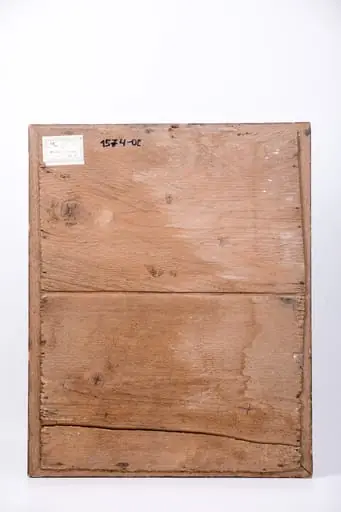 Sfântul Mare Mucenic Gheorghe este așezat călare pe un cal alb, cu șaua și elementele de harnașament albastre, omorând balaurul albastru-gri cu lancea, pe care o ține cu amândouă mâinile. Balaurul este pictat cu albastru-gri, având corpul de reptilă. Fondul este albastru bleu-ciel, în registrul superior și roșu-galben-albastru, în cel inferior, în centrul icoanei ușor întrepătrundu-se toate culorile. Se remarcă un câmp deosebit galben, cu tușe subțiri albastre paralel-oblice. Tunica Sfântului Mucenic Purtător de Biruință este roșie cu verde, având pantalonii albaștri și cămașă de cavaler roșie. Mantia fluturândă a Sfântului Mucenic este albastră-regal. În registrul superior, pe cer, sunt 9 elemente florale roșii cu frunze lungi verzi, echilibrând întreaga compoziție. Rujele din ghirlanda decorativ-ancadratoare au motivul zăluței albe în interior. Fiind o icoană de Nicula, imaginea picturală este armonioasă, cu un desen simplu, curat. Cromatica este armonioasă; roșu vermillon-roz, albastru bleu-ciel și cobalt, verde brad, ocru, brun, gri, alb și negru. Inscripția din româno-chirilică se traduce Sf Gheorghe. Icoana este de Nicula-Gherla.
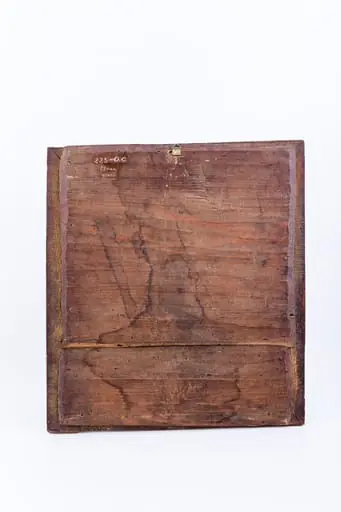 Icoana este segmentată în patru ferestre, icoană cruce, reprezentându-i pe Sfântul Mare Mucenic Gheorghe purtător de biruință, de două ori, pe diagonală, pe Sfântul Mare Ierarh Nicolae făcător de minuni și vindecător de boli, pe Sfânta Mare Cuvioasă Parascheva, de la Iași. Au veșminte roșii vermillon, epitrahilul Sfântului Nicolae este verde smarald, fondul Sfintei Parascheva este orange, fondul Sfântului Gheorghe din dreapta registrul inferior este verde. Întreaga tematică iconografică este încadrată de un chenar decorativ geometrizant, dantelat, din foiță aurie. Registrul superior are fondul albastru ultramarin, iar registrul inferior fondul este rozaliu pal. Interiorul crucii este un rotund verde-absint. Icoana excelează prin combinațiile cromatice luminoase și foarte vii. Inedită este și prezența dublă, în ipostasuri diferite, pe diagonală, a Sfântului Mare Mucenic Gheorghe. Icoana este de Țara Oltului. Are rama colorată în cafeniu și roșu, în interior. Inscripția din româno-chirilică se traduce SF Gheorghe Sf Nicolae Sf Parascheva Sf Gheorghe.
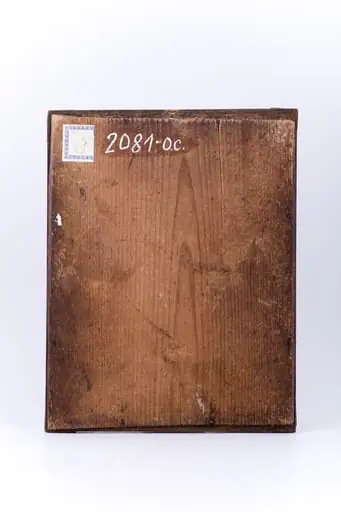 Sfânta Mare Cuvioasă Parascheva de la Iași are crucea și o ramură de finic verde brad, în mâna dreaptă. Este îmbrăcată în veșmânt roșu vermillon, cu interiorul căptușit cu verde, vernil, crem și galben, cu sacosul alb ivoriu, cu dungi crem-bej. Sacosul este alb ivoriu crem-bej, cu danteluță și guleraș galben. Sfânta Cuvioasă are părul negru lung, ondulat, lăsat pe umeri, coroană roșie și aureolă. Fondul icoanei este cerul albastru-negru întunecat, în registrul superior și un câmp înalt luminos de grâu galben-copt, în registrul mediu și inferior, de culoare ocru-muștar. Întreaga compoziție iconografică este încadrată de un chenar decorativ geometrizant alb și unul paralel, fitomorf, format dintr-o ghirlandă de 6 ruje - margarete, cu petale roșii. Ghirlanda excelează prin delicatețea desenului și bogăția cromatică armonioasă. Cromatica este armonioasă: roșu vermillon, albastru-negru, verde forest, kaki, vernil-măr, olive, bej-crem, negru, galben chihlimbar, ocru, muștar, negru, alb. Icoana este din Nordul Transilvaniei, Nicula.