Artwork
Icoana repictată este reprezentarea târzie a Sfântului Ioan Botezătorul, redat frontal, în picioare, în ipostaza îngerească. Sfântul binecuvintează cu dreapta ridicată. Pictura este destul de naivă cu elemente necanonice(Sfântul are veșmânt lung, decorat cu motive florale). Mâinile și picioarele sunt stângaci executate, cu culoare neagră peste fondul roșu din partea inferioară. Aripile roșii.Aureolă galbenă, chenar lat, roșu. Fond întunecat, cu motive astrale de culoare roșie. Chenarul în relief pictat cu galben și roșu. Nu există date în legătură cu pictura originală, probabil în momentul în care a fost scris textul cu creionul icoana era deja deteriorată.
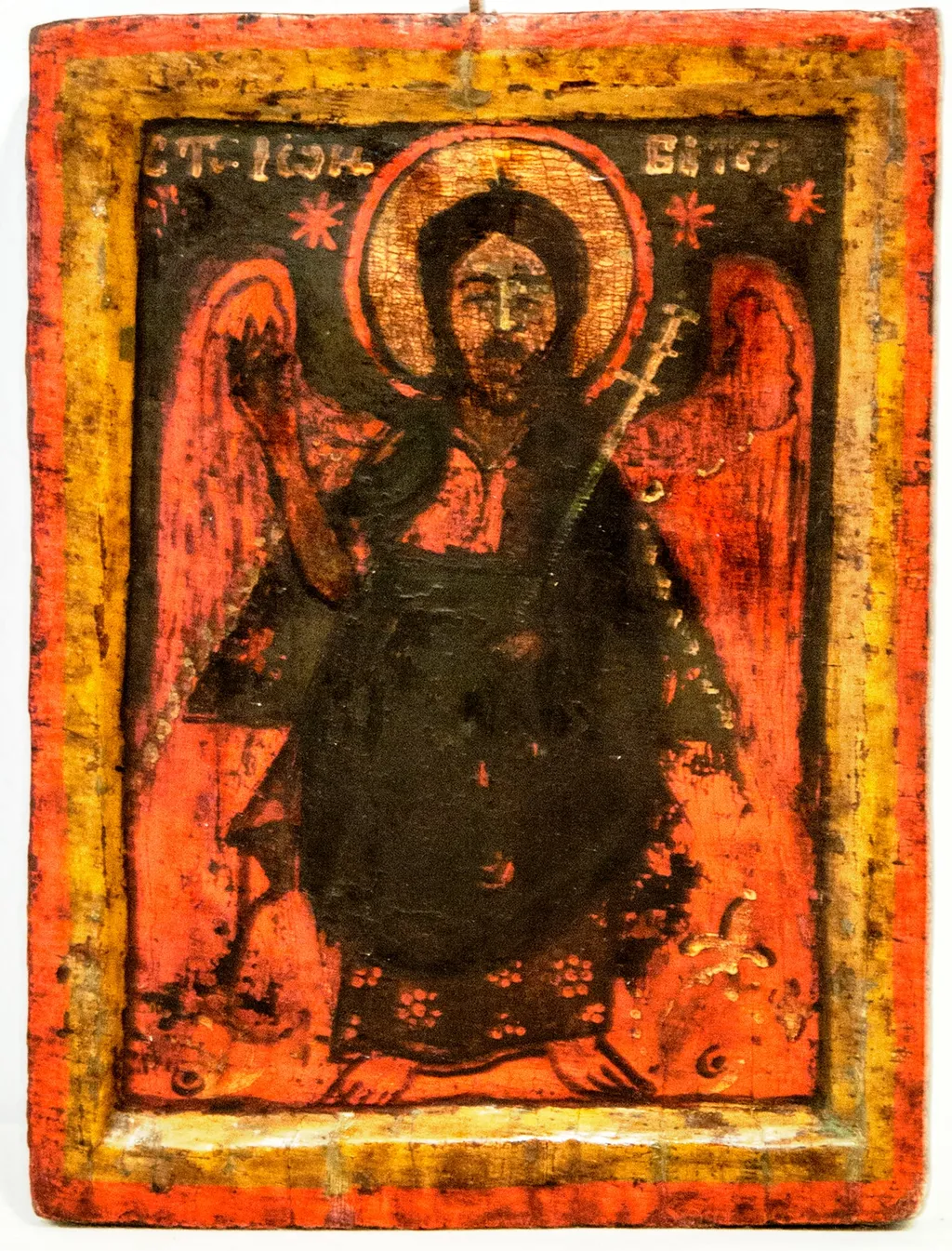
Icoana repictată este reprezentarea târzie a Sfântului Ioan Botezătorul, redat frontal, în picioare, în ipostaza îngerească. Sfântul binecuvintează cu dreapta ridicată. Pictura este destul de naivă cu elemente necanonice(Sfântul are veșmânt lung, decorat cu motive florale). Mâinile și picioarele sunt stângaci executate, cu culoare neagră peste fondul roșu din partea inferioară. Aripile roșii.Aureolă galbenă, chenar lat, roșu. Fond întunecat, cu motive astrale de culoare roșie. Chenarul în relief pictat cu galben și roșu. Nu există date în legătură cu pictura originală, probabil în momentul în care a fost scris textul cu creionul icoana era deja deteriorată. is a drawing by Unknown. It dates from 1850 and is held in the collection of the "Dimitrie Gusti" National Village Museum. The work is a late‑period iconographic depiction of Saint John the Baptist, presented frontally and standing in an angelic pose.
About this work
Overview
The work is a late‑period iconographic depiction of Saint John the Baptist, presented frontally and standing in an angelic pose. He raises his right hand in a blessing gesture, framed by a broad, painted border of yellow and red. The composition is dominated by strong reds and yellows against a dark, star‑filled background.
Subject & Meaning
Saint John is shown with a golden halo and red wings, his long robe adorned with floral motifs—a departure from traditional iconography. The blessing gesture emphasizes his role as a prophetic herald, while the celestial background suggests a heavenly realm.
Technique & Style
The painting exhibits a naïve execution; the limbs are rendered awkwardly, and the figures lack refined modeling. Bold, flat colors dominate, with black outlines on the hands and feet set against a red lower field. The border is rendered in relief, painted in yellow and red, adding a three‑dimensional effect.
History & Provenance
No documentation exists regarding the original creation of the icon. At the time of the recorded description, the piece showed signs of deterioration, indicating it had already suffered damage before the note was made.
Context
The work reflects a regional tradition of folk religious art, where conventional canon rules are often relaxed in favor of local decorative preferences, such as the floral‑patterned garment and vivid chromatic scheme.
Artist & collection
Museum
"Dimitrie Gusti" National Village Museum
Continue through works from the same source collection.
 Domestic Scene
 Giacomo and Cardinal Marco, investing Andrea, Abbot of San Zeno, with his Benefice
 The Nymph of Fontainebleau
 Portrait of a Woman
 Madonna and Child with Saints in the Enclosed Garden
 Venus and Minerva
 Family Group of Four on Sofa
 Wall painting from Room H of the Villa of P. Fannius Synistor at Boscoreale
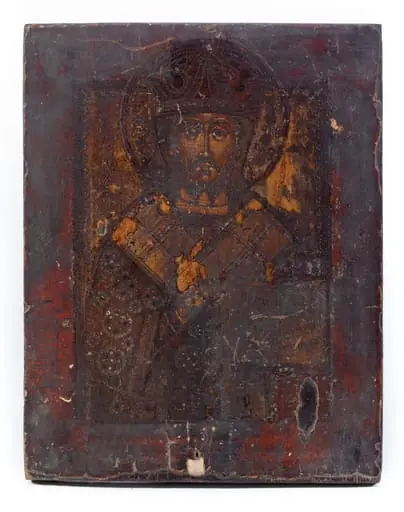
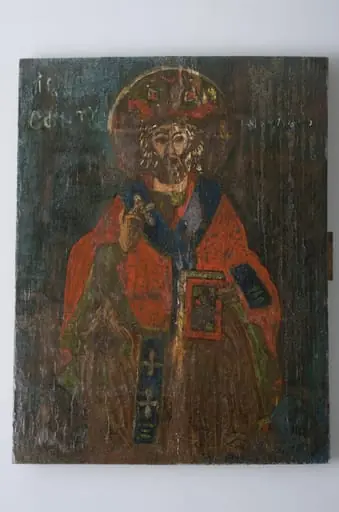 Icoana este pictată pe lemn, reprezentându-l pe Sfântul Nicolae cu veșminte arhierești (felon roșu, omofor albastru și mitră pe cap), ținând Evanghelia închisă cu mâna stângă și binecuvântând cu mâna dreaptă. Cromatică: roșu, albastru, verde, maro închis.
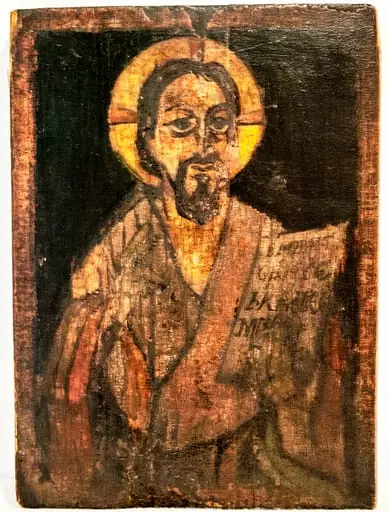 Pictura inițială, deteriorată, a suferit intervenții care e posibil să fi modoficat tema(în oferta făcută de Mihai Mihalcu în data de 8.10.2002)tema menționată este "Sfânt", deoarece acesta nu putea fi identificat).La intervenția peste pictura inițială i s-a atribuit personajului nimbul cruciger(fără însemne).Ochii sunt deasemenea modificați, mâna, și inscripția de pe rotulus, ilogică, scrisă cu litere chirilice și caractere latine.Sfântul poartă un veșmânt roșiatic(omofor), chiton și himation. Fondul este foarte întunecat, pe margine un chenar de culoare deschisă.
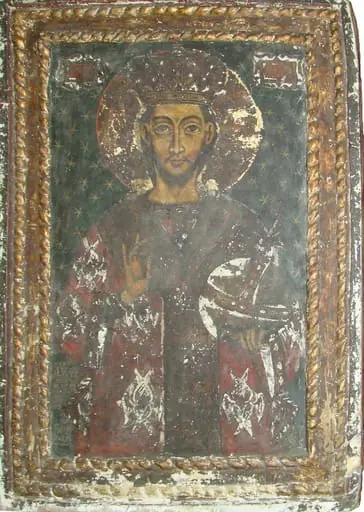
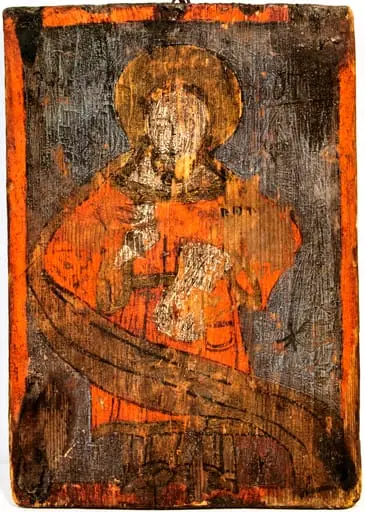 Icoana îl reprezintă pe sfântul Ioan Botezătorul într-o manieră populară, rudimentară. Sfântul este redat frontal, cu dreapta binecuvintează,? în stânga ține un rotulus desfășurat?. Carnația este albă, desenul naiv, contururile trasate cu o linie neagră, groasă. Sfântul are părul negru, lăsat pe umeri, poartă un veșmânt roșu,3/4 peste care este plasată o mantie lungă, îngustă de culoare ocru galben. În jurul capului, nimb de culoare galbenă. Fondul icoanei este bleu murdar, încadrat de o bandă roșie marginală. Inscripția, din care sunt lizibile doar trei litere, ce fac posibilă identificarea sfântului, este scrisă cu majuscule de culoare neagră în partea de sus. Pictura este rudimentară, stratul pictural degradat, cu numeroase urme de arsură(de la lumânări sau vreun incendiu), lacune și murdărie.
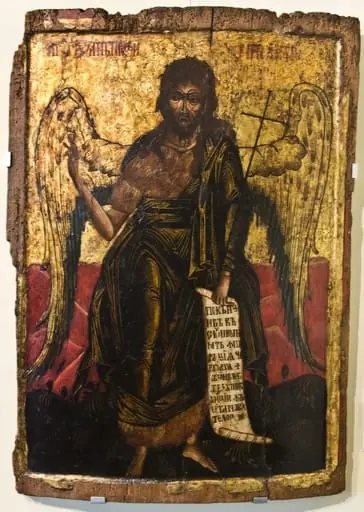 Sf. Ioan Botezătorul
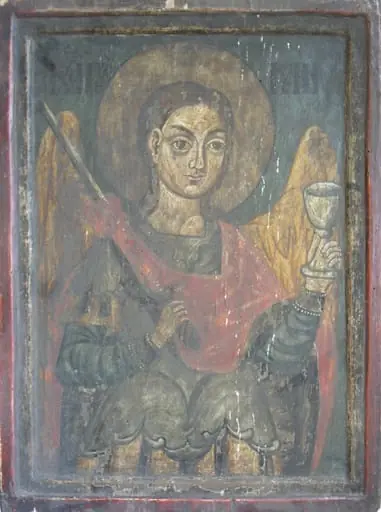 Arhanghelul Mihail
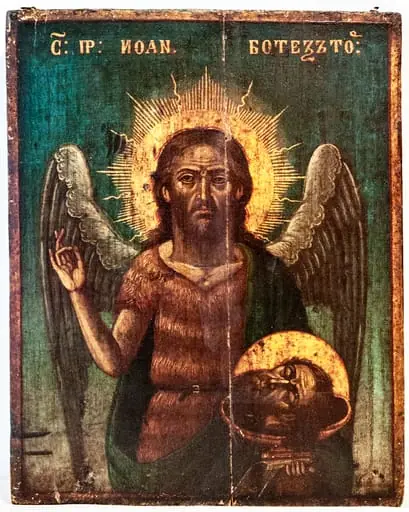 Icoana îl redă pe Sfântul Ioan Botezătorul 3/4, în ipostaza de Înger al Pustiului, cu aripile strânse, ținând propriul cap tăiat pe o tipsie. Este înveșmântat conform canoanelor, cu blana de cămilă încinsă la mijloc, pe umărul drept având prinsă o mantie verde. Chipul este sobru, încruntat, carnația întunecată, trăsăturile severe, părul ușor în neorânduioală, în jurul capului aureolă din raze. Cu dreapta binecuvintează. Fondul verde smarald, inscripția cu litere aurii dublate cu roșu, majuscule. Pictura studiată, tehnica evoluată. Colț dreapta jos semnătura F(sau T). Marinescu, dreapta anul 1887. Capul de pe tipsie, are aureolă. Chenar dublu, linie subțire roșie, bandă aurie. Lanțișor complex pentru atârnat pe perete.
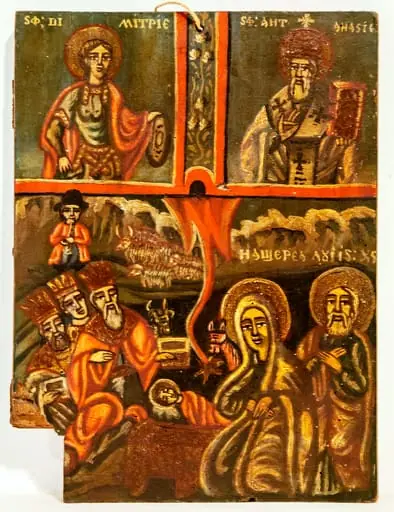 Câmpul icoanei împărțit în 2 registre orizontale inegale(cel de se 1/3 din suprafața icoanei, la rândul lui împărțit în 2 casete separate de o bandă verticală pe care este pictat un lujer cu flori albe. În registru inferior: Nașterea Domnului. În prim plan, Maria si Iosif îngenuncheați, central Pruncul Isus înfășat, așezat în iesle, în stânga lui cei trei magi, cu coroane împărătești pe cap, aducându-i daruri, în plan îndepărtat un cioban(în veșminte orășenești, cu pălărie neagră pe cap, cântând din fluier turmei de oi. În spatele Pruncului se văd capetele animalelor din grajd și o iesle. Steaua își revarsă razele asupra Pruncului(zonă incandescentă, terminată cu o stea deasupra acestuia). Pe fundalul întunecat, nori cu marginile albe. Sfinții din registrul superior sunt redați 3/4, sfântul Dimitrie tânăr, în veșminte militare, lorică, mantie roșie, scut în stânga, suliță în dreapta, Sfântul Atanasie, în veșminte arhierești, binecuvintează cu dreapta, în stânga ține cartea Evangheliilor ridicată. Părul și barba albe, mustățile lungi, veșmintele deschise la culoare, mitra înaltă, surmontată de o cruce albă. Cromatica: roșu, brun, alb, albastru, galben. Colț stânga jos lipsă. Stil naiv, popular.
 Sfântul Nicolae
 Iisus Hristos Pantocrator
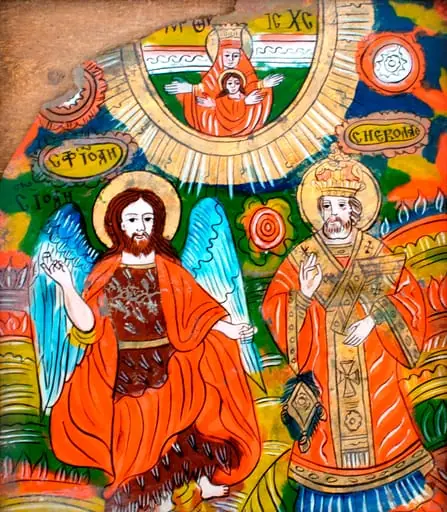 Asociere mai rar întâlnită, probabil comandată special. Icoana îi reprezintă pe în prim plan Sfinții Ioan Botezătorul și Sfântul Nicolae(1/1), deasupra lor Maica Domnului Platytera într-un medalion aurit,înconjurat de raze. Maica are coroană împărătească și îl ține pe Isus copil în poală, ambii avînd brațele desfăcute. Sfântul Ioan este în ipostaza îngerească, înaripat, desculț, binecuvântând cu dreapta, înveșmântat cu haina de păr de cămilă, deasupra mantie roșie. Sfântul Nicolae este prezentat în ipostaza de mare ierarh, cu însemnele episcopale(mitră pe cap, sacos, epitrahil decorat cu cruci și motive florale, bedernița cu franjuri și motive geometrice) Relief stilizat, alternanță de benzi ondulate multicolore, și registre cu elemente fitomorfe. Inscripțiile în chenare, numele sfântului Ioan dublat în afara chenarului. Câmp albastru ultramarin, decorat cu pete de culoare și motive astrale stilizate. Medalionul este împărțit în două zone de culoare(galben și verde) printr-o bandă albă cu motiv spiralat(funia răsucită). Cromatica este foarte variată:alb, albastru, verde, roșu, galben, ocru,culori intense. Icoana are colțul stâng lipsă.