Artwork
Iconographic Drawings: Vaishravana, Yama, Ushnishavijaya, Chunda (?), and Buddha (recto)
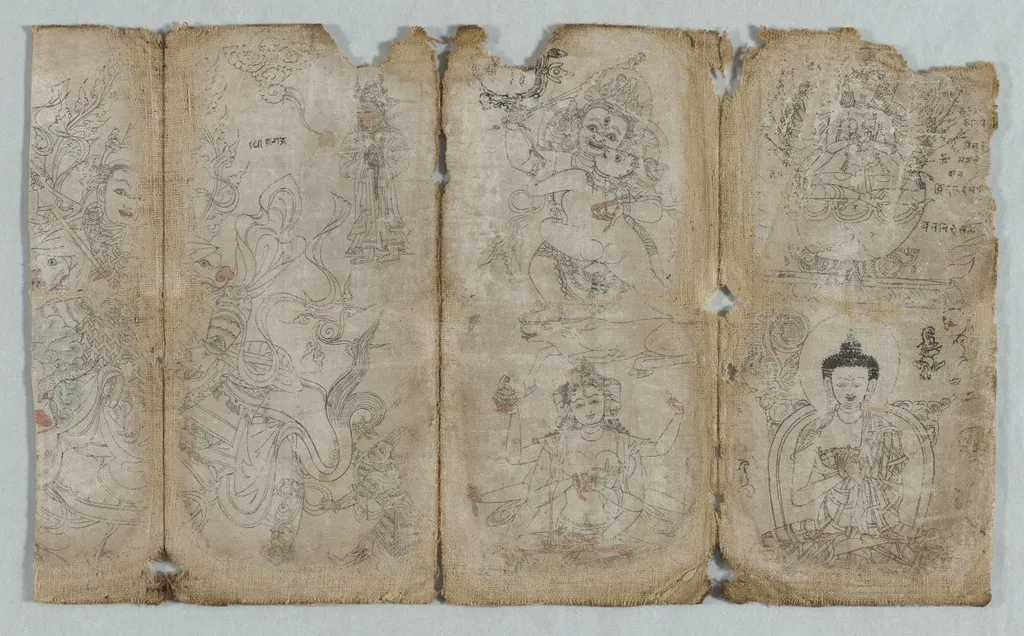
Iconographic Drawings: Vaishravana, Yama, Ushnishavijaya, Chunda (?), and Buddha (recto) is a drawing by the Renaissance artist Unknown. It dates from 1500 and is held in the collection of the Cleveland Museum of Art. This rare, worn drawing on paper is a surviving example of a Tibetan sketchbook page used to guide the iconography of Buddhist figures.
About this work
Overview
This rare, worn drawing on paper is a surviving example of a Tibetan sketchbook page used to guide the iconography of Buddhist figures. It features five key figures drawn in black ink with halos, where applicable.
Subject & Meaning
The drawing depicts: Vaishravana (guardian king of the north and god of wealth) on the left, a small donor in Tibetan attire to his right, followed by Yama (guardian king of the south and god of death) with his consort on a buffalo, Ushnishavijaya (goddess of longevity) below them, and an 18-armed goddess in a skull cup on serpents with a seated Buddha below her.
Technique & Style
Characterized by steady line drawings in black ink, the work showcases the precise delineation of attributes and gestures essential for accurate Buddhist iconography, reflecting the instructional purpose of the sketchbook.
History & Provenance
Originating from Tibet, this page is exceptionally rare due to the heavy usage and consequent deterioration of such sketchbooks over time, with most not surviving to the present.
Context
Used by Tibetan thangka painters, this sketchbook page would have served as a vital reference for learning and consistently depicting the specific characteristics of various Buddhist deities and figures in religious art.
Artist & collection

 Domestic Scene
 Giacomo and Cardinal Marco, investing Andrea, Abbot of San Zeno, with his Benefice
 The Nymph of Fontainebleau
 Portrait of a Woman
 Madonna and Child with Saints in the Enclosed Garden
 Venus and Minerva
 Family Group of Four on Sofa
 Wall painting from Room H of the Villa of P. Fannius Synistor at Boscoreale
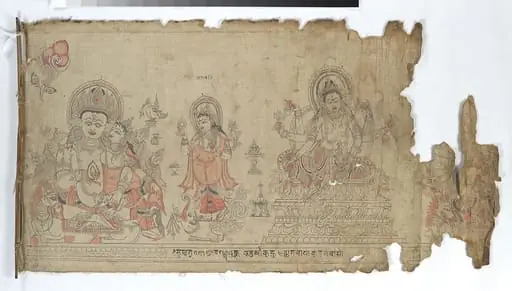 Untitled
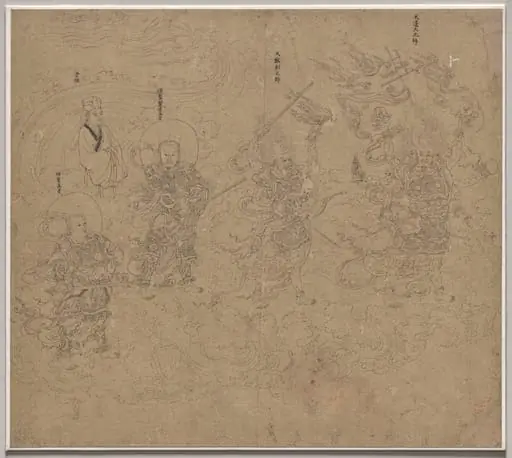 Album of Daoist and Buddhist Themes: Procession of Daoist Deities: Leaf 11
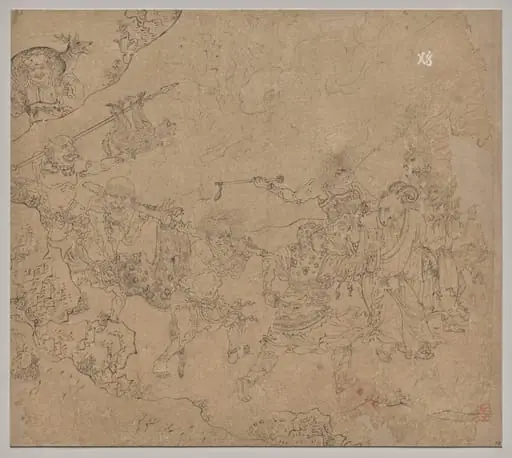 Album of Daoist and Buddhist Themes: Search the Mountain: Leaf 45
 Untitled
 Iconographical Sketch (Zuzō) for the "Benevolent Kings Sutra Mandala"
 Album of Daoist and Buddhist Themes: Search the Mountain: Leaf 41
 Album of Daoist and Buddhist Themes: Procession of Daoist Deities: Leaf 19