Artwork
Album of Daoist and Buddhist Themes: Search the Mountain: Leaf 41
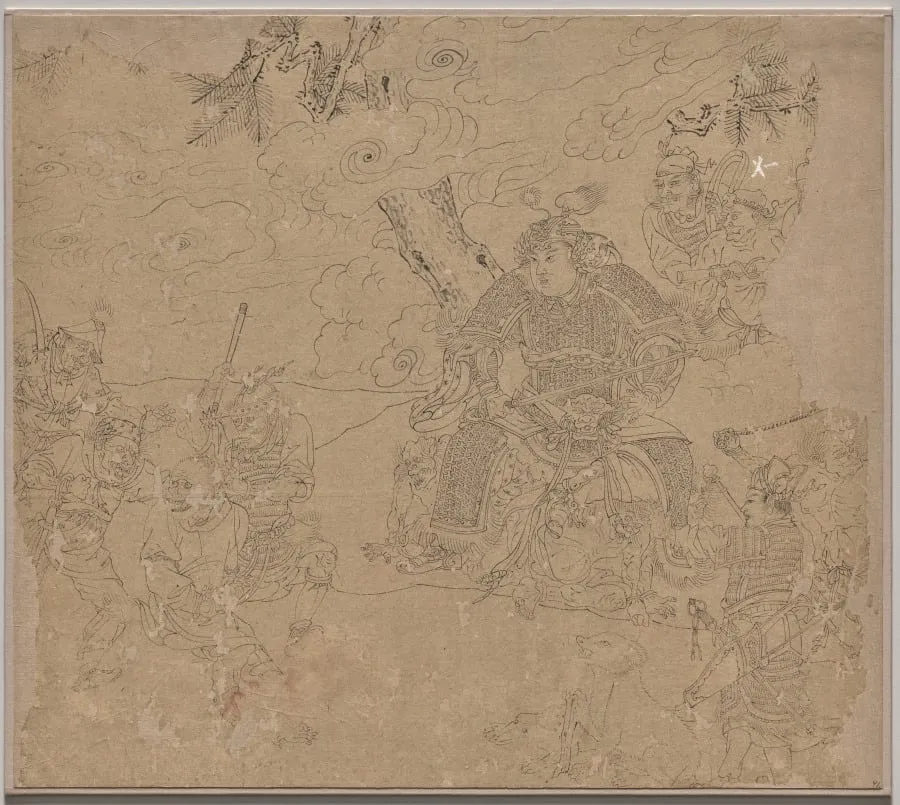
Album of Daoist and Buddhist Themes: Search the Mountain: Leaf 41 is an unspecified painting by the Ming dynasty painting artist Unknown. It dates from 1204 and is held in the collection of the Cleveland Museum of Art.
About this work
This is Erlang, a god from Chinese myths, sending his army to clear a mountain of troublemakers.
You see a warrior in armor sitting under a pine tree, sword in hand. Around him, a wolf, a small alligator, and a monkey in clothes crouch in the shadows.
This is Erlang, a god from Chinese myths, sending his army to clear a mountain of troublemakers. The scene was first painted by Gao Yi and stayed popular for centuries. The artist left no name, so we don’t know who made this exact version.
If you like this, look up more about china, southern song dynasty (1127-1279).
Overview
The painting is a leaf from the album titled “Search the Mountain,” depicting a scene in which the deity Erlang, a celestial commander, sits beneath a pine tree, sword in hand, directing his forces to cleanse Mt. Guankou of disruptive wildlife.
Subject & Meaning
Erlang, portrayed in full armor, commands a small army that includes a wolf, a diminutive alligator and a monkey dressed in human attire, symbolising the removal of chaotic elements from the natural world, a motif drawn from popular Chinese mythic narratives.
Technique & Style
Rendered in the traditional Chinese brush technique of the Song period, the composition balances a central figure with surrounding creatures, using delicate ink lines and subtle colour washes to convey both the figure’s authority and the forested setting.
History & Provenance
The narrative first appeared in a Northern Song work by Gao Yi and persisted through the Southern Song and Ming eras. This leaf, part of a ten‑panel set, is the earliest surviving version of the scene, as Gao Yi’s original has been lost; the artist of this copy remains unidentified.
Context
The album belongs to a broader tradition of “search the mountain” (Soushan Tu) illustrations that visualised mythic expeditions, reflecting the period’s interest in integrating folklore with moral instruction.
Artist & collection

 Domestic Scene
 Giacomo and Cardinal Marco, investing Andrea, Abbot of San Zeno, with his Benefice
 The Nymph of Fontainebleau
 Portrait of a Woman
 Madonna and Child with Saints in the Enclosed Garden
 Venus and Minerva
 Family Group of Four on Sofa
 Wall painting from Room H of the Villa of P. Fannius Synistor at Boscoreale
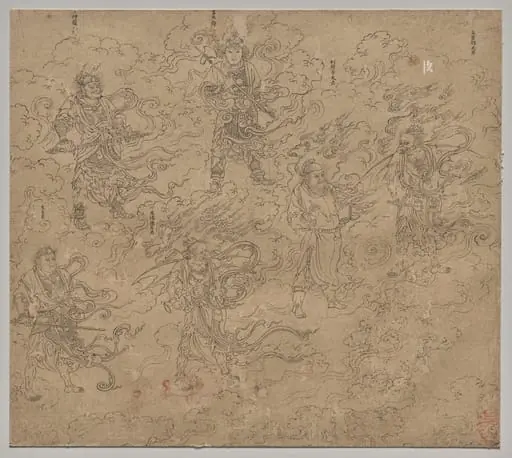 Album of Daoist and Buddhist Themes: Procession of Daoist Deities: Leaf 19
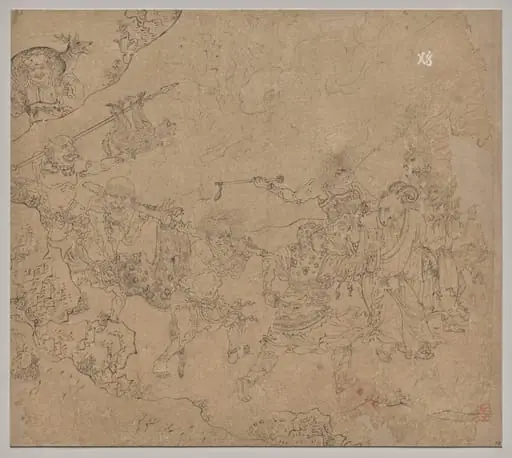 Album of Daoist and Buddhist Themes: Search the Mountain: Leaf 45
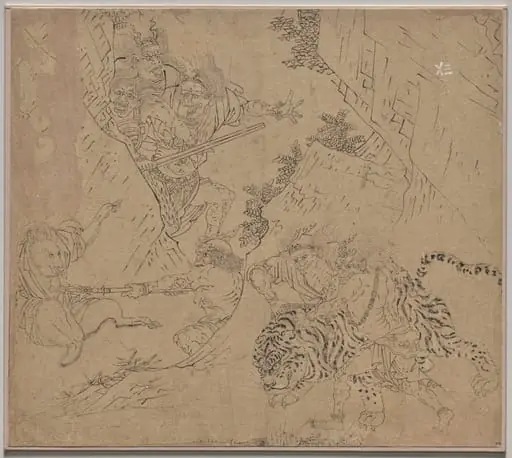 Album of Daoist and Buddhist Themes: Search the Mountain: Leaf 43
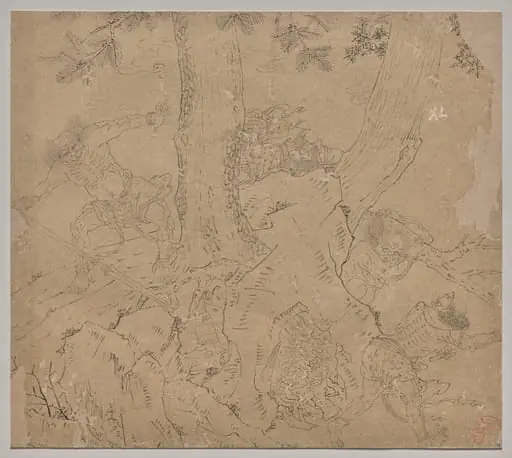 Album of Daoist and Buddhist Themes: Search the Mountain: Leaf 46
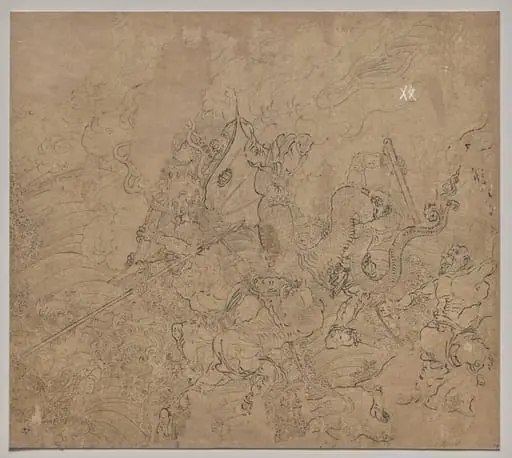 Album of Daoist and Buddhist Themes: Search the Mountain: Leaf 49
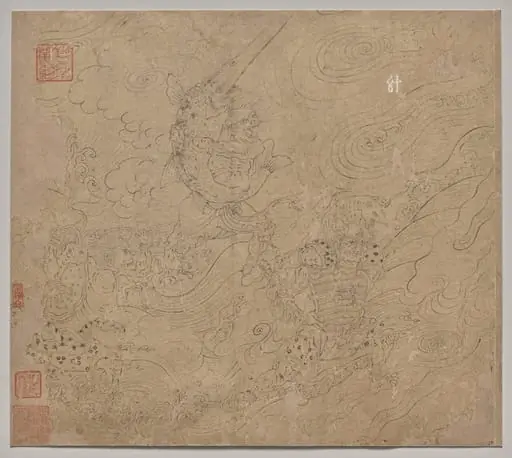 Album of Daoist and Buddhist Themes: Search the Mountain: Leaf 50
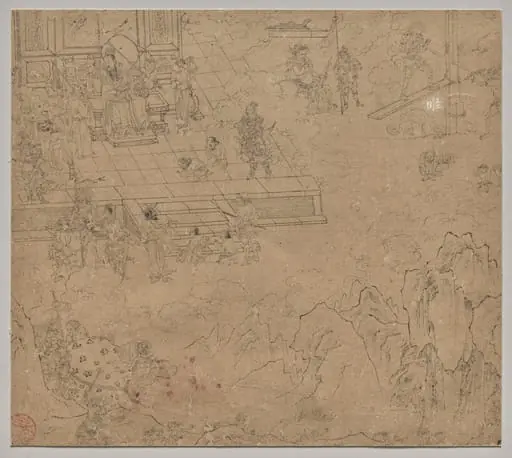 Album of Daoist and Buddhist Themes: Kings of Hells: Leaf 39
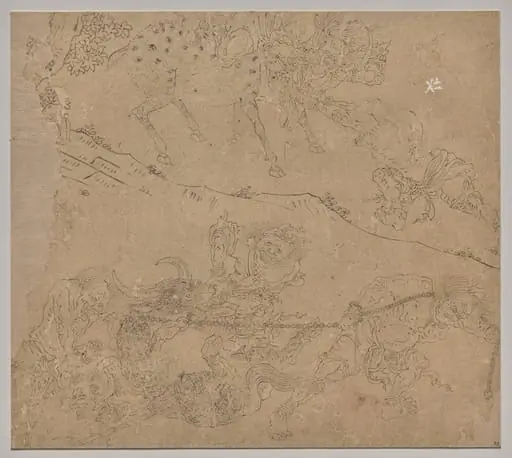 Album of Daoist and Buddhist Themes: Search the Mountain: Leaf 47
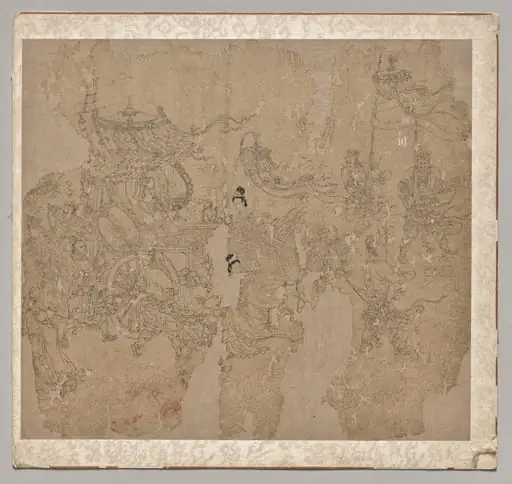 Album of Daoist and Buddhist Themes: Procession of Daoist Deities: Leaf 3
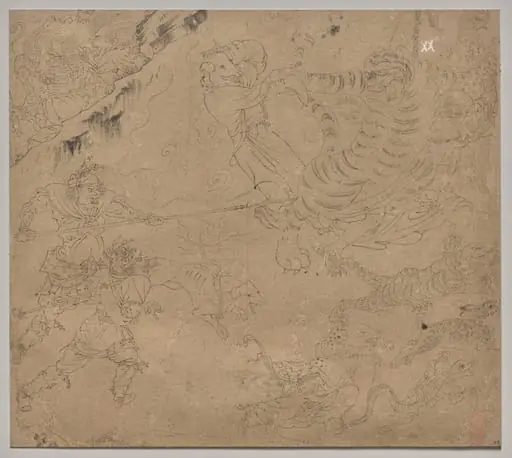 Album of Daoist and Buddhist Themes: Search the Mountain: Leaf 44
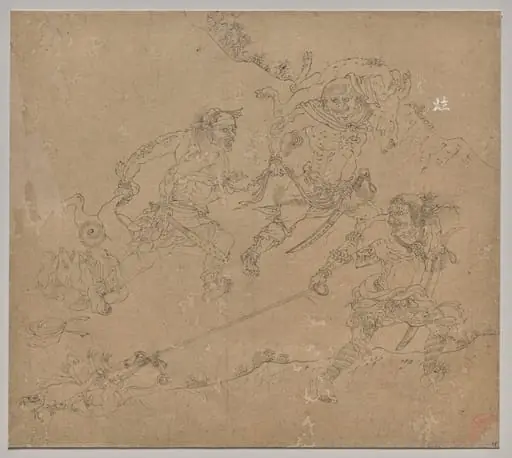 Album of Daoist and Buddhist Themes: Search the Mountain: Leaf 48