Artwork
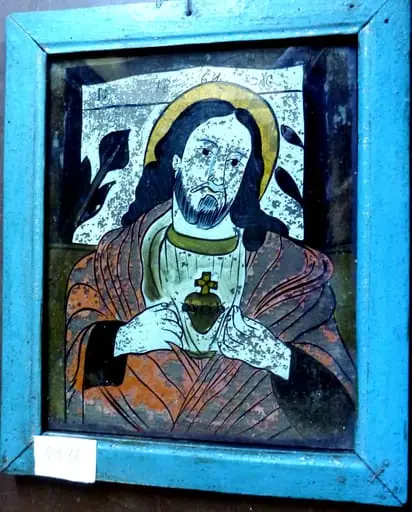
Iisus cu inima
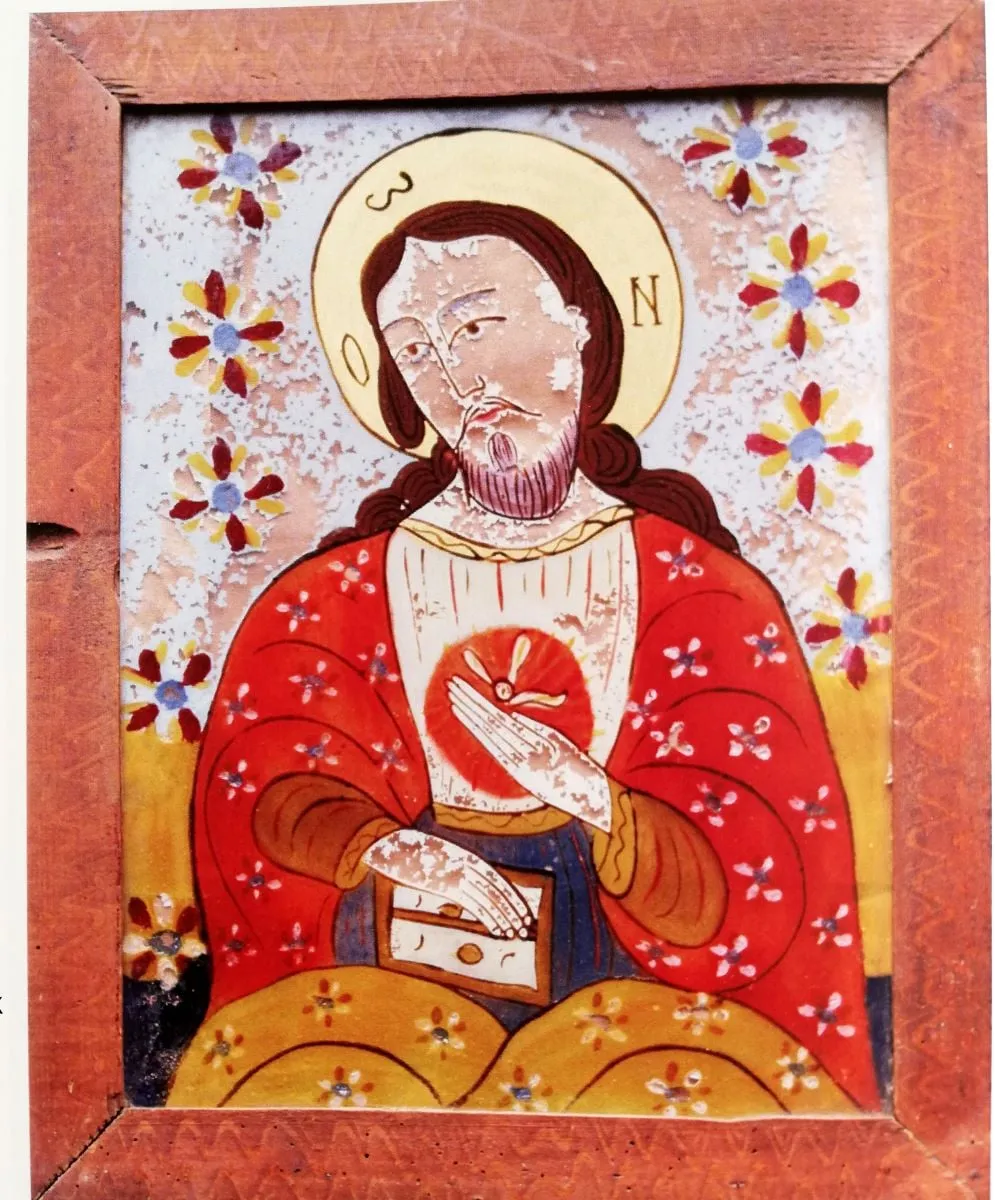
Iisus cu inima is a drawing by Unknown. It dates from 1850 and is held in the collection of the Bistrita-Năsăud Museum Complex. This devotional image depicts a figure identified as Jesus, rendered in a traditional iconographic style.
About this work
Overview
This devotional image depicts a figure identified as Jesus, rendered in a traditional iconographic style. The composition centers on his gesture of presenting a heart, surrounded by ornamental floral motifs and a gold-tinged background. The wear on the surface suggests age and repeated veneration, consistent with religious objects used in private or communal worship over time.
Subject & Meaning
The figure holds a heart, a symbol of divine love and compassion in Christian iconography. The raised hand emphasizes revelation, while the heart’s visible interior may signify inner purity or the soul. The imagery draws from Eastern Orthodox and Catholic traditions, where Christ’s Sacred Heart represents mercy and sacrifice, inviting contemplation and devotion from the viewer.
Technique & Style
The painting employs fine cross-hatching to model form and texture, particularly in the beard and fabric folds. Colors are layered with subtle gradations—deep reds, bright blues, and yellows—against a muted gold ground. The faded areas indicate aging varnish or pigment loss, while the detailed linework reflects a hand-crafted, pre-industrial approach to sacred imagery.
History & Provenance
The object’s condition suggests it was once part of a domestic or chapel setting, handled and displayed over generations. Its stylistic elements align with 18th- to 19th-century Eastern European or Balkan religious art, where such images were reproduced for personal devotion. No documented provenance exists, but its material and wear point to continuous use rather than museum preservation.
Context
This type of depiction, often painted on wood or canvas, was accessible to laypeople and reinforced theological themes of love and redemption.
In rural and Orthodox Christian communities, images of Christ with the Sacred Heart served as focal points for prayer and protection. This type of depiction, often painted on wood or canvas, was accessible to laypeople and reinforced theological themes of love and redemption. The floral borders and gold background echo liturgical textiles and manuscript illumination, bridging sacred and domestic spaces.
Legacy
Though not attributed to a known artist, the image contributes to a broader tradition of vernacular religious art that sustained faith outside institutional channels. Its survival, despite deterioration, reflects the enduring role of visual symbols in personal spirituality. Such works remain valuable as cultural artifacts, preserving devotional practices of communities often absent from formal art histories.
Artist & collection
 Domestic Scene
 Giacomo and Cardinal Marco, investing Andrea, Abbot of San Zeno, with his Benefice
 The Nymph of Fontainebleau
 Portrait of a Woman
 Madonna and Child with Saints in the Enclosed Garden
 Venus and Minerva
 Family Group of Four on Sofa
 Wall painting from Room H of the Villa of P. Fannius Synistor at Boscoreale