Artwork
Imam 'Ali
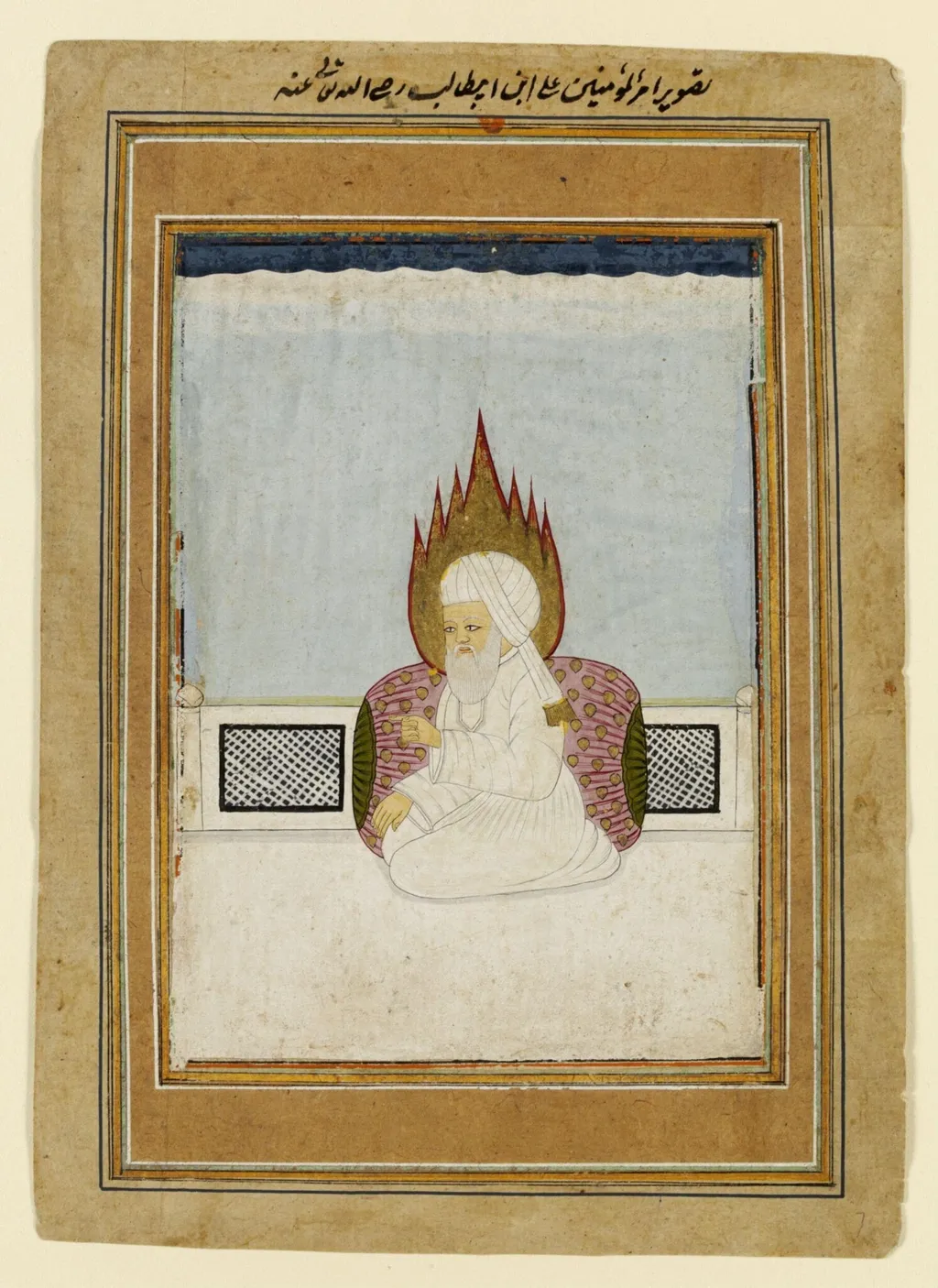
Imam 'Ali is a paint painting by the Persian Miniature artist Unknown. It dates from 1850 and is held in the collection of the Victoria and Albert Museum.
About this work
Overview
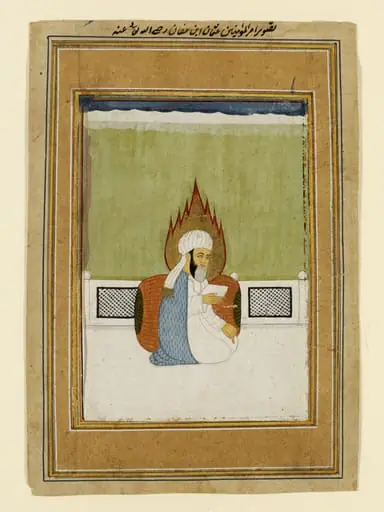
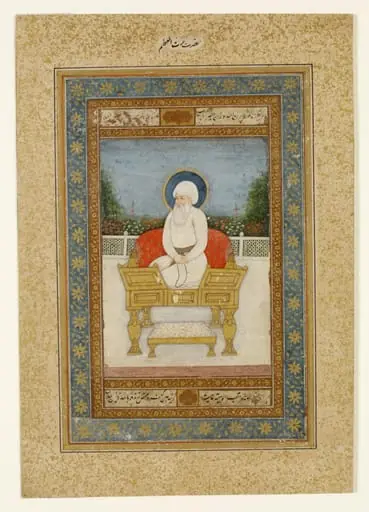
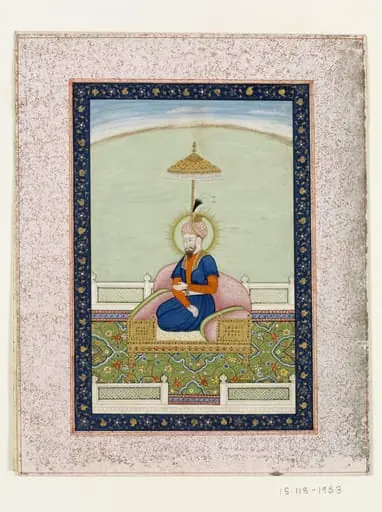
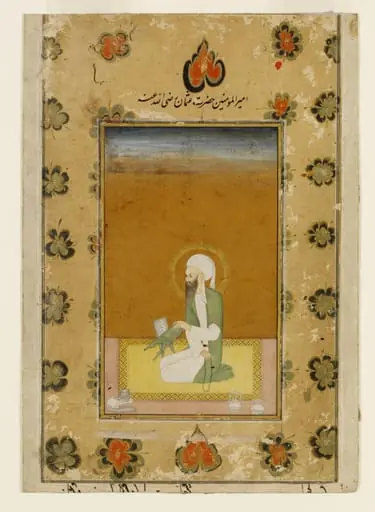
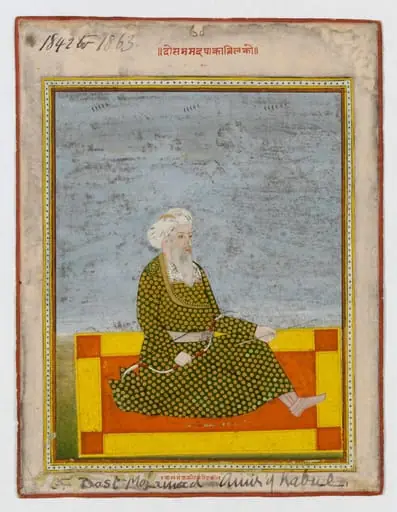
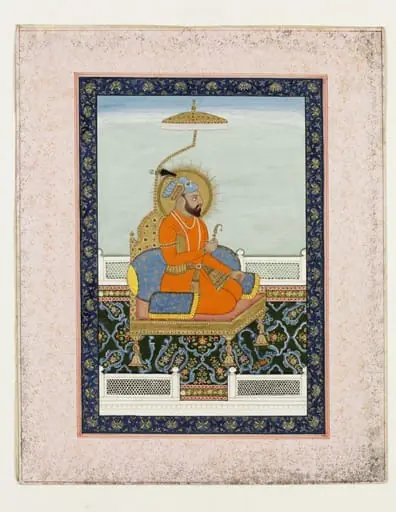
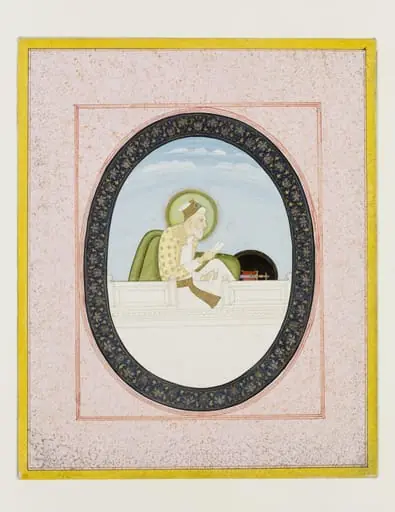
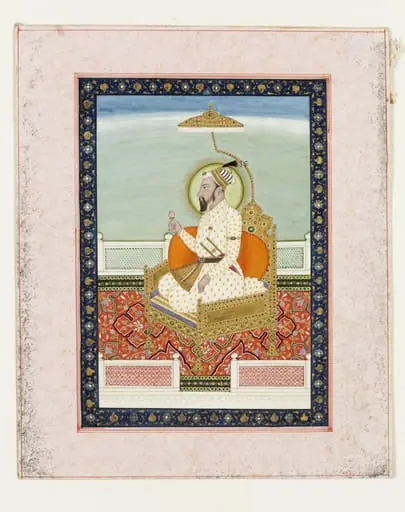
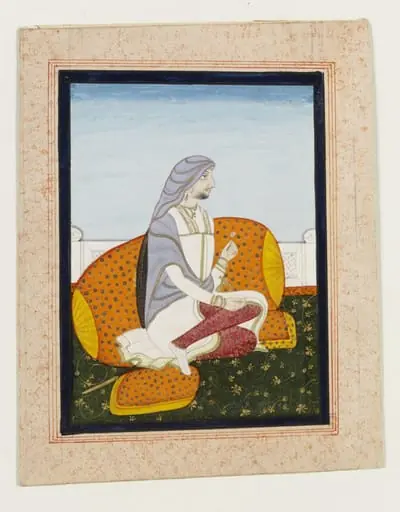
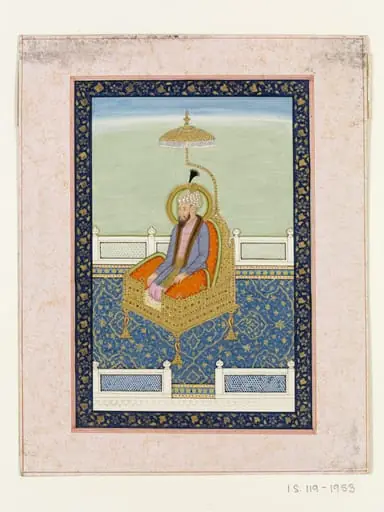
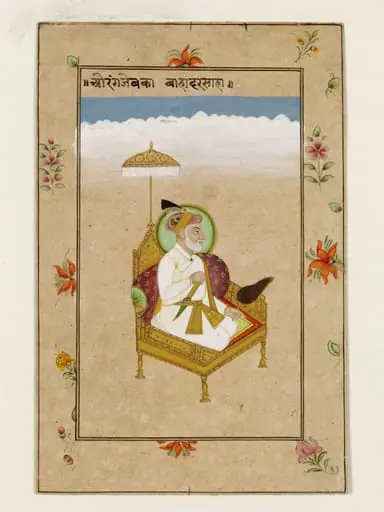
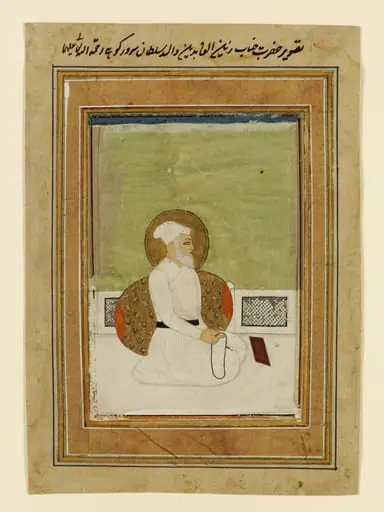
This 19th-century painting, created circa 1850, depicts Imam 'Ali, a key figure in Islamic history, in a seated portrait. Executed in opaque watercolour on paper, the work combines vivid colours and intricate details.
Subject & Meaning
Imam 'Ali, son of Abu Talib and a central figure in Shia Islam, is portrayed in a contemplative pose, conveying calmness and seriousness through his facial expression. The objects in his hands, though small, may symbolize his attributes or virtues.
Technique & Style
The artist employed opaque watercolour to achieve a rich, flat colour palette, evident in the subject's attire and the light blue background. The frame's gold and black lines, along with Arabic script at the top, add to the work's ornateness and cultural context.
History & Provenance
While the exact artist remains unknown, the painting's style and date (circa 1850) suggest origins within a traditional Islamic artistic framework. Provenance details are not provided, highlighting the need for further research into the work's historical ownership and creation context.
Context
This portrait reflects the ongoing veneration of Imam 'Ali in Shia Islamic traditions during the 19th century. The inclusion of specific attire and symbols (e.g., the red-and-gold hat) may indicate the work's intended audience or regional artistic influences.
Legacy
As an example of 19th-century Islamic portraiture, this work contributes to the understanding of religious art in the period. Institutions like the Victoria and Albert Museum, which house similar pieces, facilitate broader study and appreciation of such artworks.
Artist & collection

 Domestic Scene
 Giacomo and Cardinal Marco, investing Andrea, Abbot of San Zeno, with his Benefice
 The Nymph of Fontainebleau
 Portrait of a Woman
 Madonna and Child with Saints in the Enclosed Garden
 Venus and Minerva
 Family Group of Four on Sofa
 Wall painting from Room H of the Villa of P. Fannius Synistor at Boscoreale