Artwork
Indra
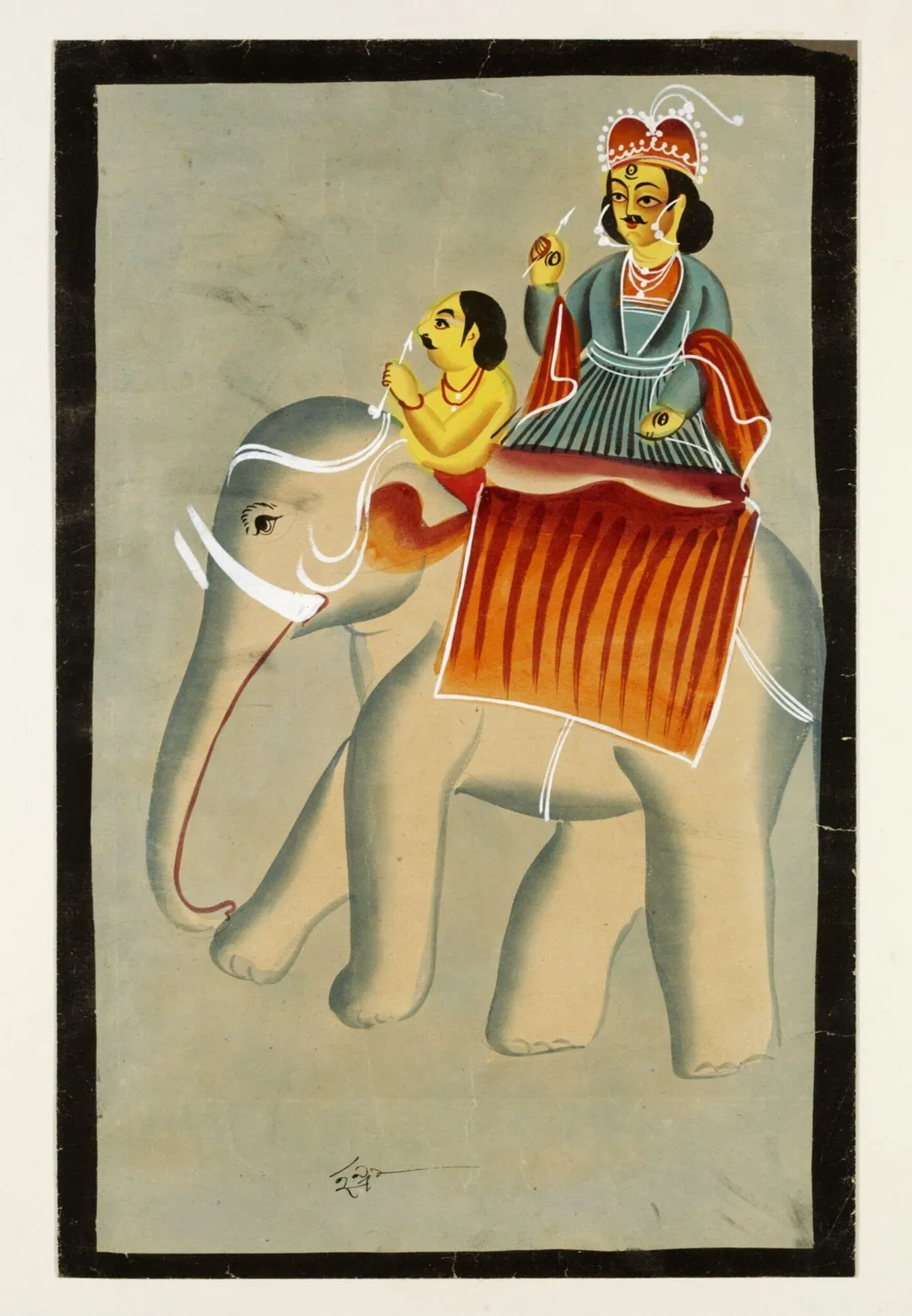
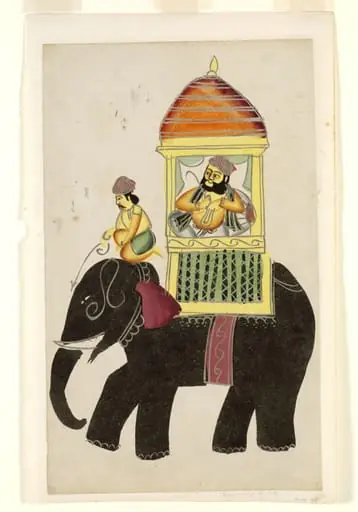
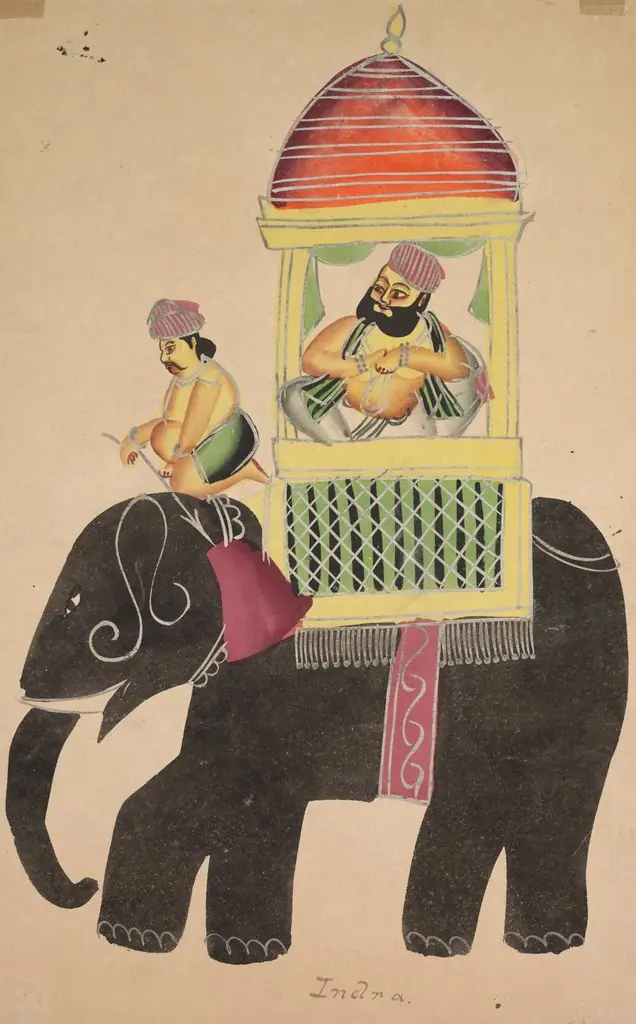
Indra is a paint painting by the Impressionist artist Unknown. It dates from 1885 and is held in the collection of the Victoria and Albert Museum.
About this work
Overview
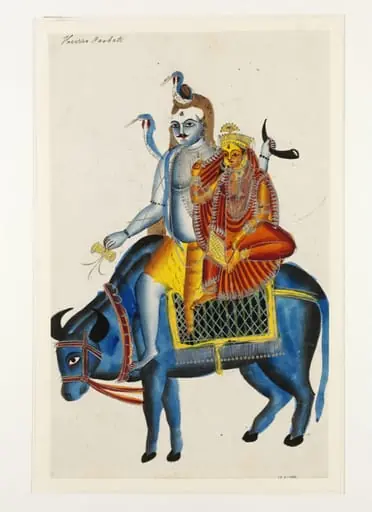
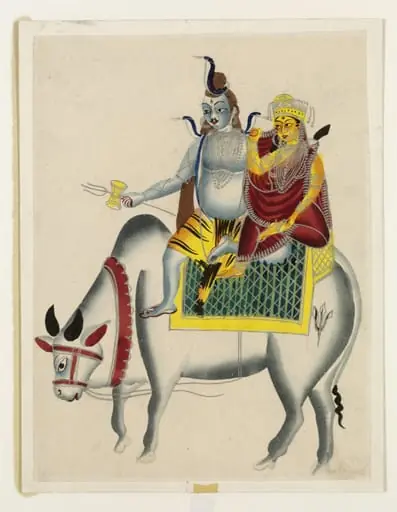
Indra is an opaque watercolour on paper painting created in 1885, depicting a scene of a woman and a man on a decorated elephant, with symbolic and traditional elements.
Subject & Meaning
The painting portrays a woman in vibrant attire (blue and red) standing on an elephant, accompanied by a man holding an unspecified object. The woman's jewelry and the elephant's red saddle indicate wealth and adherence to tradition, potentially alluding to mythological or royal themes, though the title 'Indra' suggests a divine or Hindu mythological context.
Technique & Style
The work features bold outlines, flat colors, and a plain light-colored background, which collectively create a lively yet simplified visual effect. Notably absent is the use of chiaroscuro, resulting in a distinct, non-dimensional depth compared to works relying on light and shadow for depth.
History & Provenance
Acquired by the collection in 1894 from Miss M Steele, the painting's origins are traced back through her family. Her grandmother's residence in India and her mother's role as a Cambridge Sanskrit scholar suggest a possible Indian provenance for the artwork.
Context
Given the family's academic and geographical ties to India and Sanskrit studies, the painting likely reflects a blend of cultural fascination and scholarly interest in Indian mythology or royal life during the late 19th century.
Legacy
While specific impact or influence of 'Indra' on subsequent art movements or cultural narratives is not detailed, it remains a testament to the cross-cultural artistic exchanges and interests of the Victorian era.
Artist & collection

 Domestic Scene
 Giacomo and Cardinal Marco, investing Andrea, Abbot of San Zeno, with his Benefice
 The Nymph of Fontainebleau
 Portrait of a Woman
 Madonna and Child with Saints in the Enclosed Garden
 Venus and Minerva
 Family Group of Four on Sofa
 Wall painting from Room H of the Villa of P. Fannius Synistor at Boscoreale