Artwork
Indra, chief of the gods and the guardian of the east, on his elephant, Airavata.
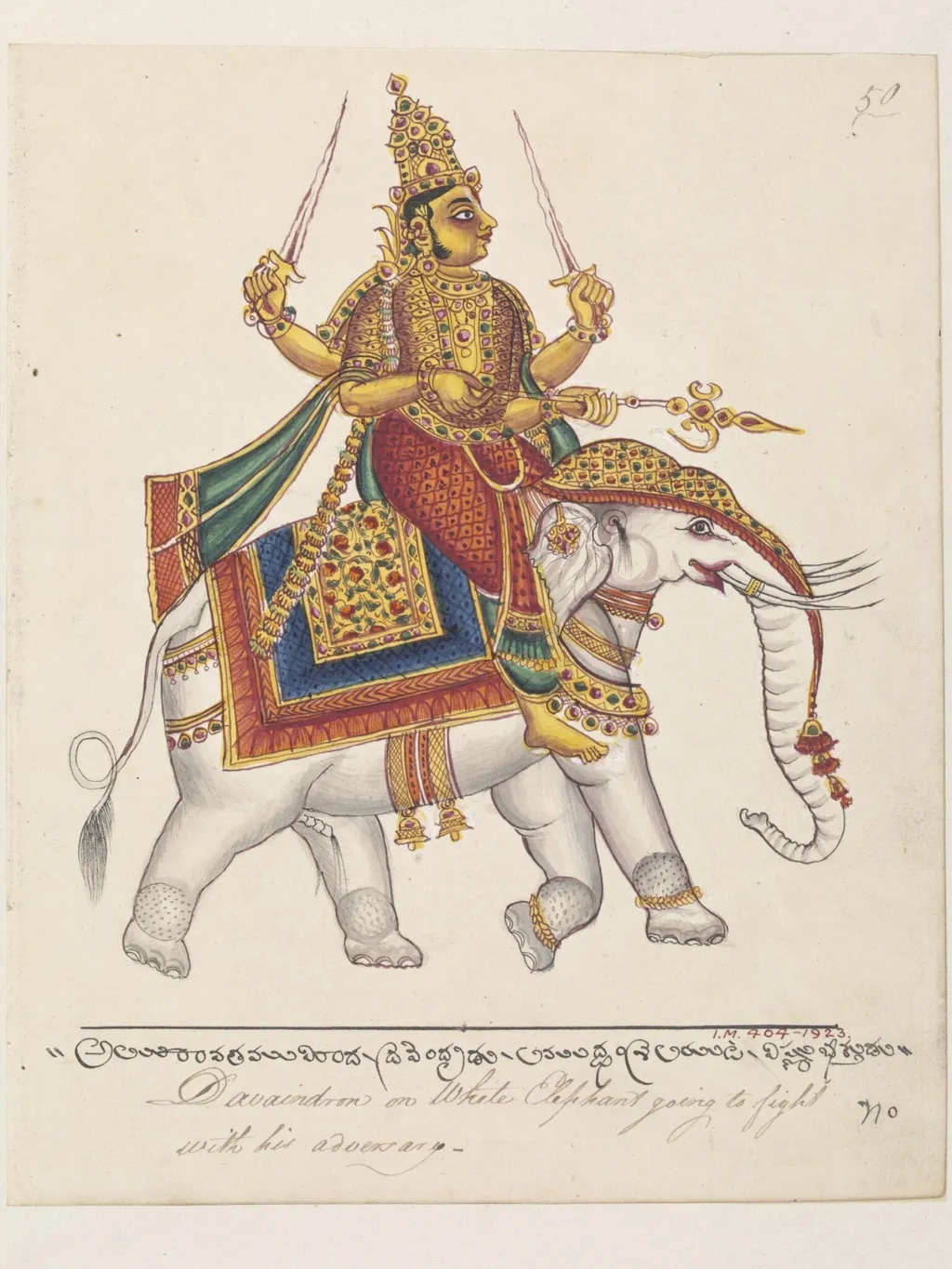
Indra, chief of the gods and the guardian of the east, on his elephant, Airavata. is a paint painting by the Patna School of Painting artist Unknown. It dates from 1820 and is held in the collection of the Victoria and Albert Museum. The painting portrays the Hindu deity Indra, leader of the celestial pantheon, astride his mythic white elephant Airavata.
About this work
Overview
The painting portrays the Hindu deity Indra, leader of the celestial pantheon, astride his mythic white elephant Airavata.
The painting portrays the Hindu deity Indra, leader of the celestial pantheon, astride his mythic white elephant Airavata. Indra is rendered with a golden complexion, adorned in regal attire and a jeweled crown, while the elephant is equipped with a richly colored saddle featuring blue and red motifs and ornamental tassels. The composition is set against an unadorned background that isolates the two figures.
Subject & Meaning
Indra is depicted with four arms, a conventional attribute that allows him to wield multiple weapons simultaneously. In his right hands he grasps an elephant goad, a symbol of his control over Airavata, while the left hands hold short, wavy‑bladed swords, indicating martial authority. The raised trunk of the elephant suggests readiness for combat, reinforcing Indra’s role as a protector and war deity in Hindu tradition.
Technique & Style
Executed in paint, the work employs a vivid palette of gold, white, blue, and red to delineate divine and animal forms. The artist renders the golden skin and jeweled crown with fine detailing, creating a luminous effect, while the elephant’s saddle is outlined with intricate patterns and tassels that contrast with the plain backdrop. The overall style reflects a decorative, narrative approach typical of South Asian religious art.
History & Provenance
The piece is catalogued as a painting of Indra and Airavata, though specific details of its creation, such as date, artist, or original patron, are not recorded in the available documentation. It currently resides in a collection that includes comparable works of Hindu iconography, indicating its relevance to the broader visual tradition of deities and mythic animals.
Artist & collection

 Domestic Scene
 Giacomo and Cardinal Marco, investing Andrea, Abbot of San Zeno, with his Benefice
 The Nymph of Fontainebleau
 Portrait of a Woman
 Madonna and Child with Saints in the Enclosed Garden
 Venus and Minerva
 Family Group of Four on Sofa
 Wall painting from Room H of the Villa of P. Fannius Synistor at Boscoreale
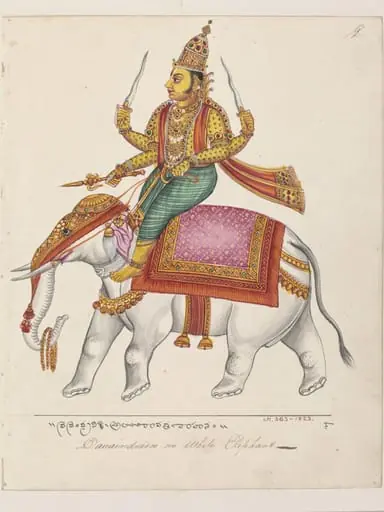 Indra, the god of storms, riding on a white elephant, Airavata.
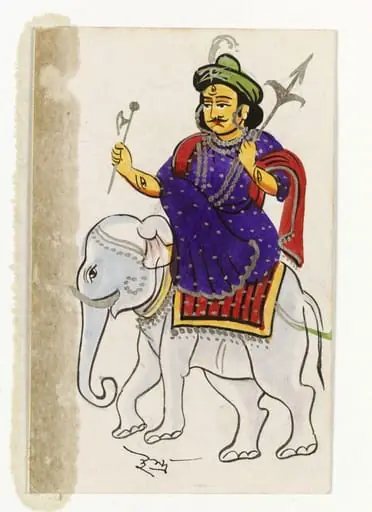 Indra
Indra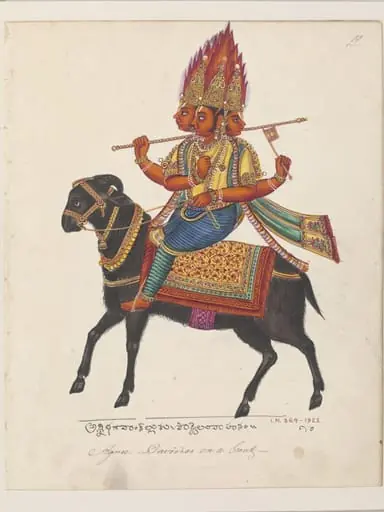 The Vedic god Agni, the god of fire and guardian of the south-east
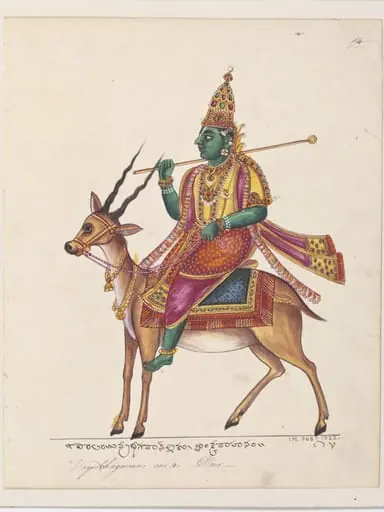 Vayu, the god of the wind and guardian of the north-west, riding on a deer.
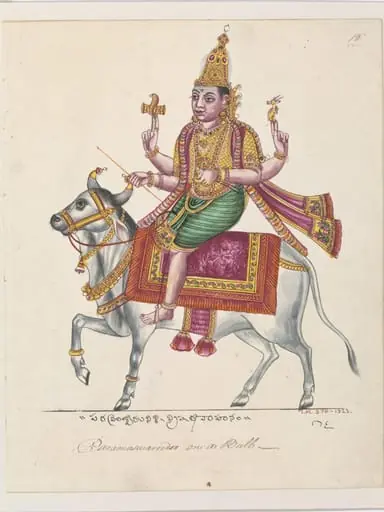 Mahadeva in his form as Isana, guardian of the north-east, riding on a white bull
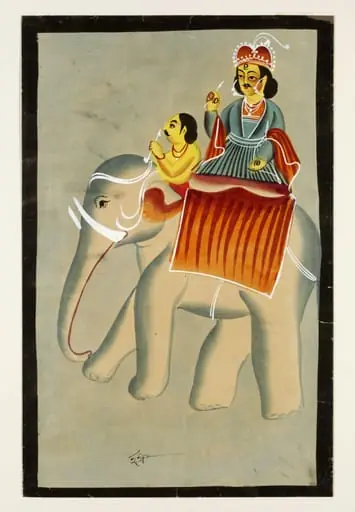 Indra
Indra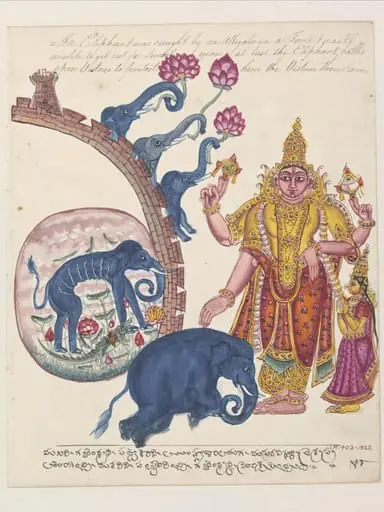 Vishnu saving the elephant, Gajendra - 'Gajendramoksha'.