Artwork
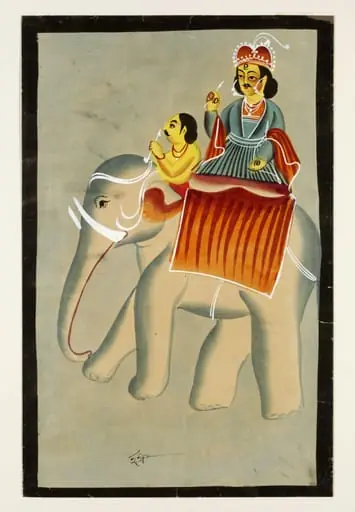
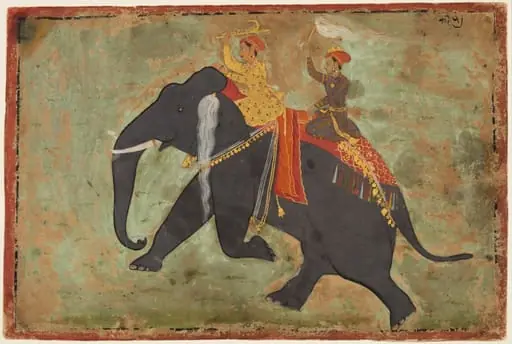
Indra, the god of storms, riding on a white elephant, Airavata.
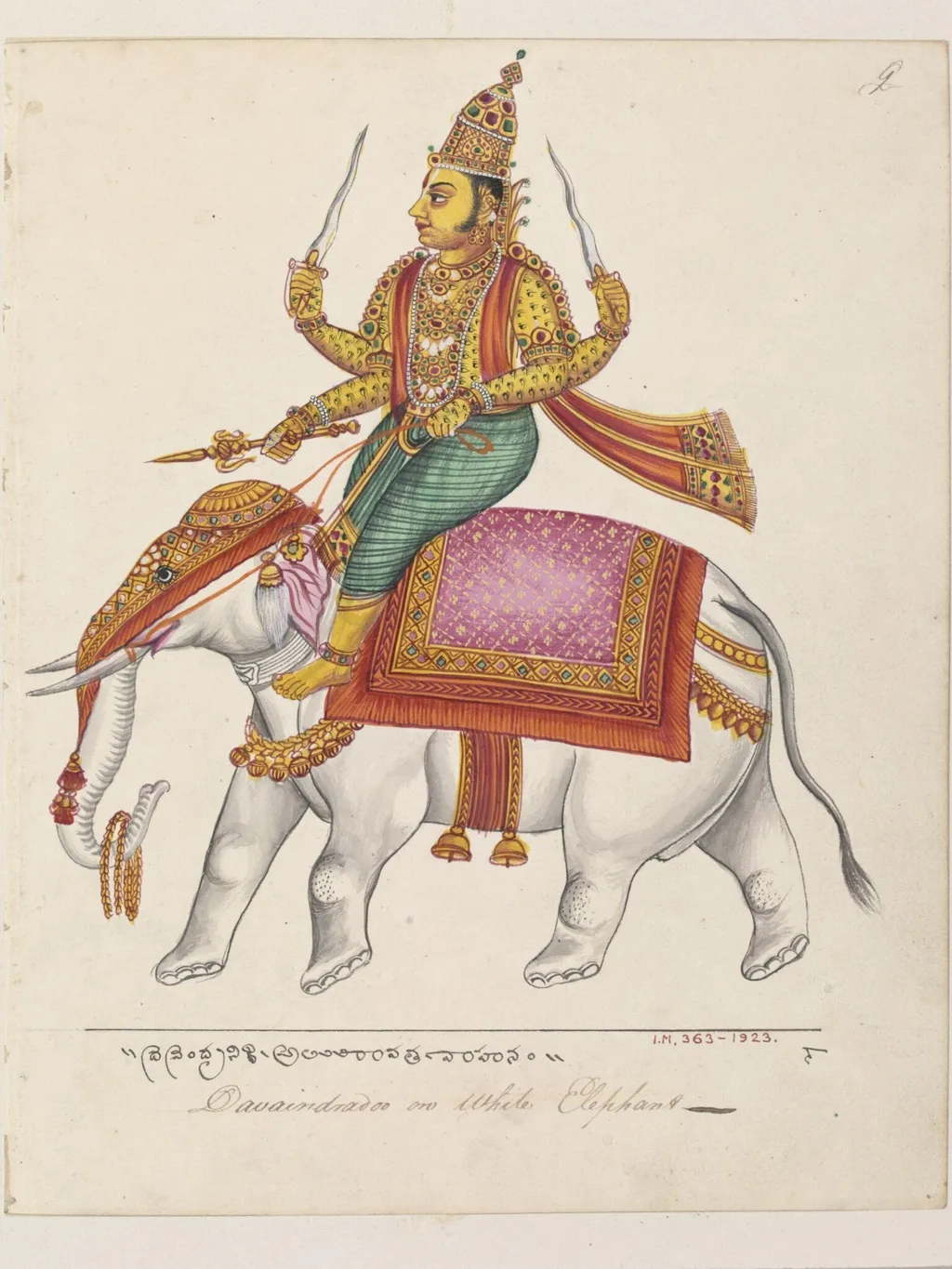
Indra, the god of storms, riding on a white elephant, Airavata. is a paint painting by the Romanticist artist Unknown. It dates from 1820 and is held in the collection of the Victoria and Albert Museum.
About this work
Overview
This painting portrays Indra, the Hindu god of storms, mounted on his iconic vehicle, the white elephant Airavata. The depiction conveys Indra's divine authority through elaborate attire and accessories.
Subject & Meaning
Indra, characterized by yellow skin and four arms, embodies his role as a powerful deity. His wavy-bladed swords, eyes on his body, jewelry, red scarf, and green loincloth symbolize his multifaceted divine attributes. Airavata, bearing a noose in its trunk, reinforces Indra's command over the elements.
Technique & Style
The painting features vibrant, bright colors and intricate details, suggesting an emphasis on opulence and grandeur. While reminiscent of Romanticism's expressive and imaginative qualities, the work's specific stylistic affiliations are not explicitly tied to European art movements, instead reflecting traditional Hindu iconography with possible regional Indian painting styles.
History & Provenance
No specific historical or provenance details are provided for this painting, leaving its exact date, artist, and origin uncertain.
Context
The artwork is rooted in Hindu mythology, drawing on the well-documented character of Indra. The depiction aligns with traditional representations of Indra and Airavata, highlighting the enduring influence of mythological themes in Indian art.
Legacy
As a representation of Indra, the painting contributes to the visual heritage of Hindu mythology in art, though its individual impact or contribution to broader art historical narratives is not specified.
Artist & collection

 Domestic Scene
 Giacomo and Cardinal Marco, investing Andrea, Abbot of San Zeno, with his Benefice
 The Nymph of Fontainebleau
 Portrait of a Woman
 Madonna and Child with Saints in the Enclosed Garden
 Venus and Minerva
 Family Group of Four on Sofa
 Wall painting from Room H of the Villa of P. Fannius Synistor at Boscoreale
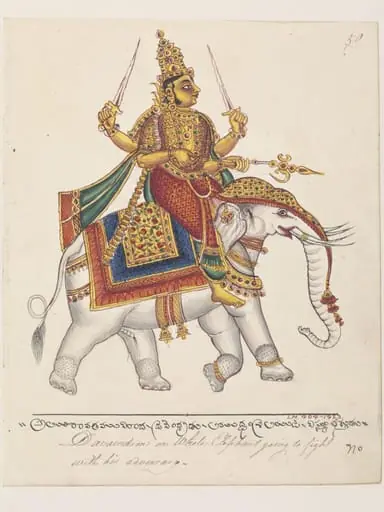 Indra, chief of the gods and the guardian of the east, on his elephant, Airavata.
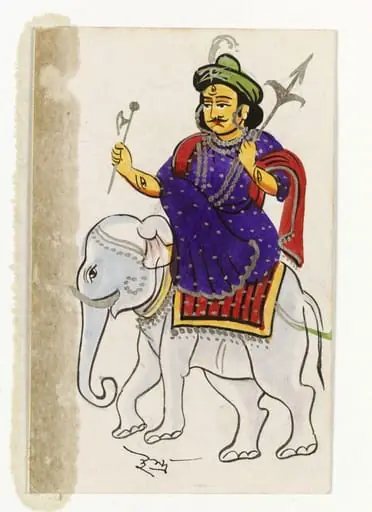 Indra
Indra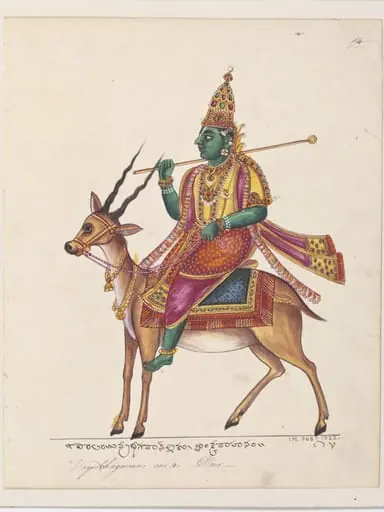 Vayu, the god of the wind and guardian of the north-west, riding on a deer.
 Indra
Indra Mahant of Tarakeshwar Rides on an Elephant
 Visvakarma on a black elephant
 Shiva as the slayer of the elephant demon, Gajasura.
 Prince Amar Singh (1672–1710) Drives His Own Elephant