Artwork
Intrarea Domnului în Ierusalim
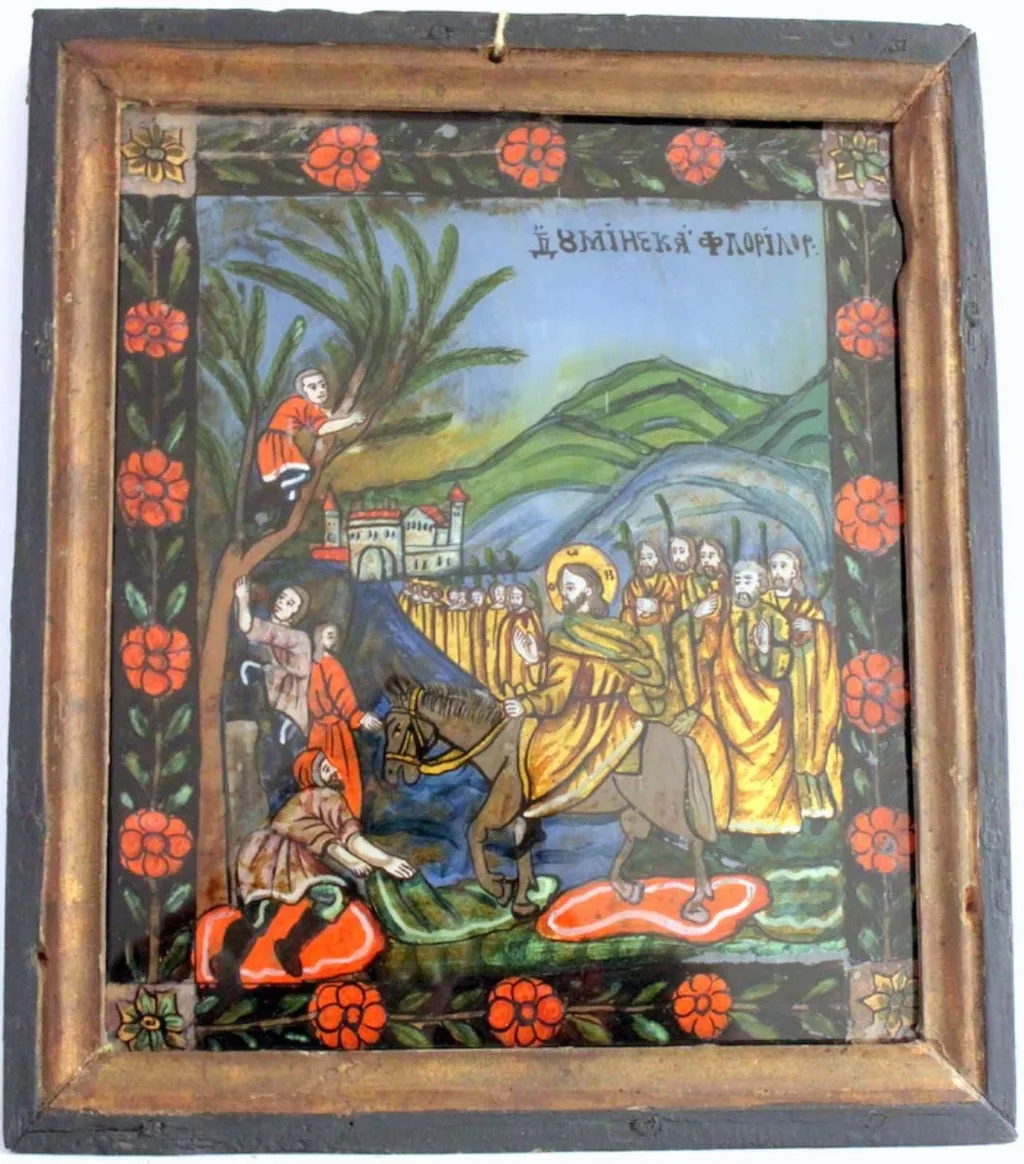
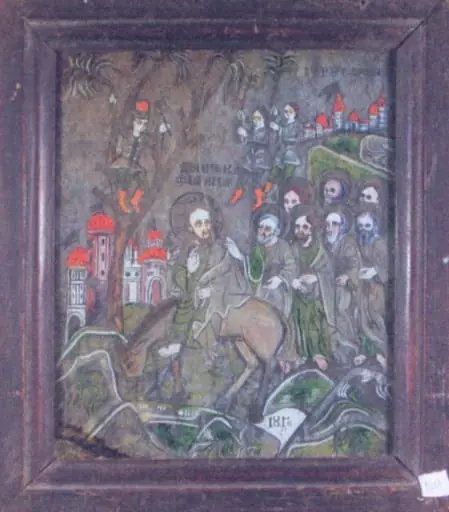
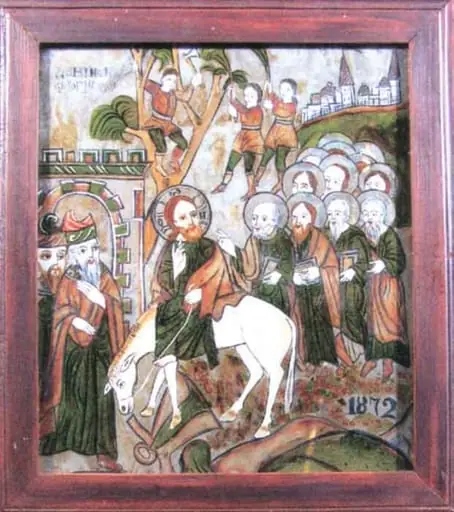
Intrarea Domnului în Ierusalim is a drawing by Unknown. It dates from 1850 and is held in the collection of the "Dimitrie Gusti" National Village Museum. This folk-style painting illustrates the biblical event of Christ’s entry into Jerusalem.
About this work
Overview
Rendered with bold outlines and vivid hues, it captures a moment of procession with figures in yellow robes, a donkey, and a tree-climbing observer.
This folk-style painting illustrates the biblical event of Christ’s entry into Jerusalem. Rendered with bold outlines and vivid hues, it captures a moment of procession with figures in yellow robes, a donkey, and a tree-climbing observer. The background includes rolling green hills, a white building with a red roof, and a bright blue sky, all composed in a simplified, decorative manner typical of regional religious art.
Subject & Meaning
The scene depicts Jesus arriving in Jerusalem on a donkey, fulfilling prophecy and symbolizing peace. Figures hold palm branches, a traditional sign of triumph and reverence. One person climbs a tree to gain a better view, a detail common in folk depictions that adds intimacy and human curiosity to the sacred moment.
Technique & Style
The painting employs flat planes of color, strong outlines, and minimal perspective, characteristic of folk traditions. Warm yellows and oranges dominate the palette, creating a luminous, energetic atmosphere. Details are stylized rather than naturalistic, emphasizing symbolic presence over realism, aligning with devotional art practices in rural communities.
History & Provenance
The work is held in the collection of the Museum of Ethnography, suggesting it was collected as an example of popular religious expression rather than fine art. Its origin is likely from a local artisan or community workshop, created for private devotion or seasonal celebration, though its exact date and maker remain undocumented.
Context
Similar depictions of Christ’s entry into Jerusalem appear across Eastern European folk traditions, often painted on wood, cloth, or walls for home altars or church festivals. This version reflects localized interpretations of biblical narratives, where cultural aesthetics and oral storytelling shape religious imagery beyond formal ecclesiastical norms.
Legacy
As a piece preserved in an ethnographic museum, it contributes to the documentation of how sacred stories were visually transmitted outside institutional churches. Its continued presence highlights the endurance of folk religious art as a form of cultural memory, distinct from academic or liturgical traditions.
Artist & collection
Museum
"Dimitrie Gusti" National Village Museum
Continue through works from the same source collection.
 Domestic Scene
 Giacomo and Cardinal Marco, investing Andrea, Abbot of San Zeno, with his Benefice
 The Nymph of Fontainebleau
 Portrait of a Woman
 Madonna and Child with Saints in the Enclosed Garden
 Venus and Minerva
 Family Group of Four on Sofa
 Wall painting from Room H of the Villa of P. Fannius Synistor at Boscoreale