Artwork
Iisus Hristos Pantocrator
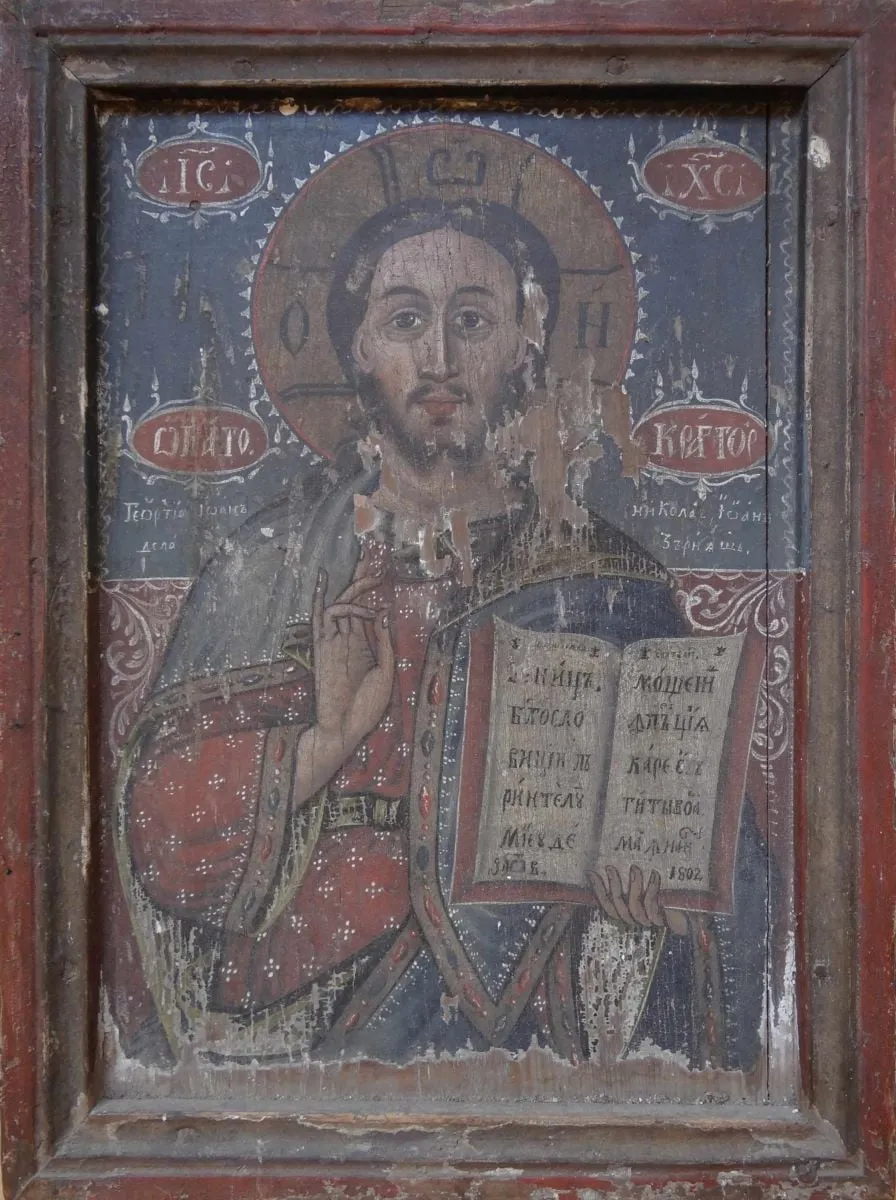
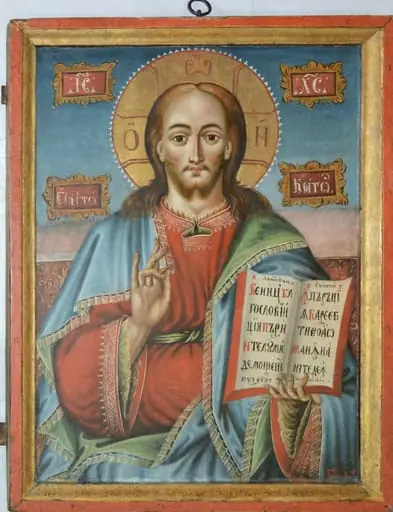
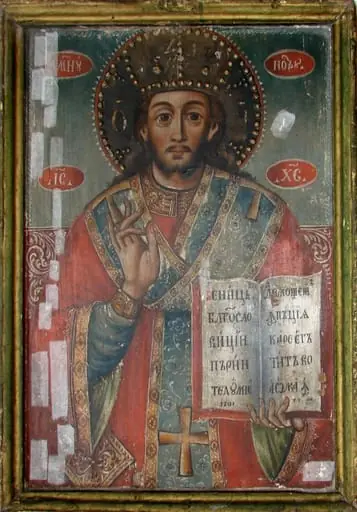
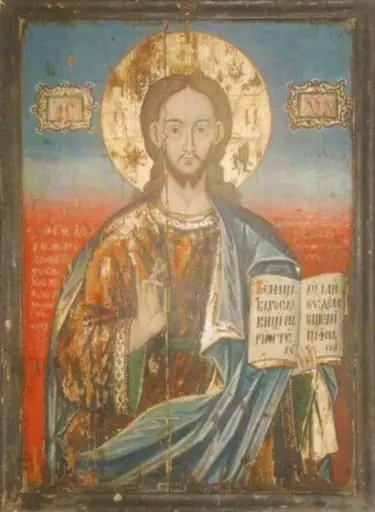
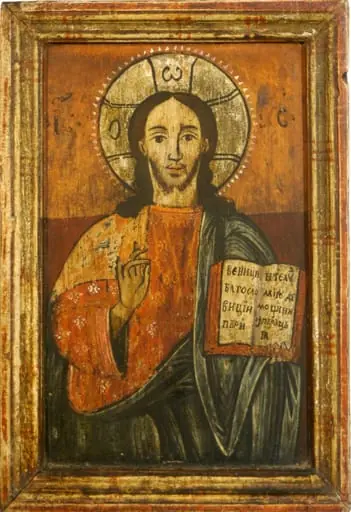
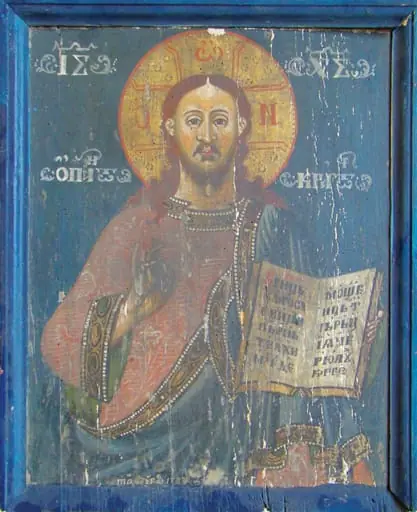
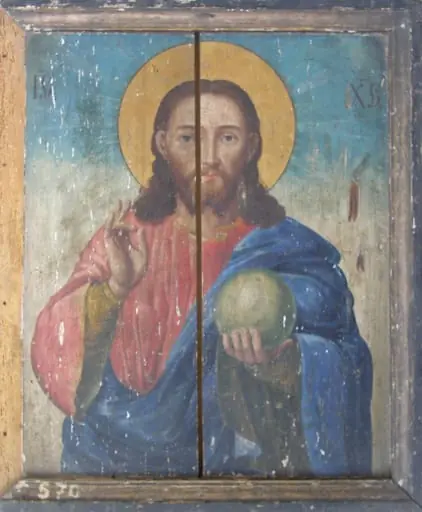
Iisus Hristos Pantocrator is a drawing by the Romanticist artist Gheorghe fiul lui Iacov. It dates from 1802 and is held in the collection of the Alba Iulia Orthodox Archdiocese.
About this work
Overview
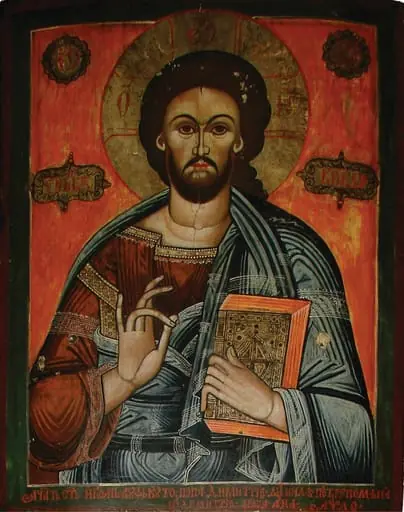
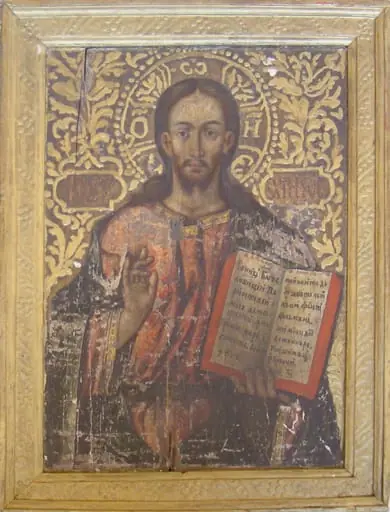
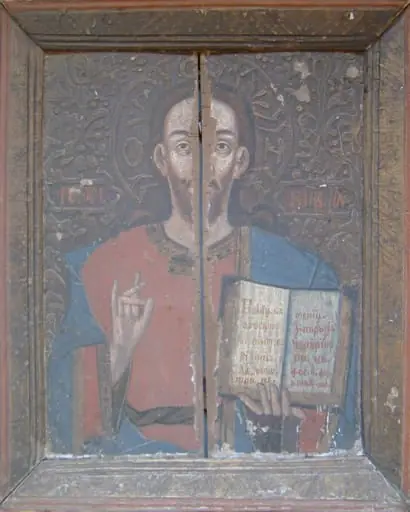
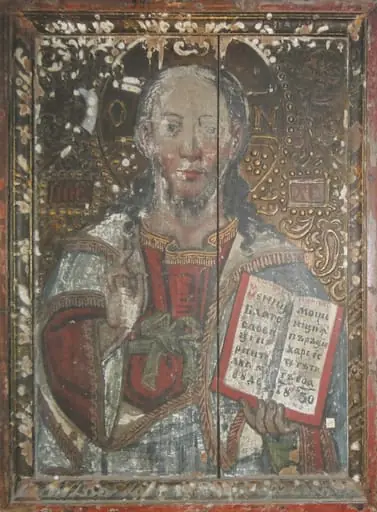
Created in 1802 by Gheorghe fiul lui Iacov, this religious icon portrays Christ Pantocrator, a traditional Byzantine depiction of Christ as ruler of all.
Created in 1802 by Gheorghe fiul lui Iacov, this religious icon portrays Christ Pantocrator, a traditional Byzantine depiction of Christ as ruler of all. The work is part of the collection at the Museum of Ethnography, reflecting the persistence of Eastern Christian visual traditions in 19th-century Romanian religious art. Its execution blends local artistic practices with enduring ecclesiastical iconography.
Subject & Meaning
The figure represents Christ Pantocrator, shown with dark hair and a beard, dressed in a red outer robe over a blue tunic—colors symbolizing divinity and humanity. He holds an open book, likely the Gospels, and raises his right hand in a gesture of blessing. This composition conveys authority and divine presence, aligning with Orthodox liturgical imagery meant for veneration and spiritual contemplation.
Technique & Style
The painting employs flat, stylized forms typical of Orthodox iconography, with minimal modeling and strong outlines. The dark blue background, accented with faint white lines, suggests a celestial realm without naturalistic depth. While some elements echo Romantic-era sensibilities, the work remains rooted in traditional Byzantine conventions rather than adopting Western artistic innovations.
History & Provenance
Attributed to Gheorghe fiul lui Iacov, the painting dates to 1802 and was likely produced for a local church or private devotional use in Moldavia or Wallachia. It entered the Museum of Ethnography’s collection as part of efforts to preserve regional religious artifacts, reflecting its cultural significance beyond purely artistic value.
Context
In early 19th-century Romanian principalities, religious art continued to follow Byzantine models despite growing Western influence. This icon represents a bridge between medieval traditions and emerging national identities, created during a period when Orthodox communities maintained distinct visual languages amid political and cultural shifts under Ottoman and Habsburg pressures.
Legacy
The work remains a documented example of post-Byzantine religious painting in Romanian lands. It contributes to scholarly understanding of how iconographic conventions persisted in rural and ecclesiastical contexts, offering insight into the continuity of spiritual imagery even as broader European art movements evolved.
Artist & collection
Artist
This painter created religious scenes in 18th-century Romanian churches, where gold-leaf halos and deep cobalt blues were common.