Artwork
Isus invatator
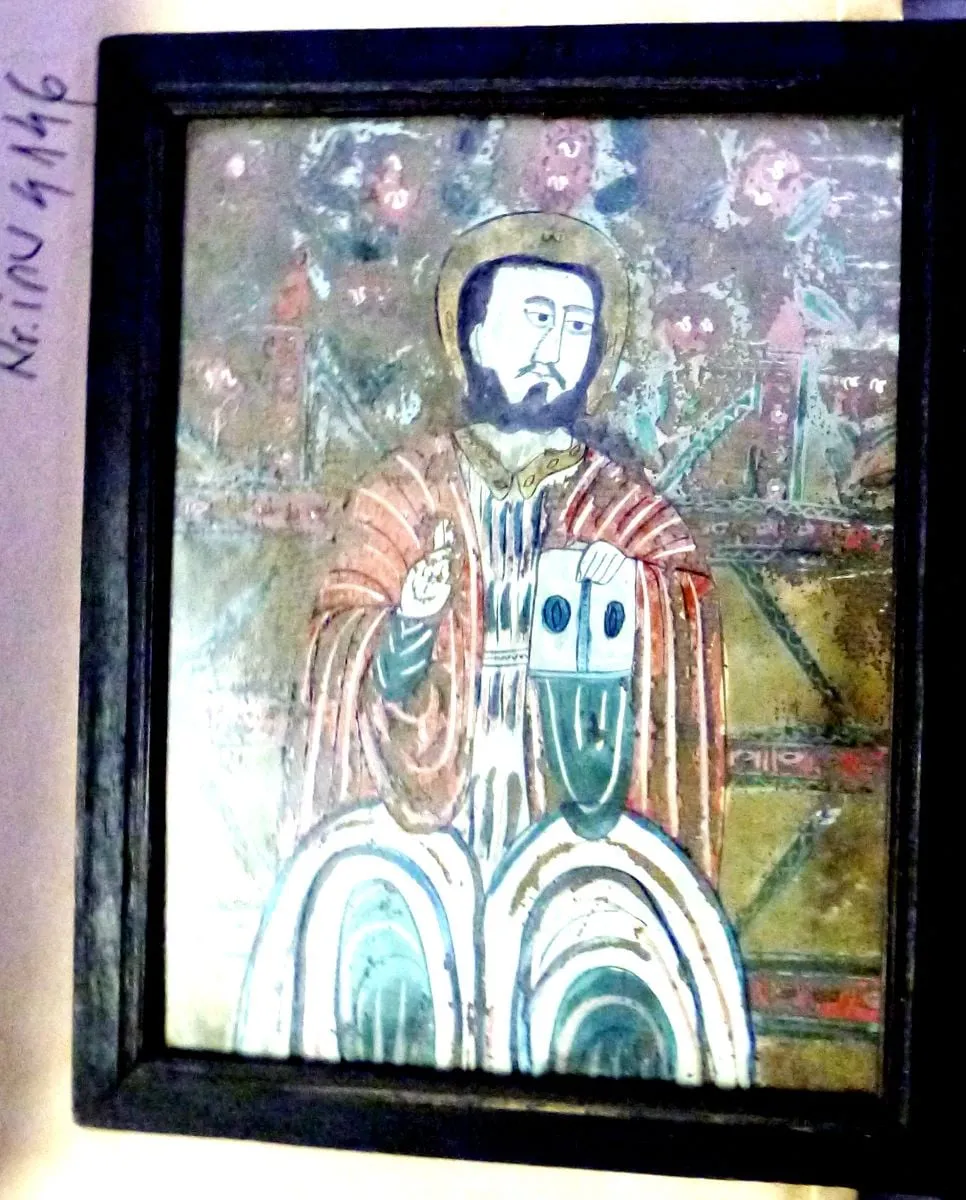
Isus invatator is a drawing by Unknown. It dates from 1850 and is held in the collection of the Bistrita-Năsăud Museum Complex. This image depicts a bearded male figure with a halo, dressed in a striped red-and-white robe and a patterned white shawl.
About this work
Overview
The work is cataloged in the Museum of Ethnography, suggesting a ritual or devotional context rather than a fine art tradition.
This image depicts a bearded male figure with a halo, dressed in a striped red-and-white robe and a patterned white shawl. His left hand holds a small object, while his right gestures forward. The background is subdued, with faint outlines of structures and foliage. The palette is restrained, save for the vivid red and white of his garments. The work is cataloged in the Museum of Ethnography, suggesting a ritual or devotional context rather than a fine art tradition.
Subject & Meaning
The figure, identified as Jesus, is rendered with solemnity and symbolic clarity. The halo denotes sanctity, the pointing gesture suggests teaching or divine direction, and the small object in his left hand may represent a scroll or sacred item. The attire, though stylized, aligns with traditional iconography of Christ as teacher. The composition avoids naturalism, emphasizing spiritual presence over physical realism, likely serving a liturgical or instructional purpose.
Technique & Style
The image employs flat, unmodulated color fields and simplified forms, typical of folk or liturgical art traditions. Details like the dotted shawl and striped robe are rendered with deliberate repetition, suggesting pattern over realism. Brushwork is restrained, with minimal shading or perspective. The faded background and lack of depth reinforce the figure’s symbolic centrality, prioritizing spiritual focus over environmental context.
History & Provenance
The work resides in the Museum of Ethnography, indicating it was collected as part of a cultural or religious artifact rather than as a fine painting. Its origins are likely regional, possibly from a rural community where devotional imagery was produced for domestic or communal use. The style suggests it was made by an anonymous artisan, reflecting local interpretations of Christian iconography rather than academic conventions.
Context
Created within a tradition where religious imagery served both devotional and didactic roles, this piece reflects how biblical figures were adapted in non-Western or folk settings. Its muted tones and schematic forms align with regional practices that prioritized symbolic legibility over naturalism. Such images often circulated in households or small chapels, reinforcing faith through accessible visual language rather than elaborate detail.
Legacy
As a preserved example of vernacular religious art, the image contributes to understanding how Christian iconography was localized and reinterpreted beyond formal ecclesiastical settings. Its preservation in an ethnographic collection underscores its value as a cultural artifact, offering insight into the visual piety of communities where artistic expression was intertwined with daily spiritual life.
Artist & collection
 Domestic Scene
 Giacomo and Cardinal Marco, investing Andrea, Abbot of San Zeno, with his Benefice
 The Nymph of Fontainebleau
 Portrait of a Woman
 Madonna and Child with Saints in the Enclosed Garden
 Venus and Minerva
 Family Group of Four on Sofa
 Wall painting from Room H of the Villa of P. Fannius Synistor at Boscoreale
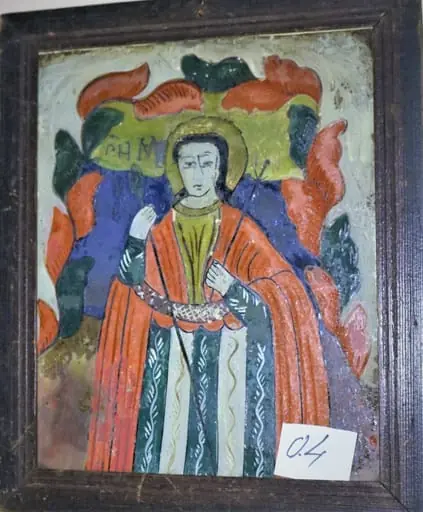 Sânta Paraschiva
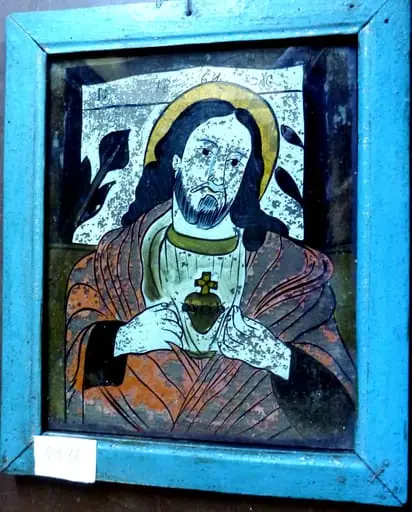 Inima lui Iisus
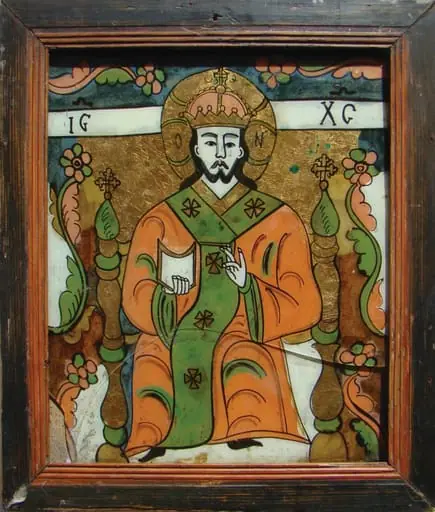 Iisus Hristos Mare Arhiereu și Învățător, tronând
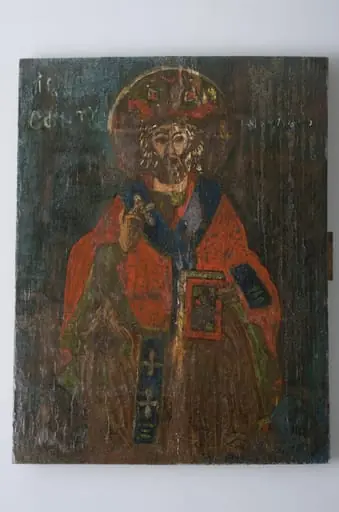 Icoana este pictată pe lemn, reprezentându-l pe Sfântul Nicolae cu veșminte arhierești (felon roșu, omofor albastru și mitră pe cap), ținând Evanghelia închisă cu mâna stângă și binecuvântând cu mâna dreaptă. Cromatică: roșu, albastru, verde, maro închis.
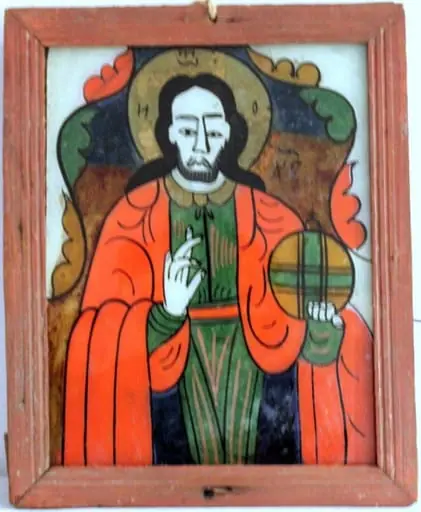 Iisus Cristos Pantocrator
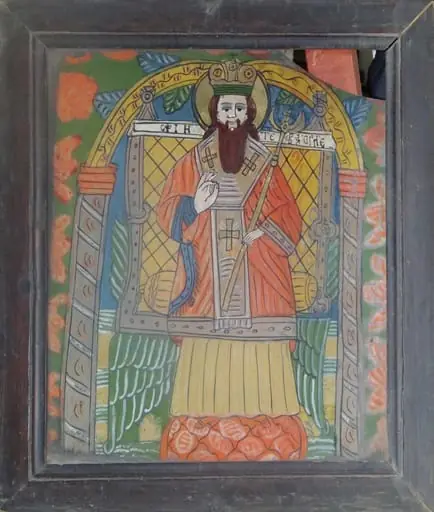 Sf. Vasile cel Mare
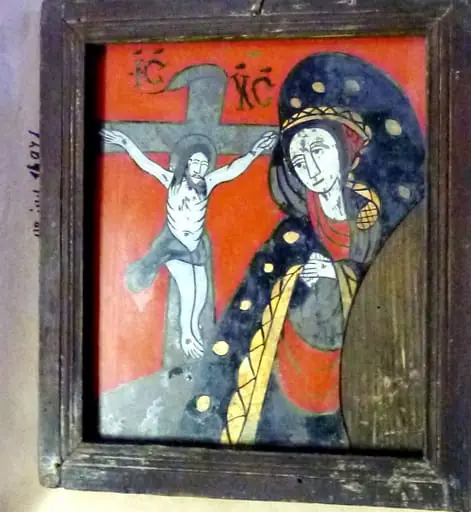 Maica Domnului Indurearata
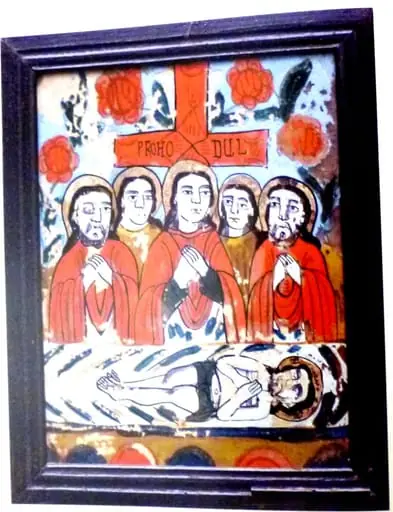 Prohodul
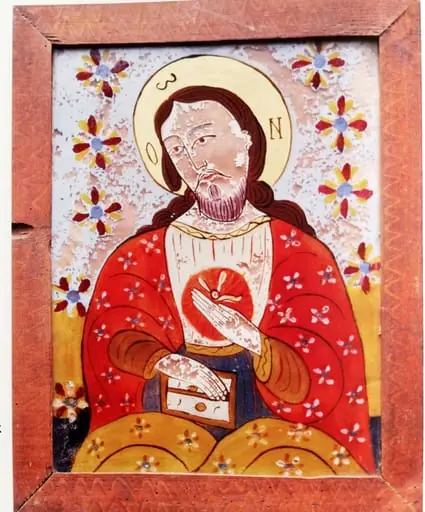 Iisus cu inima
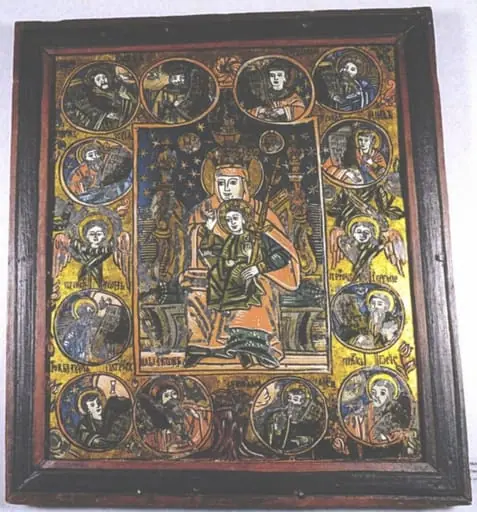 Maica Domnului Împărătiță cu Proorocii