Artwork
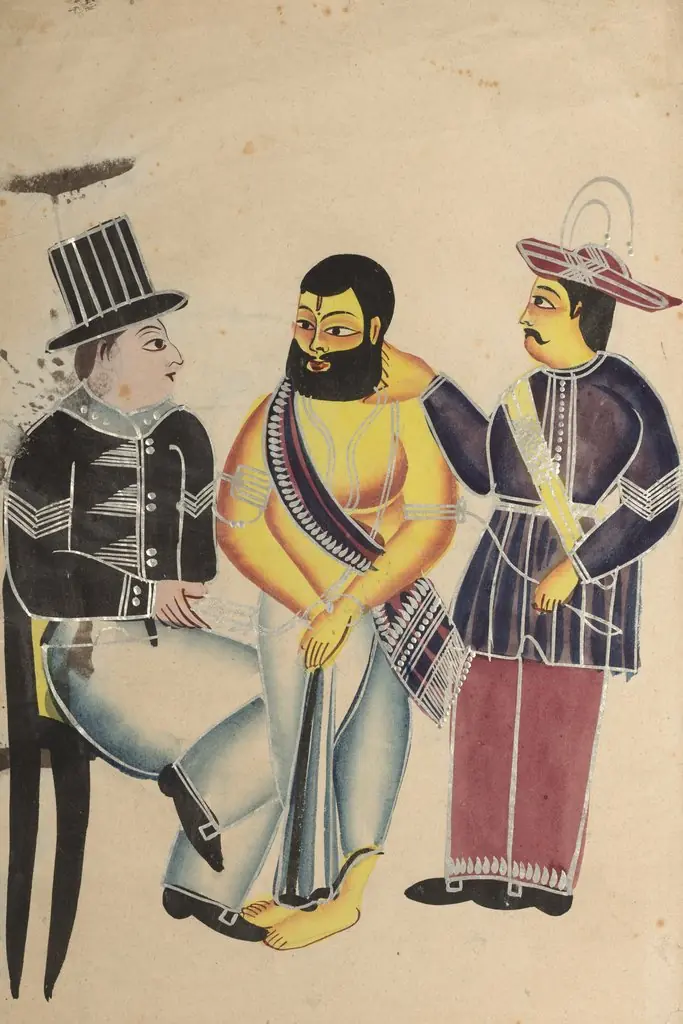
Jailer Receiving the Mahant of Tarakeshwar in Prison
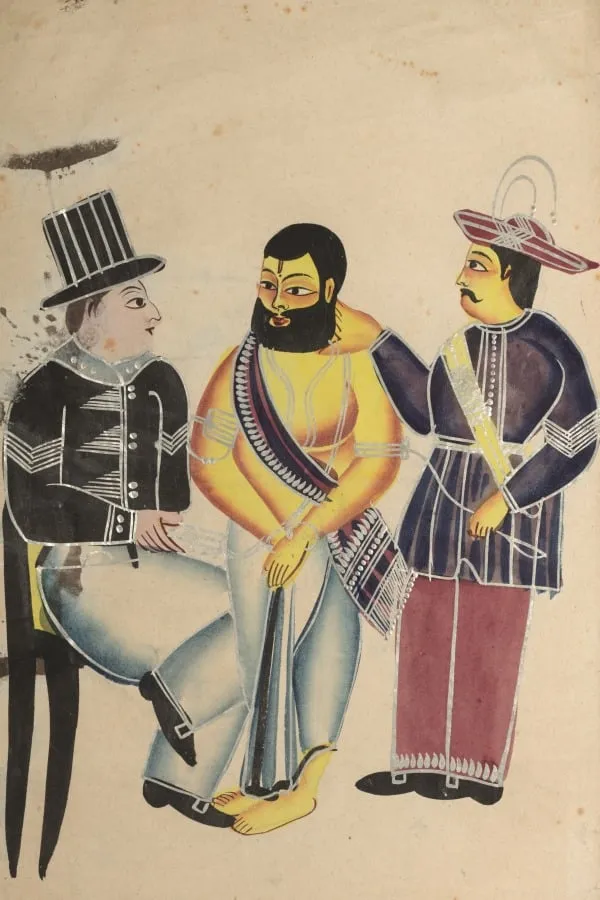
Jailer Receiving the Mahant of Tarakeshwar in Prison is an unspecified painting by the Patna School of Painting artist Unknown. It dates from 1890 and is held in the collection of the Cleveland Museum of Art.
About this work
Overview
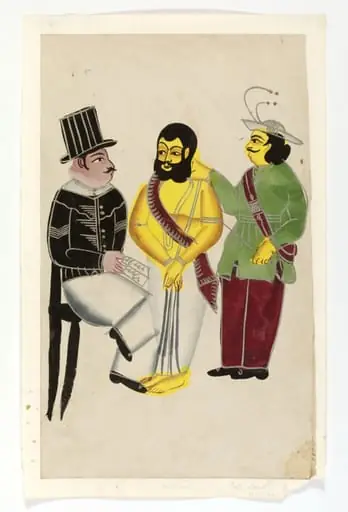
The work portrays a scene in which a prison guard, dressed in a striped uniform, presents a bound priest to a warden seated in a black chair. The warden, wearing a top hat and holding a warrant, appears to be of British or Anglo‑Indian origin. The composition references a notorious 1873 scandal from Calcutta involving a temple priest and a murder.
Subject & Meaning
The image dramatizes the aftermath of the Tarakeshwar case, where the chief Shiva priest, accused of adultery, is taken into custody. By showing the priest restrained and the authority figures in colonial attire, the picture underscores themes of moral transgression, legal punishment, and the intersection of native and colonial power structures.
Technique & Style
Executed in the characteristic Kalighat aesthetic, the painting employs bold outlines and flat, vivid colours that prioritize narrative clarity over realism. The figures are rendered with simplified forms, and the use of striking contrasts serves to capture the viewer’s attention quickly, reflecting its origin as a mass‑produced print.
History & Provenance
Created during the late nineteenth century, the piece was part of a popular series of inexpensive prints sold near the Kali temple in Kolkata. These prints circulated widely, disseminating sensational stories of contemporary crimes and scandals to a broad audience.
Context
The Tarakeshwar murder, involving a jealous husband who killed his wife after discovering her affair with the temple’s Mahant, sparked public outrage and inspired numerous Bengali plays and visual representations. The painting reflects the era’s fascination with moral drama and the blending of indigenous narratives with colonial imagery.
Artist & collection

 Domestic Scene
 Giacomo and Cardinal Marco, investing Andrea, Abbot of San Zeno, with his Benefice
 The Nymph of Fontainebleau
 Portrait of a Woman
 Madonna and Child with Saints in the Enclosed Garden
 Venus and Minerva
 Family Group of Four on Sofa
 Wall painting from Room H of the Villa of P. Fannius Synistor at Boscoreale