Artwork
Vaishnava Devotee with Two Women
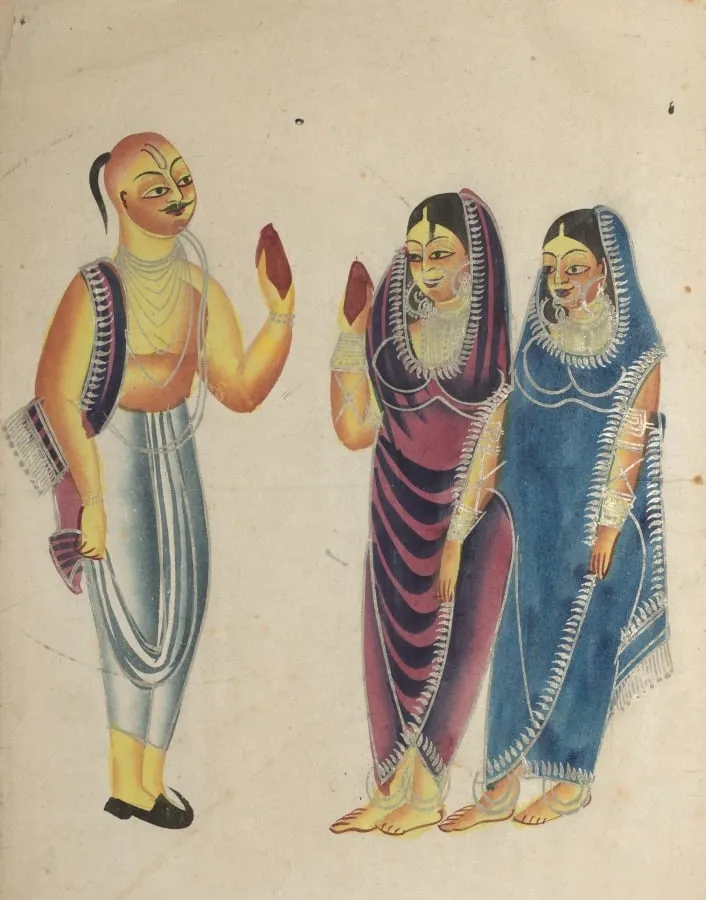
Vaishnava Devotee with Two Women is an unspecified painting by the Patna School of Painting artist Unknown. It dates from 1890 and is held in the collection of the Cleveland Museum of Art.
About this work
Overview
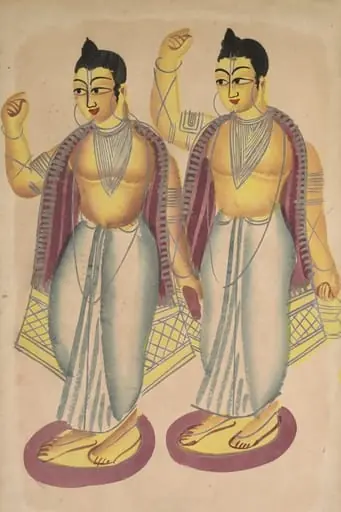
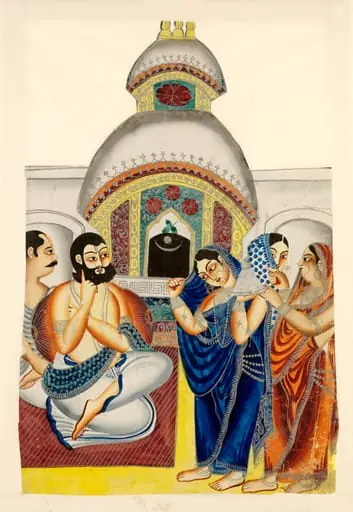
A Kalighat painting depicts a Vaishnava devotee, identifiable by Vishnu-sectarian forehead marks, standing between two women against a flat yellow background. Notable is the devotee's incongruous attire, including fashionable shoes, suggesting a potential discrepancy between appearance and spiritual devotion.
Subject & Meaning
The subject appears to critique the hypocrisy of certain Vaishnava mendicants in 19th-century Kolkata, who might use their religious status to interact with women inappropriately. The painting may imply the devotee's intentions are not entirely sincere.
Technique & Style
Characterized by simple, sharp forms and a minimalist backdrop, the work exemplifies the distinctive visual language of Kalighat art. The selective use of red (possibly indicating henna) on the raised hands adds a touch of detail to the otherwise straightforward composition.
History & Provenance
Created in 19th-century Kolkata, this painting is part of the Kalighat tradition, which often employed satire to comment on contemporary social issues. Specific provenance details for this work are not provided.
Context
Within the social landscape of 19th-century Kolkata, such artworks served as commentary on the religious and social practices of the time, particularly targeting the behaviors of certain mendicants. The use of accessible, straightforward imagery made these critiques widely understandable.
Legacy
This painting contributes to the legacy of Kalighat art as a form of social commentary. Its themes and style continue to provide insight into the religious and social dynamics of its era, influencing the appreciation of folk and satirical art traditions.
Artist & collection

 Domestic Scene
 Giacomo and Cardinal Marco, investing Andrea, Abbot of San Zeno, with his Benefice
 The Nymph of Fontainebleau
 Portrait of a Woman
 Madonna and Child with Saints in the Enclosed Garden
 Venus and Minerva
 Family Group of Four on Sofa
 Wall painting from Room H of the Villa of P. Fannius Synistor at Boscoreale